

Key Takeaways:
- October is one of the best trekking months in Nepal — expect generally clear skies, low rainfall, and excellent mountain visibility.
- Temperatures vary greatly with altitude — lower regions are comfortable during the day, while high-altitude areas can be freezing, especially at night and early morning.
- There is a trek for every experience level — Poon Hill and ABC suit beginners, while EBC, Manaslu, and Kanchenjunga are better for experienced trekkers.
- October is peak trekking season — popular trails, flights, and teahouses can be busy, so advance planning is important.
- Pack for changing temperatures — use layers and bring warm clothing, a down jacket, suitable footwear, and other high-altitude essentials.
October is one of the best months to trek in Nepal, thanks to clear skies, low rainfall, comfortable daytime temperatures, and excellent mountain views. After the monsoon ends, the trails become drier and the Himalayas are often at their most visible.
Whether you’re dreaming of Everest Base Camp, Annapurna, Manaslu, or a shorter trek like Poon Hill, October offers options for different fitness levels, budgets, and travel styles. It is also peak trekking season, so popular trails, flights, and teahouses can get busy. In this guide, we’ll explore the best treks in Nepal in October, their weather, temperatures, difficulty, costs, and practical planning tips to help you choose the right trek for your adventure.
Is October a Good Time to Trek in Nepal?
Yes – October falls right in Nepal’s prime autumn trekking season. Most rain is gone and the skies often clear up. With the monsoon over, mountain views are spectacular. Daytime temperatures in the trekking regions are comfortably warm (around 20–25 °C), though it’s much colder at high camps each morning and evening. Clouds are few, so you get brilliant sun and far-reaching panoramas of Everest, Annapurna, and Dhaulagiri. It’s not 100% guaranteed perfect weather – storms do occasionally happen – but October consistently delivers the most reliably clear, dry conditions of the year.
- Clear skies and views: October follows the monsoon, so you see peaks and blue sky almost every day. The air is fresh, the valleys lush from rains, and distant ridges shimmer in the sunlight.
- Comfortable conditions: Days are mild-to-warm; nights are chilly (especially above 4,000 m, where a down jacket is a must). But you won’t deal with the mud or leeches of the wet season.
- Peak season: Because the weather is so good, all the big treks (Everest, Annapurna) see heavy traffic. Flights to Lukla or Jomsom, and teahouse rooms in Namche and Annapurna villages, fill up fast. On the plus side, more people means more services open.
Why October Is So Popular
October is the honeymoon of Nepali trekking. The sky is a deep blue, the air is clean, and conditions are ideal. The forests and hills are still green from monsoon rains, and every sunrise on the ridge is a show. Trekking lodges and transport are in full swing: trails on all routes are open, tea-houses are serving and porters are available.
- Post-monsoon season: October is mid-autumn, just after Nepal’s heavy rains. The monsoon clouds are gone, so visibility is at its best.
- Stable weather: Rain is rare; you can expect sunny days and cold nights. The day hikes are warm, but above 5,000 m (e.g. Kala Patthar or Thorong La pass) it can be freezing in the mornings.
- Trails at full capacity: All the camps and teahouses are open now, unlike winter when high passes close. Every village from Lukla to Annapurna is active with lodging and supplies.
- Scenery: Mountain peaks glitter with fresh snow from any early showers, and forests are lush. Even Kathmandu Valley and low hills have clear, crisp air and great visibility.
10 Best Treks in Nepal in October
Here are the top 10 treks to do in October, ranked by popularity and the experience they offer. Each trek listing includes its difficulty, highest altitude, who it’s best for, and the essentials (route highlights, permits, costs). I’ve trekked most of these routes myself and guided others on them, so I’ll share the real scoop:
1. Everest Base Camp Trek in October
- Difficulty: Moderate to Challenging (long days, high altitude)
- Max Altitude: 5,364 m (Everest Base Camp, Nepal side); 5,545 m (summit of Kala Patthar viewpoint).
- Best For: Fit, experienced trekkers and “bucket-list” adventurers. You don’t need climbing skills, but you must be ready for high altitude and very long walks.
- Permit: Sagarmatha National Park Entry (NPR 3,000 / ~US$25) + Khumbu (Everest Himalaya) Trekking Permit at Lukla (NPR 3,000 / ~$25). (You no longer need separate TIMS in Everest region; the Khumbu permit covers it.)
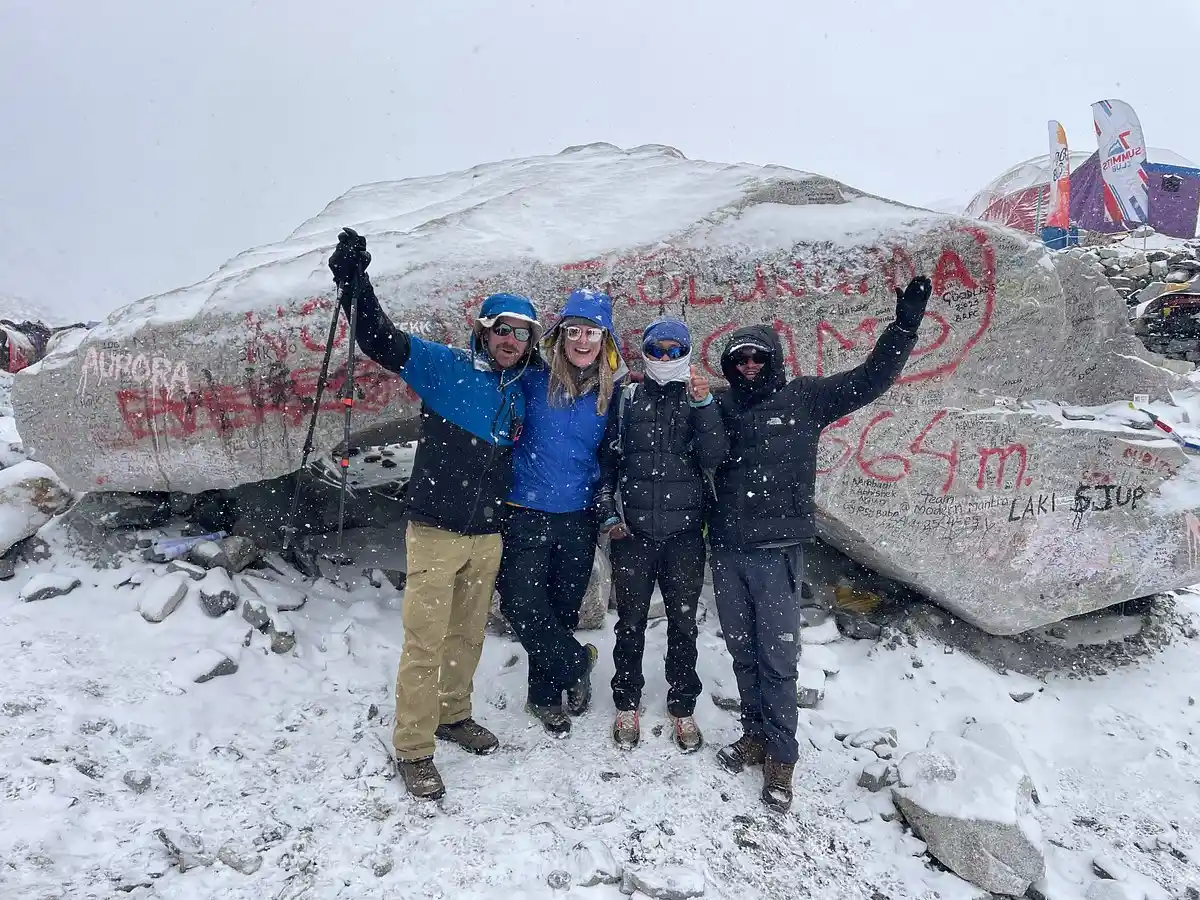
In October the views of Everest are spectacular. The morning sun paints the giant peaks rose gold. From Nepal’s side, the trek starts at Lukla (2,840 m) and climbs up the Dudh Koshi valley through Namche Bazaar (3,440 m) and Tengboche Monastery (3,860 m). You acclimatize with rest days at Namche and Dingboche (4,260 m). The trail continues to Gorak Shep (5,170 m), then Everest Base Camp (5,364 m). If you’re up for it, hike to Kala Patthar (5,545 m) for the ultimate sunrise view of Everest.
All along the way are teahouse lodges and small guesthouses – no camping is needed. In October these tea-houses are fully open (and busy). Expect to pay in the range of US$1,200–$3,000 for a guided trek of ~2 weeks (including flights and guide); solo DIY treks cost less but be careful at high altitude. Book early: flights to Lukla and Namche Bazaar lodges can sell out in October. The trail will be crowded, but every step is a thrill – nothing beats seeing Everest’s peak up close in perfect weather.

2. Annapurna Circuit Trek in October
- Difficulty: Moderate to Challenging (long, varied terrain)
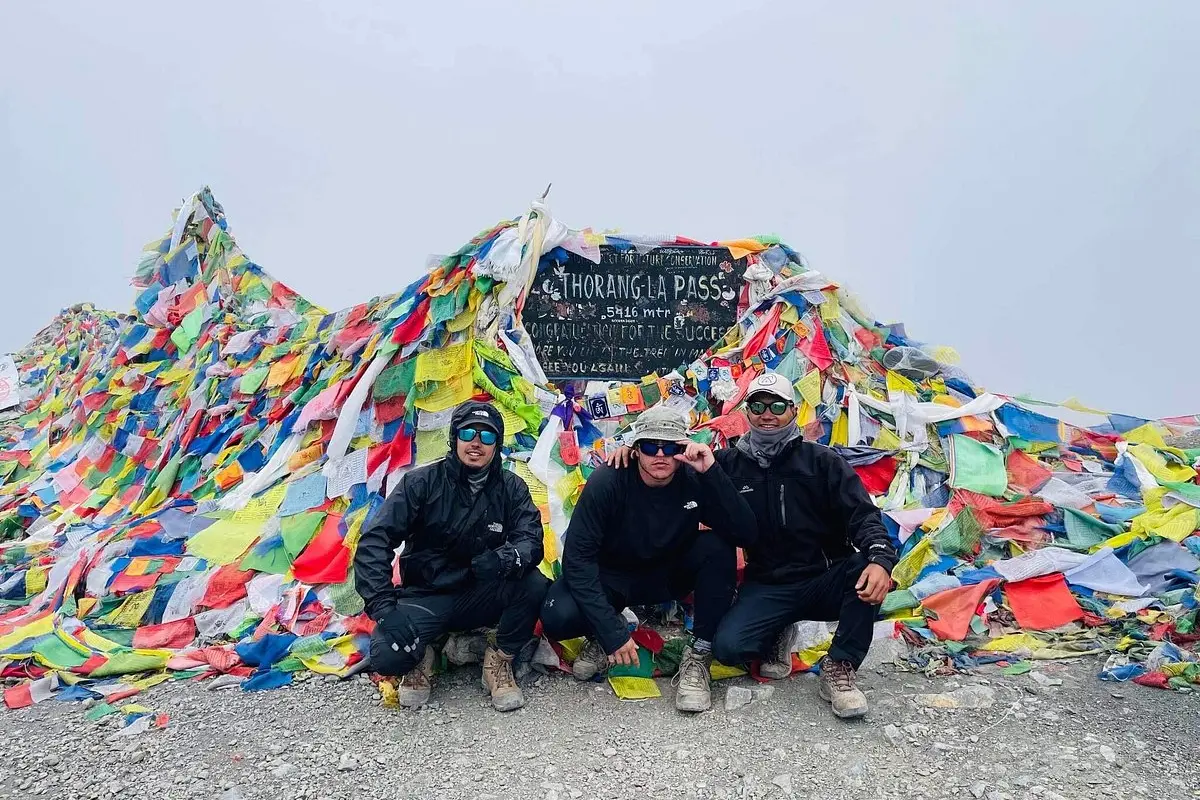
- Max Altitude: 5,416 m (Thorong La Pass).
- Best For: Adventurous hikers who want culture + scenery. This trek circles Annapurna massif and crosses Tibet’s rain-shadow; it’s ideal for solo explorers and younger trekkers.
- Permits: Annapurna Conservation Area Permit (ACAP, NPR 3,000 / ~$25) + TIMS Card (USD 40 solo, $20 group).
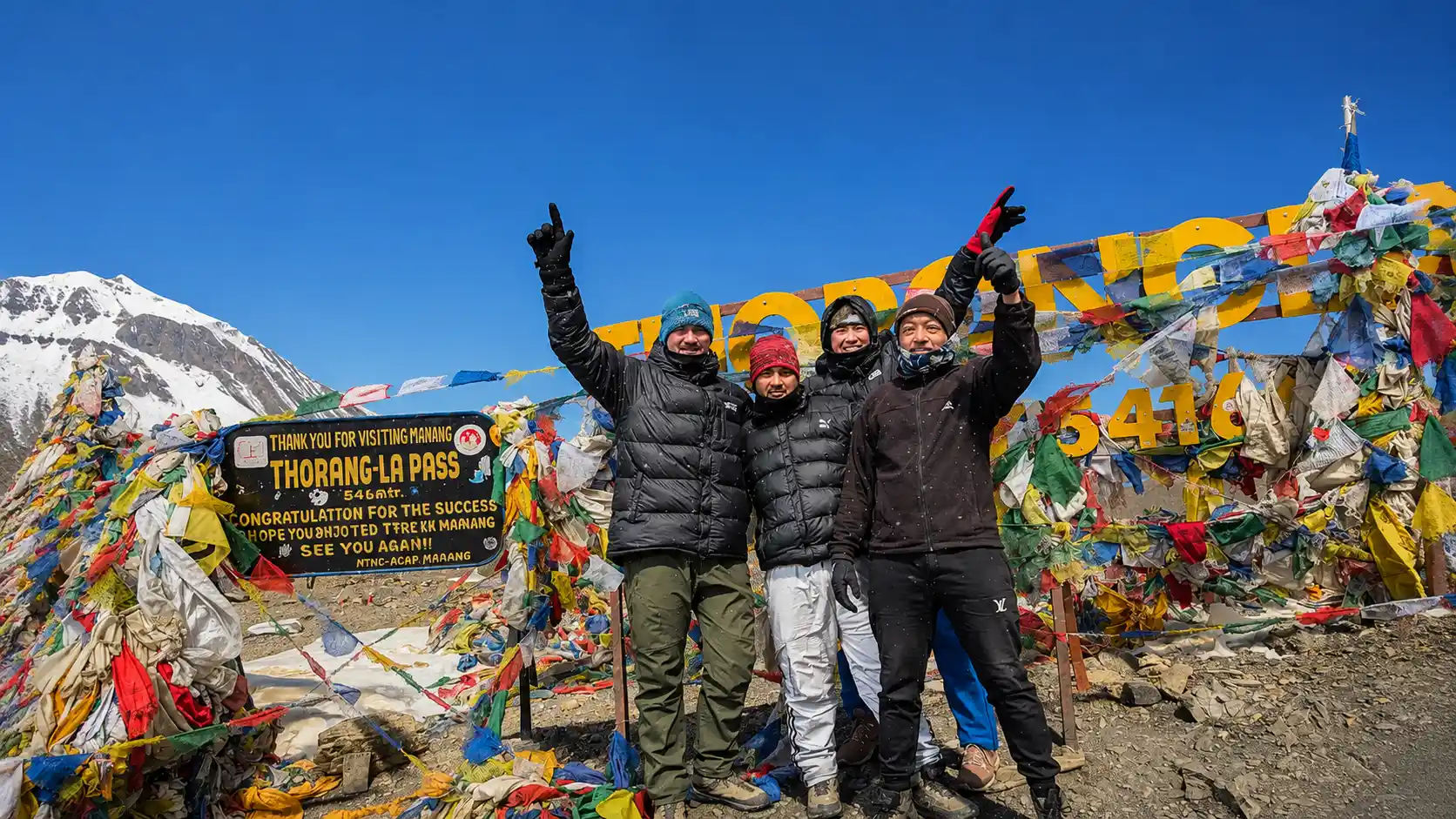
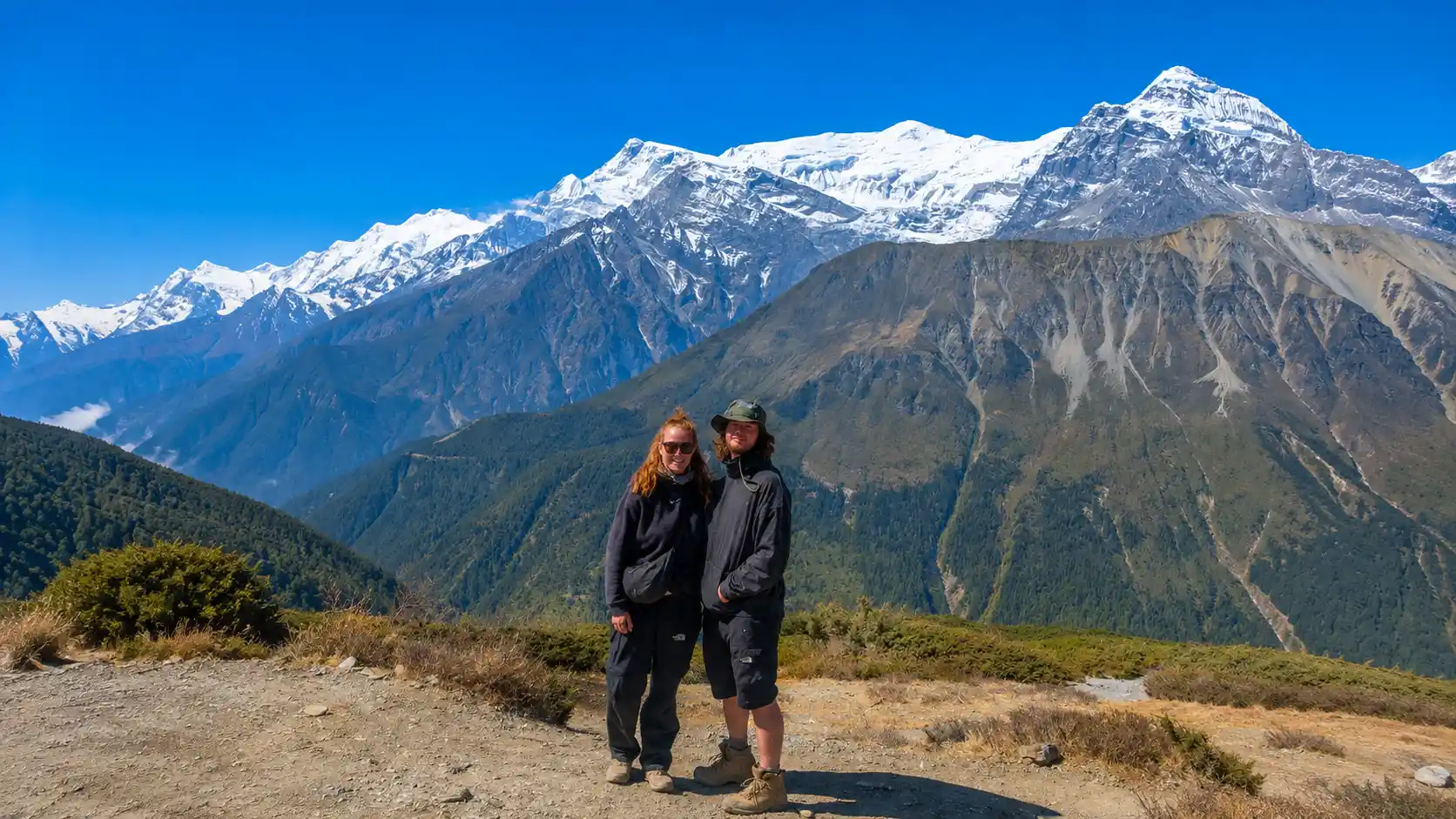
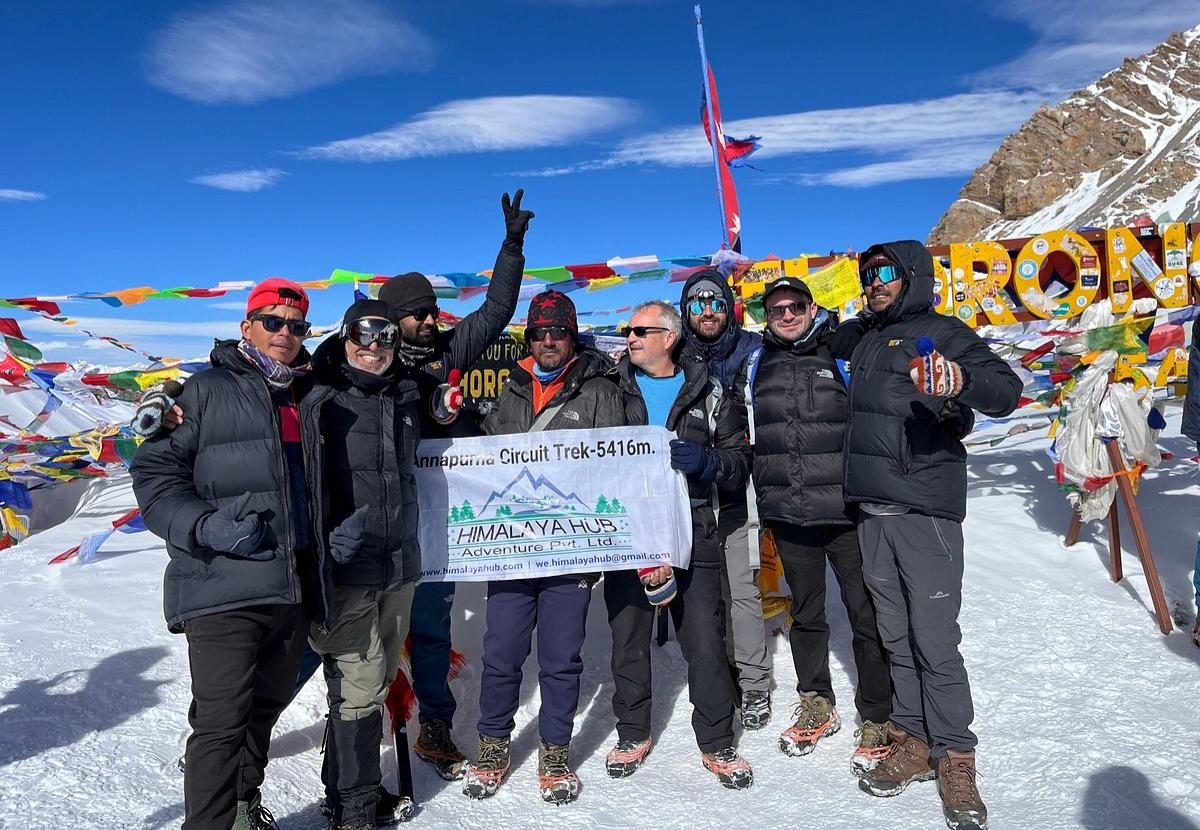
This legendary trek starts in lush subtropical valleys (Besisahar) and gradually climbs north. You pass terraced rice fields and rhododendron forests, then enter the Marsyangdi Gorge and climb above tree line. Highlights include the classic village of Manang (3,500 m), and side hikes to Gangapurna Lake or Ice Lake. The Thorong La Pass (5,416 m) is the watershed: on the other side, the landscape is a high, dry desert. After crossing Thorong La, you descend past Muktinath Temple, then down through the Kali Gandaki valley (world’s deepest gorge). The trek usually ends at Jomsom or Pokhara.
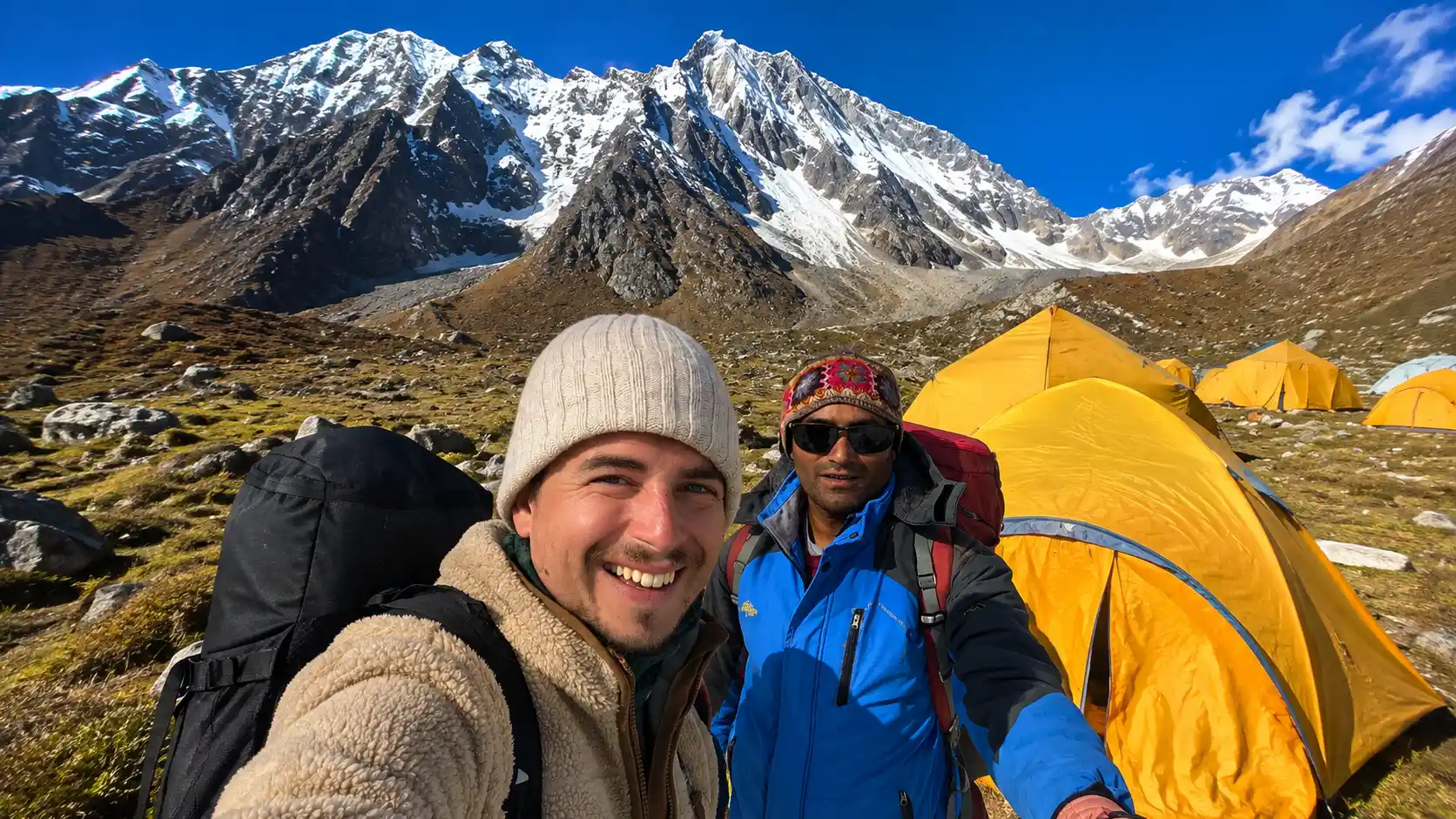
October gives perfect views of Annapurna I, Dhaulagiri and other giants. The terrain is incredibly varied: jungles, waterfalls, high snow slopes, and arid cliffs. You need good fitness for the long climb to Thorong La, but moderate pace and acclimatization stops make it doable. Budget roughly $1,500–$2,500 (guide/permits/transport included). It’s very scenic and culturally rich (Gurung and Thakali villages). The only catch: the pass day (just before or after the Full Moon) can get cold and windy, so pack warm gear.
“Standing at 5,416 m, the Thorong La Pass is the crown jewel of the Circuit…” – the highest and most dramatic point of the Annapurna Circuit.
3. Annapurna Base Camp (ABC) Trek in October
- Difficulty: Moderate
- Max Altitude: 4,130 m (Annapurna Base Camp).
- Best For: Beginners to moderately fit hikers, families, couples. A shorter alternative to the full Circuit, with big mountain vistas.
- Permits: ACAP (same NPR3,000) + TIMS (USD 40 solo) – same permits as Circuit.
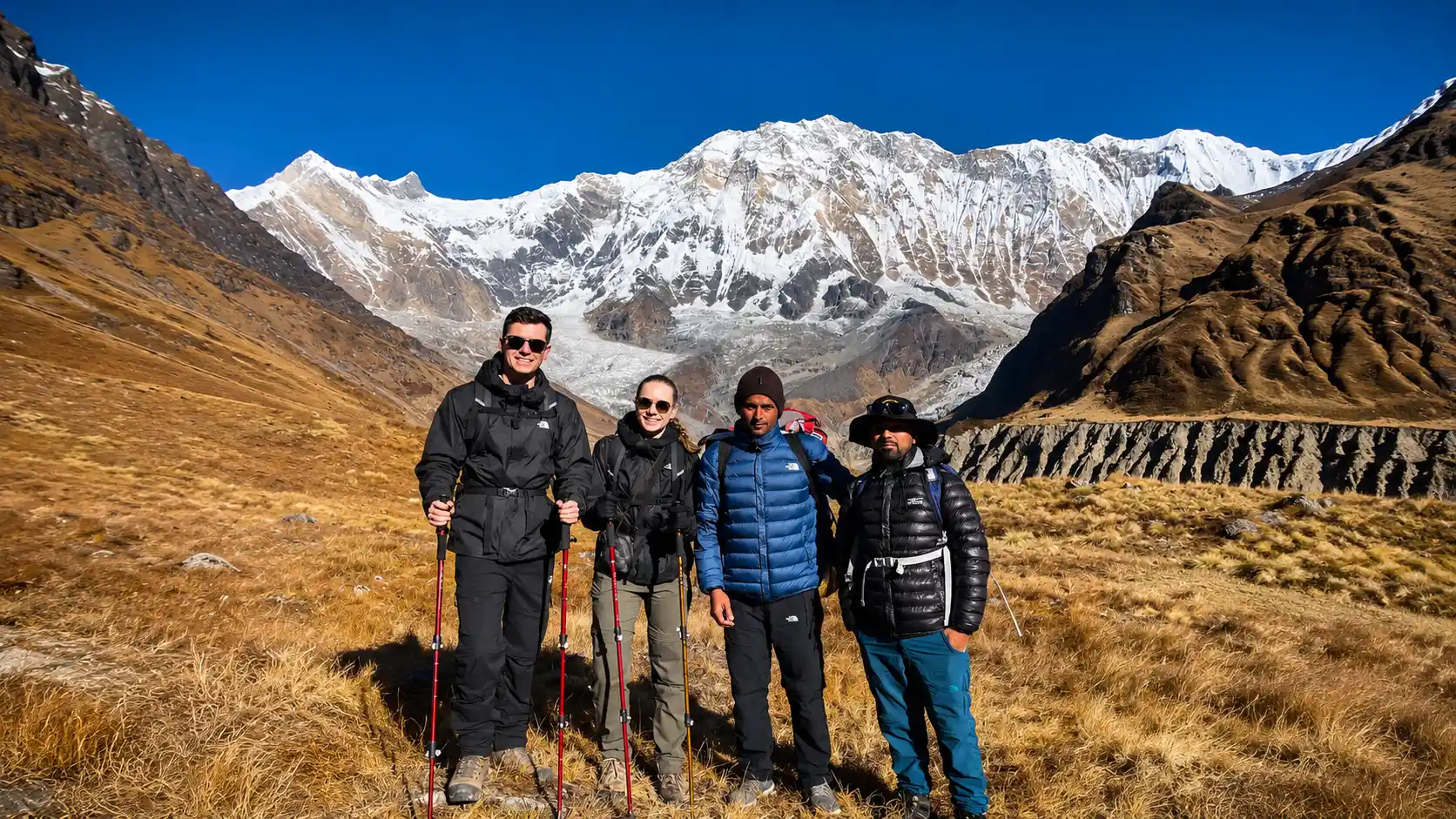
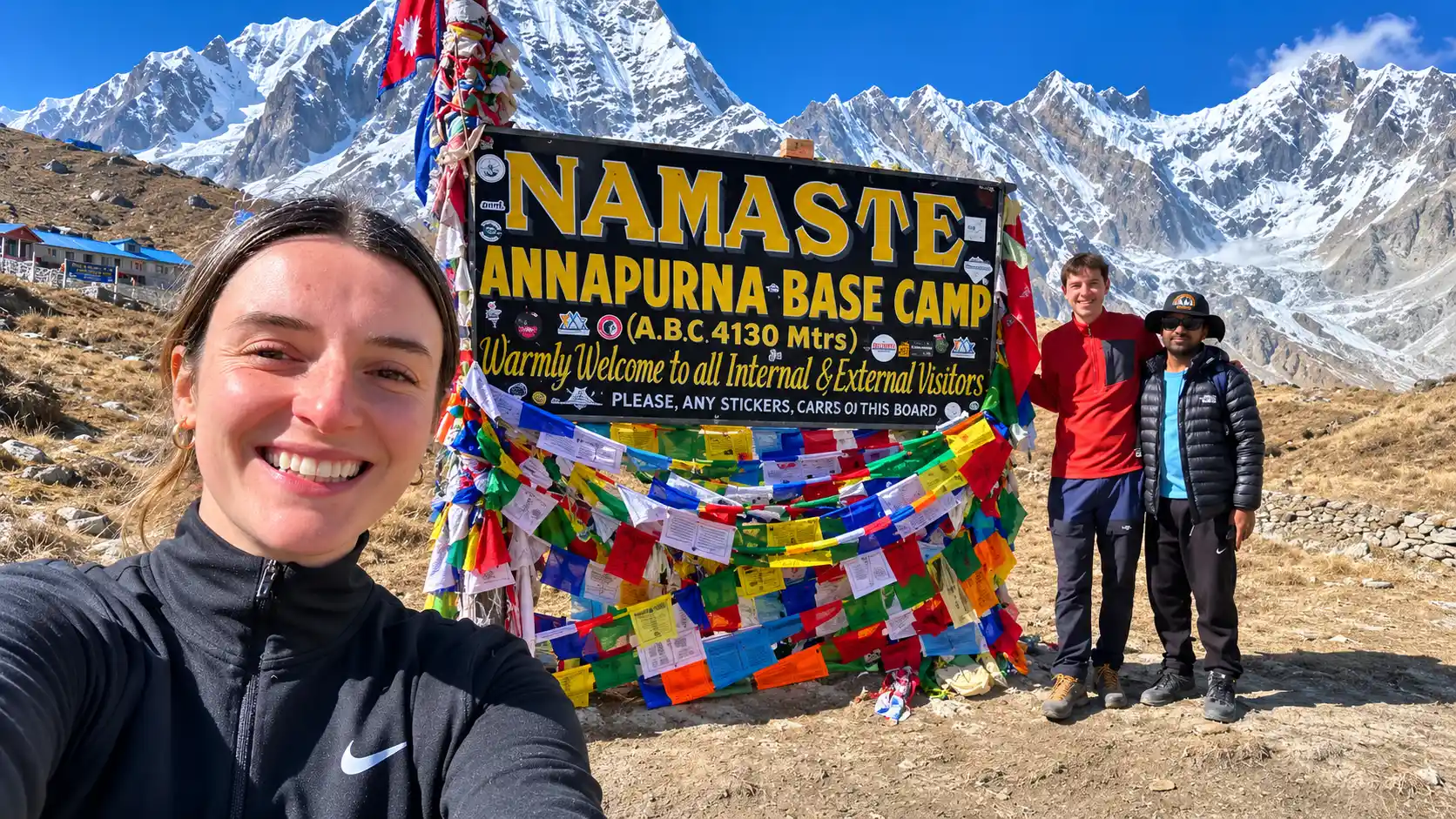
This popular 7–12 day trek from Pokhara goes to the heart of the Annapurna Sanctuary. You pass through villages like Ghandruk and Chhomrong, winding through rhododendron and oak forests. Every day offers big views: Machapuchare (Fishtail) peak, Annapurna South, Annapurna I, etc. The trail ends at ABC (4,130 m) in a natural amphitheater surrounded by high peaks. On summit day you usually wake at 5am, hike to a viewpoint for sunrise, then back to camp for breakfast.
Teahouses are plentiful; this is one of the most comfortable high treks (and does not require camping). October’s weather makes the mountain panorama crystal clear. Cost-wise it’s cheaper than EBC – many do it independently for around $500–$1,000 (just permits, food, lodging). It’s great for first-time hikers or anyone wanting a shorter adventure. The lodge at ABC has a tiny bar and fireplace to celebrate the achievement! (Remember to bring warm clothes, as nights at ABC are below freezing.)
“Altitude: Annapurna Base Camp: 4,130 m…” – Annapurna Base Camp sits at the foot of Annapurna I, giving a front-row seat to the Himalaya.
4. Langtang Valley Trek in October
- Difficulty: Moderate
- Max Altitude: 4,984 m (Tsergo Ri Summit).
- Best For: Nature lovers and budget trekkers. It’s close to Kathmandu (no flight), less-crowded and rich in flora, wildlife and Tamang culture.
- Permits: Langtang National Park (NPR 3,000 / ~$25). No TIMS required for Langtang as of 2024 (only national park fee).
Just 7–9 days’ drive from Kathmandu, Langtang Valley offers “Himalaya-lite”: rhododendron forests, yak pastures and a sacred lake (Gosainkunda is a side trip). You trek through villages like Syabrubesi and Kyanjin Gompa (3,800 m), which is a calm Tibetan-influenced village with cheese-makers. The highlight is the day-hike up Tserko Ri (4,984 m) from Kyanjin for sweeping views of Langtang Lirung, Ganesh Himal and beyond.
Langtang’s trail is well-marked and mostly gentle (no huge passes). In October the valley is wildflower-green and the panorama from Tsergo Ri is jaw-dropping. Teahouses are basic but very friendly (often run by locals). It’s an excellent route for mid-budget or solo trekkers who want big-mountain scenery without the Everest crowds. A guide is optional but recommended (in case of heavy rain or landslides).
“Maximum Elevation: 4,984 m – Tsergo Ri” – the summit above Langtang Valley gives one of the most spectacular all-round views of the Langtang Himal.

5. Upper Mustang Trek in October
- Difficulty: Moderate (altitude is highest challenge, terrain is dry)
- Max Altitude: 3,840 m (Lo Manthang).
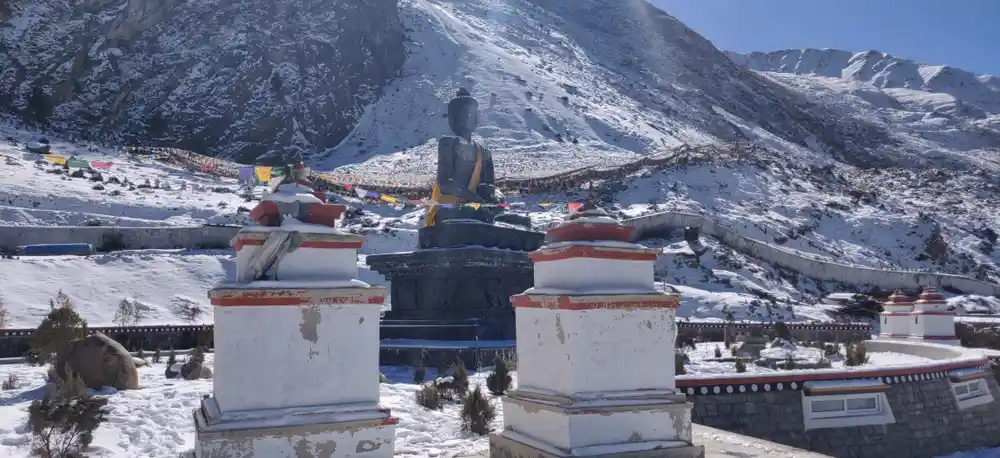
- Best For: Culture seekers and luxury travellers. The route to the ancient walled city of Lo Manthang feels like stepping into Tibet – it’s a dry, windy desert with Buddhist shrines at every turn.
- Permits: Special “Restricted Area” permit (USD 500 for first 10 days, plus ~US$50/day thereafter). Also ACAP ($30) and TIMS.
Upper Mustang is in the rain-shadow of Annapurna: it stays dry even in monsoon. The landscape is surreal – bright red cliffs, desert high-plateau, dozens of mani walls and caves with Buddhist murals. You fly/drive to Jomsom, then drive up (or hike) through Kagbeni to Muktinath, and then on into Mustang. The circuit loops through spectacular villages like Ghami and Chhusang, finally arriving at Lo Manthang, the medieval capital (alt 3,840 m).
October is perfect for Mustang: dry skies and mild days let you absorb the vast high-desert scenery. This trek is also easier on the lungs than EBC/ABC (no 5,000+m passes), but pay attention to altitude acclimatization. Only guided groups (2+ trekkers) are allowed and the hefty permit fee is unavoidable. In return, you get very few crowds and the chance to meet the nomadic Lhoba people. Expect to spend $2,500+ for the permit and a guided package (it’s a more expensive trek, often done with luxury lodges or even flights).
“Elevation: 3,840 m” – Lo Manthang sits at 3,840 m in Upper Mustang’s desert plateau, a full 9,000 ft above sea level.

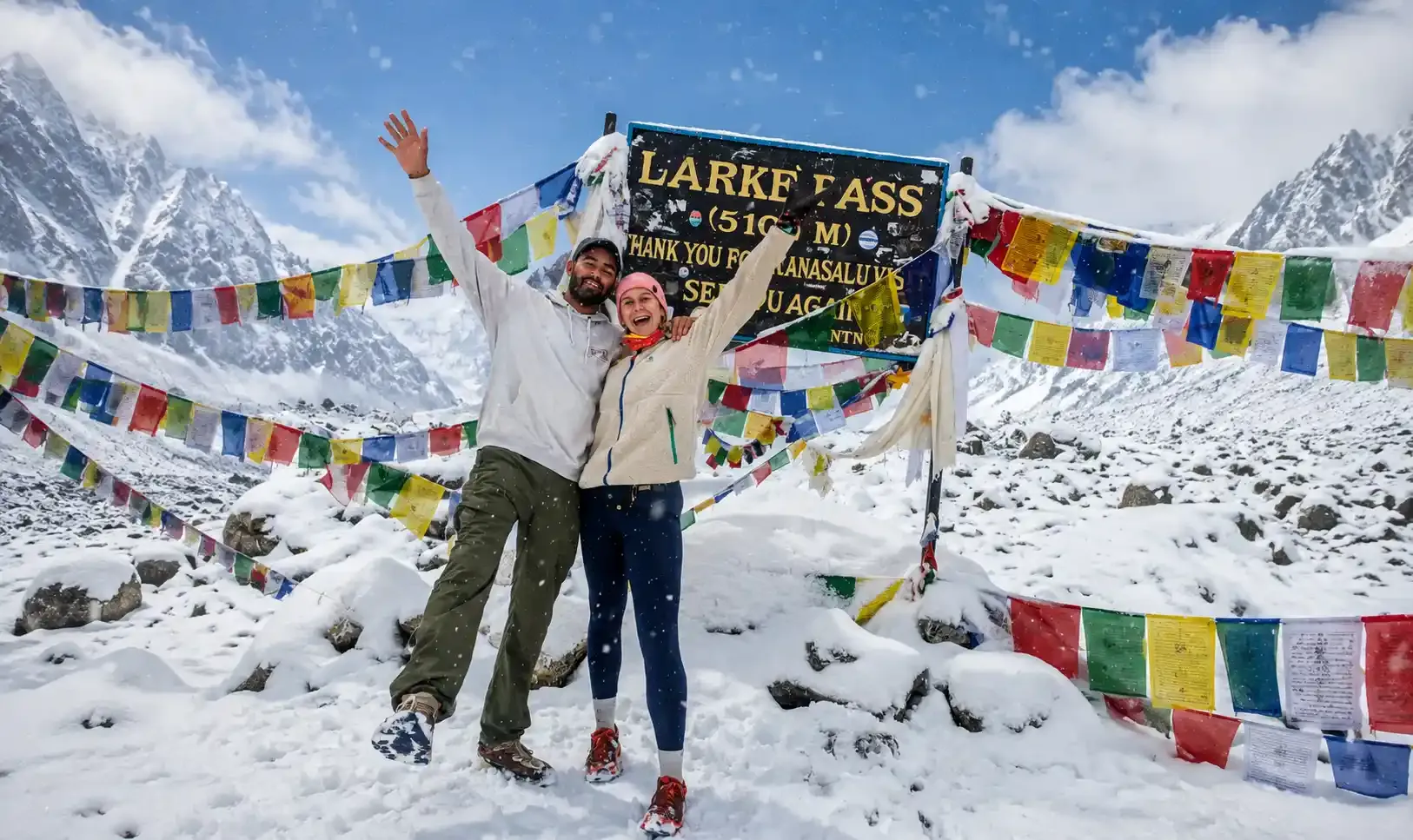
6. Manaslu Circuit Trek in October
- Difficulty: Challenging
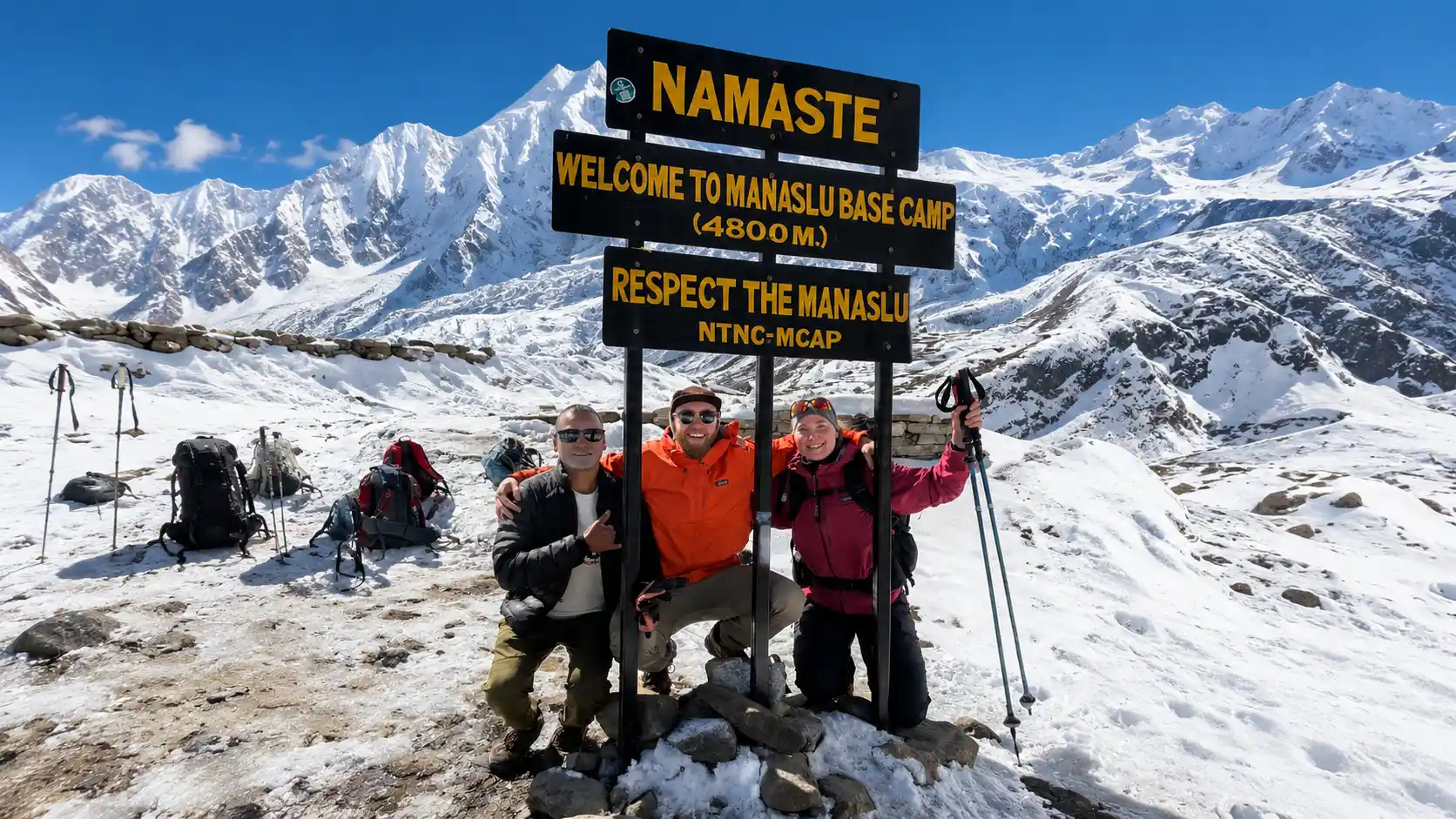
- Max Altitude: 5,106 m (Larkya La Pass).
- Best For: Very fit, experienced trekkers who want a remote alternative to the Annapurna Circuit. Great for avoiding crowds (there are far fewer trekkers here than EBC/ABC).
- Permits: Special Restricted Area Permit (RAP). It costs USD 100/week (Sept–Nov); plus the Manaslu Conservation Area Permit and TIMS. Also mandatory guide for foreign solo trekkers.
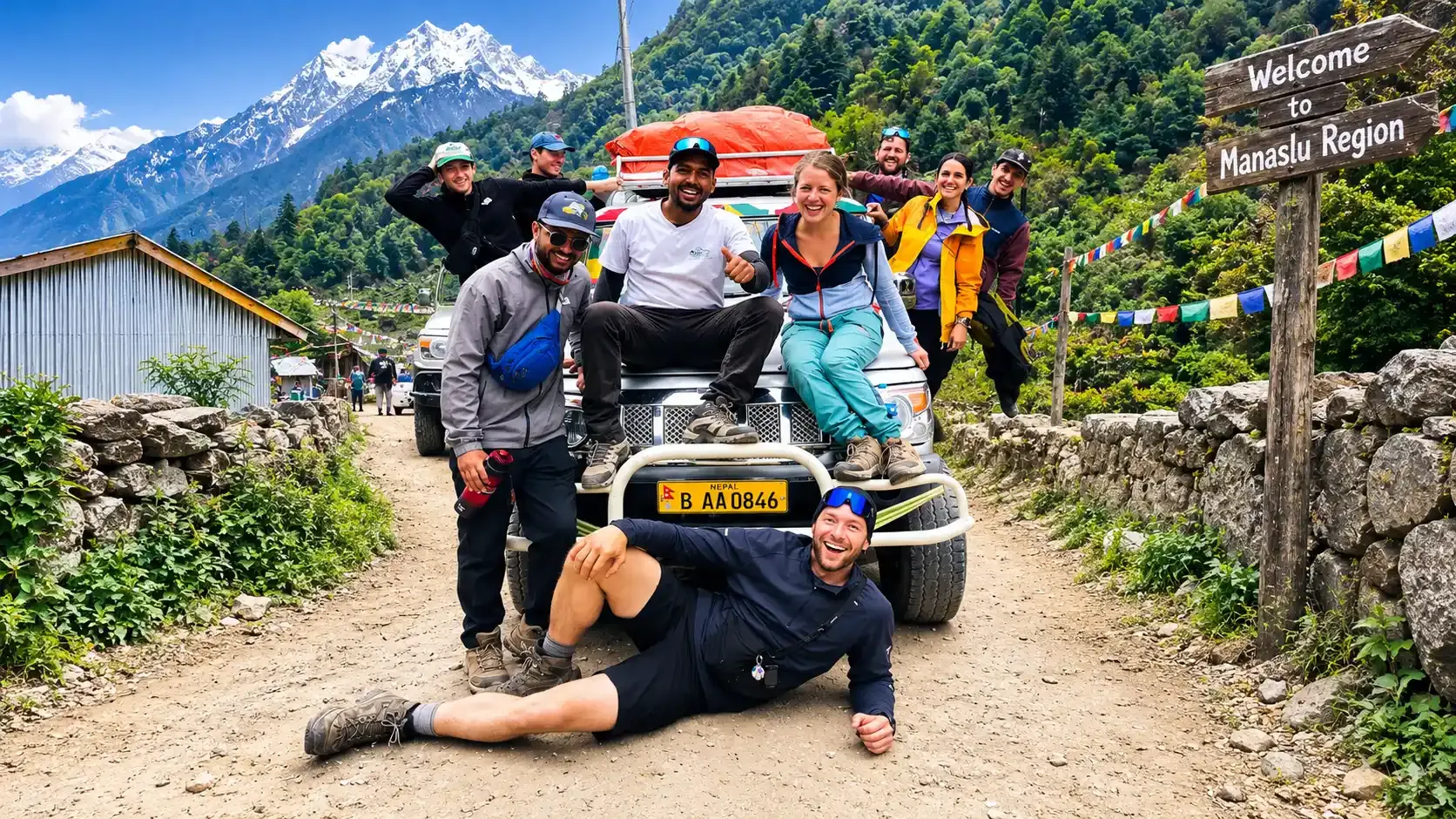
The Manaslu Circuit encircles Mt. Manaslu (8,163 m). It’s often called the “Annapurna Circuit of the West” – you climb through typical mid-hill villages, enter the hidden Buddhist region around Samagaon, and then face the big obstacle: the Larkya La Pass at 5,106 m. Crossing the pass gives a 360° Himalayan panorama including Manaslu and Annapurna I. The trek descends into the Marsyangdi (Annapurna) side, ending at Dharapani or Jagat.
October’s weather is usually stable here, so you get fantastic views of Manaslu’s towering north face. It’s a logistically tougher trek: permits are expensive and rules strict (you need a registered guide and 2 trekkers). But the reward is a quieter trail and high alpine scenery. Lodges are basic and fewer, but exist along the whole route. Typical cost is $1,500–$3,000 with guide/permits included.
“Larkya La stands at the height of 5,106 meters above sea level.” – this high pass is the heart of the Manaslu Circuit trek.

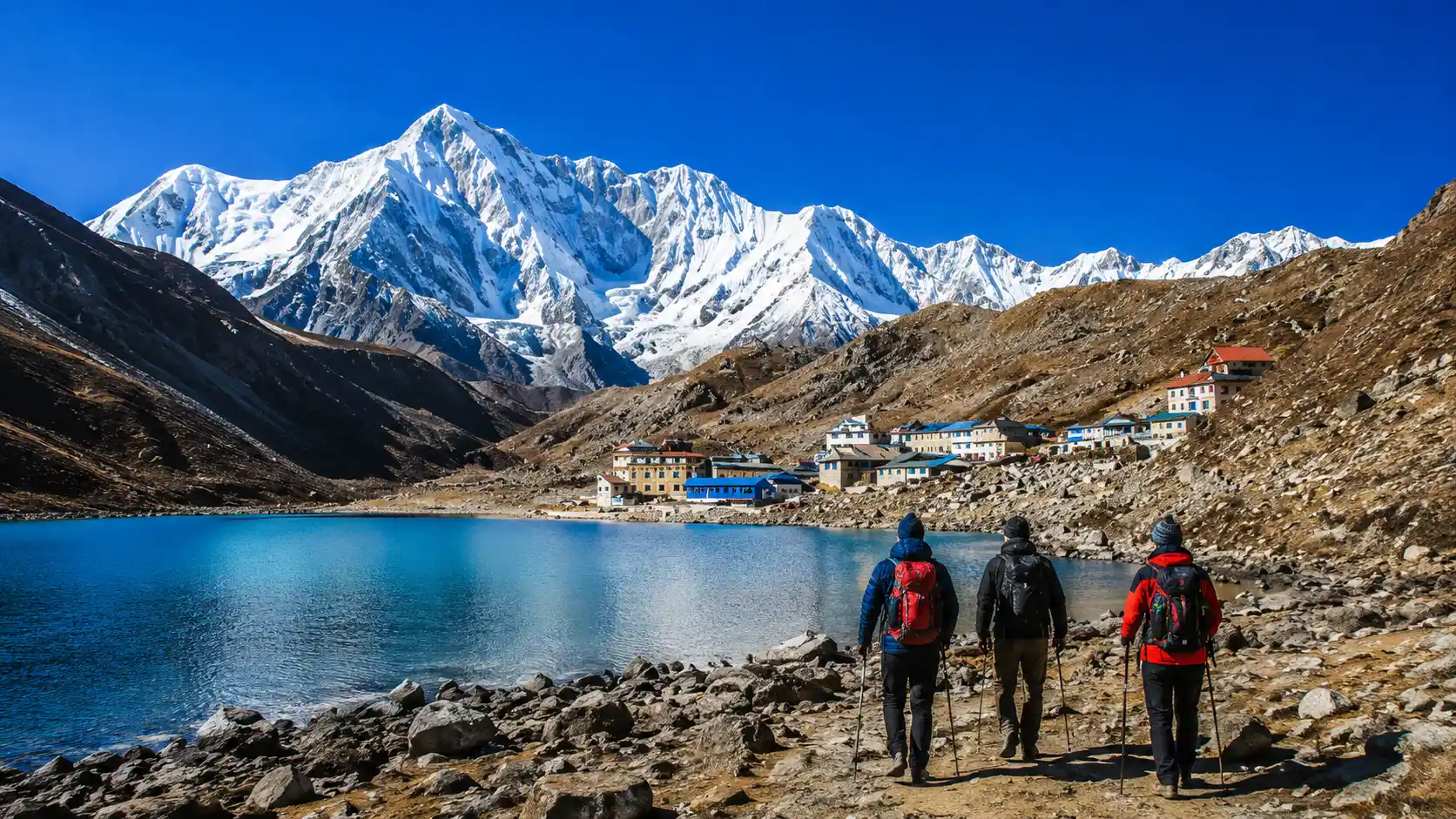
7. Gokyo Lakes Trek in October
- Difficulty: Moderate to Challenging
- Max Altitude: 5,360 m (Renjo La Pass or Gokyo Ri summit) (The Gokyo Ri viewpoint itself is around 5,360 m).
- Best For: Photographers and nature lovers who want Everest views off the beaten path. It’s an alternative to EBC that climbs to lakes and a high pass.
- Permits: Sagarmatha National Park + Khumbu Trekking Permit (same as EBC).
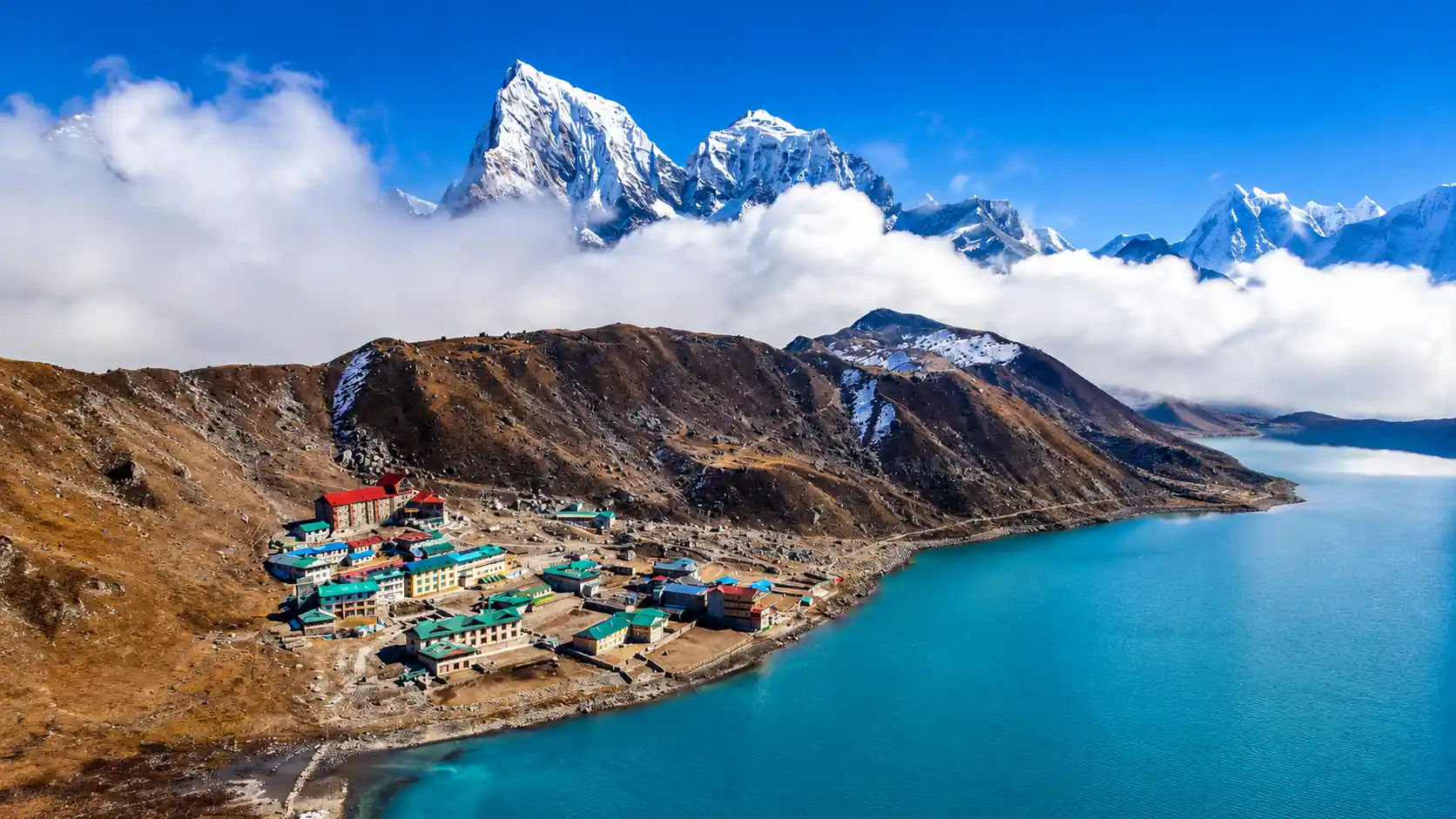
This trek follows most of the EBC route up to Namche Bazaar, but then heads west up to the holy Gokyo Lakes. From the village of Gokyo (4,750 m) you do a sunrise hike to Gokyo Ri (~5,360 m) for sweeping views of Everest, Cho Oyu, Lhotse, and the turquoise lakes below. You can also add Renjo La Pass (5,360 m) to loop back to the main EBC trail.
October weather means the lake system is mirror-still and free of haze – perfect for photography. The trail is less crowded than the EBC trail, so you often have those views mostly to yourself. Teahouses are available in the main villages (with extra rooms for trekkers). Expect to pay similar permits as EBC (about $50 total) for Sagarmatha NP and local fees.
8. Mardi Himal Trek in October
- Difficulty: Moderate to Challenging (steep at higher sections)
- Max Altitude: ~4,500 m (Mardi Himal viewpoint above Forest Camp) (Not a huge pass.)
- Best For: Hikers who have only a few days and want a direct view of Machapuchare (Fishtail). It’s quiet and less-trod compared to the main Annapurna routes.
- Permits: Annapurna Conservation Area Permit (NPR 3,000) + TIMS (USD 40).
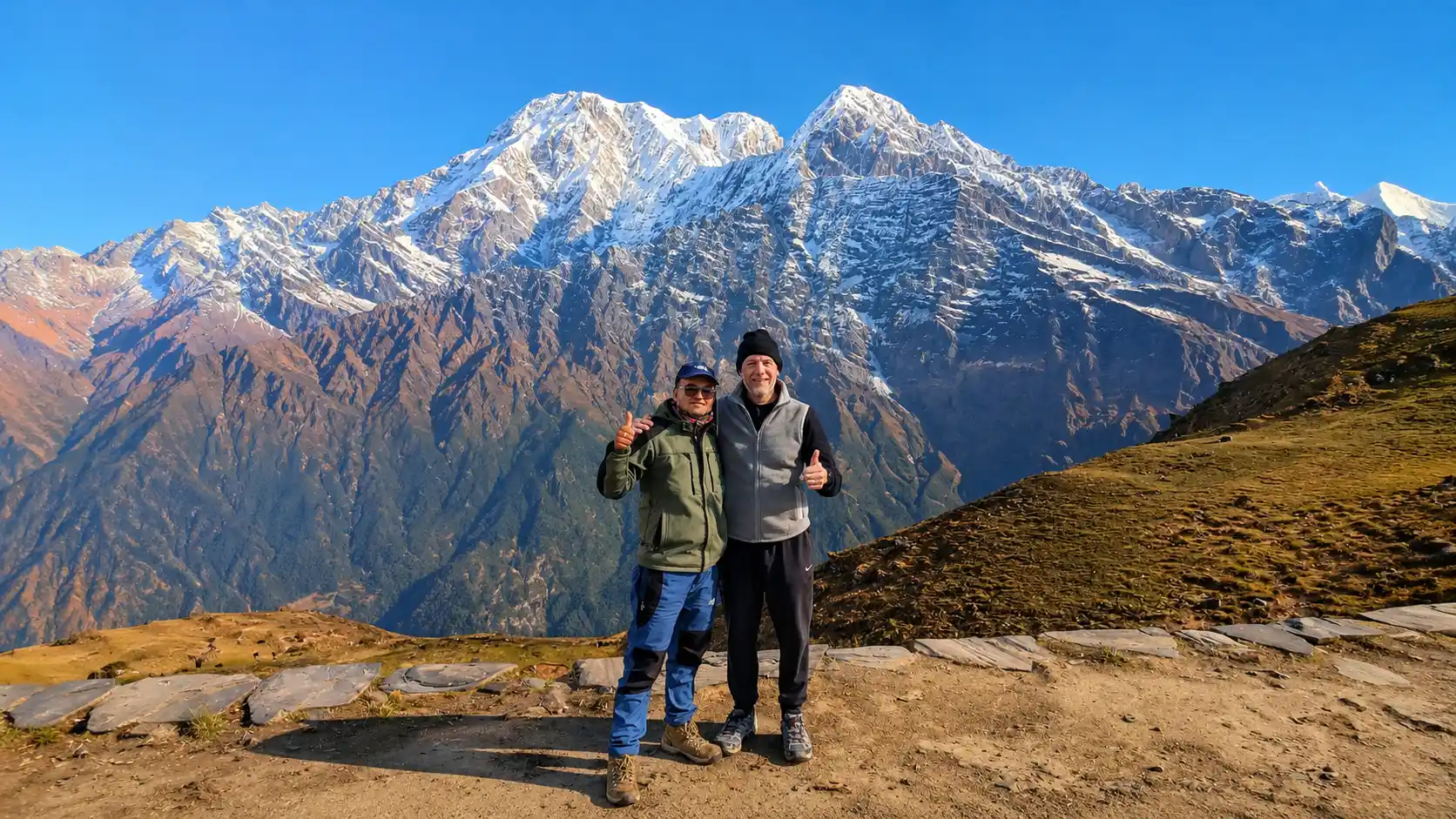
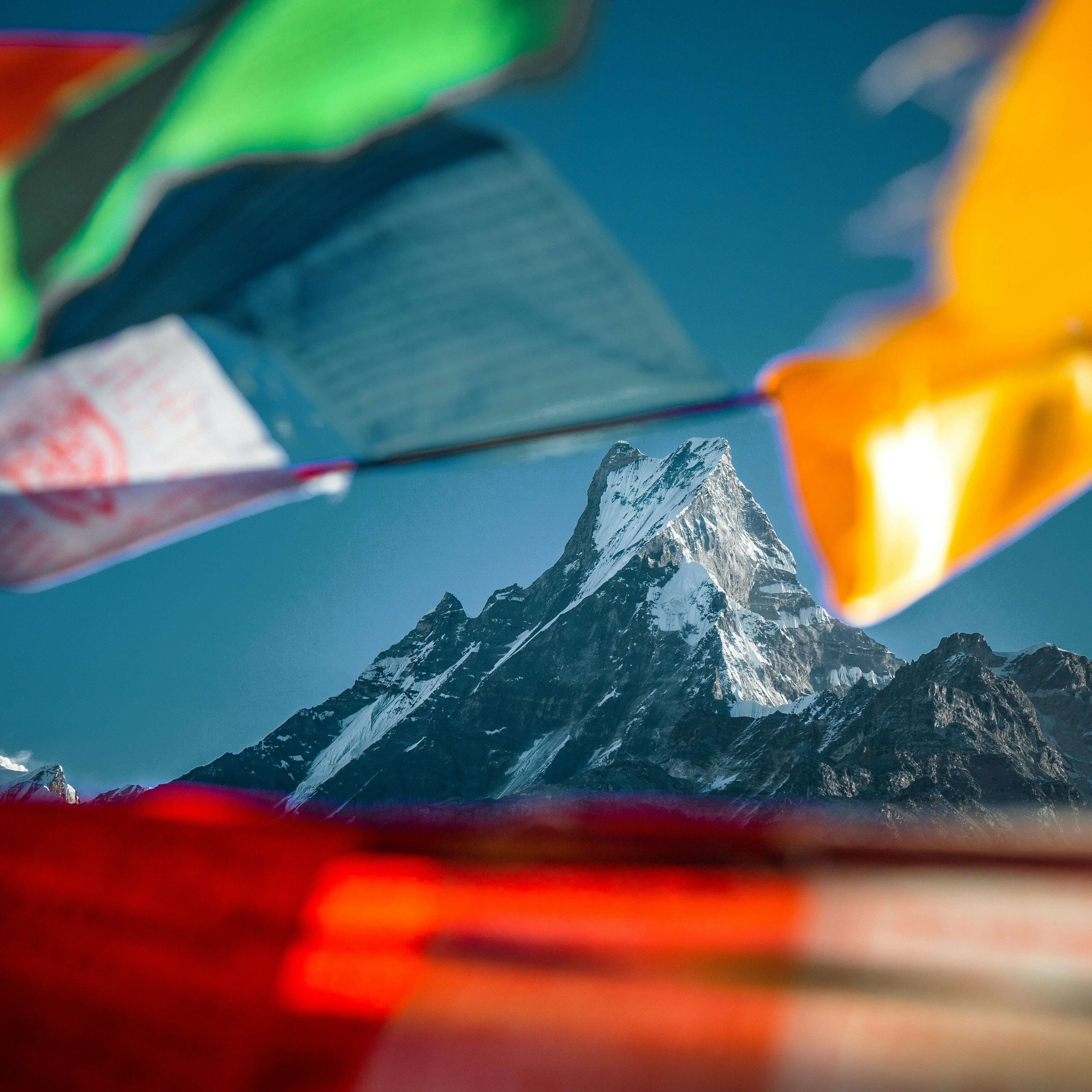
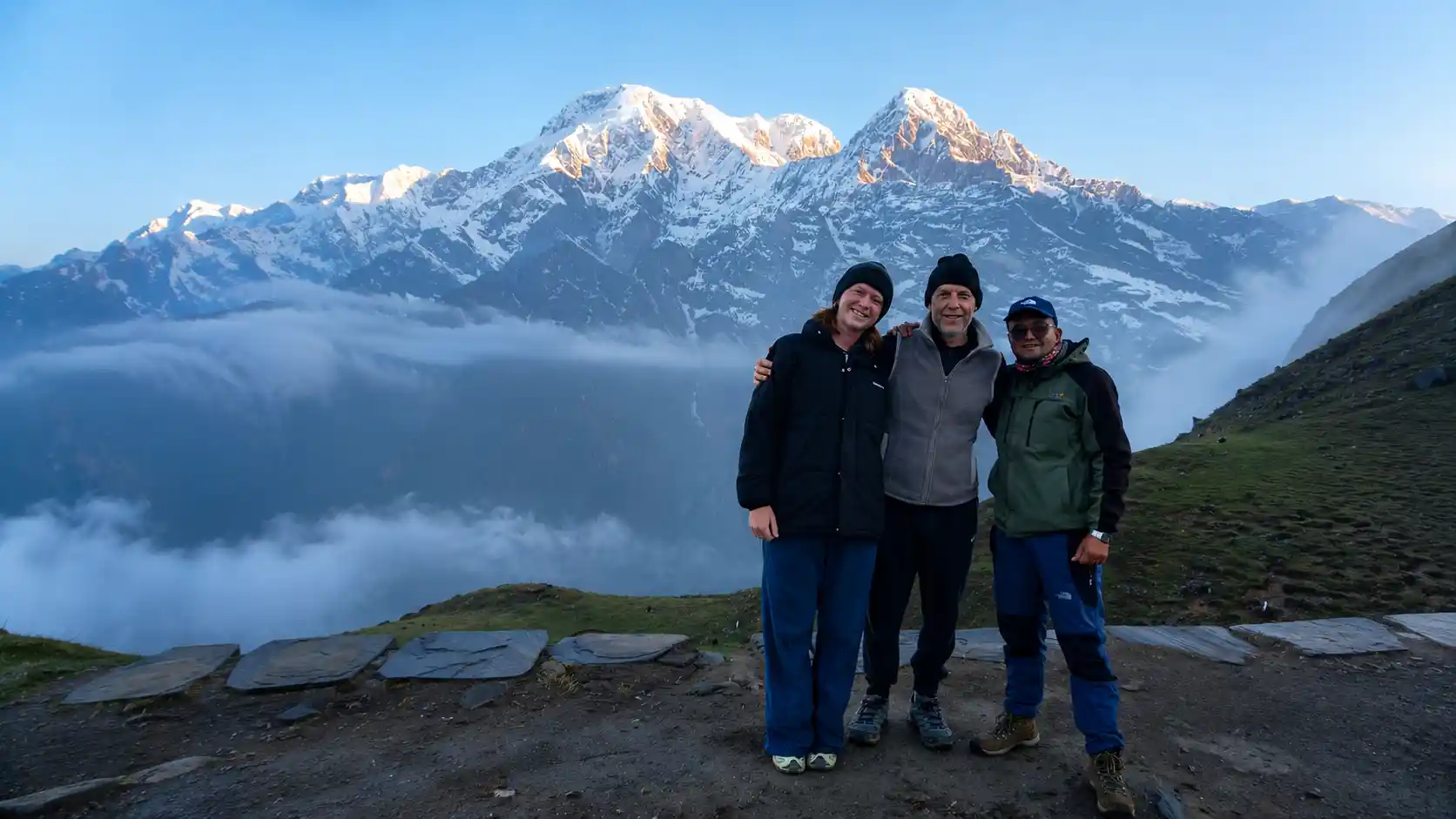
A branch off the Annapurna circuit near Ghandruk, the Mardi Himal trek goes through rhododendron forest into alpine meadows and a high camp, ending at Mardi Himal Base Camp viewpoint. From there, the sunrise views of the Annapurna range and Fishtail are unbelievable. The trail is steep in places, but it’s a very scenic 5–6 day trek. In October the forests are in peak bloom and the days are dry. Accommodation is more basic (a few new teahouses) and the route is quiet, so you’ll enjoy solitude. Permit fees are low (ACAP as above) and it’s quite affordable.
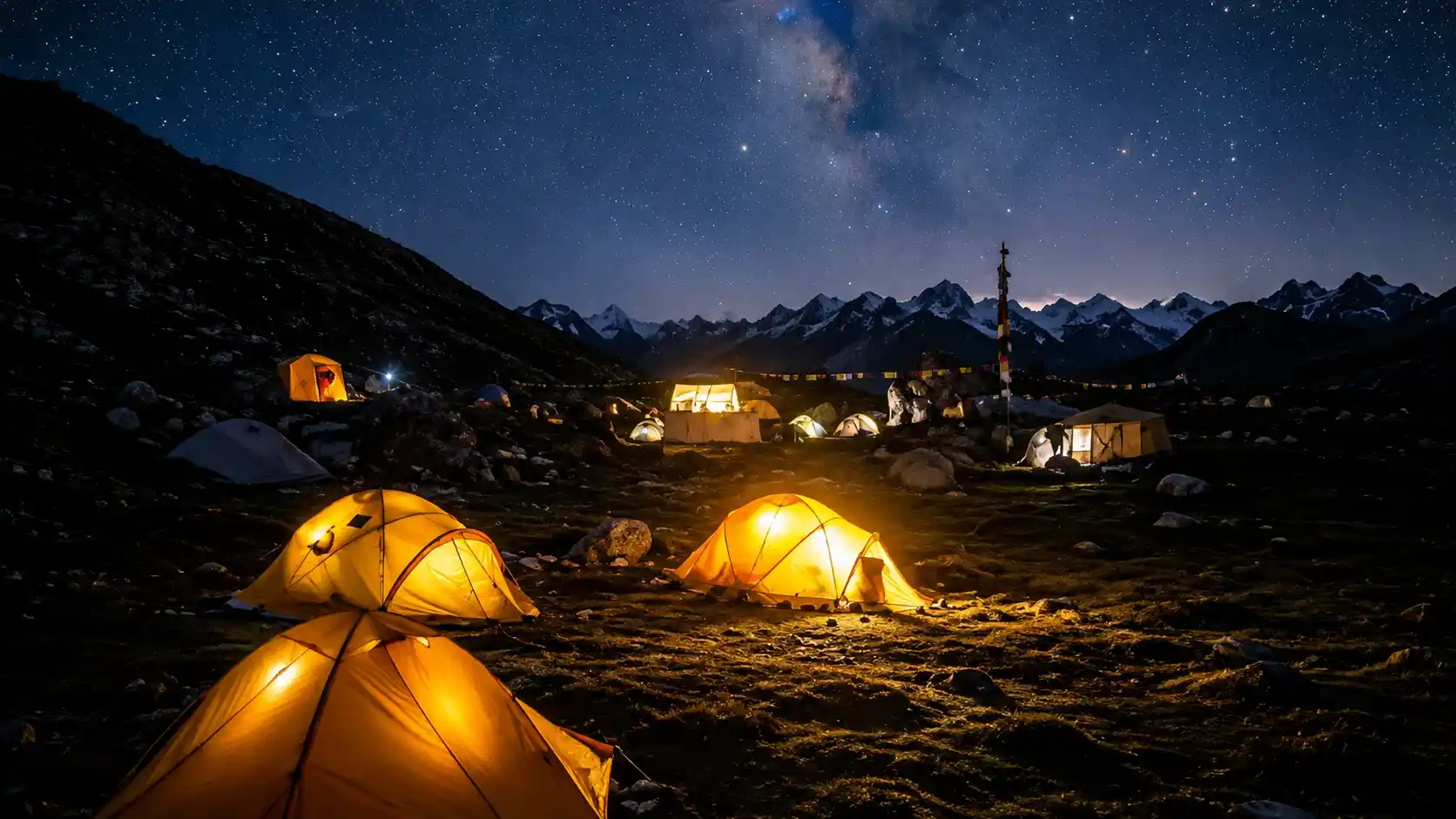
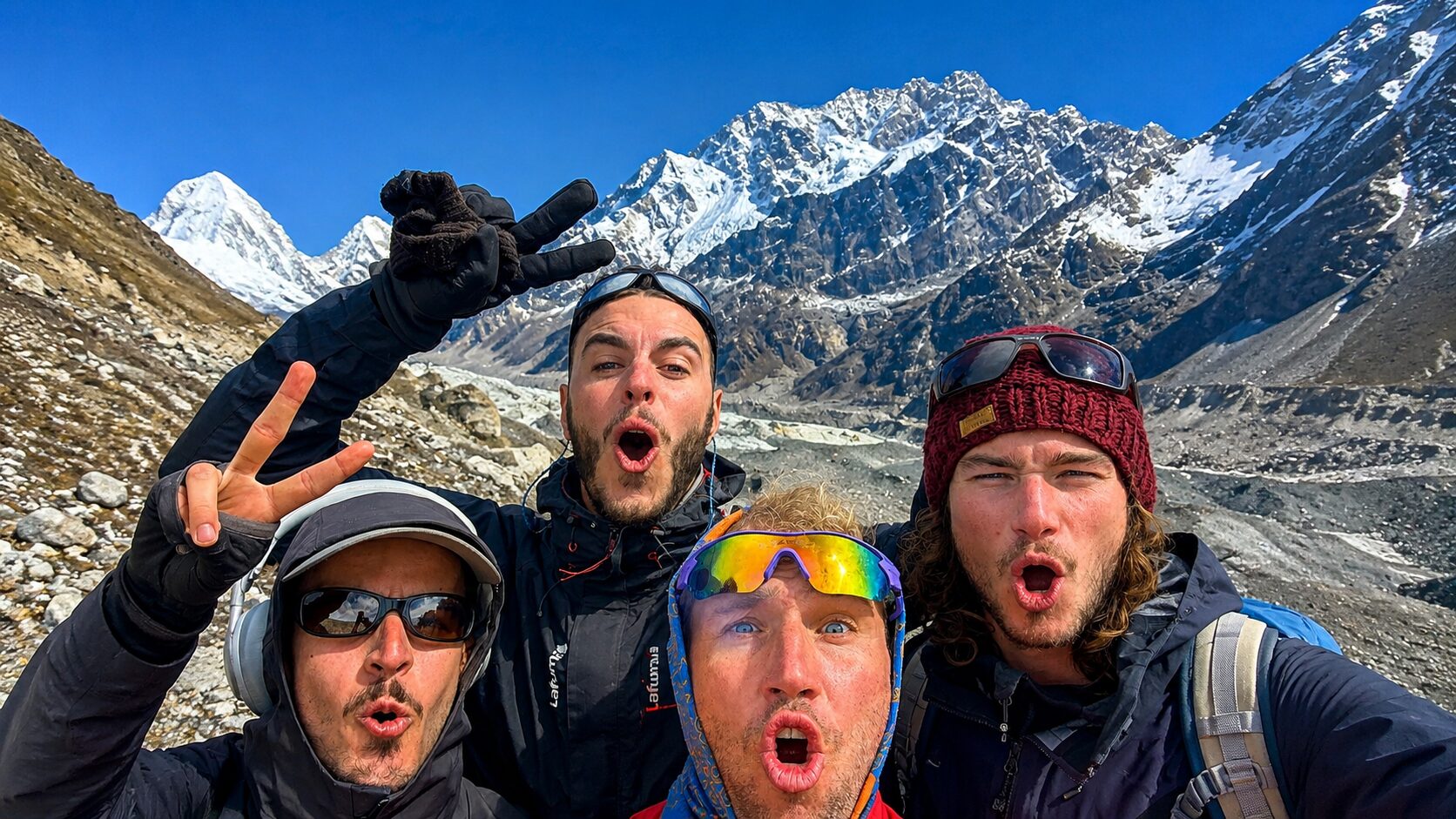
9. Kanchenjunga Trek in October
- Difficulty: Moderate to Challenging (long days, altitude)
- Max Altitude: ~5,300 m (Kanchanjunga South Base Camp)
- Best For: Hardcore adventurers. It’s remote, less-visited, and culturally Tibetan. Not for the faint-hearted, but the views of Kanchenjunga (8,586 m, world’s 3rd highest) are staggering.
- Permits: Kanchenjunga Conservation Area Permit (~NPR 2,000 / ~$15) plus special Restricted Area Permit (around $95 total for 4+ weeks).
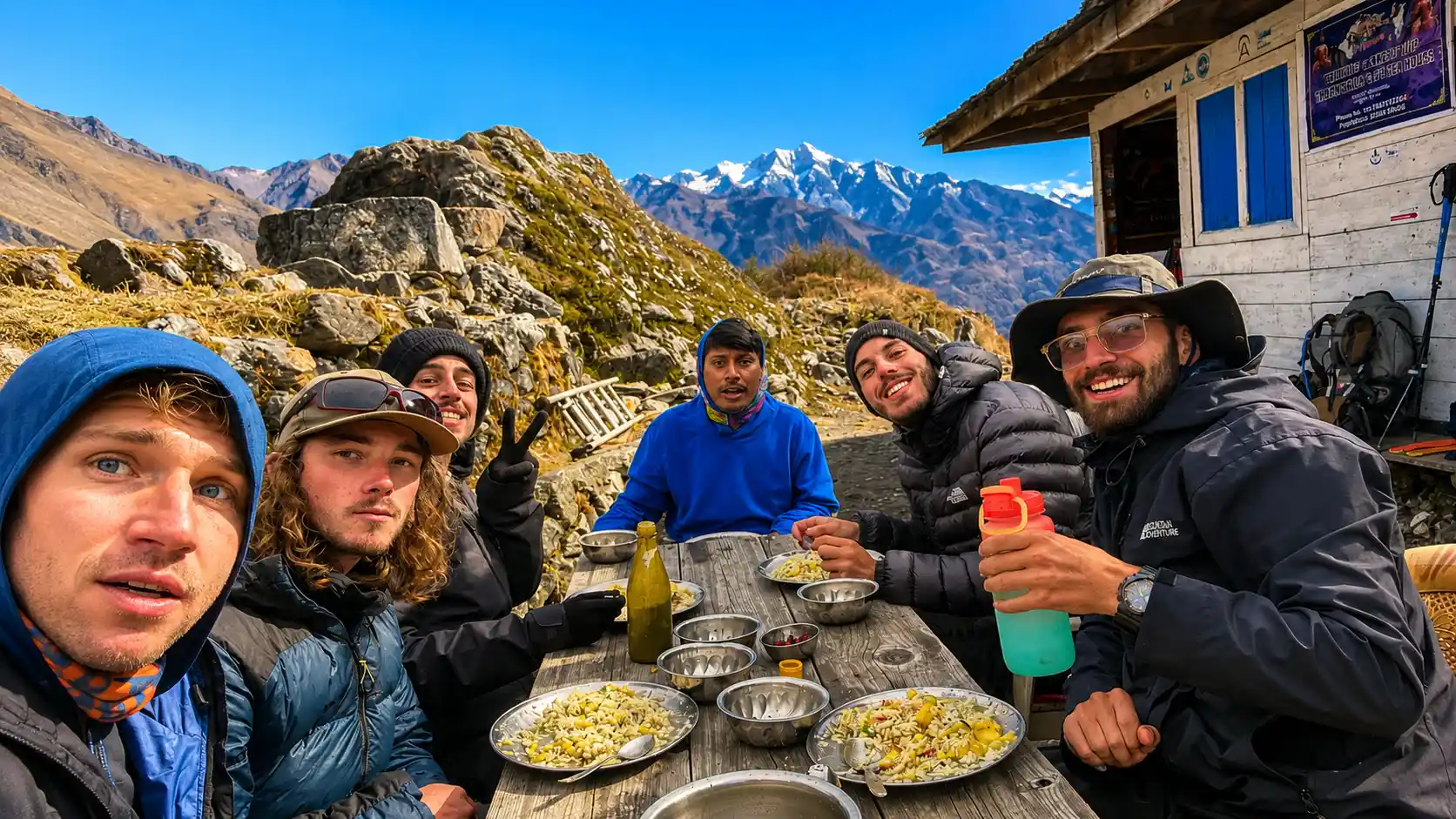
The classic Kanchenjunga trek goes through lush tea-garden valleys (Kangchenjunga’s south side), into rhododendron forests, then passes two high camps (South Base Camp and North Base Camp) surrounded by Kanchenjunga’s giant faces. October means excellent views of those jagged snow peaks and very clear skies. The trail is very steep and less maintained; you’ll see very few other trekkers. Villages like Ghunsa and Mhyam are very traditional. Permit costs are higher than other treks because Kanchenjunga is protected: the Conservation Area fee plus a restricted-area charge, but the isolation and scenery make it worthwhile for serious trekkers. This trek takes ~3–4 weeks.
10. Poon Hill Trek in October
- Difficulty: Easy to Moderate
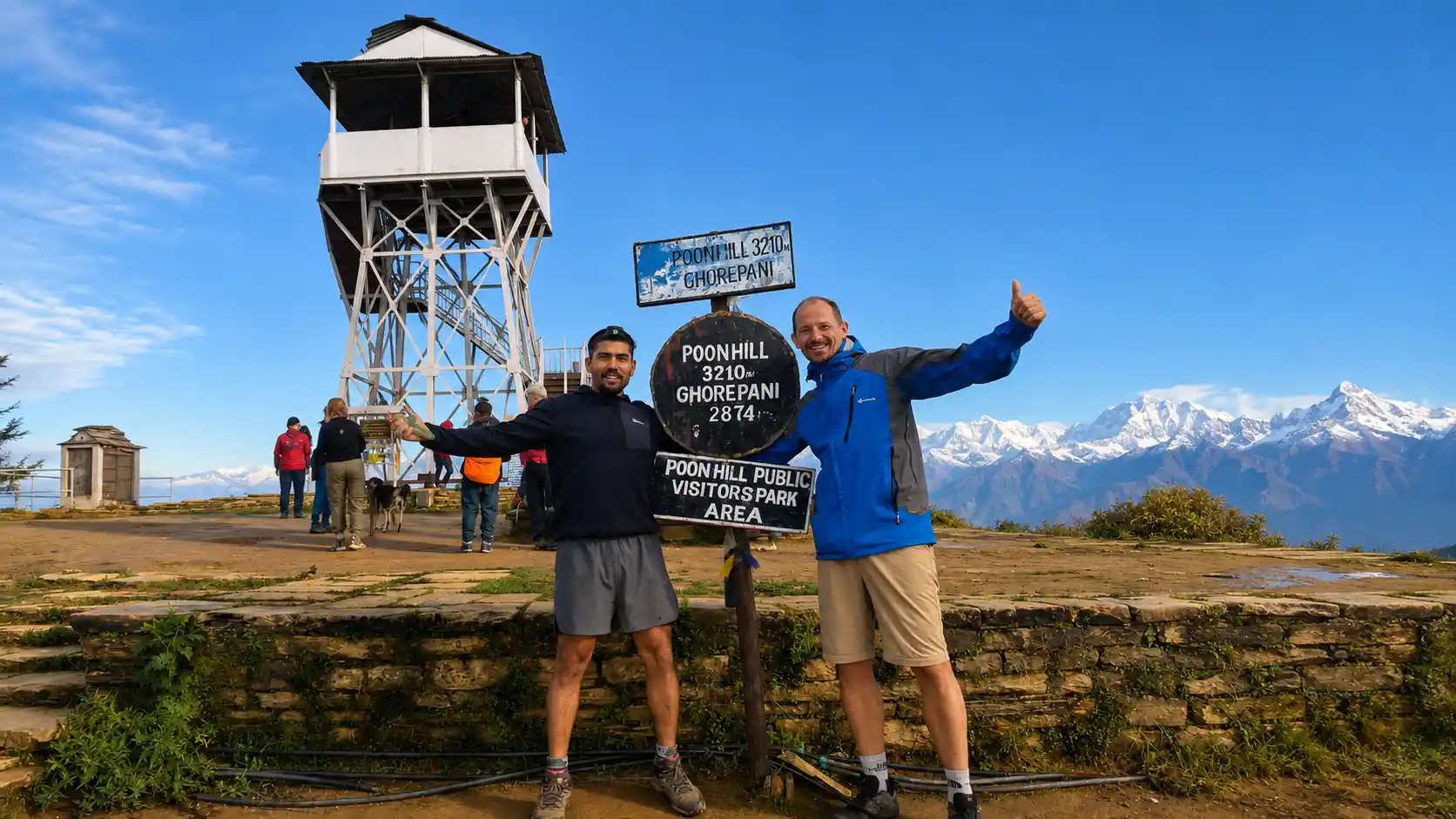
- Max Altitude: 3,210 m (Poon Hill).
- Best For: Families, beginners, short-time hikers. A classic sunrise viewpoint trek with views of Annapurna and Dhaulagiri.
- Permits: Annapurna Conservation Area Permit (NPR 3,000) – same ACAP as Circuit (no extra passes needed, since it’s in Annapurna region).
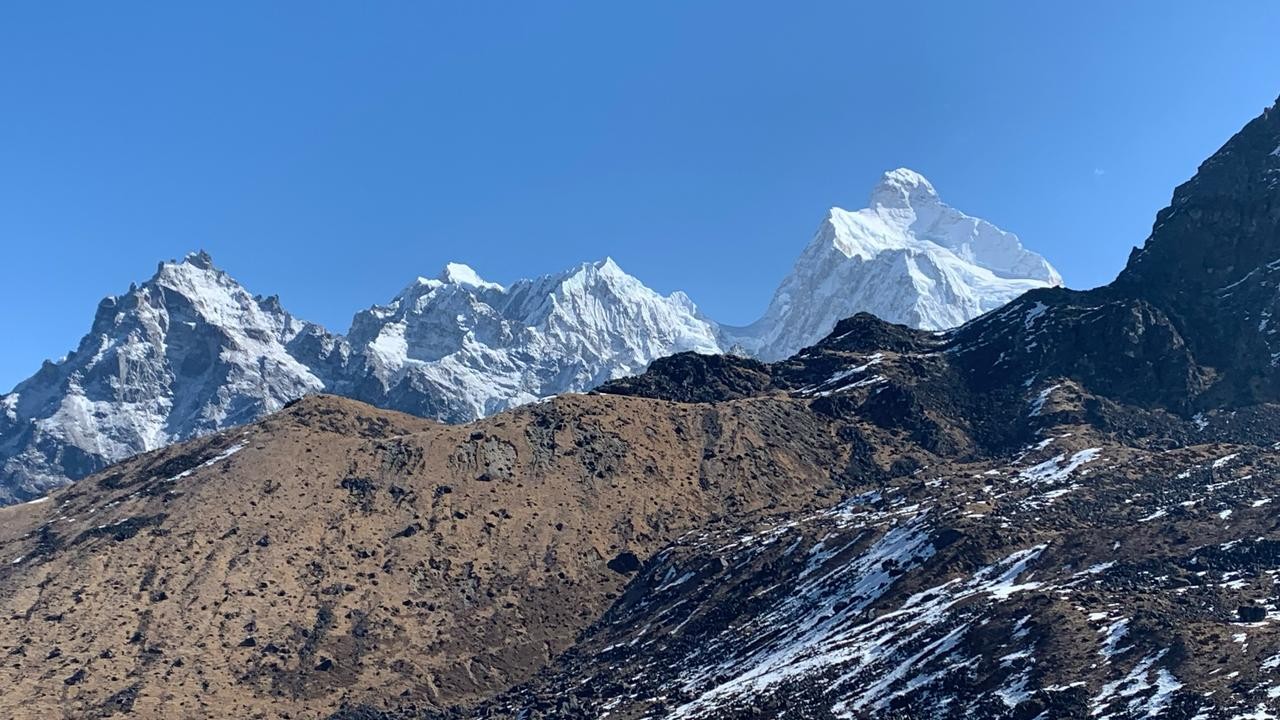
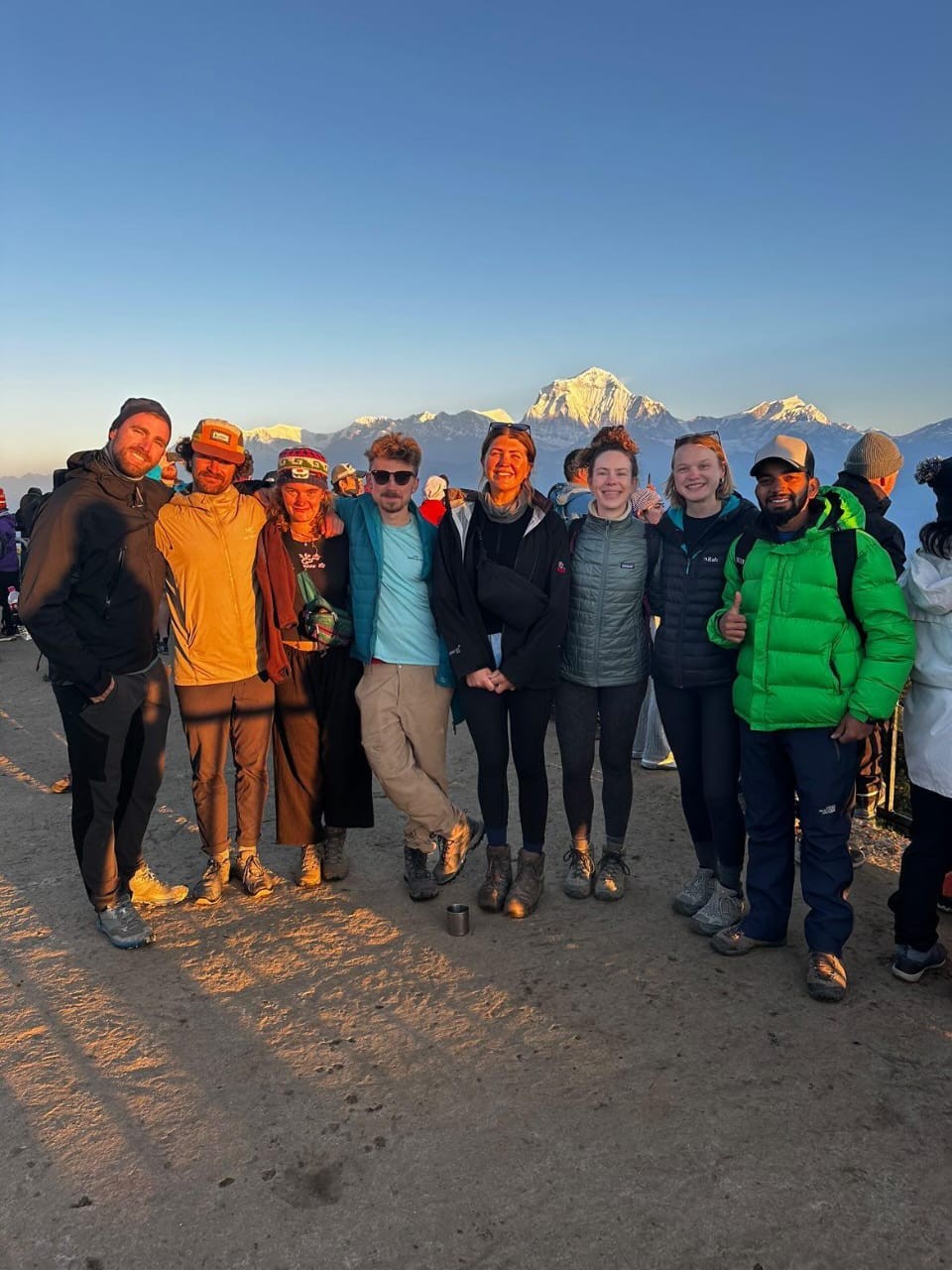
The Ghorepani–Poon Hill trek is a 4–5 day circuit near Pokhara. You hike through terraced farms and forests to the village of Ghorepani (2,860 m). The big attraction is hiking 30 minutes further up to Poon Hill (3,210 m) just before dawn, to watch the sunrise light up Annapurna I (8,091 m), Dhaulagiri (8,167 m) and several other peaks. The reward is a front-row seat to the Himalaya’s grandeur on a very short trek. October brings a clear view and fewer mosquitoes than in spring. Teahouses line the route. It’s perfect for those with only a week or less; many trekkers even do it as a quick getaway from Pokhara.
“Poon Hill elevation: 3,210 m” – a small peak that offers massive panoramic mountain views.
How to Choose the Right Trek for You in October
Here are some quick guides to match the trek to your fitness, time, and style:
1.By Fitness Level:
- Beginner/Low: Annapurna Base Camp (shorter days, max 4,130 m), Poon Hill (max 3,210 m) – both are manageable for new trekkers. Langtang is also moderate.
- Moderate: Gokyo Lakes (some high altitude), Mardi Himal, and Upper Mustang (strenuous days but no super-high passes). Annapurna Circuit (long days) and Manaslu (steep, required guide) are tougher but doable if fit.
- Advanced: Everest Base Camp + Kala Patthar, full Annapurna Circuit (Thorong La), Manaslu Circuit – all have sustained altitude and long days. Kanchenjunga is for very experienced groups only.
2.By Time Available:
- 5–7 days: Poon Hill, Langtang Valley (usually a 5–7 day round trip) or short Gokyo variants (just Gokyo Lakes without a pass).
- 8–12 days: Annapurna Base Camp, Gokyo Lakes (via Renjo La), Mardi Himal, or an extended Langtang with Gosainkunda.
- 13–21 days: Everest Base Camp, Annapurna Circuit (full), Manaslu Circuit, Upper Mustang (11 days in Mustang alone, 14+ total with approach). Kanchenjunga requires 3+ weeks.
3.By Budget:
- Budget ($500–$1,000): Langtang, Annapurna Base Camp (self-guided, no costly permits beyond ACAP/TIMS), Manaslu 13 days (permit + guide).
- Mid-range ($1,000–$2,500): EBC (group tour), Annapurna Circuit, Manaslu 16 days, Gokyo Lakes.
- Luxury ($2,500+): Upper Mustang (special permits + lodges), or EBC with premium lodges and helicopter options.
4.By Travel Style:
- Solo Adventurer: Langtang, Annapurna Circuit (well-marked, safe).
- Culture Lover: Upper Mustang (Tibetan culture), Langtang (Tamang villages), Annapurna Circuit (migratory monks).
- Photography/Nature: Gokyo Lakes (mountain reflections), ABC (dense variety), Langtang (flora, fauna).
- Group/Family: ABC, Langtang (shorter and lower), Mardi Himal (short).
- Luxury Traveler: Upper Mustang (expensive region), EBC with luxury tent lodges or helicopter in/out, Annapurna with lodge+road jeep options.
Think about how many days you have, how high your tolerance for altitude is, and what kind of scenery you crave. For example, if you have only a week and want epic views with no extreme altitude, Poon Hill or Annapurna Base Camp might be best. If you have lots of time and want a challenge with culture, Manaslu or Kanchenjunga could be it. Match your goals to the trek profiles above!
Weather in Nepal in October
October is one of Nepal’s best trekking months, with generally clear skies, low rainfall, and comfortable daytime conditions. Higher-altitude routes become colder, especially at night and around mountain passes.
| Trek | Typical October daytime temperature | Coldest overnight conditions | Typical weather | Rainfall | Overall |
| Everest Base Camp | 10°C to 15°C at lower and mid-altitudes; 2°C to 6°C near Gorak Shep | -10°C to -5°C at high altitude | Clear mornings, sunny days, cold and windy higher up | Very low | Excellent |
| Annapurna Circuit | 13°C to 18°C on lower trails; 8°C to 14°C around Manang | -10°C to -5°C near Thorong Phedi or the pass | Mostly dry and stable; cold around Thorong La | Very low | Excellent |
| Annapurna Base Camp | 12°C to 18°C on lower trails; 5°C to 9°C at ABC | -5°C to -10°C at ABC and MBC | Clear, pleasant walking weather; cold nights in the Sanctuary | Low | Excellent |
| Langtang Valley | 9°C to 13°C around Kyanjin Gompa | -5°C to 0°C at higher stops | Generally dry, clear, and crisp | Low | Excellent |
| Upper Mustang | 12°C to 16°C around Lo Manthang | 0°C to 5°C | Dry, sunny, and often windy; rain-shadow conditions | Very low | Excellent |
| Manaslu Circuit | 10°C to 14°C around Samagaun | -10°C to -5°C near Dharamsala/Larkya Phedi | Stable weather, clear views, very cold near Larkya La | Low | Excellent |
| Gokyo Lakes | 6°C to 12°C at Gokyo; warmer at lower elevations | -10°C to -5°C | Clear and sunny by day; cold, windy conditions near Gokyo Ri | Very low | Excellent |
| Mardi Himal | 10°C to 16°C on lower trails; 5°C to 10°C near High Camp | -5°C to 0°C near High Camp | Clear mornings and pleasant days; occasional cloud later in the day | Low | Excellent |
| Kanchenjunga | 10°C to 16°C on lower trails; 6°C to 10°C at higher camps | -10°C to -15°C near Pangpema and other high camps | Clear and dry overall, with a growing chance of high-altitude snow late in the month | Low | Very good to excellent |
| Poon Hill | 10°C to 14°C around Ghorepani | 0°C to 5°C in Ghorepani; around -3°C at Poon Hill before sunrise | Clear, pleasant, and ideal for mountain views | Very low | Excellent |
Packing List for Nepal in October
Trekking in October means layers. Days are warm, nights are cold. Here’s what I pack for a typical trek:
- Clothing Essentials: Moisture-wicking base layers (thermal tops/bottoms), a warm fleece mid-layer, and a down jacket (essential above ~3,500 m). Trekking pants (2 pairs), plus a light wind/rain shell (it’s rarely rainy, but handy if the weather turns). Warm hat, gloves, and a neck gaiter or buff for mornings/evenings. Trekking socks (several pairs – at least 3–4 per week of trek). Gaiters are optional but nice for dusty or snowy sections.
- Footwear: Waterproof, broken-in hiking boots (the trails can be dusty or muddy early season). You’ll also want comfortable sandals or flip-flops for sitting around the lodge after a day’s hike. Don’t skip trekking poles – they save your knees, especially on long descents!
- Gear & Tech: A good 45–65 L backpack. hydration bladder . A power bank for charging phones/cameras. Sunglasses, sunscreen, and a warm sleeping bag (rated to -15°C or lower for sleeping in the mountains). Also bring a basic first aid kit (blister care, painkillers, etc.) and altitude medication if you use it.
- Documents & Permits: Keep your passport (with necessary Nepal tourist visa) safe. Bring tim and permit paperwork copies. I always carry printouts of my permit receipts (ACAP, TIMS, etc.). Also pack travel insurance documents (make sure it covers high-altitude trekking and helicopter rescue). Write down emergency contact numbers (your embassy, travel insurer, and home contact) on paper too – phones can die.
Be prepared for temperature swings. In Kathmandu/Pokhara during the day it can feel warm (20°C+), but always have layers ready once you leave the lowlands. And definitely hydrate and carry snacks – October’s sun is intense at altitude, so high energy snacks and plenty of water are key to enjoying those long trail days safely.
Permits and Costs — What You’ll Actually Pay in October
Nepal’s trekking permits can be confusing. Here’s a breakdown of the main permits for each trek, and their approximate costs (in late 2020s USD):
| Trek | Permits required | Estimated permit cost |
| Everest Base Camp | Sagarmatha National Park entry permit + Khumbu Pasang Lhamu Rural Municipality permit + TIMS card | NPR 8,000 (about US$60) |
| Gokyo Lakes | Sagarmatha National Park entry permit + Khumbu Pasang Lhamu Rural Municipality permit + TIMS card | NPR 8,000 (about US$60) |
| Annapurna Circuit | Annapurna Conservation Area Permit (ACAP) + TIMS card | NPR 5,000 (about US$37) |
| Annapurna Base Camp | ACAP + TIMS card | NPR 5,000 (about US$37) |
| Mardi Himal | ACAP + TIMS card | NPR 5,000 (about US$37) |
| Poon Hill | ACAP + TIMS card | NPR 5,000 (about US$37) |
| Langtang Valley | Langtang National Park entry permit + TIMS card | NPR 5,000 (about US$37) |
| Upper Mustang | Upper Mustang Restricted Area Permit + ACAP + TIMS card | From about US$537 for 10 days |
| Manaslu Circuit | Manaslu Restricted Area Permit + Manaslu Conservation Area Permit (MCAP) + ACAP + TIMS card | From about US$160 for 7 days |
| Kanchenjunga | Kanchenjunga Conservation Area Permit (KCAP) + Restricted Area Permit + TIMS card | From about US$50+, depending on trip length |
Keep in mind these are permit fees alone. Daily costs on trek (tea-houses, food) can run ~$25–$40 per day per person on average (cheaper if you eat dal-bhat and share rooms, pricier in remote areas like Mustang or Manaslu). Internal flights (Kathmandu–Lukla, Jomsom, etc.) are extra and surge in peak season. A good rule: budget $30–$50 per day all-inclusive for midrange trekking. Guided group treks will also add agency fees and tips.
Important Safety Tips for Trekking in Nepal in October
- Altitude Sickness (AMS): October treks often reach 5,000 m. Altitude sickness can strike anyone, even experienced hikers. Prevent it by ascending slowly: follow the rule of thumb to not climb more than 300–500 m per day above 3,000 m and take rest days to acclimatize. If you feel mild headache or nausea, slow down or rest – that often prevents worse symptoms. Remember: the only “cure” for AMS is to descend. Carry altitude medication (like acetazolamide) if prescribed, and always stay hydrated and well-fed.
- Travel Insurance: This is essential. Make sure your insurance covers helicopter rescue and high-altitude trekking. If you get seriously ill (AMS, injury) above 4,000 m, you’ll need costly evacuation. Insurance is not optional; it’s a lifesaver.
- Food and Water Safety: In October the water supply is usually okay, but don’t risk illness. Stick to boiled or treated water (many lodges sell purified bottles, or use tablets/filters). Eating too much local street food in Kathmandu before your trek can also upset your stomach. On the trail, eat hot meals (dal baht is safe) and keep fruit/veggies peeled or clean. Carry snacks (nuts, energy bars) so you have fuel between meals. Avoid ice cubes or uncooked salads at high altitude where sanitary conditions are basic.
By planning wisely (permits, packing, acclimatization) and respecting mountain safety, your October trek can be an unforgettable adventure, not an ordeal.
October vs. Other Months — Quick Comparison Table
| Factor | Mar–Apr (Spring) | Jun–Aug (Monsoon) | Sept | October | Nov–Dec |
| Weather | Good | Wet / Monsoon | Improving | Best | Cold |
| Visibility | Good | Poor | Variable | Excellent | Good |
| Crowds | High (peak Dashain too) | Low | Medium | High | Medium |
| Trail Conditions | Good | Wet/slippery | Clearing | Excellent (dry) | Dry/Cold |
| Festivals | Holi (Mar) | – | – | Dashain/Tihar | (Tihar or Christmas) |
| Overall Score | 8/10 (bloom, warm) | 4/10 (downpour) | 7/10 | 10/10 | 7/10 (cold, but clear) |
In short, October stands out: it has the clearest skies, excellent trail conditions and the fewest weather worries. Yes, it’s busy, but the payoff in views and comfort is unparalleled. Compared to March–April, October has no spring bloom but steadier skies. Compared to rainy summer, October is a complete 180° – dry and sunny. And unlike November–December, October’s days are warmer (late autumn) and teahouses are full-service (some high passes start closing later in winter).
Conclusion
October isn’t just a good time to trek in Nepal, it’s the month when the Himalayas truly shine. Clear blue skies, crisp mountain air, dry trails, and breathtaking views make every sunrise feel special.
From the legendary Everest Base Camp and challenging Manaslu Circuit to the cultural landscapes of Upper Mustang and beginner-friendly Poon Hill, there’s an October trek for every kind of adventurer.
The only catch? October is the peak season. Popular trails, flights, and teahouses can fill quickly, so plan ahead and choose a route that matches your fitness, time, budget, and altitude experience.
Pick your trail, pack your layers, and get ready to watch the Himalayas turn golden at sunrise. October could be the month you remember for a lifetime.
More Trekking Guides by Month
- Trekking in Nepal in November
- Trekking in Nepal in Septenber
Reviews


Himalaya Hub Adventure executive director Ramesh gave us all the necessary in...
Himalaya Hub Adventure executive director Ramesh gave us all the necessary information to make our holiday really special and memorable. He attended to all our needs and gave a highly competitive quote. He provided us excellent vehicles and drivers and guide.
We set out from Kathmandu by road and visited Manakamana temple on the way to Pokhara. After a day of sightseeing in Pokhara including watching sunrise from Sarangkot viewpoint, we took next day early morning public bus to Ghandruk from where started our trek towards Tadapani . It is an ancient trade route and gives really memorable and special experiences but unfortunately we had continuous rain from the moment we started the trekking. Due to the clouds we missed the beautiful views of Himalayas which this trekking route is really famous for. We also spent some tense time in Tatopani due to the landslides along Kali Gandaki river where our guide took some excellent decisions to keep us safe.
Overall it was a great experience.
Ramit is a very good guide - very caring, knowledgeable, and always making sure I was safe and comfortable. He managed everything perfectly from hotels to food to permits. The only downside was the weather. Because of heavy rain, we couldn't see the good views from Ghorepani/Poon Hill and the trail became quite slippery and dangerous in some parts. But that's nature, nothing anyone can control, and he handled it very professionally and kept me safe. He took excellent decisions when faced with challenges posed by extreme weather conditions such as choosing a hotel accommodation at higher ground to keep us in safety in case of a flood and landslide. He sought required information for taking decisions regarding our trekking progress in difficult weather. He tested the path for safe crossing to minimise the risks that we were exposed to. He listened to our special needs and requirements and tried his best to meet with them such as ensuite accommodation, hot water, vegetarian food etc. His choice of teahouses and hotels were excellent.
Highly recommend Himalaya Hub Adventures for Nepal holiday packages.
Highly recommend Ramit Surkheti for anyone planning to trek in Nepal.

This tour is in the Himalayan hills and is relatively easy (ave. 6 hrs trekking per day). Lovely village sceneries, see Nepali agriculture, walks through the jungle and stiff climbs sometimes. 💪🏽
Communication with Puru of Himalaya Hub Adventures to book the tour and get all the details was very smooth.
Highly recommended!

From the morning pickup, bus transport, and hotel in Pokhara, through each day of trekking and our return to Kath...
From the morning pickup, bus transport, and hotel in Pokhara, through each day of trekking and our return to Kathmandu, everything was taken care of seemlessly.
Their well trained guide/porter Karan made every effort to see that we had a great experience.
This was our second time using Himalaya Hub, we had an excellent Everest Base Camp trek with them in 2018, so naturally they were our first choice when we arrived in Kathmandu this year.


Kind thanks from Julie and Ida, we will always remember🙏🏼


A huge thank you to our guides, Rosha...
A huge thank you to our guides, Roshan and Bipin, who were outstanding—professional, knowledgeable, kind, and went above and beyond to make sure everyone felt safe, comfortable, and well looked after. Roshan was especially organised at the guesthouses and meal times, quickly getting us settled in after each day’s trekking and clearly explaining the plan for the next day.
I also have a severe nut allergy, which Roshan managed with great care throughout the trek, something I really appreciated.
If you’re considering trekking in Nepal, I couldn’t recommend Himalaya Hub Adventure highly enough.









FAQs
Is October a good time to trek in Nepal?
Yes. October is one of the best months for trekking in Nepal, with generally clear skies, low rainfall, comfortable daytime conditions, and excellent mountain visibility.
What is the weather like in Nepal in October?
October is generally dry and clear after the monsoon. Daytime temperatures are comfortable, while nights and early mornings become much colder at higher elevations.
Which is the best trek in Nepal in October?
Everest Base Camp, Annapurna Circuit, Annapurna Base Camp, Langtang Valley, Manaslu Circuit, Gokyo Lakes, Mardi Himal, Upper Mustang, Kanchenjunga, and Poon Hill are all excellent October options. The best trek depends on your fitness, time, budget, and trekking goals.
What temperature can I expect while trekking in Nepal in October?
Temperatures vary by altitude and trekking region. Lower areas can be warm during the day, while high-altitude routes can fall below freezing at night. Your October weather chart provides approximate temperature ranges for each major trek.
Is October a busy month for trekking in Nepal?
Yes. October is a peak trekking month, so popular routes such as Everest Base Camp and Annapurna can be crowded. Flights and teahouse accommodation can also fill up quickly, so booking early is recommended.
2 Comments