28Oct
Annapurna Circuit Trek 21 Days
18 spaces open
USD $1,560USD $1,1001 traveller - USD $1,100 each



















21 Days
Daily Tour
18 people
English
Annapurna circuit trek is prominently considered to be the classic trekking trail in the second most popular trekking trail in, Annapurna region in Nepal. Most importantly, Annapurna circuit is also known as round Annapurna or Annapurna Circle.
You will land at Tribhuvan International Airport in Kathmandu. A HimalayanHub driver will meet you with a sign showing your name. The driver helps you collect your bags and takes you to the hotel. The drive takes about 30 minutes through busy city streets with cars, motorcycles, and people everywhere.
Kathmandu is a lively city with temples, shops, and restaurants. You will see narrow streets and many colorful buildings. The driver will help you understand what you see. At the hotel, friendly staff will welcome you and show you to your clean room. You can rest after your long flight.
In the evening, HimalayanHub team will meet you for a welcome dinner. You will meet your trek guide and other trekkers. The dinner has traditional Nepali food. This is a good time to ask questions and feel excited about starting your adventure tomorrow.
Today you explore ancient Kathmandu with your guide. The city has many religious buildings hundreds of years old. These are UNESCO World Heritage Sites, meaning they are important to world history. First, you visit Pashupatinath Temple, one of the most important Hindu temples in the world. It sits next to the Bagmati River where people pray and perform cremations.
Then you go to Boudhanath, a huge Buddhist stupa or monastery with a dome shape. Thousands of Buddhists come to pray and walk around the stupa, spinning prayer wheels. You also visit Kathmandu Durbar Square with old palaces and temples made of wood and stone. Some buildings were damaged in an earthquake but have been fixed. You walk through narrow streets seeing traditional Nepali architecture.
You leave Kathmandu early and drive 8 hours to Besisahar. The road follows the beautiful Trishuli River through green hills and terraced farms. You see farmers working in fields and children playing near villages. The landscape is lovely with rice paddies and fruit trees. You have one lunch break in a town where you eat at a simple restaurant.
The road is sometimes bumpy because Nepal has mountains and rain makes roads uneven. You see how rural Nepali people live outside cities. From Besisahar, you trek 2 kilometers to Ngadi village. This short walk helps your body start adjusting to trekking. Ngadi is a small village where you stay in a teahouse. The family cooks dinner for you. This is your first night in a teahouse. You feel excited and maybe nervous.
Today is your first full trekking day. You walk 15 kilometers through beautiful forests and villages. The trail is not too difficult. You climb 410 meters in altitude. The path goes through oak and rhododendron forests with green plants and trees around you.
You cross several suspension bridges over the Marsyangdi River. These bridges hang high above the fast flowing water. They look scary but are very safe. Local people use them every day. Walking across feels like real mountain adventure. Jagat is a small stone village on a hillside. The houses have slate roofs. Local people smile and wave at you. You stay in a simple teahouse with basic rooms and a warm dining area where trekkers eat together and make friends.
You walk 15 kilometers and climb 520 meters today. The trail goes through thick forests next to the Marsyangdi River. You see large trees, green plants, and sometimes birds and monkeys. The sounds of nature are beautiful and peaceful. You have a lunch break of 1 hour in a small village. During this break, you rest your feet and drink water.
Teahouses along the trail serve simple food like noodles, rice with beans, and hot tea. These meals give you energy to walk more. You sit with other trekkers and share trek experiences. The lunch break is important for resting your body. Dharapani is a bigger village in the Manang valley. The village has several teahouses and shops. The architecture changes here, showing more Tibetan style buildings. You notice different culture and languages. You are entering higher mountains now.
You walk 15.5 kilometers and climb 790 meters. The trail enters higher mountains and the landscape changes. Thick green forests become smaller. You see fewer trees and more open space. On clear days, you see Annapurna II mountain in the distance with snow on the top. The air becomes thinner as you climb higher.
You might feel a little tired or notice your breathing is different. This is normal and happens to everyone at altitude. Walk slowly and take rest breaks. Your guide helps you walk at the right speed. Drink lots of water and eat snacks like chocolate and nuts to keep your energy up. Chame is a nice village with beautiful mountain views. There is a small hot spring nearby. Many trekkers enjoy warm baths relaxing their muscles. The teahouse is comfortable with friendly owners used to trekkers.
You walk 14 kilometers and climb 600 meters. The trail becomes more narrow and steep. You are in real mountains now. The forests have mainly pine and birch trees. The air is much thinner and colder. You might feel short of breath walking uphill. This is altitude affecting your body.
The path has many rocks and roots. You need to watch your feet carefully to avoid falling. Trekking poles help support your legs on steep sections. Local people still live in these mountains. You see their homes and farms. Some have horses or yaks carrying supplies. Upper Pisang is a small mountain village. Teahouses here are simpler than lower villages. Rooms are small and cold. You will need your sleeping bag to stay warm at night. Temperature drops a lot when the sun sets. Teahouse owners have hot food ready for you. Views of Annapurna peaks are very clear now.
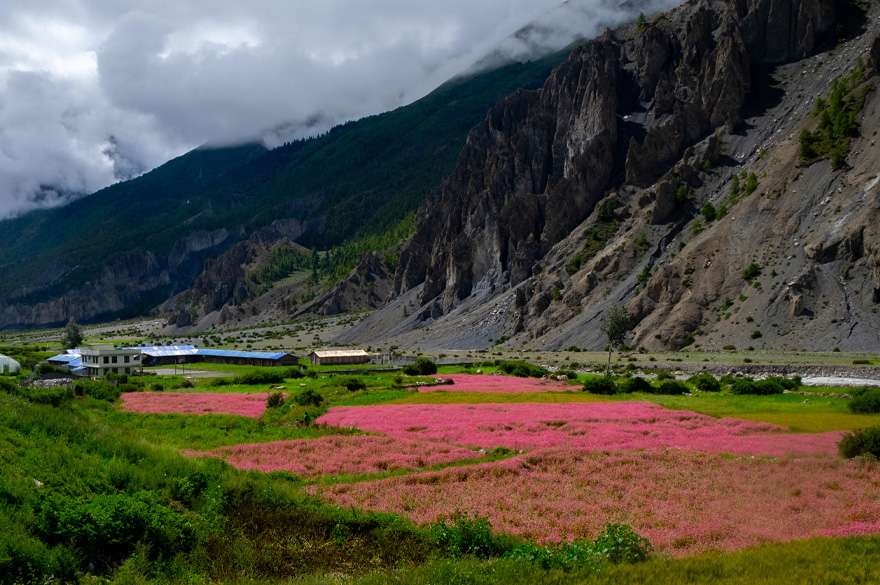
You walk 16 kilometers and climb 290 meters. The trail enters the Manang valley, a wide flat area surrounded by tall mountains. The landscape changes completely. There are very few trees. You see rocks, stones, and dry grass. The valley is wide and beautiful with amazing views. The trail is easier to walk than steep mountain sections.
The path is mostly flat or slightly uphill. You have time to look around and enjoy the views. You might see Tibetan prayer flags on poles. Prayer flags have prayers written on them. Buddhists believe wind carries the prayers to help all living things. Colors are red, blue, white, yellow, and green. Manang is the biggest village in this high area. There are many teahouses, shops, and even a hospital. You can find electricity in some places. The teahouse owners are friendly and experienced with trekkers. There is a Buddhist monastery called a gompa where monks live and study Buddhist teachings.
Today you do not trek. This is a very important rest day. At 3,540 meters, the air has much less oxygen than at sea level. Your body needs time to get used to thin air. If you do not rest, you might get altitude sickness which is dangerous. You can do light activities today. Many trekkers hike to nearby places like Ice Lake or Gangapurna Lake. These hikes are easy and short.
Ice Lake is a beautiful frozen lake surrounded by high mountains. You walk on snow and ice which is fun and different. Easy walks help your body adjust to altitude without hard work. Your guide goes with you and knows safe routes. You can spend time in Manang village. Walk slowly and talk to local people. Visit the monastery and learn about Buddhism. Sit in a teahouse and drink hot tea while looking at mountains. Write in your journal about your trek. Rest in your room and sleep more than usual. This rest is important for health and safety.
You walk 11 kilometers and climb 480 meters. This is a shorter day because you are climbing to higher altitude. The landscape becomes very dry and rocky. There are almost no trees. You have gone above the forest line. Plants here are small bushes growing slowly in harsh mountain environment.
The air is very thin now. You get tired more easily. Walking uphill is harder because there is less oxygen. Your guide makes you walk slowly. This is important. Walking slowly is actually faster than walking fast because you do not get as tired. Drink lots of water and eat small snacks like nuts or chocolate. Rest often. Your body works hard adjusting to altitude. Yak Kharka is a small place where people keep yaks and sheep in summer. There is only one teahouse. The building is simple and cold. Temperature can go below freezing at night. You see yaks walking around eating grass. Their long hair keeps them warm in cold mountains. People here are friendly. Rest well.
You walk 7 kilometers and climb between 520 to 905 meters. This is short distance but very high. The air is extremely thin. You might feel dizzy or have headache. These are altitude signs affecting your body. Walk very slowly and rest often. Your guide checks how you feel and helps you walk.
The landscape is rocky and harsh now. There are no trees at all. You see only rocks, stones, and small tough plants. The sky is very blue. The sun is very bright and strong. Wear sunscreen on your face and neck. Mountains look very close. You see many peaks around you. Snow on mountains is white and bright. You stay at either Thorong Phedi at 4,540 meters or High Camp at 4,925 meters. Both places are basic shelters. Rooms are small and cold. Dinner is simple. Go to bed early because tomorrow you start very early. Tomorrow you cross Thorong La Pass, the most important day.
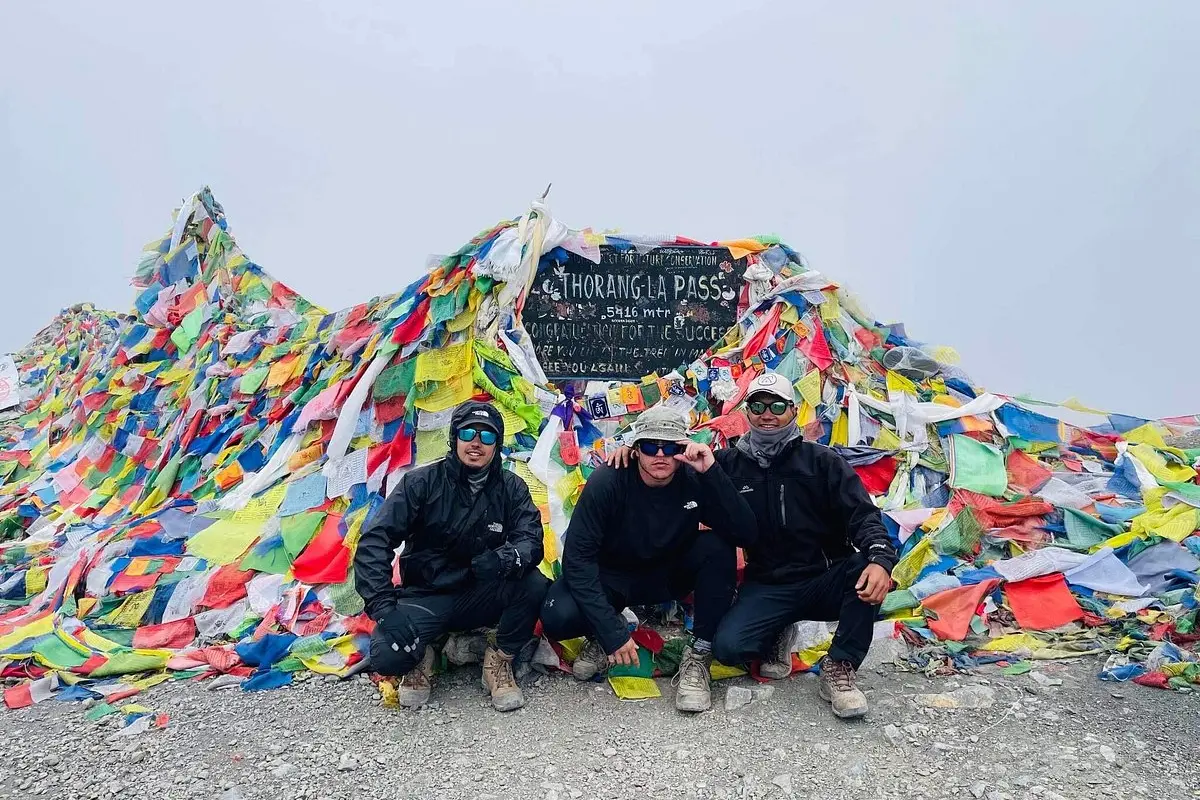
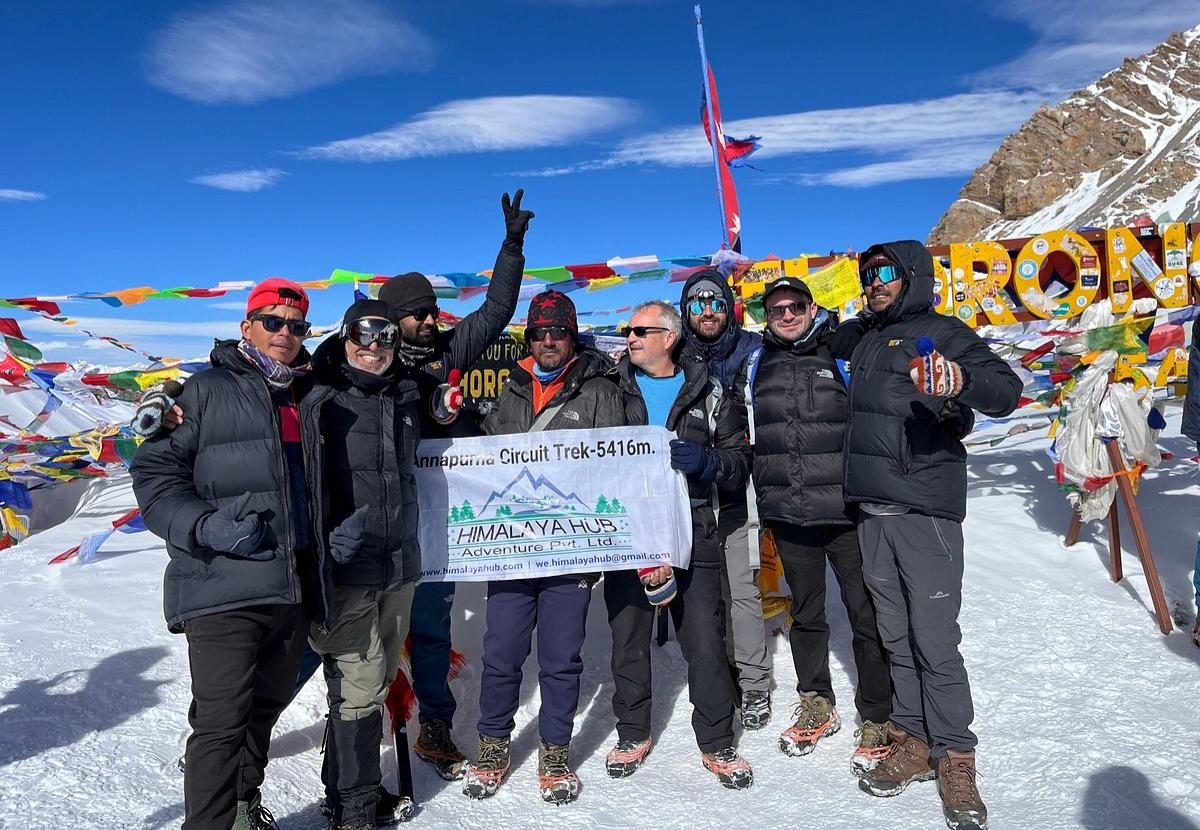
This is the hardest and most important day. You start very early at 3 or 4 AM when it is still dark. You need a headlamp to see the path. You walk 16 kilometers total. The highest point is Thorong La Pass at 5,416 meters. This is one of the highest trekking points in the world.
The walk to the pass is very steep, taking about 5 hours. You climb in darkness then the sun rises. The air is extremely thin. Walking is very slow. You feel very tired. Your body works hard climbing with little oxygen. Other trekkers are on the same path. Your guide encourages you. When you reach Thorong La Pass, the view is amazing. You see mountains for hundreds of kilometers. Snow covers peaks beautifully. Many trekkers cry with happiness. You spend 30 minutes taking photos and resting. After the pass, you walk down 4 hours to Muktinath. You arrive in afternoon. You are very tired but very happy.
You walk 22 kilometers and go down 1,060 meters. Going down is long but easier because gravity helps you. However, your knees and feet will hurt from downhill impact. Walk slowly and use trekking poles to protect your legs. Poles reduce knee pain by supporting your weight.
The landscape changes quickly descending. You leave rocky high mountains and enter areas with trees and grass. The air becomes thicker and warmer. Plants and flowers start appearing. The river valley becomes green and beautiful. You see the Kali Gandaki River, very large and fast flowing. This river is in the deepest valley in the world. Marpha is a beautiful traditional village. Houses are white with black roofs. Streets are narrow and clean. You walk through old lanes between stone buildings. Apple trees grow around the village. Local people make apple brandy which is famous. Teahouses are comfortable. Food is good. You feel much better today because there is more oxygen in the air.
You walk 23 kilometers and go down 600 meters. The landscape becomes more green with trees and plants everywhere. The weather becomes warmer. You are leaving high mountains and entering lower valleys. The Kali Gandaki River stays beside the trail. The river is loud and fast moving.
You see more villages and more people. Small shops sell snacks and cold drinks. Local people work in fields and farms. You see women carrying heavy baskets of crops on their heads. Children follow you trying to talk in English. Being friendly to local people helps them feel good about trekkers and tourists. You will get good smiles. Ghasa is a small village in the lower Kali Gandaki valley. The teahouse is simple but clean and comfortable. Temperature is much warmer than high mountains. You see different plants and animals. Bananas and tropical fruit trees grow here. At lower altitude, you sleep very well because there is plenty of oxygen. Your body recovers from hard days.
You walk 14.5 kilometers and go down 850 meters. You are getting much closer to trek end. Valleys are wider now. Rivers flow with more water. You see bananas and tropical plants not growing in mountains. The weather is warm. The sky is usually clear and blue.
The trail is sometimes very steep and sometimes flat following the river valley. You cross several bridges made of wood or metal over small rivers and streams. The landscape is beautiful with green rice fields. Small villages sit next to the trail. You pass through villages where children come out saying hello and waving at trekkers. Tatopani means hot water in Nepali. This village is famous for natural hot springs. The hot water comes from deep earth staying warm all year. After many walking days, you take relaxing baths in hot water. This is one of trek’s best rewards. Hot springs make tired muscles feel much better. The teahouse has a place where you soak in hot water.
You walk 16 kilometers and climb 1,674 meters. This is a big climb gaining much altitude in one day. The trail is very steep and sometimes difficult. You need trekking poles helping yourself climb. Take many breaks and walk very slowly. Drinking water and eating snacks helps you have energy.
The landscape changes climbing higher. You walk through terraced farms where people grow rice and crops. Women work in fields. Then you enter rhododendron forests. If trekking in spring from March to May, rhododendron flowers bloom. The flowers are red, pink, white, and other colors. Forests are beautiful and peaceful. Birds sing in trees. You see monkeys jumping between branches. Ghorepani is a village on top of a hill. From Ghorepani, you see mountain views in all directions. The teahouse is friendly and comfortable. Your legs are tired from climbing so much altitude. Rest well tonight because tomorrow morning you wake early. Tomorrow you see one of Nepal’s most beautiful views.
Today you have two parts. First, you wake at 4 AM hiking to Poon Hill. The hike takes 1 to 1.5 hours. Poon Hill is the best sunrise place in this area. You climb in darkness with your headlamp. Other trekkers climb too. You reach Poon Hill before sunrise.
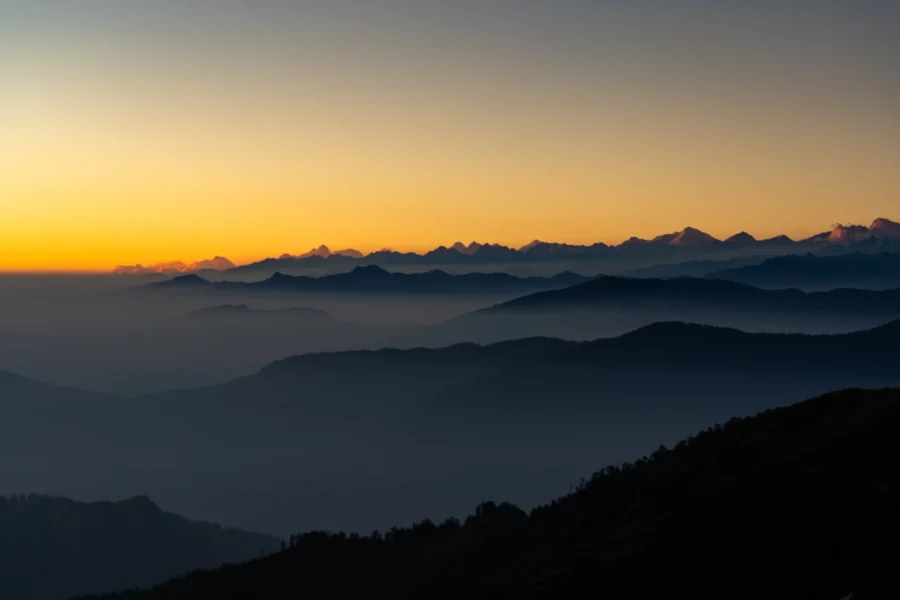
When the sun rises, it lights white snow on mountain peaks. You see Annapurna, Dhaulagiri, and many mountains. The view is incredible and beautiful. Many trekkers cry with happiness because the view is so amazing. You spend 30 minutes taking photos and enjoying the view. After sunrise, you return to Ghorepani for breakfast. After breakfast, you trek down to Hile. You walk 14 kilometers losing 1,714 meters altitude. This is long downhill walking. Your legs are tired from going down. The trail goes through forests and small villages. You are now very close to trek end. The air is warm with lots of oxygen. Your body adjusted well to trekking.
Today is the last trekking day. You walk 11 kilometers to Nayapul. The walk is easy because it is mostly downhill. The air is warm. Valleys are very green. You see rivers and small villages. Local people work in fields. Nayapul is where the Annapurna Circuit Trek officially ends. This is a small village. You celebrate finishing the trek.
From Nayapul, you drive to Pokhara, a beautiful city next to a large lake. The drive takes 2 hours. The road goes through green hills and farmland. You see how people live outside trekking areas. Pokhara is a nice city to rest and relax. You stay in a comfortable hotel with hot water, electricity, and good beds. The hotel is near Phewa Lake which is very beautiful and calm. After 18 trekking days and sleeping in small teahouses, a comfortable hotel feels amazing. You take hot showers and sleep in real beds. This is wonderful.
Today you have a rest day in Pokhara. You relax and explore the city. You visit Phewa Lake and take boat rides on calm water. The lake is beautiful and peaceful. On clear days, you see Annapurna and mountains reflected in water. Many trekkers sit by the lake thinking about their trek experience.
You visit Davis Falls, a waterfall going underground. Water falls into a cave and disappears. There is a small museum near falls about local culture and history. You also visit Tibetan refugee camps where Tibetan people live. They make beautiful handicrafts like carpets and jewelry. You buy souvenirs helping the Tibetan community. In the afternoon, you relax at your hotel. You get massages for tired muscles. Massage feels wonderful after hard trekking. You sit enjoying peaceful environment. Pokhara is quieter and cleaner than Kathmandu. Many trekkers think about their trek and write in journals. You buy any souvenirs you want from Pokhara shops.
Today you drive back to Kathmandu. The drive is 200 kilometers, taking approximately 8 hours. The road is sometimes bumpy and winding because Nepal has mountains. The countryside views are nice. You pass through many villages and towns. You see how Nepali people live their daily lives outside cities and tourist areas.
During the drive, your guide points out important places explaining Nepal’s history and culture. The road follows rivers and crosses many bridges. You have a lunch break in a town eating at a simple restaurant. The drive is long but gives time to rest after trekking. Many trekkers sleep or read during the drive. You arrive in Kathmandu in the evening. After 20 days away, Kathmandu seems crowded and noisy. Your hotel is comfortable and you rest well. You have one more night in Kathmandu before flying home. You eat dinner in a nice restaurant enjoying your last night in Nepal.
Today you fly home from Kathmandu. A HimalayanHub driver picks you up from your hotel and takes you to Tribhuvan International Airport. You have time for breakfast at the hotel before leaving. The drive to airport takes 30 minutes.
You check in for your international flight. You go through security and passport control. You say goodbye to your guide and HimalayanHub team. They wish you safe travels. This is your Annapurna Circuit Trek adventure end. You completed one of the world’s most famous treks. You walked 160 kilometers over 18 days. You crossed Thorong La Pass at 5,416 meters. You saw incredible mountains, walked through beautiful forests, and met wonderful people. You learned about yourself, challenged your body and mind, and experienced real adventure. You leave Nepal but carry memories staying with you forever. Many trekkers say trekking changed their lives. Your Annapurna Circuit Trek is complete.
Are you interested in planning a custom trip? Tell us your travel plans and we'll create a personalized itinerary based on your budget, interests, and schedule.
Chat with us — real trekking experts, not bots.
WhatsApp Us
Want to Know More About This Trek?
Online now
Our local guides are not just knowledgeable; they’re passionate about sharing the rich culture and beauty of the Himalayas.
We focus on providing authentic, immersive experiences by connecting you with local communities and offering you a chance to explore Nepal
Your trek, your way! We tailor every itinerary to match your pace and preferences, ensuring that you have the best possible adventure.
Chat with our experts and get special discounts tailored for your group size.
We have a daily trips available on private basis, To customize group tour please feel free to write us.
Explore the breathtaking route of the Annapurna Circuit trekking map with our custom interactive map. This detailed annapurna trekking map highlights key landmarks, high-altitude passes, and scenic viewpoints across Nepal’s most iconic trail. Whether you’re planning your next adventure or simply discovering the beauty of the region, our map provides valuable insights and easy-to-follow directions to help you navigate the Annapurna Circuit with confidence. Experience an immersive view of the trekking route and start planning your journey today.
A detailed Annapurna Circuit Trek map will be provided to help you visualize your journey and track your progress.
If you want to use a private transport or flight option instead of bus, hotel on your own in Kathmandu and Pokhara or just a trekking part please feel free to write us
Weave through lush subtropical valleys, dense forests, and rugged high-altitude passes.
Discover ancient villages and centuries-old traditions along the route.
Enjoy panoramic views of peaks like Annapurna, Dhaulagiri, and more.
Trek a route renowned for its breathtaking beauty and diverse experiences.
Challenge yourself physically and mentally, and experience the transformation that comes with conquering high altitudes.
Engage with local communities and witness centuries-old traditions firsthand.
From serene valleys to dramatic mountain passes, the landscapes are as varied as they are awe-inspiring.
No shared groups. No fixed schedules. Just a personalized journey made for you.
The Annapurna Circuit began as a lesser-known path in the 1970s that soon captured the attention of adventurers worldwide.
Over decades, it evolved into one of Nepal’s most celebrated and well-documented trekking circuits.
Its legacy is marked by both the cultural exchanges between trekkers and locals and the ongoing efforts to conserve the region’s natural beauty.
Chat with us — real trekking experts, not bots.
Diverse Climates:
Experience a dramatic shift from humid, lush valleys to cold, alpine conditions at higher altitudes.
Varied Terrain:
Traverse gentle slopes, terraced fields, and challenging, rocky passes.
Rich Cultural Encounters:
Interact with local communities and experience traditions that have endured for centuries.
Chat with our travel experts and get a personalized itinerary tailored to your needs.
Everything you need to know before embarking on your epic adventure around Nepal’s Annapurna region trek.
The best trekking experience depends on the season. Here’s what to expect in each:
Spring (March-May)Blooming rhododendrons, clear skies, and mild temperatures.
Autumn (September-November)Best weather with stable conditions and fewer weather-related risks.
Winter (December-February)Cold temperatures and heavy snow can make high passes challenging.
Monsoon (June-August)Heavy rains bring landslides but the rain shadow area remains trek-friendly.
The Annapurna Trail reaches an altitude of 5,416m (Thorong La Pass), so solid physical preparation is key.
All trekkers need these permits to enter the Annapurna Conservation Area:
Before heading to Nepal, ensure you have:
Chat with us — real trekking experts, not bots.
Plan your journey to the Annapurna Region Trek with our guide on how to get there and navigate Nepal’s roads.
The Annapurna Circuit Trek begins in Bhulbhule or Syange, accessible from Kathmandu or Pokhara. Here’s how you can reach the trailhead:
There are multiple transportation options to reach the Annapurna Region Trekking, based on your preferences and budget:
Travel in Nepal requires patience and flexibility. Here are some tips:
After completing the Annapurna Circuit Trek, here’s how you can return:
Chat with us — real trekking experts, not bots.
Packing smart is key to a successful trek. Here’s a complete guide to what you’ll need on the Annapurna Circuit:
Ready for Your Annapurna Adventure?
Browse through our full range of Annapurna Region Treks and find the perfect journey that suits your time, fitness, and adventure level. We promise you an unforgettable adventure in the heart of Nepal’s majestic Himalayas.
The Annapurna Circuit Trek is a 12-day journey around the Annapurna mountain range in Nepal, offering diverse landscapes, high-altitude passes, and cultural experiences in Himalayan villages.
The trek is considered moderate to challenging, requiring good physical fitness due to steep ascents, descents, and high-altitude conditions.
The highest point is Thorong La Pass, situated at an elevation of 5,416 meters (17,769 feet).
Spring (March–May) and autumn (September–November) are the best seasons for the trek, offering clear skies and favorable weather.
Yes, you need the Annapurna Conservation Area Permit (ACAP) and a Trekkers' Information Management System (TIMS) card.
Yes, altitude sickness is a risk. Proper acclimatization and a gradual ascent are essential to minimize this risk.
The trek typically takes 12 days, but the duration can vary based on your pace and itinerary adjustments.
You’ll stay in teahouses or lodges, which offer basic facilities, including beds, shared bathrooms, and meals.
Teahouses serve local and international cuisine, including dal bhat, noodles, soups, and pasta. Vegetarian options are widely available.
While not mandatory, hiring a guide or porter is highly recommended for navigation, cultural insights, and carrying your load.
Essential gear includes trekking boots, layered clothing, a sleeping bag, trekking poles, and a backpack. A detailed packing list is recommended.
The cost ranges from $670 to $800 per person, depending on group size, accommodations, and additional services like guides or porters.
ATMs are rare beyond the starting points, so carry sufficient cash for the trek.
Weather varies by season. Spring and autumn are mild, while winter is cold, and summer (monsoon) can bring rain and landslides.
Yes, but prior physical preparation is essential, and beginners may benefit from hiring a guide for additional support.
Yes, acclimatization days are typically scheduled in places like Manang to help adjust to the altitude.
Yes, comprehensive travel insurance covering high-altitude trekking and emergency evacuation is mandatory.
Some teahouses offer hot showers for an additional fee, but availability may decrease at higher altitudes.
Your guide or trekking agency will assist with emergencies. Helicopter evacuations are available for severe cases, but insurance is necessary.
Yes, the trek can be customized to include additional side trips like Tilicho Lake or extended stays in certain villages.
| # | Discount group | From adult | To adult | Value |
|---|---|---|---|---|
| 1 | Pax | 2 | 5 | $1300.00 |
| 2 | Pax | 6 | 11 | $1250.00 |
| 3 | Pax | 12 | 18 | $1100.00 |

Member Since 2025






tour is well organised and held