

The best time to trek in Nepal is generally autumn (September to November) and spring (March to May). Autumn offers clear skies, stable weather, and excellent mountain visibility, while spring brings warmer days, blooming rhododendrons, and often fewer crowds. But there is no single best season for every trek.
Altitude and route make a big difference. A lower-altitude trek can have comfortable conditions in winter, while high mountain passes may become difficult because of snow and freezing temperatures. Similarly, some rain-shadow regions can remain suitable during the monsoon when much of Nepal is wet.
This guide breaks down Nepal trekking seasons first, then looks at the best time to trek by route, so you can choose the right month based on your destination, elevation, weather preferences, and trekking plans.
The Quick Answer
Temperatures in Nepal vary sharply with altitude, so these figures are general trekking estimates rather than fixed temperatures for every route.
| Season | Months | Typical Day | Night / Higher Altitudes | Best For |
| Autumn | Sep–Nov | 15–24°C | Around 5°C at 1,000–3,500m; below 0°C higher up | Mountain views and classic treks |
| Spring | Mar–May | 16–23°C | Around 5–10°C in lower areas; colder above | High-altitude trekking and rhododendrons |
| Winter | Dec–Feb | 5–15°C in lower trekking areas | Below freezing at higher elevations | Lower-altitude and selected winter treks |
| Monsoon | Jun–Sep | 15–25°C in many lower areas | Varies greatly by altitude | Rain-shadow routes |
Important: High-altitude camps and passes can be much colder than these general ranges. Nepal Tourism Board notes that temperature falls by about 6°C for every 1,000m of elevation gain.
Nepal’s Four Main Trekking Seasons
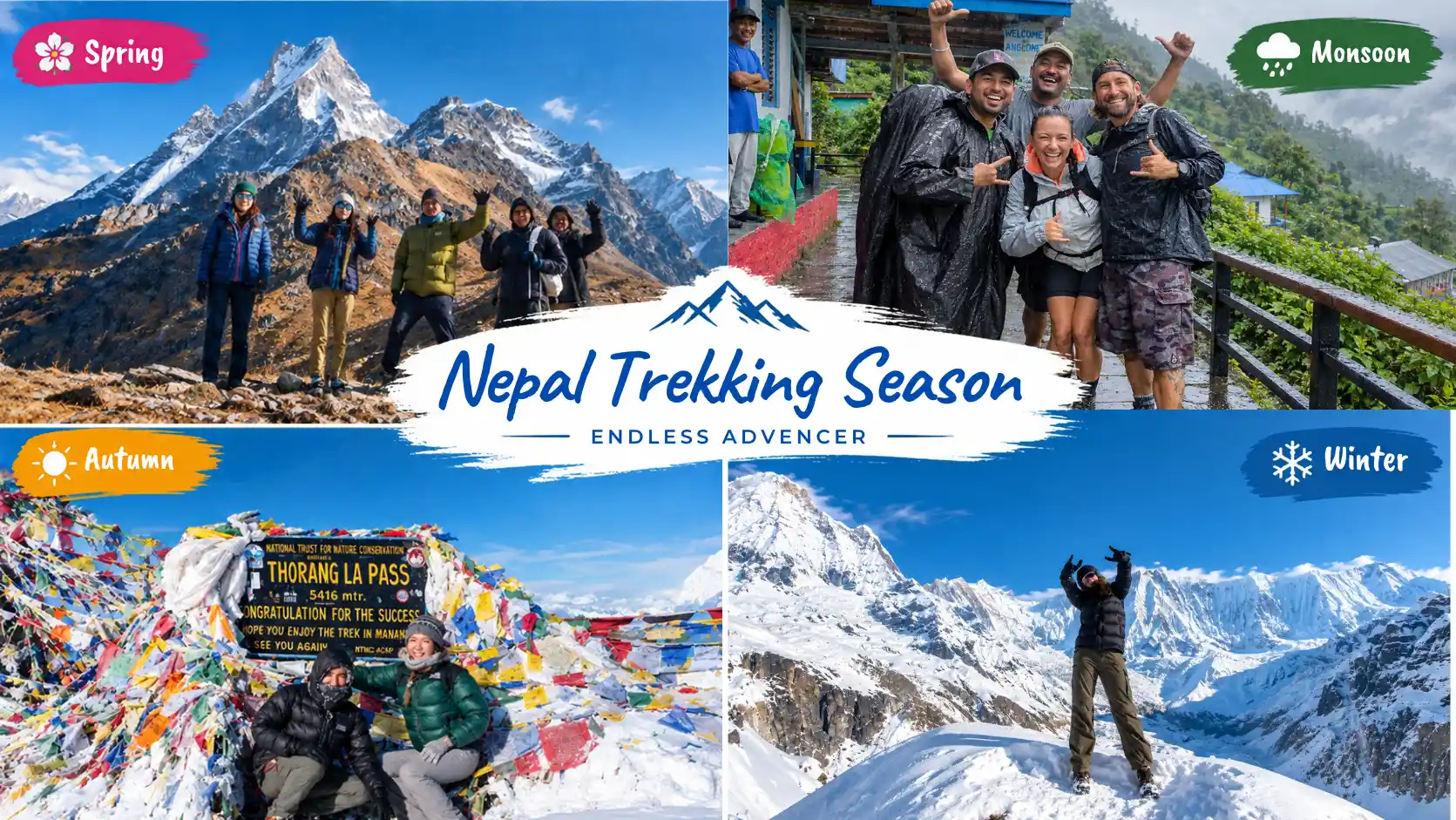
Nepal is commonly divided into four main trekking seasons: spring, monsoon, autumn, and winter. The monsoon cycle shapes much of the trekking calendar, but elevation and geography can create major differences from one route to another
Autumn (September–November)
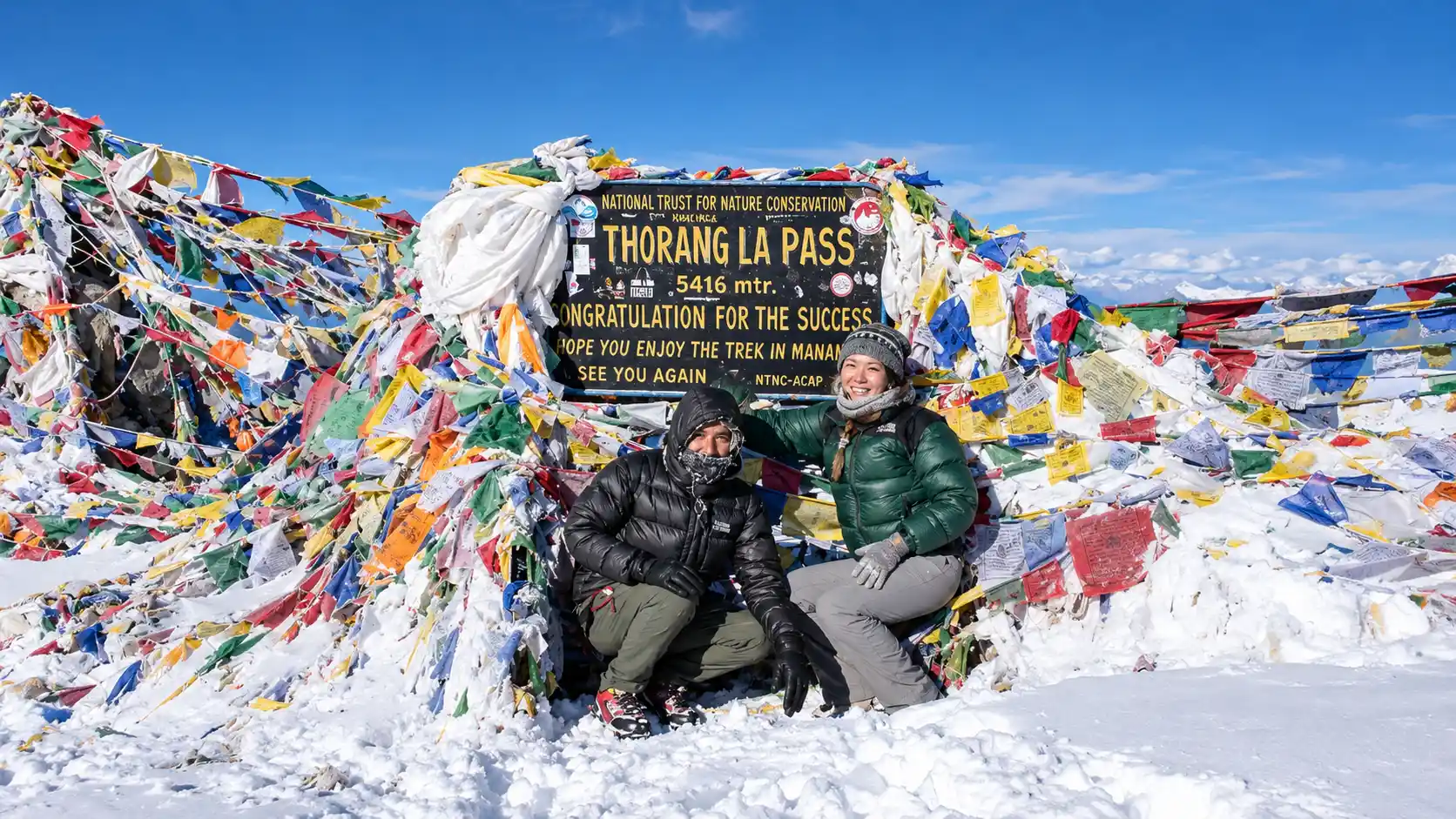
Autumn is one of the most popular seasons for trekking in Nepal. As the monsoon withdraws, humidity falls and mountain visibility improves, especially in October and November. In general trekking areas, daytime temperatures are around 15–24°C, although higher elevations can be much colder.
What to expect:
- Clear skies: Post-monsoon weather often brings excellent Himalayan visibility.
- Stable conditions: Autumn generally offers more predictable trekking weather than the monsoon.
- Festival season: Dashain and Tihar fall during this period, while Mani Rimdu is celebrated at Tengboche around October or November.
- Busy trails: October and November are peak trekking months, so popular routes and teahouses can become crowded.
Altitude makes a major difference. For example, in the Everest region during October, average temperatures can range from 17°C to 6°C in Lukla, 13°C to 1.4°C in Namche, and 5.4°C to -8.9°C in Gorak Shep. A late monsoon can also bring cloud and rain into early October.
Spring (March–May)
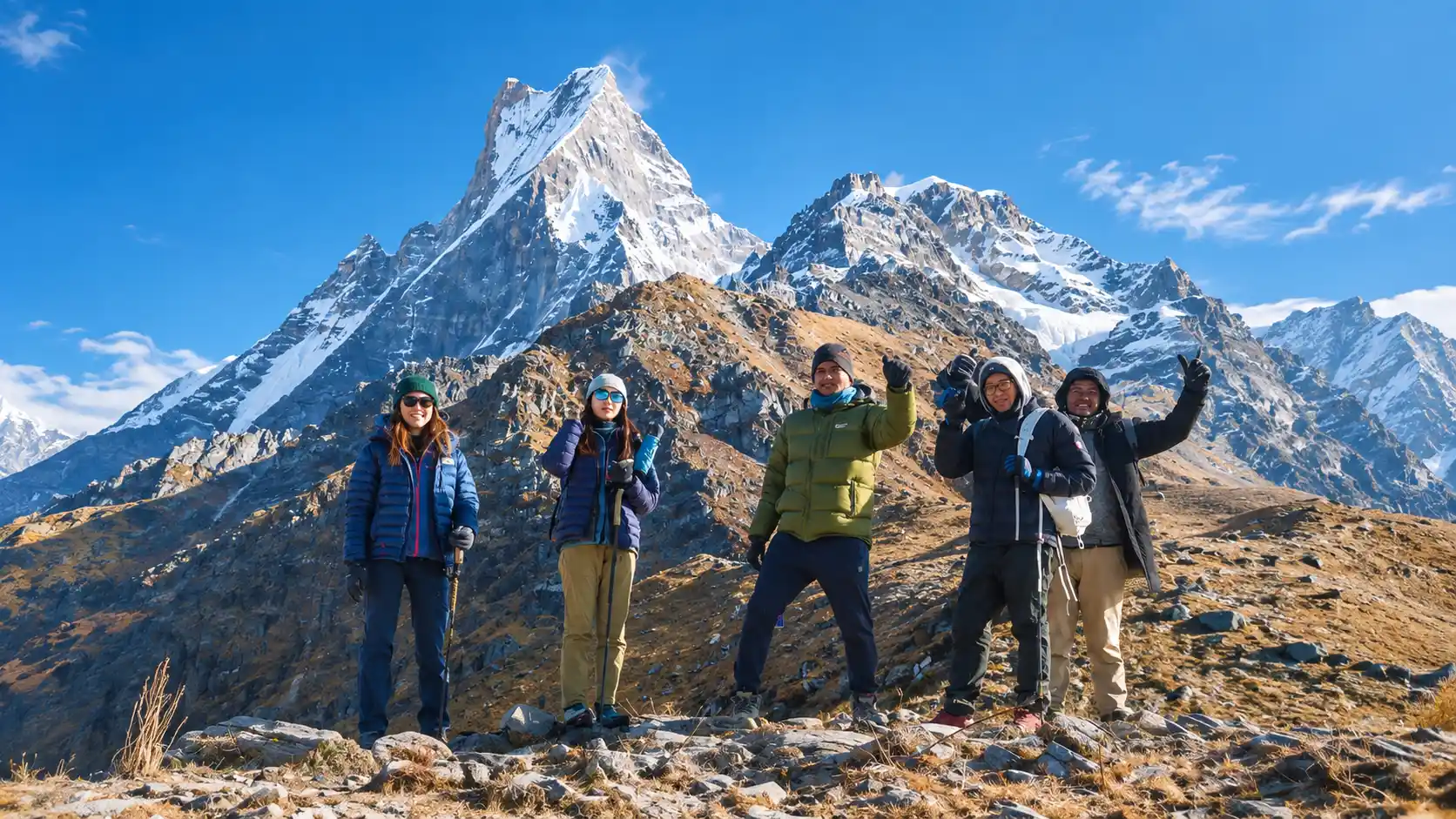
Spring is another major trekking season, bringing mild weather, blooming rhododendrons, and generally lighter crowds than autumn. General trekking-season temperatures are around 16–23°C, but conditions become much colder as elevation increases.
What to expect:
- Rhododendron bloom: Nepal’s national flower is especially visible from mid-March through April.
- Milder weather: Comfortable conditions make spring popular for longer trekking routes.
- Everest expedition season: Spring brings increased climbing activity to the Khumbu region.
- Changing visibility: Haze and afternoon cloud can become more noticeable later in the season.
For a route-specific example, Annapurna Base Camp can see about 10–20°C in lower sections, while temperatures near base camp can fall to around -2°C to -10°C. Early spring can still bring snow at high elevations, while lower areas become warmer and more humid by May.
Winter (December–February)
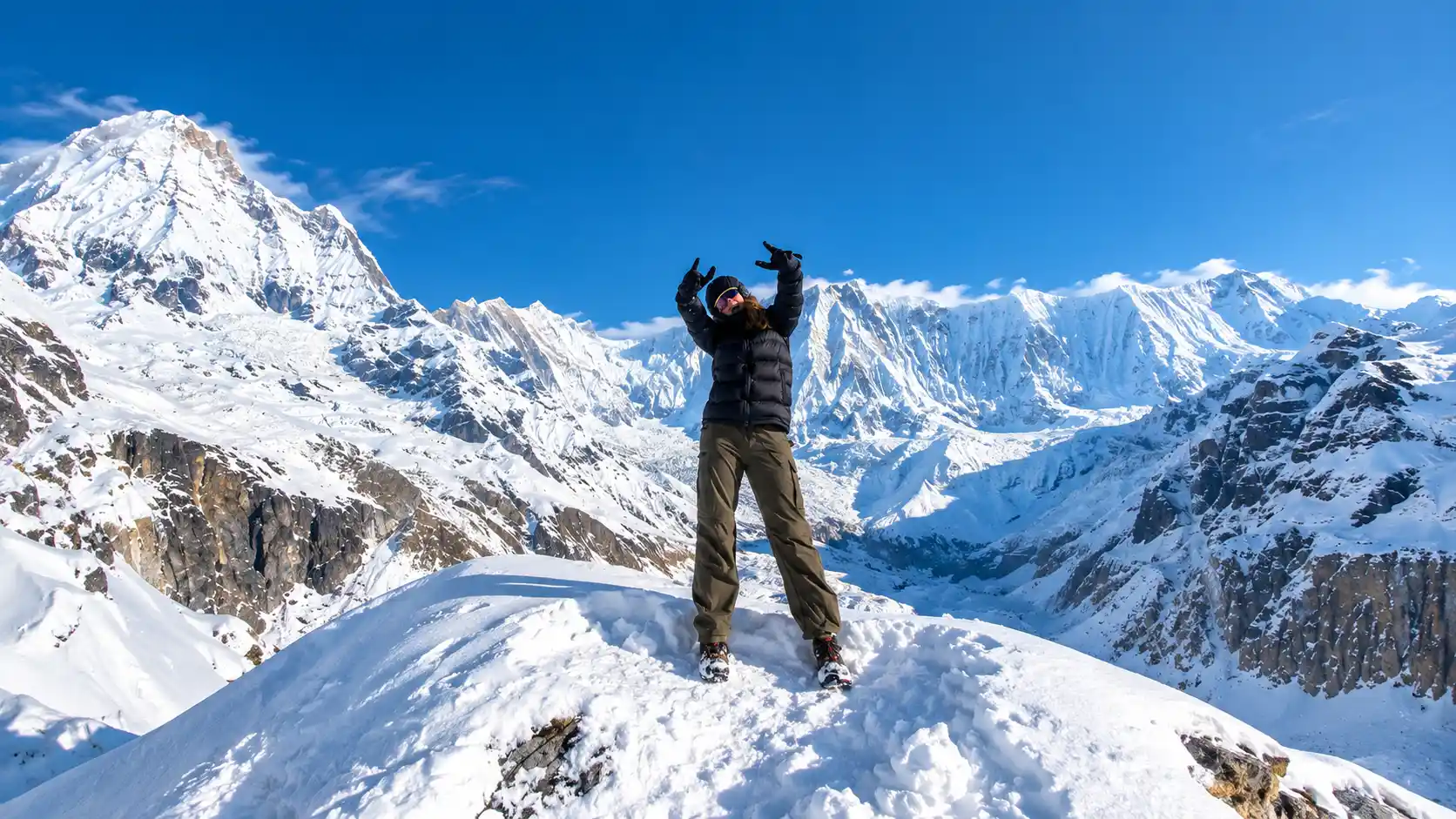
Winter is one of Nepal’s quieter trekking seasons, with clear skies but much colder conditions. General trekking-season temperatures are around 9–12°C, although lower valleys can remain milder and high-altitude areas can fall far below freezing.
What to expect:
- Clear skies: Winter can provide excellent mountain visibility.
- Quieter trails: Popular routes are generally less crowded.
- Lower-altitude options: Routes such as Poon Hill can remain feasible in favorable conditions.
- High-pass challenges: Heavy snow can make high passes such as Thorong La, Cho La, and Larkya La difficult or impassable.
On higher Annapurna sections, winter daytime temperatures can be around 5–15°C in lower areas, while nights near base camp can fall to roughly -10°C to -20°C. Around Gorak Shep and Everest Base Camp, winter conditions can be even colder.
Monsoon (June–September)
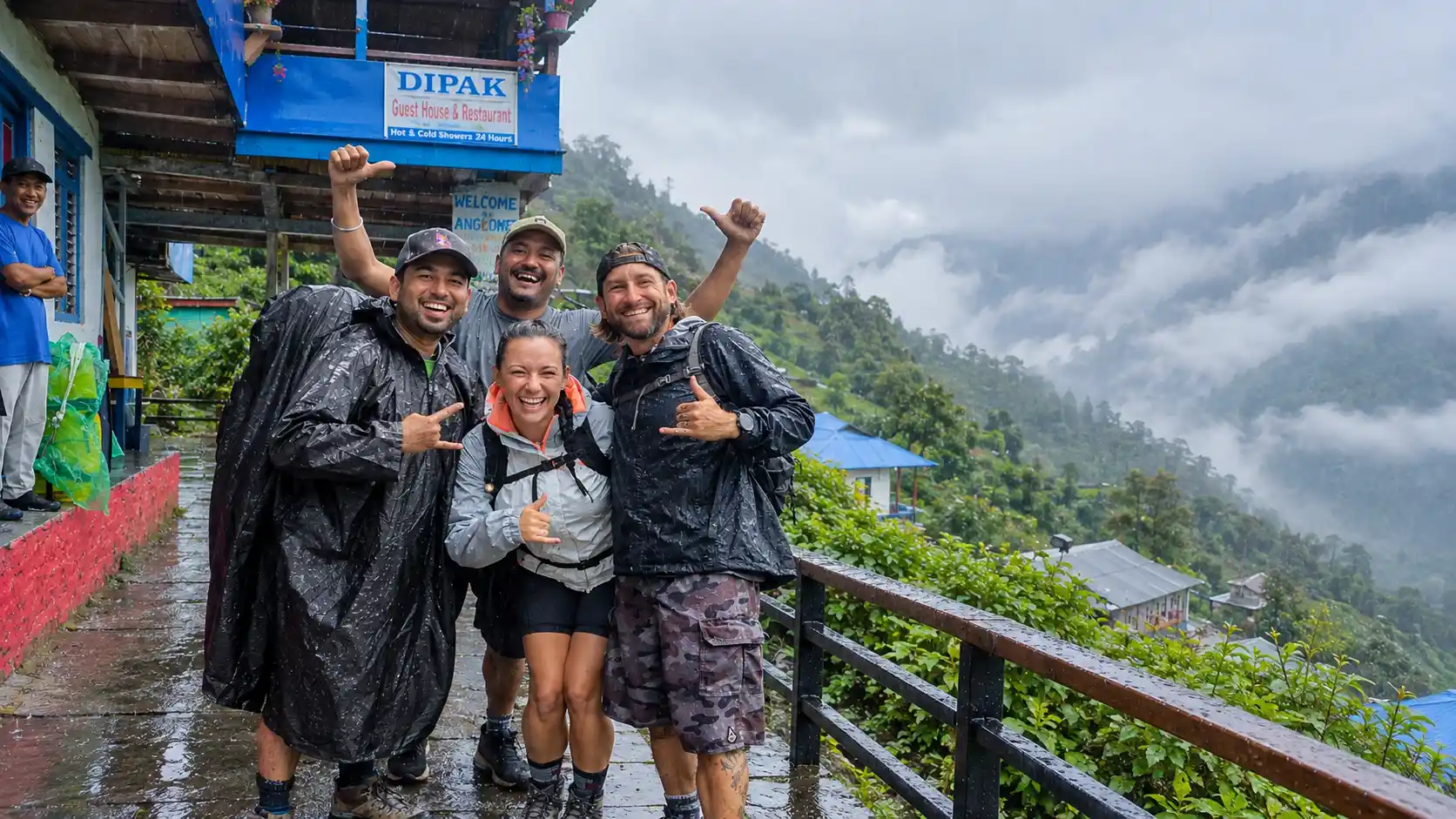
Monsoon is Nepal’s wettest season, bringing warm temperatures at lower elevations but frequent rain, cloud, and slippery trails on many classic trekking routes. Nepal receives about 80% of its annual rainfall during June–September.
What to expect:
- Wet trails: Heavy rain can make paths muddy and slippery.
- Reduced visibility: Cloud cover often hides mountain views.
- Lush scenery: Forests and hills become especially green.
- Rain-shadow routes: Upper Mustang and other trans-Himalayan areas receive much less monsoon rainfall.
In representative lower sections of the Annapurna region, monsoon temperatures can reach around 15–25°C, while higher areas are much cooler. Because temperature varies so much by elevation and location, it is better not to give one Nepal-wide day/night range for monsoon.
Nepal’s rain-shadow regions are the major exception to the usual monsoon pattern, with Mustang receiving less than 300 mm of annual rainfall compared with much wetter areas such as Pokhara.
Can You Trek in Nepal in Winter?
Yes, winter trekking in Nepal is possible, but altitude makes a major difference. Nepal Tourism Board notes that even during the coldest months, Nepal can be visited year-round, while winter conditions become much harsher above about 4,000m. Lower-altitude routes can remain manageable, although cold nights and occasional snow are still possible.
Higher routes are a different story. Around Everest Base Camp and Gorak Shep, winter nights can fall to roughly -15°C to -25°C or lower, depending on conditions. High passes such as Thorong La, Cho La, Renjo La, Kongma La, and Larkya La can become difficult or impassable when heavy snow arrives. Some higher-altitude teahouses may also close during the winter months.
So, winter trekking in Nepal is not the same everywhere. Lower routes offer a quieter option, while high-altitude and high-pass treks require careful planning for snow, cold, and route conditions.
Nepal Trekking Calendar: Month by Month
There is no single “best month” for every trek. This quick calendar gives a general picture; conditions can differ significantly by route and elevation.
| Month | General Conditions | Good For |
| January | Cold, often clear | Lower-altitude winter treks |
| February | Cold, gradually warming | Lower routes and late-winter trips |
| March | Spring begins | Classic trekking routes |
| April | Mild to warm, rhododendrons | Everest, Annapurna and other high routes |
| May | Warmer, increasing pre-monsoon weather | Early-May trekking |
| June | Monsoon begins | Selected rain-shadow routes |
| July | Wet across most regions | Upper Mustang and selected rain-shadow areas |
| August | Peak monsoon | Rain-shadow routes |
| September | Monsoon transition | Late-September trekking |
| October | Clear, peak trekking season | Most major routes |
| November | Clear and cooler | Most major routes |
| December | Cold and quieter | Lower-altitude and selected winter routes |
Nepal Tourism Board identifies spring and autumn as the main trekking seasons while also noting that Nepal can be visited throughout the year.
Best Time to Trek by Route
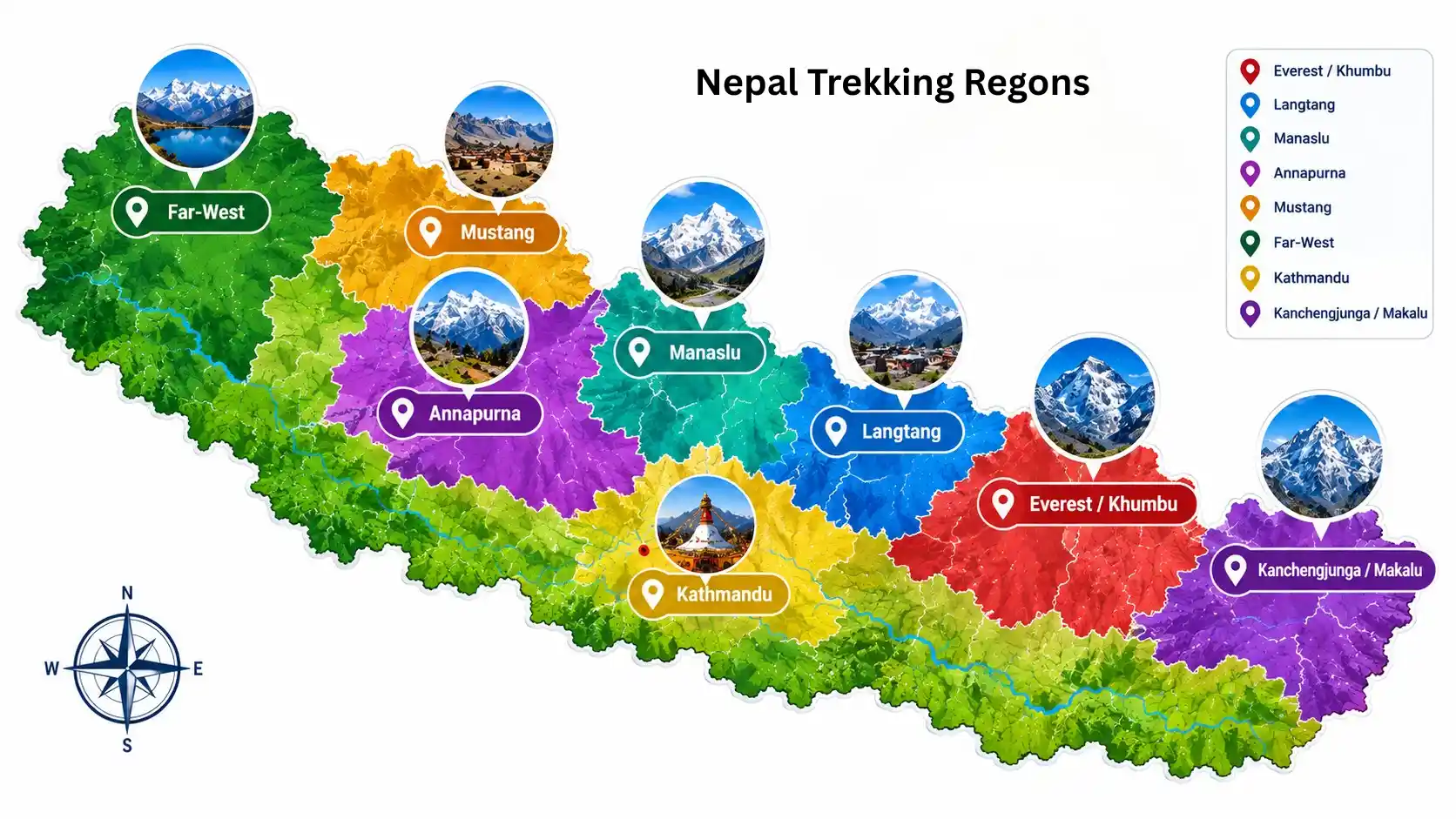
Different trekking regions have different ideal windows. Elevation, monsoon exposure, and high-pass conditions can all change the answer.
Everest / Solu-Khumbu Region
- Everest Base Camp: Best conditions generally fall in October–November and March–May. December is possible, but colder conditions become more important at altitude.
- Gokyo Lakes / Three Passes: Spring and autumn are the main trekking windows. Heavy winter snow can make the high passes difficult or impassable.
- Everest View Trek: Its lower elevation makes it a more manageable winter option than high-pass routes.
- Rolwaling Valley: Spring and autumn are generally preferable, while the high Tashi Lapcha Pass is highly dependent on snow and weather.
Langtang & Helambu Region
- Langtang Valley, Gosaikunda and Tamang Heritage Trail: October–November and March–May are the main recommended seasons.
- Winter: Higher sections can have snow and icy conditions.
- Monsoon: June–September brings wetter trail conditions.
- Short trips: The region’s proximity to Kathmandu makes it practical for shorter trekking itineraries.
Manaslu & Tsum Valley Region
- Manaslu Circuit: Best in March–May and September–November.
- Larkya La Pass: At 5,106m, this high crossing can become difficult in heavy snow.
- Tsum Valley: Generally follows the same spring and autumn pattern.
- Permits: Manaslu and Tsum Valley are among the trekking routes covered by current guide and TIMS requirements. Check the latest rules before departure.
Annapurna Region
- Annapurna Base Camp: Spring and autumn are the main trekking seasons.
- Annapurna Circuit: October–November and March–April are useful windows, particularly for the high-pass section.
- Ghorepani Poon Hill: Its lower elevation makes it more flexible and suitable for winter trekking in favorable conditions.
- Mardi Himal: Spring and autumn generally offer the most reliable trekking conditions.
The Nepal Tourism Board lists March–May and September–November as the main seasons for the Annapurna region.
Upper Mustang & Rain-Shadow Routes
Upper Mustang is a major exception to Nepal’s usual monsoon pattern. Its location in the rain shadow means it receives much less rainfall than many other trekking areas.
- Upper Mustang: Can be visited during the monsoon season and is one of Nepal’s best-known rainy-season trekking options.
- Nar Phu Valley: Spring and autumn remain dependable choices, while monsoon trekking can be possible depending on conditions.
Upper Mustang is also a restricted area and requires a special permit.
Far-Western Nepal
- Rara Lake: Best in February–April and October–November according to Nepal Tourism Board.
- Upper Dolpo: The Nepal Tourism Board lists March–May and September–October as the best seasons.
- Upper Humla / Limi Valley: A remote high-altitude region where conditions vary considerably by route and elevation. Specific permits and trekking requirements apply.
Far-Eastern Nepal
- Kanchenjunga Base Camp: Best in March–May and September–November.
- Makalu Base Camp: Best in October–November and March–April; June–September is monsoon season.
- High passes: Winter snow can make remote sections substantially more difficult.
Quick Route Summary
| Region | Trek | Best Season | Main Consideration |
| Everest | Everest Base Camp | Oct–Nov, Mar–May | Colder at high altitude in winter |
| Everest | Gokyo / Three Passes | Mar–May, Sep–Nov | High passes can be snowbound |
| Everest | Everest View Trek | Mar–May, Sep–Nov | More manageable in winter |
| Rolwaling | Rolwaling Valley | Mar–May, Sep–Nov | Tashi Lapcha depends on conditions |
| Langtang | Langtang / Gosaikunda | Oct–Nov, Mar–May | Snow possible at higher elevations |
| Manaslu | Circuit / Tsum Valley | Mar–May, Sep–Nov | Larkya La affected by snow |
| Annapurna | Base Camp | Mar–May, Sep–Nov | Winter is colder at altitude |
| Annapurna | Circuit | Oct–Nov, Mar–Apr | Thorong La can be snow-affected |
| Annapurna | Poon Hill | Mar–May, Sep–Nov | Lower elevation gives winter flexibility |
| Annapurna | Mardi Himal | Mar–May, Sep–Nov | Monsoon is less reliable |
| Mustang | Upper Mustang | Year-round possible; monsoon viable | Rain shadow |
| Annapurna | Nar Phu Valley | Mar–May, Sep–Nov | Monsoon conditions vary |
| Far-West | Rara Lake | Feb–Apr, Oct–Nov | Winter snow can affect access |
| Far-West | Upper Dolpo | Mar–May, Sep–Oct | Remote, high-altitude route |
| Far-West | Upper Humla / Limi | Seasonal | Remote and permit-controlled |
| Far-East | Kanchenjunga | Mar–May, Sep–Nov | Wetter during monsoon |
| Far-East | Makalu Base Camp | Mar–Apr, Oct–Nov | Monsoon and winter are harder |
Nepal Festivals to Plan Your Trek Around
Nepal’s trekking calendar overlaps with several major cultural festivals, making it possible to combine trekking with local celebrations.
- Mani Rimdu: Held at Tengboche Monastery in the Everest region, usually around October or November, with Buddhist ceremonies and traditional dances.
- Dashain: One of Nepal’s major festivals, celebrated during the autumn season with family gatherings and religious traditions.
- Tihar: A five-day festival of lights celebrated in autumn.
- Tiji Festival: Held annually in Lo Manthang, Upper Mustang, according to the Tibetan calendar, so its Gregorian date changes each year.
- Holi: Usually falls in February or March and is widely known as Nepal’s festival of colors.
- Indra Jatra: An eight-day September festival in Kathmandu featuring chariot processions, masked dances, and traditional celebrations.
Festival dates change from year to year, so check Nepal Tourism Board’s current festival calendar when planning exact travel dates.
Which Trekking Season Is Right for You?
The best time to trek in Nepal depends on what matters most to you:
- Want the clearest mountain views? → October and November are strong choices.
- Want fewer crowds? → Consider winter or early spring.
- Want warmth and flowers? → April is a good choice for spring trekking and rhododendrons.
- Want a quieter winter trek? → Consider lower-altitude routes such as Poon Hill.
- Want to trek during monsoon? → Look at rain-shadow routes such as Upper Mustang.
There is no single best month for every trek. Match your dates to the route, elevation, weather, and experience you want.
Conclusion
For most trekking routes in Nepal, autumn and spring offer the most reliable combination of favorable weather and good trekking conditions. October and November are especially known for clearer skies after the monsoon, while spring brings warmer conditions and seasonal blooms.
However, the right time depends on your trek. Lower-altitude routes can remain suitable in winter, high passes require more careful planning in colder months, and rain-shadow areas such as Upper Mustang can offer a different option during the monsoon.
The best time to trek in Nepal ultimately comes down to your route, altitude, preferred weather, and tolerance for crowds. Use the route-by-route guide above to plan your trek around the conditions that suit you best.
Frequently Asked Questions
What is the best time to trek in Nepal?
For most major trekking routes, autumn and spring offer the most favorable overall conditions. October–November usually provides the clearest post-monsoon skies, while March–May brings spring weather and rhododendron blooms.
Can you trek to Everest Base Camp in December?
Yes, winter trekking is possible, but conditions become much colder at high elevations. Winter travelers should plan for cold, changing weather and route-specific conditions.
Is spring or autumn better for Nepal trekking?
Autumn generally offers clearer post-monsoon skies, while spring brings rhododendron blooms and milder conditions. The better choice depends on your route and priorities.
What is the coldest time to trek in Nepal?
January and February are among the coldest months, especially at high elevations. Winter conditions become much more severe as altitude increases.
Can you trek in Nepal during monsoon?
Yes. While many classic routes become wetter and cloudier, rain-shadow areas such as Upper Mustang can remain suitable for trekking during the monsoon.
Is October too crowded for trekking in Nepal?
October is part of Nepal’s peak trekking season, so popular routes can be busy. Booking accommodation and transport ahead can be useful on heavily visited trails.
Do high mountain passes close in winter?
High passes can become difficult or impassable under heavy snow. Conditions vary by route, so trekkers should check current weather and trail conditions before attempting high-pass crossings.
Which Nepal trek is suitable for winter?
Lower-altitude routes such as Poon Hill can be more manageable in winter than high-pass or extreme high-altitude treks. Conditions can still change, so route-specific preparation is important.
0 Comment