
















16 Days
Daily Tour
18 people
English
The Manaslu Circuit Trek is one of the most breathtaking and adventurous trekking trails in Nepal. This 16-day journey takes you around Mount Manaslu (8,163m), the eighth highest mountain in the world. The trek follows the ancient salt trading route along the Budhi Gandaki River valley, crosses the dramatic Larke Pass at 5,106 meters, and offers an experience that very few treks in the Himalayas can match.
Unlike the crowded trails of Everest Base Camp or Annapurna Circuit, the Manaslu Circuit Trek remains a hidden gem. It was opened to foreign trekkers only in 1991, and because it falls within a restricted area, you need a special permit and a registered trekking agency to explore this route. This restriction is exactly what keeps the trail uncrowded, the culture authentic, and the natural beauty untouched.
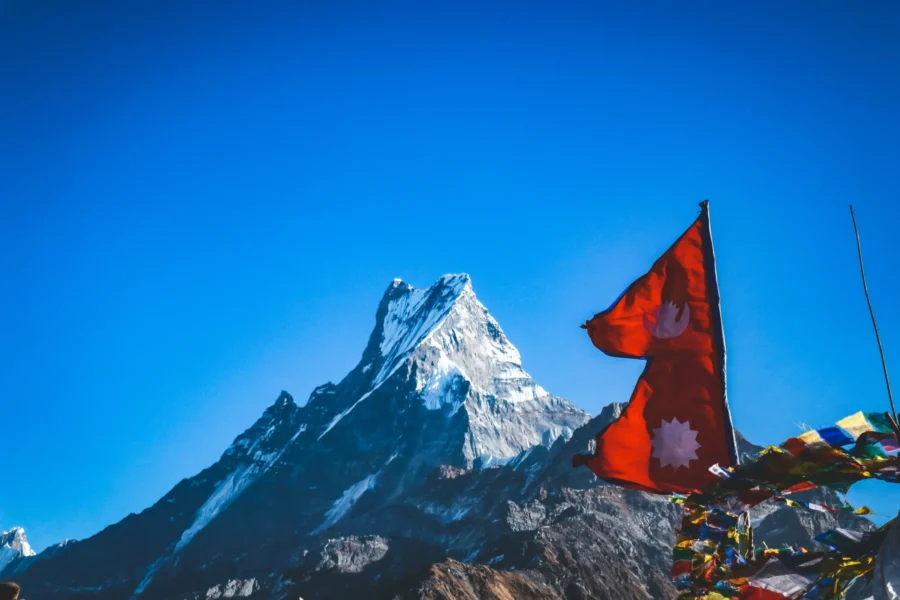
The Manaslu region sits in the Gorkha District of Nepal, bordering Tibet (China) to the north. As you trek through this region, you will notice a fascinating blend of Nepali and Tibetan cultures. The villages along the trail are home to ethnic communities like the Gurungs, Tamangs, and Bhotiyas who have preserved their traditional way of life for centuries. You will see ancient Buddhist monasteries, colorful prayer flags, carved mani walls, and spinning prayer wheels at almost every turn.
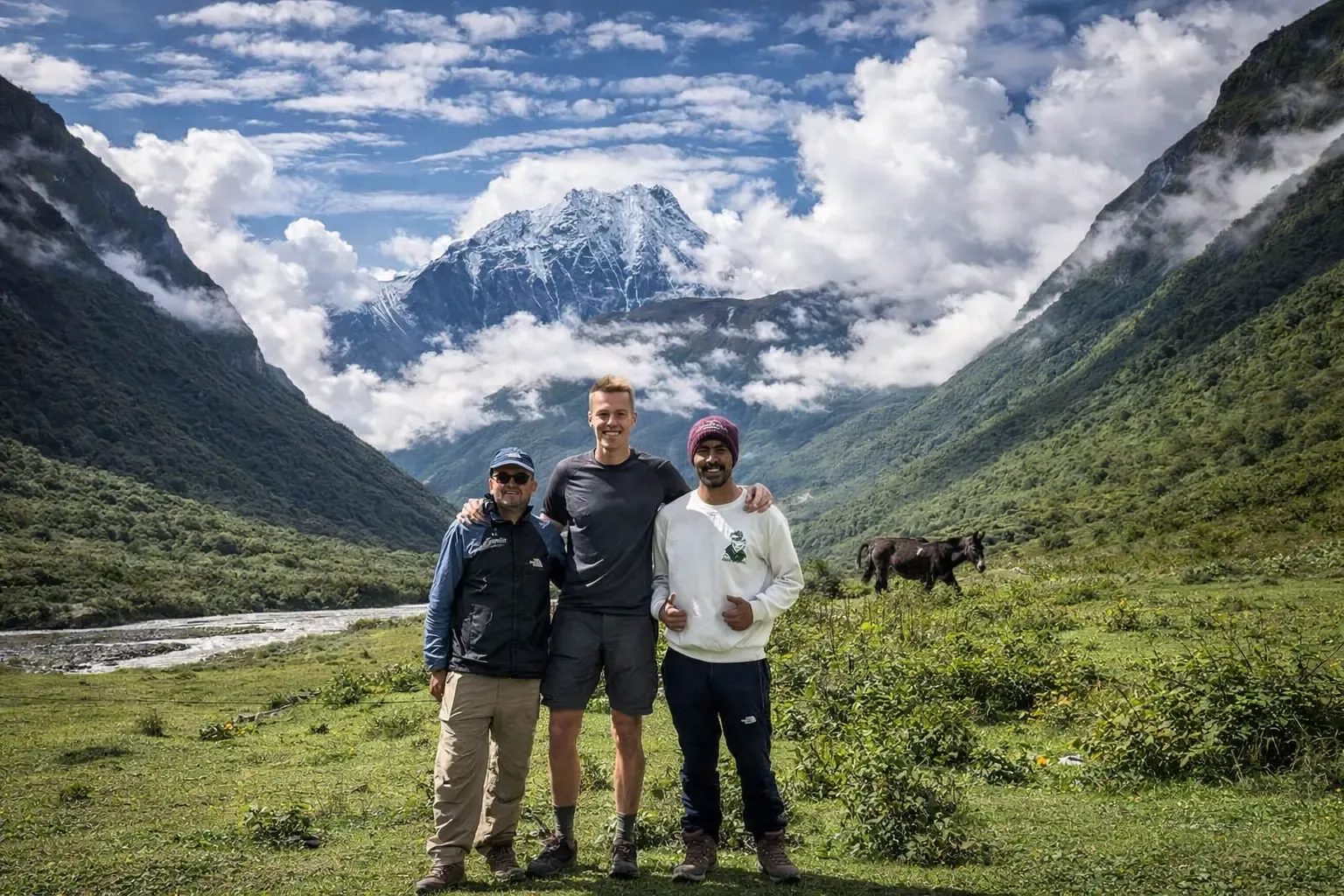
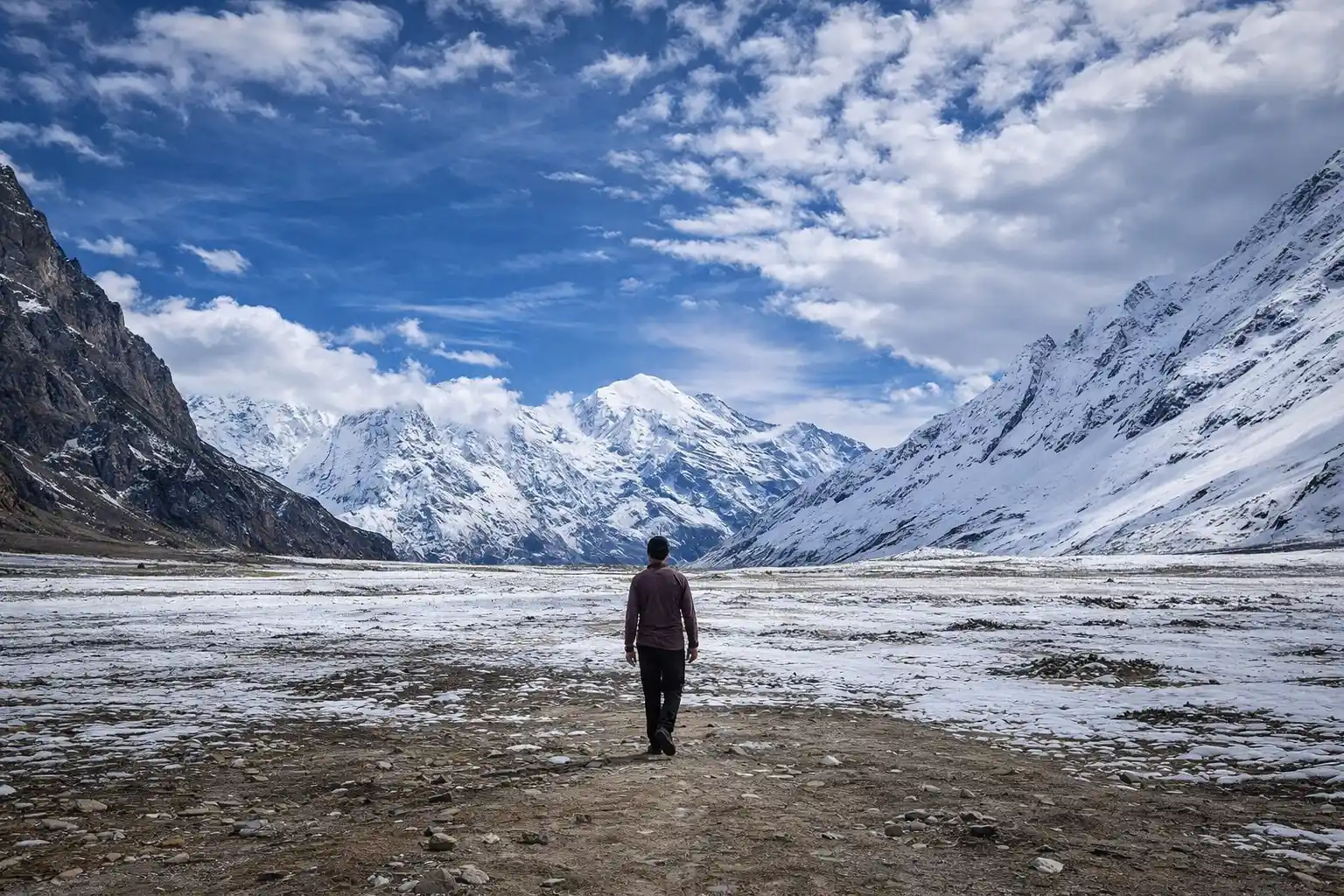
The landscape on this trek changes dramatically as you gain altitude. You start your journey walking through lush subtropical forests filled with bamboo, rhododendron, and oak trees. As you climb higher, the forests thin out and give way to alpine meadows, rocky terrain, and glacial moraines. The views of snow-capped peaks, deep gorges, thundering waterfalls, and turquoise rivers will stay with you long after the trek is over.
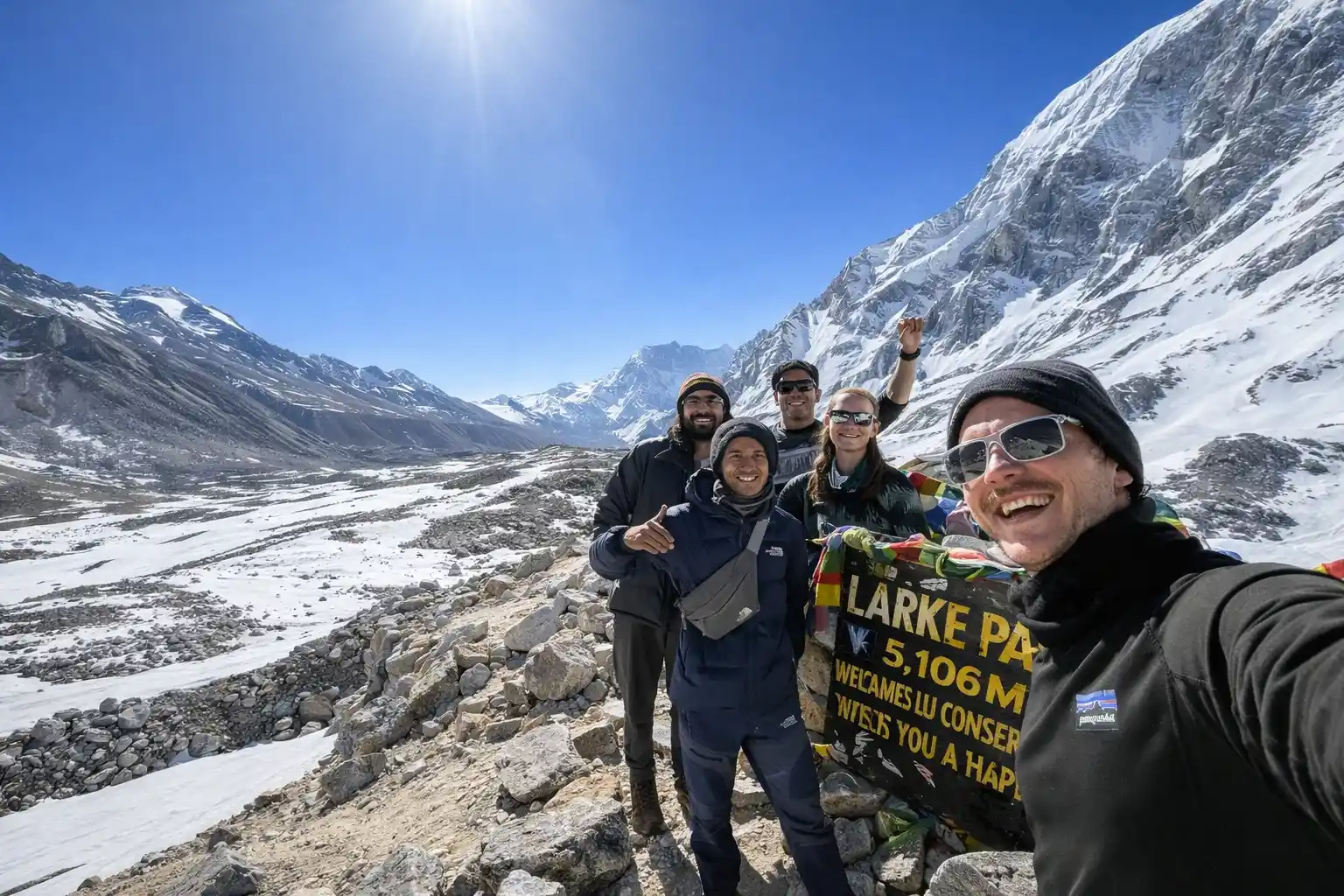
The highlight of the entire trek is crossing Larke Pass (5,106m / 16,752 ft). Standing at the top of the pass, you are surrounded by a 360-degree panorama of Himalayan giants, including Mount Manaslu, Himlung Himal, Cheo Himal, Kangguru, and the Annapurna range. It is a moment that makes every step of the challenging journey worth it.
The Manaslu Circuit Trek is often called the best alternative to the Annapurna Circuit. It offers similar diversity in landscape and culture but with far fewer trekkers on the trail. If you are looking for an authentic, challenging, and rewarding trekking experience in Nepal, the Manaslu Circuit Trek should be at the top of your list.
At Himalaya Hub Adventure, we have been organizing the Manaslu Circuit Trek for years. Our experienced guides know every village, every trail, and every teahouse along the route. We take care of all the permits, logistics, accommodation, and meals so that you can focus on what matters most, enjoying the incredible journey.
Chat with us — real trekking experts, not bots.
Here are the top reasons why the Manaslu Circuit Trek is considered one of the best treks in Nepal:
Chat with our experts and get special discounts tailored for your group size.
Welcome to Nepal! Your Manaslu Circuit Trek adventure officially begins today. Our friendly representative will greet you at Tribhuvan International Airport (TIA) and transfer you to your hotel in Kathmandu. After checking in, take some time to rest and recover from your journey.
In the evening, your trek leader will meet you for a detailed briefing session, covering your itinerary, permits, gear check, and what to expect on the trail. If you are feeling fresh, take a short walk around the lively streets of Thamel and enjoy your first taste of Nepali food and culture.
Before heading into the mountains, spend a full day exploring the incredible cultural treasures of Kathmandu Valley. Your guide will take you on a sightseeing tour of some of the most iconic UNESCO World Heritage Sites in Asia.
Visit the sacred Pashupatinath Temple on the banks of the Bagmati River, marvel at the enormous Boudhanath Stupa, one of the largest Buddhist stupas in the world, and walk through the historic Kathmandu Durbar Square with its ancient palaces and temples. This is also the perfect day to pick up any last-minute trekking gear from the shops in Thamel.
Your mountain journey begins early this morning with a long but scenic drive from Kathmandu to Soti Khola. You travel by private jeep through the winding hills and river valleys of central Nepal. The road passes through busy market towns and quiet farming villages, giving you a great first glimpse of rural Nepali life.
As you get closer to Soti Khola, the landscape becomes wilder and more dramatic. The road gets rough towards the end, but the views make it worthwhile. By the time you arrive, the sound of the Budhi Gandaki River rushing nearby will tell you that your trekking adventure is just one sleep away.
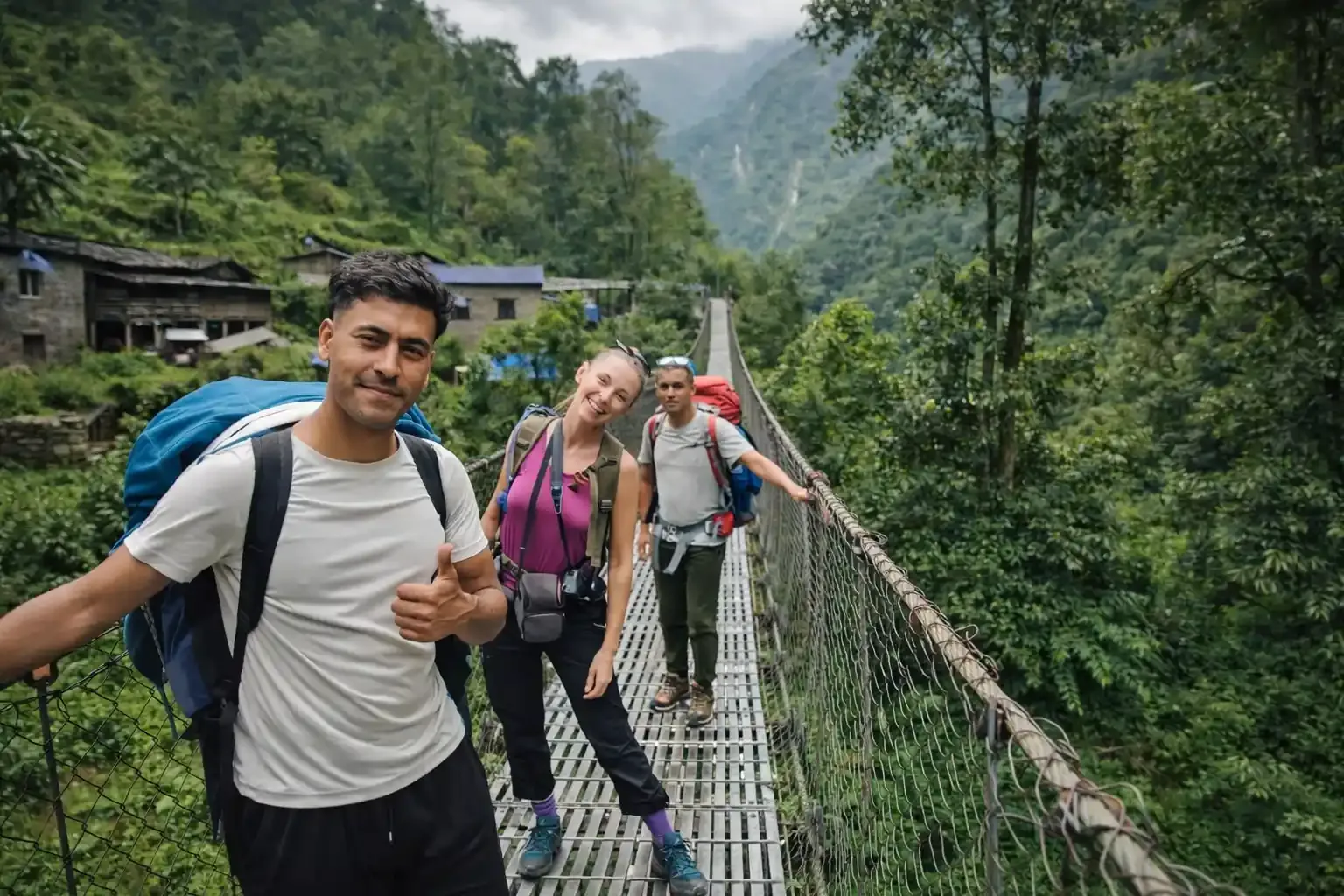
Today your boots hit the trail for the very first time! The path begins by winding through sub-tropical jungle, bamboo groves, and small riverside settlements. You will cross several suspension bridges swinging over the roaring Budhi Gandaki River, a dramatic and exciting introduction to Himalayan trekking.
The trail is relatively gentle today, making it a perfect warm-up for your legs and lungs. You pass through the small villages of Khursane and Lapubesi before arriving at Machha Khola, whose name literally means “Fish River” in Nepali. Settle in, rest your legs, and fuel up with a hearty teahouse dinner.
Today the trail becomes more exciting as you push deeper into the Budhi Gandaki River Gorge. The path climbs and descends over rocky ridges, crosses more hanging bridges, and passes through dense forest alive with birdsong.
You walk through the village of Tatopani, famous for its natural hot springs, a wonderful spot to rest your feet if time allows. The trail then climbs steeply up to the fortified village of Jagat, the official entry checkpoint into the Manaslu Restricted Area. Your permits will be checked here by government authorities. This is where the real wilderness adventure truly begins.
Leaving Jagat behind, today’s trail takes you through some of the most dramatic gorge scenery on the entire route. The Budhi Gandaki River gorge narrows and deepens, creating a wild and powerful landscape all around you. You cross more suspension bridges and walk through thick forest where rare birds and wildlife call the trees home.
The trail passes through the villages of Salleri, Sirdibas, and Ghatta Khola before making a steady climb up to Deng. This peaceful Gurung village sits surrounded by terraced fields and is a wonderfully quiet place to rest after a long day on the trail.
Today the trail begins to reveal its true Himalayan character. As you gain altitude steadily, the landscape shifts from dense jungle to more open alpine terrain. You walk through the villages of Rana and Bihi, where you will notice the culture becoming noticeably more Tibetan Buddhist in feel, intricate mani walls, spinning prayer wheels, and colorful prayer flags line the trail.
The mountains around you grow taller and more imposing with every step. You arrive at Namrung with rewarding views of Sringi Himal (7,161m) towering above the village. This is a great place to rest and absorb the dramatic change in scenery and culture.
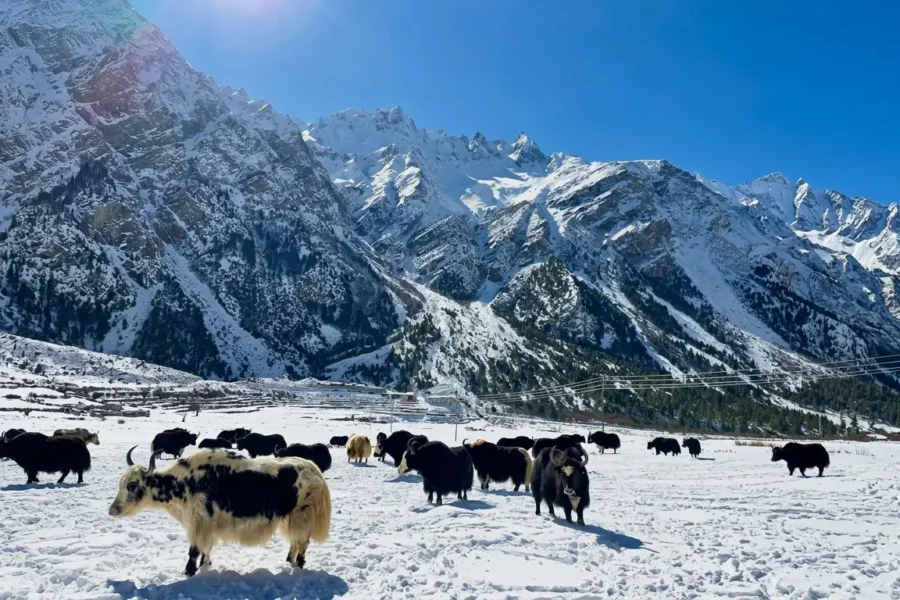
This is one of the most spectacular and rewarding days of the entire trek. The trail climbs steadily through high alpine forests, open yak pastures, and ancient Buddhist settlements. You pass through the villages of Lihi, Sho, and Lho, each offering increasingly breathtaking mountain scenery.
At Lho village, stop and look up, you will get your first powerful, close-up view of Mount Manaslu (8,163m) dominating the skyline in front of you. It is a moment you will never forget. Continuing through Shyala, you descend gently to reach Samagaun, a beautiful, classic Tibetan-style village with flat-roofed stone houses, fluttering prayer flags, and a warm, welcoming atmosphere.
Do not skip this day, it is one of the most important days of your entire trek. After days of steady climbing, your body needs time to properly adjust to the altitude before ascending any higher. You have two excellent options for your acclimatization hike today.
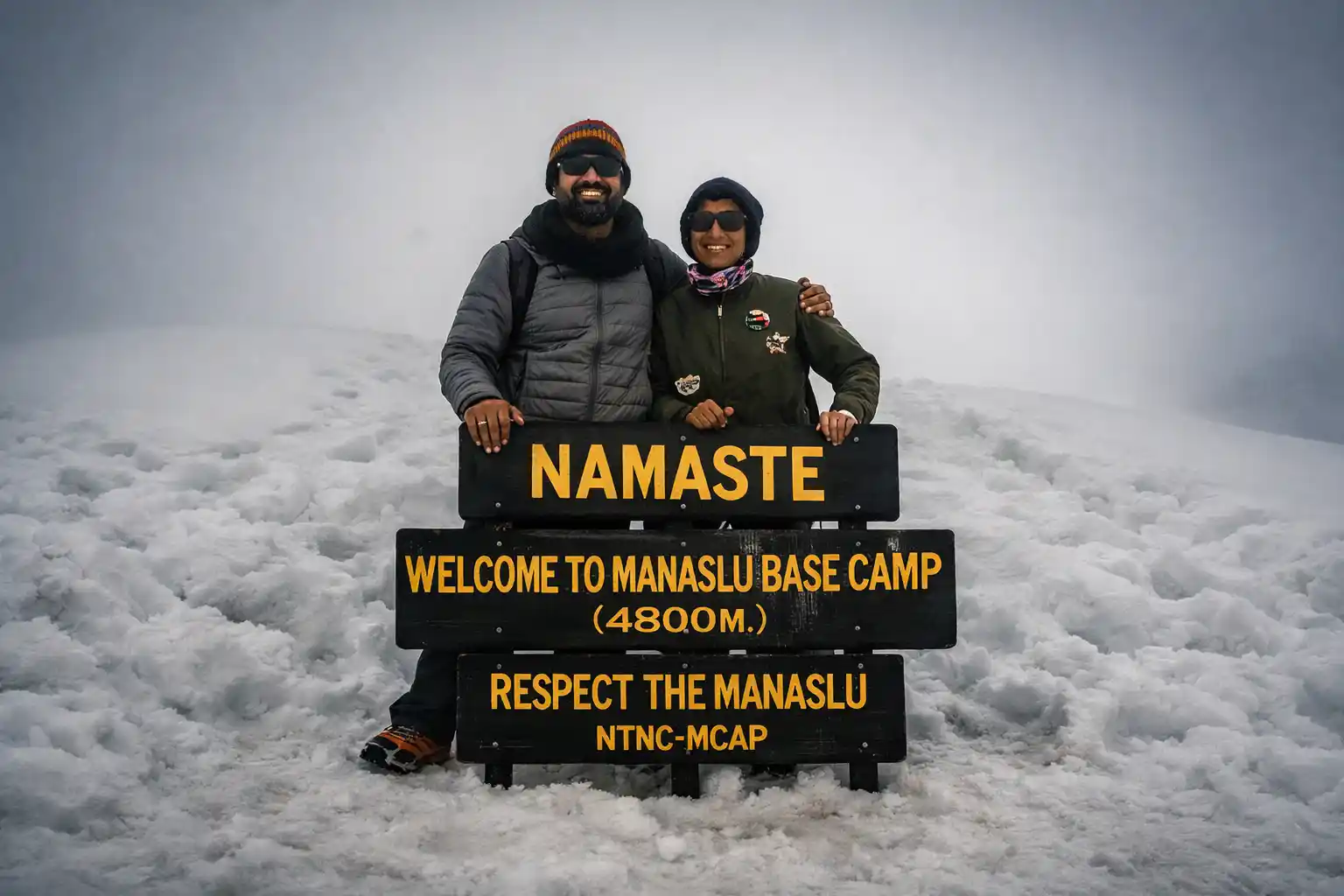
Option A: Hike up to Manaslu Base Camp (4,800m) for jaw-dropping close-up views of Manaslu’s massive South Face, you may even spot a mountaineering expedition on the mountain.
Option B: Take a gentler walk to the stunning Birendra Glacial Lake (3,450m), a sacred turquoise lake surrounded by snowy peaks. In the afternoon, explore Samagaun village, visit the ancient local monastery, drink plenty of fluids, and rest well.
A shorter and gentler day, perfect for keeping your legs fresh while continuing to acclimatize. The trail from Samagaun to Samdo follows a wide, open glacial valley with magnificent mountain views surrounding you on every side. You cross a large glacial moraine and the Budhi Gandaki River before arriving at the small but fascinating village of Samdo (3,875m).
Samdo sits very close to the Tibetan border, and the cultural connections here are strong, the local people have historically traded directly with Tibet across the mountain passes. You can even see the Tibetan plateau in the distance. Use the afternoon to rest, hydrate well, and prepare your gear for the pass crossing ahead.
A short but purposeful day. The trail climbs gradually through a stark and beautiful high-altitude landscape, nothing but rock, ice, glaciers, and enormous sky. The air is noticeably thinner here and every step feels a little more deliberate.
You arrive at Dharamshala (also known as Larkya La Phedi) at 4,460m, your base camp for tomorrow’s big pass crossing. The teahouses here are simple and basic, but they are everything you need for one night. Go to bed early tonight. You will wake up at around 4:00 AM tomorrow to begin the Larke Pass crossing. Prepare your warmest layers, pack your bag, and get as much rest as you can.
This is the day you have been working towards. The greatest day of the entire trek.
You wake at 4:00 AM, eat a quick hot breakfast, and set off into the darkness with your headlamp leading the way. The trail climbs steeply through snow, ice, and glacier terrain. It is cold, it is tough, and it demands everything you have, but every step brings you closer to the roof of the trek.
After approximately 4–5 hours of climbing, you reach the summit of Larkya La Pass at 5,160m. Standing at the top, the view is absolutely overwhelming. On a clear day you can see Manaslu (8,163m), Himlung Himal (7,126m), Cheo Himal (6,820m), Kang Guru (6,981m), and Annapurna II (7,937m) all at once. Celebrate, take photos, and breathe it all in.The long descent to the lush green valley of Bimthang takes another 4–5 hours. After the brutal beauty of the pass, Bimthang feels like absolute paradise.
After yesterday’s epic crossing, today feels like a well-deserved reward. The trail descends steadily through one of the most beautiful landscapes of the entire trek, ancient rhododendron and pine forests that explode with color in the spring season.
The path crosses the Dudh Khola River and winds through wide open meadows with gorgeous views of Lamjung Himal ahead of you. You pass through the small settlement of Hampuk before arriving at the charming traditional village of Tilije. At 2,300m, the air is noticeably richer in oxygen and your body will feel the relief immediately. Relax, breathe easy, and enjoy a warm teahouse dinner after a long and satisfying day.
Your final day of trekking on the Manaslu Circuit. Savor every step. The trail descends gently through terraced farmland, apple orchards, and lush green villages. You pass through Thonje and Karte as the landscape becomes greener and more populated with every kilometer.
At Dharapani, the Manaslu Circuit trail officially meets the famous Annapurna Circuit trekking route. You will suddenly notice more teahouses, more trekkers, and better facilities, a clear sign that your remote wilderness journey is coming to a close. It is a bittersweet moment. Sit down with a cup of tea, look back at the mountains you have conquered, and feel immensely proud of what you have achieved.
Your trekking boots can finally rest today. After a hearty breakfast in Dharapani, you board a jeep for the long drive back to Kathmandu. The route first takes you down through the beautiful Marsyangdi River Valley to Besisahar (760m), the well-known gateway town of the Annapurna Circuit.
From Besisahar, the road continues through the rolling hills and river valleys of central Nepal before finally reaching the busy streets of Kathmandu. You arrive in the evening, check in to your hotel, and step into a hot shower, possibly the best shower of your entire life. Tonight, celebrate your incredible achievement with a well-deserved farewell dinner.
Your Manaslu Circuit Trek adventure comes to an end today, but the memories you have made will last a lifetime. After breakfast at your hotel, our Himalaya Hub team will transfer you to Tribhuvan International Airport in plenty of time for your departure flight.
As your plane lifts off and Kathmandu shrinks below you, look out the window, on a clear day, you may catch one last glorious glimpse of the Himalayan giants you have just walked around. We hope you carry home not just incredible photographs, but a deeper connection to the mountains, the culture, and the people of Nepal.
Thank you for trekking with Himalaya Hub. We hope to see you back in Nepal again very soon!
Are you interested in planning a custom trip? Tell us your travel plans and we'll create a personalized itinerary based on your budget, interests, and schedule.
Chat with us — real trekking experts, not bots.
Chat with us — real trekking experts, not bots.
| Group Size (adult) | Price |
|---|---|
| 1 | $1290 |
| 2-5 | $1,160 (Per Person) |
| 6-11 | $1,030 (Per Person) |
| 12-18 | $970 (Per Person) |
No shared groups. No fixed schedules. Just a personalized journey made for you.
Layered Clothing: Lightweight, moisture-wicking base layers paired with thermal and insulating layers to adjust easily to changing temperatures.
Trekking Pants: Comfortable and quick-drying for long days on the trail.
Shirts: Long-sleeve shirts for sun and wind protection, along with short-sleeve options for warmer conditions.
Warm Hat and Gloves: Essential for cold mornings, evenings, and higher elevations.
Hiking Boots: Durable, waterproof boots that provide comfort and support on varied terrain.
Casual Footwear: Light shoes or sandals for villages, teahouses, and indoor use.
Socks: Wool or synthetic socks, including several thicker pairs designed for trekking.
Scarf/Buff: Useful for added warmth and protection from dust or wind.
Daypack: A small, comfortable backpack for daily walks and short excursions (30–40L backpack with rain cover.)
Trekking Poles: Useful for balance and support on steep or uneven trails.
Sleeping Bag: Available for rent in Kathmandu if you prefer not to bring one.
Water Bottle: A reusable bottle, ideally insulated to maintain temperature.
Headlamp or Torch: Essential for early starts, late evenings, or low-light conditions.
Power Bank: Helps keep your phone, camera, and other devices charged during the trek.
| Item | Description | Qty |
|---|---|---|
| Underwear | Breathable synthetic material (BYO) | 3 |
| Socks | Wool socks (BYO) | 3 |
| Sports Bra | Supportive sports bra (BYO) | As needed |
| Base Layer Pants | Merino wool thermal bottoms (BYO) | 1 |
| Trekking Shirts | Lightweight synthetic; bring your own or buy in Kathmandu | 2 |
| Rain Pants | Lightweight synthetic; Frogg Toggs recommended | 1 |
| Trekking Pants | Lightweight synthetic; BYO or purchase in Kathmandu | 2 |
| Hiking Shoes / Boots | Well-broken-in trekking boots (e.g. Salomon Quest 4D, X Ultra 3 or 4) | 1 pair |
| Camp Shoes | Down booties; BYO or available in Kathmandu | 1 pair |
| Gloves | One thin merino pair and one thick insulated pair | 2 pairs |
| Hat | Sun hat or cap with neck protection (BYO) | 1 |
| Down Jacket | Warm insulated jacket (BYO) | 1 |
| Windbreaker | Lightweight windproof jacket (BYO) | 1 |
Personal Toiletries: Bring biodegradable soap, a toothbrush, toothpaste, and any other essential personal care items.
Sun Protection: A high-SPF sunscreen is essential to protect your skin at higher altitudes.
Lip Care: Use an SPF lip balm to guard against dryness and cracking.
Insect Protection: Pack insect repellent, particularly if you’re trekking during warmer seasons.
Basic First Aid Kit: Carry your personal medications along with bandages, antiseptic wipes, and blister care supplies.
Camera or Smartphone: Ideal for photographing the breathtaking landscapes and memorable moments.
Book or E-reader: Bring your favorite book or a Kindle for relaxed reading time.
Notebook and Pen: Perfect for recording thoughts, memories, and daily experiences along the trek.
Choosing the right trekking agency can make or break your Himalayan experience. Here is why hundreds of trekkers trust Himalaya Hub for their Manaslu Circuit Trek:
We are a Nepal-based trekking company, we have in-depth knowledge of the Manaslu region with years of experience.
Government-licensed, English-speaking guides trained in high-altitude safety and first aid.
We prioritize safety with proper acclimatization, first aid, and emergency evacuation plans.
We keep our groups small for personalized service and a better trekking experience.
Transparent pricing with no hidden fees, including permits, meals, transport, and guide services.
We manage all permits and paperwork, making the process simple and stress-free.
We support local communities, ensure fair wages, and promote eco-friendly trekking practices.
Our team is available anytime by email, phone, or WhatsApp throughout your journey.
Description: Flexible itineraries tailored to your schedule, fitness level, and travel preferences.
Highly rated by trekkers for our professionalism, service, and memorable trekking experiences.
Chat with us — real trekking experts, not bots.
Explore the Eighth‑Highest Mountain in the World, and enjoy unforgettable panoramic views of Mt. Manaslu (8,163 m), known locally as the “Spirit Mountain,” towering above the trail. Walk Along Ancient Salt Trade Routes, Hike the historic Budhi Gandaki River valley on paths once used for salt trading, rich in scenery and culture.
Cross the Challenging Larkya La Pass, test your trekking skills at Larkya La Pass (5,106 m), the highest point of the trek, with sweeping Himalayan vistas. Cultural Immersion, Experience the traditions of Gurung and Tibetan communities, visiting monasteries such as Ribung, Pungyen, and Thonje along the trail. Wildlife and Nature Encounters, Spot rare animals like red pandas, snow leopards, Himalayan yaks, and blue sheep amid diverse ecosystems.
Six Climate Zones, Trek through a remarkable range of landscapes, from sub‑tropical forests and rivers to high alpine valleys and remote mountain passes. Remote Himalayan Villages, Enjoy teahouse stays in traditional villages such as Samagaun and Samdo, offering authentic local hospitality and serene mountain life. Less‑Crowded Trail, Compared to popular treks like Everest Base Camp and Annapurna, this route offers a more tranquil, off‑the‑beaten‑path experience.
The Manaslu Circuit Trek is a circular trekking route in the Manaslu Conservation Area in northern-central Nepal.
The trail goes all the way around Mount Manaslu (8,163m), the 8th tallest peak on Earth. The entire circuit covers approximately 177 kilometers on foot.
The route starts with a long jeep or bus drive from Kathmandu to Soti Khola or Machha Khola. From there, you walk through deep river gorges, lush forests, rice terraces, and traditional villages. As you go higher, the landscape shifts from green jungles to rocky alpine terrain with dramatic glacier views.
The biggest challenge and reward of the entire trek is crossing Larke Pass (5,106m). On a clear day at the top, you can see jaw-dropping views of Manaslu, Himlung Himal, Cheo Himal, Kang Guru, and Annapurna II.
After crossing the pass, you descend into the Marsyangdi River Valley and eventually connect with the Annapurna Circuit trail near Dharapani.
Because this is a restricted trekking area, you must trek with a registered guide and obtain special permits. This rule is actually what keeps the trail quiet and unspoiled.
There are many treks in Nepal. So why should you choose the Manaslu Circuit? Here are the top reasons:
Unlike Everest Base Camp or Annapurna Circuit, the Manaslu region sees only a fraction of trekkers. You get to enjoy the trail, the villages, and the mountain views in peace and quiet.
In 16 days, you walk through sub-tropical jungle, terraced farmland, alpine meadows, glacial moraines, and high snowfields. The landscape changes every single day.
The upper Manaslu valley is home to Tibetan Buddhist communities. Villages like Samagaon and Samdo feel like you have stepped into another world. Ancient monasteries, prayer flags, mani walls, and yak herders are part of everyday life here.
You walk right around the 8th highest mountain in the world. On clear days, Manaslu fills the entire horizon. The views from Manaslu Base Camp and Larke Pass are absolutely unforgettable.
Crossing Larke Pass at 5,106m is a true achievement. It is tough, it is high, and it is cold, but the panoramic view from the top makes every step worth it.
Dramatic river gorges, hanging bridges, remote mountain villages, glaciers, and a high alpine pass, the Manaslu Circuit has everything a great Himalayan trek should have.
The Manaslu Circuit Trek is graded as Challenging. This is not a beginner trek. But with the right preparation, it is absolutely achievable for fit and determined trekkers.
Here is what makes it challenging:
The trek reaches 5,106m at Larke Pass. At this altitude, the air has significantly less oxygen. Altitude sickness is a real risk if you rush or skip acclimatization days.
Many days involve 5 to 9 hours of walking. The terrain is often steep and uneven. Day 11 (Larke Pass crossing) is particularly long and physically demanding.
The Manaslu region is remote. Medical facilities are very limited on the trail. This is why good preparation and a knowledgeable guide are essential.
Mountain weather can change very quickly. The Larke Pass crossing can be dangerous in bad conditions, snow, ice, and strong winds are all possible.
You do not need to be a mountaineer or a professional athlete. You just need to be:
If you are not sure about your fitness level, please contact our team at Himalaya Hub. We are happy to give you honest advice about whether this trek is right for you.
Choosing the right season is one of the most important decisions for a successful Manaslu Circuit Trek. The weather, trail conditions, visibility, and overall experience vary significantly depending on when you go.
Autumn (September – November) — Best Season ⭐
Autumn is the most popular and recommended season for the Manaslu Circuit Trek. The monsoon rains end by mid-September, leaving the skies clear and the mountains beautifully visible. The air is clean and crisp, temperatures are moderate at lower altitudes, and the trails are dry and well-defined.
Spring (March – May) — Second Best Season ⭐
Spring is the second-best season for the Manaslu Circuit Trek. The weather is generally warm and pleasant, and the rhododendrons are in full bloom, adding spectacular color to the forests along the trail. The views are usually clear, especially in March and early April.
Winter (December – February) — Difficult but Possible
The Manaslu Circuit Trek is technically possible in winter, but it is not recommended for most trekkers. Temperatures drop extremely low at higher altitudes, and Larke Pass may be blocked by heavy snow. Many teahouses at higher elevations close during winter due to the harsh conditions.
Monsoon / Summer (June – August) — Not Recommended
The monsoon season brings heavy rainfall, leeches, slippery trails, landslides, and very poor visibility. The trails along the Budhi Gandaki River are particularly dangerous during monsoon due to flooding, rockfalls, and trail washouts. Trekking during this season is strongly discouraged.
Book your Manaslu Circuit Trek for October–November (autumn) or March–April (spring) for the best experience. These months offer the best combination of weather, visibility, trail conditions, and overall trekking enjoyment.
The Manaslu region is a restricted area in Nepal, which means you cannot trek here independently. You must trek with a registered trekking agency, in a group of at least 2 trekkers, and with a licensed guide.
Here are the permits required:
This is the main permit required to enter the Manaslu restricted area. The permit fee varies by season:
Note:strong> SAARC nationals pay a reduced fee (NPR 1,000 for the first week + NPR 100 per extra day).
This permit is required to enter the Manaslu Conservation Area. The fee is:
Since the last section of the trek (from Dharapani) passes through the Annapurna Conservation Area, you also need an ACAP permit:
When you book the Manaslu Circuit Trek with Himalaya Hub Adventure Pvt. Ltd., all permits are included in the package price. We handle the entire permit application process for you. All you need to provide is a copy of your passport and passport-sized photos.
In Kathmandu, you will stay in comfortable 3-star hotels. You can expect:
Teahouses are the traditional accommodation on Himalayan trekking trails. Think of them as small mountain guesthouses run by local families.
Lower Sections of the Trail (Days 3–6):
The teahouses are relatively good. Rooms are basic but clean, with simple wooden beds and warm blankets. Most have squat toilets and limited hot water.
Higher Sections (Days 7–12):
The teahouses are relatively good. Rooms are basic but clean, with simple wooden beds and warm blankets. Most have squat toilets and limited hot water.
At Dharamsala / Larke Phedi (Day 10):
This is the most basic accommodation on the entire trek. Rooms are very simple. Bring a good sleeping bag, it gets very cold at night.
You do not need to be a professional athlete, but you do need to prepare your body properly. Here is how:
Cardiovascular Training:
Leg Strength Training:
Practice Hiking:
Altitude Preparation:
The Golden Rule: During the trek, always follow the principle – "Walk high, sleep low" and never ascend more than 500m per day above 3,000m.
Altitude sickness (AMS - Acute Mountain Sickness) is a serious risk on the Manaslu Circuit. Understanding it could save your life.
Mild AMS:
Severe AMS / HACE (High Altitude Cerebral Edema) or HAPE (High Altitude Pulmonary Edema):
HAPE and HACE are life-threatening emergencies. Descend immediately.
Mild AMS:
Our guides at Himalaya Hub are trained in Wilderness First Aid and are experienced in identifying and responding to altitude sickness. Your safety is always our first priority.
On the Manaslu Circuit, meals are simple yet comforting. You’ll savor each serving of hot dal bhat, enjoy freshly made pancakes, and relish a warm cup of tea after a chilly day on the trail. Make sure to eat well, stay hydrated, and bring along a few snacks to keep your energy and morale up. You can view the full food menu here.
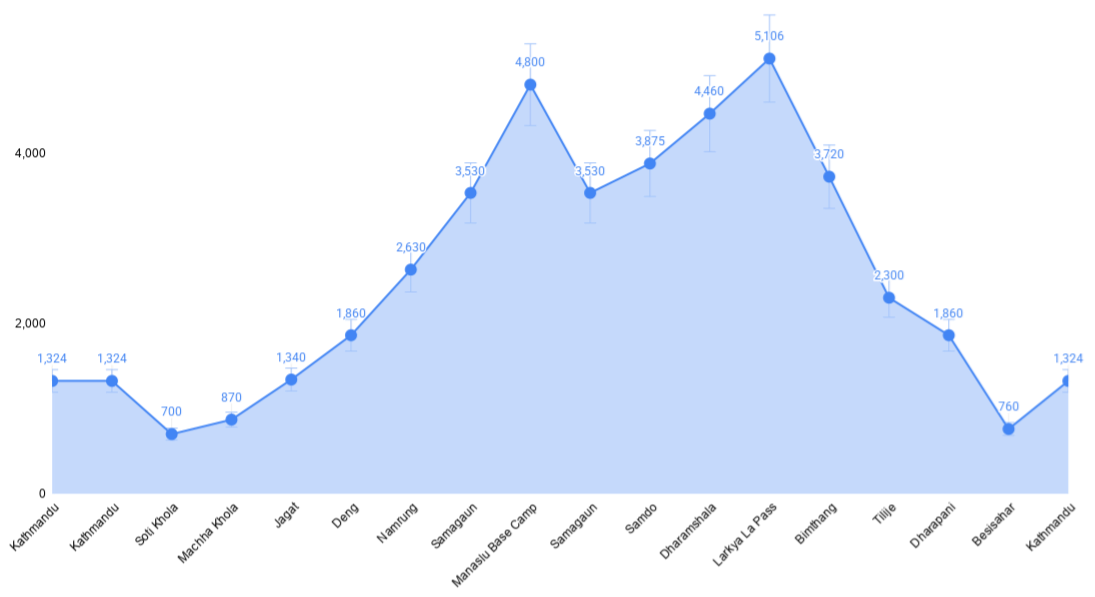
The Manaslu Circuit Trek begins with your arrival in Kathmandu (1,345m) at Tribhuvan International Airport (TIA). After arrival, you enjoy guided sightseeing around the Kathmandu Valley, visiting several UNESCO World Heritage Sites including Swayambhunath (Monkey Temple), Patan Durbar Square, Pashupatinath Temple, and Boudhanath Stupa.
From Kathmandu, the journey continues by road to Soti Khola (700m), the starting point of the trek. The trail then follows the Budhi Gandaki River, passing through lush forests, terraced fields, and traditional villages. You trek from Soti Khola to Machha Khola (870m), and onward to Jagat (1,340m), a charming village that marks the entry point to the Manaslu Conservation Area.
The trek continues from Jagat to Deng (1,860m) and then to Namrung (2,630m), where the landscape begins to change into alpine terrain with impressive mountain views. From Namrung, the trail leads to Samagaun (3,540m), a culturally rich village nestled beneath Manaslu Himal. A rest and acclimatization day in Samagaun allows time to explore the area and adjust to the altitude.
After acclimatization, you trek from Samagaun to Samdo (3,875m), followed by a gradual ascent to Dharmashala / Larkya La Phedi (4,460m). The highlight of the trek comes as you cross the challenging Larkya La Pass (5,160m), offering breathtaking panoramic views, before descending to Bimthang (3,590m).
The trail then descends through beautiful forests and pasturelands from Bimthang to Tilije (2,300m) and onward to Dharapani (1,860m), where the Manaslu route connects with the Annapurna region. From Dharapani, you drive to Besisahar and continue onward back to Kathmandu, marking the end of the unforgettable Manaslu Circuit Trek.
In addition to the classic Manaslu Circuit, several alternative trekking routes around the Manaslu region offer unique landscapes, cultural encounters, and varying levels of challenge. These routes are ideal for trekkers seeking quieter trails, shorter itineraries, or more adventurous experiences.
Above all, relax and embrace your journey, enjoy the adventure with HimalayaHub!
It’s advisable to carry around USD 15–20 per day during your trek. This amount can cover extras such as hot showers, device charging, and the occasional soft drink or beer. Please note that this does not include tips for your guide or trekking crew. Learn more about the overall cost of the Manaslu Circuit Trek.
The Manaslu Circuit Trek begins with a road journey from Kathmandu to Soti Khola 145 km (7-8 hours) depending on road conditions.
The trek itself covers roughly 177 km (110 miles), looping around the Manaslu Massif and reaching the highest point at Larkya La Pass (5,106 m / 16,752 ft). Including road travel, the total journey from Kathmandu and back spans around 450–470 km, offering a full Himalayan adventure of culture, nature, and mountain scenery.
Nepal is known for its friendly hospitality and is generally a safe destination for visitors. That said, trekking in remote, high-altitude regions such as the Manaslu Circuit requires awareness and sensible preparation. At Himalaya Hub, your safety and comfort are our top priorities, and we take every measure to ensure a secure and rewarding trekking experience. Below are key safety considerations to help you trek with confidence.
High-altitude trekking comes with the possibility of Altitude Sickness, also known as Acute Mountain Sickness (AMS). Typical symptoms may include headaches, nausea, dizziness, fatigue, and a reduced appetite. The most effective prevention is gradual ascent, proper acclimatization, and staying well hydrated. Trek at a steady pace, give your body time to adapt, and avoid alcohol or heavy meals at higher elevations.
If you experience any symptoms, inform your guide immediately. Our guides are fully trained to identify and manage altitude-related conditions and will take appropriate action if needed. For more detailed information, please refer to our dedicated Altitude Sickness guide.
Although uncommon, emergencies such as landslides, avalanches, or sudden health issues can occur in mountainous terrain. In such situations, it is essential to follow your guide’s instructions at all times. Our team is trained in first aid and emergency response and can arrange further assistance, including helicopter evacuation, when necessary.
We strongly advise all trekkers to obtain comprehensive travel insurance that covers high-altitude trekking and emergency evacuation services. This provides added security and ensures quick access to support if required.
Before traveling to Nepal, consult your healthcare provider regarding recommended vaccinations. Commonly advised immunizations include hepatitis A, typhoid, tetanus, and others depending on your health history and travel itinerary.
Carrying a small personal first-aid kit is also recommended. Essentials may include antiseptic cream, blister treatment, oral rehydration salts, pain relief medication, and any prescribed medicines. While basic medical supplies can be found in Kathmandu, bringing your own ensures familiarity and convenience during the trek.
Chat with us — real trekking experts, not bots.

 -11°C
-11°C


Transportation Included in the Tour:
End‑of‑trek transport:
Chat with us — real trekking experts, not bots.
To initiate a cancellation request, please write to us at [email protected] from your registered email ID.
Cancellations prior to 25 days from the start of the Trip
Cancellations Between 24 and 15 Days Before the Trip Start Date
Cancellations Between 14 and 10 Days Before the Trip Start Date
Cancellation less than 9 days to the start of the trek.
In the unfortunate event of a death in the immediate family (parents, siblings, spouse, or children), or if the trekker is hospitalized for a minimum of 48 hours, or sustains a fracture (arm or leg) within one week prior to the trek, even if the cancellation is made a day before departure:
50% of the trek fee will be refunded in cashValid supporting documents must be submitted. We understand these are difficult times and are here to help.
HimalayaHub reserves the right to alter, shorten, or cancel any part of the trip due to transportation delays, adverse weather conditions, health emergencies, or any other unforeseen circumstances, including Force Majeure events.
HimalayaHub shall not be held liable for any cancellations, delays, or changes to services resulting from events beyond its control. These include, but are not limited to, earthquakes, landslides, strikes, curfews, wars, pandemics, government-imposed restrictions, heavy rainfall or snowfall, storms, road blockages, trail disruptions, or permit withdrawals.

Mt. Manaslu, also known as Kampunge is located in the west-central part of Nepal. It is part of Manisiri himal, Nepalese Himalayas.
Entire trek takes around 13 days for completion (18 days if you count transport time and days in Kathmandu).
For a good trekking experience in Manaslu Circuit Trek, the spring season (March-June) gives you the best experience.
For a Manaslu Circuit Trek, you need special permission in addition to the regular trekking permit. This requirement stems from the region's proximity to Tibet, which designates it as a restricted area. The need for a restricted area permit ensures regulated access, preserving the delicate cultural and environmental balance of this remote region. On the upside, this restriction means fewer trekkers on the trail. As a result, the experience feels more like an authentic expedition rather than a bustling commercial trek, allowing for a more intimate encounter with the stunning landscapes and unique local cultures.
At 8,163 meters (26,781 feet) above sea level, Manaslu ranks as the eighth-highest mountain in the world.
No, it is strictly prohibited because of the dangers of landscape and weather.
Completing a trek can cost you anywhere from 1000$ to 2000$ approximately depending upon your expense.
Trekking without a guide is banned therefore, it is mandatory to hire at least one guide to complete the Manaslu Circuit Trek. The section between Jagat and Bhimthang that has been declared a restricted area is covered by the Manaslu Trail.
The Manaslu Circuit Group Join Trek is a popular organized trekking route in Nepal that circles Manaslu, the eighth-highest mountain in the world (8,163 meters / 26,781 feet). Unlike private or independent treks, this is a group trekking program, meaning travelers join a pre-scheduled group with other trekkers rather than trekking individually.
To visit Nepal, most travelers can obtain a visa on arrival at Tribhuvan International Airport in Kathmandu. Make sure your passport is valid for at least six months. Currently, all visitors are required to complete an online application for arrival and departure before boarding their flight. For the latest information and requirements, you can visit the official website: Nepal Immigration.
Himalaya Hub offers flexible trekking packages for the stunning Manaslu Circuit Trek, catering to every type of traveler. Choose from our Guide Service Package for personalized support, a Budget Package for essentials, a Standard Package for comfort and convenience, or a Full Board Package for a fully inclusive trekking experience with meals, accommodations, guides, and permits.
We highly recommend the Standard or Full Board Packages for a smooth, hassle-free journey. Additionally, we can create custom packages tailored to your budget, preferences, and itinerary.
Experience the adventure of a lifetime in the Manaslu region with Himalaya Hub, where every trek is carefully designed for a memorable and seamless journey.
Upon your arrival at Tribhuvan International Airport in Kathmandu, a friendly member of the Himalaya Hub team will be waiting to welcome you. Look for your name on a pickup board at the arrival gate. Additionally, a representative from NHTE will also be present at the airport to assist and ensure a smooth transition to your trek preparations.
While trekking the Manaslu Circuit, you can access the internet, though the speed is generally limited and may not support heavy usage like streaming. Internet is not complimentary, so you’ll need to purchase access if required. Mobile coverage is available in most villages along the trail, with 4G service in some areas, but connectivity can fluctuate depending on weather conditions.
Standing tall at 8,163 meters, Mount Manaslu is the highest peak in the Manaslu region and ranks as the 8th-tallest mountain in the world. This majestic Himalayan giant was first conquered on May 9, 1956, by the Japanese climber Toshio Imanishi and Nepali climber Gyalzen Norbu, marking a historic moment in mountaineering. The Manaslu Circuit Trek offers trekkers an incredible opportunity to experience the grandeur of this towering peak, winding through pristine landscapes, traditional villages, and breathtaking mountain vistas.
Larkya La Pass, perched at 5,160 meters in the Manaslu region, is one of the most thrilling highlights of the Manaslu Circuit Trek. While its altitude is manageable for trekkers with basic acclimatization, the difficulty can increase significantly depending on weather conditions. During heavy snowfall, the trail on the far side becomes hard to follow, and icy patches make the crossing quite challenging.
For beginners or those new to high-altitude trekking, having an experienced crew and proper gear is essential. At Himalaya Hub, we provide expert trekking guides, support staff, and all the necessary equipment to ensure a safe and unforgettable journey across Larkya La Pass. With the right preparation, even first-time trekkers can enjoy this spectacular adventure without compromising safety.
The guide is mandatory for the Manaslu Circuit trek. You can’t do it without the guide.
Manaslu is about 123 km aerial distance from Kathmandu to the Northwest. The starting point of the trek is around 126 km from Kathmandu.
On the Manaslu Circuit Trek, lodging is simple and rustic, designed to offer comfort after long days of trekking. Most teahouses provide twin-bed rooms with basic mattresses, so bringing your own sleeping bag is essential. Bathrooms are generally shared, and heating is usually available only in the dining areas.
Please note that accommodation options are limited in certain areas, particularly at Dharamsala, just before the Larke Pass. In this section of the trek, you may need to share rooms with fellow trekkers.
Our Manaslu Circuit Trek package does not include hotels in Kathmandu, allowing you the flexibility to choose your preferred stay before and after the trek.

Member Since 2025



Manaslu Circuit 2017