
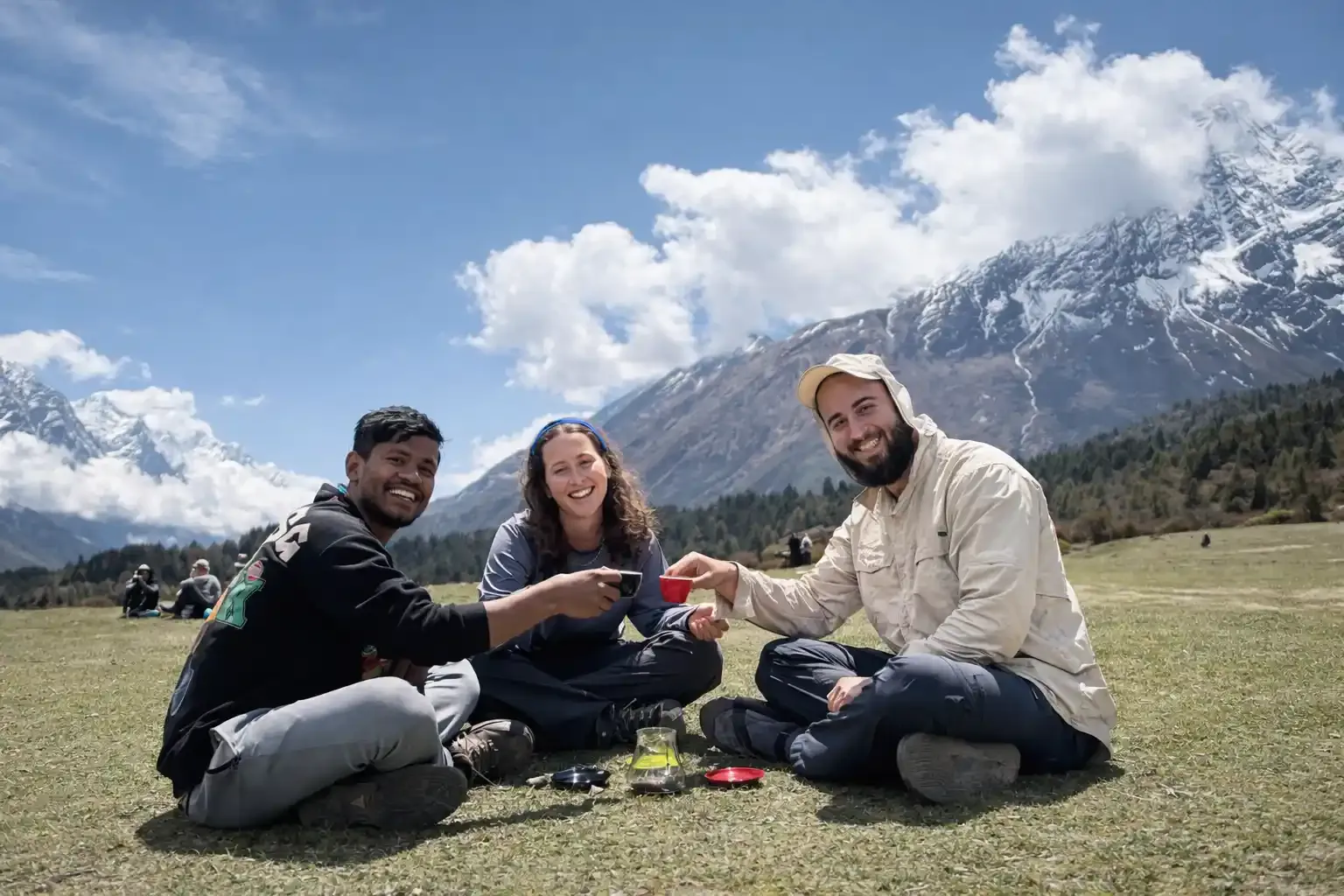

Spring (March to May) is the best season for the Manaslu Circuit Trek. Expect daytime temperatures of 10–22°C at lower elevations, dropping to -5°C–10°C at night depending on altitude. Pre-monsoon weather is stable, offering crisp views of Mount Manaslu (8,163 m). Crucially, Larkya La Pass (5,106 m) is safely crossable from late March, with April offering peak conditions.
Trekkers call this trail a “forest of fire.” Between 2,000 and 3,500 meters, hillsides erupt in vibrant red and pink rhododendrons against snow-capped peaks. Combined with longer days and cheaper permits, it’s a favorite for all hikers.
This guide covers everything spring-specific: month-by-month weather, trail and pass conditions, what blooms when, honest pros and cons, and practical planning advice for permits, costs, packing, and teahouses.
Key Highlights of Spring
At a glance eight reasons trekkers choose spring:
- Full rhododendron bloom from late March to April, between 2,000 and 3,500 m
- Clear morning views of Manaslu, Himalchuli, Ngadi Chuli, and Ganesh Himal
- Dry, stable trails no monsoon mud, no leeches
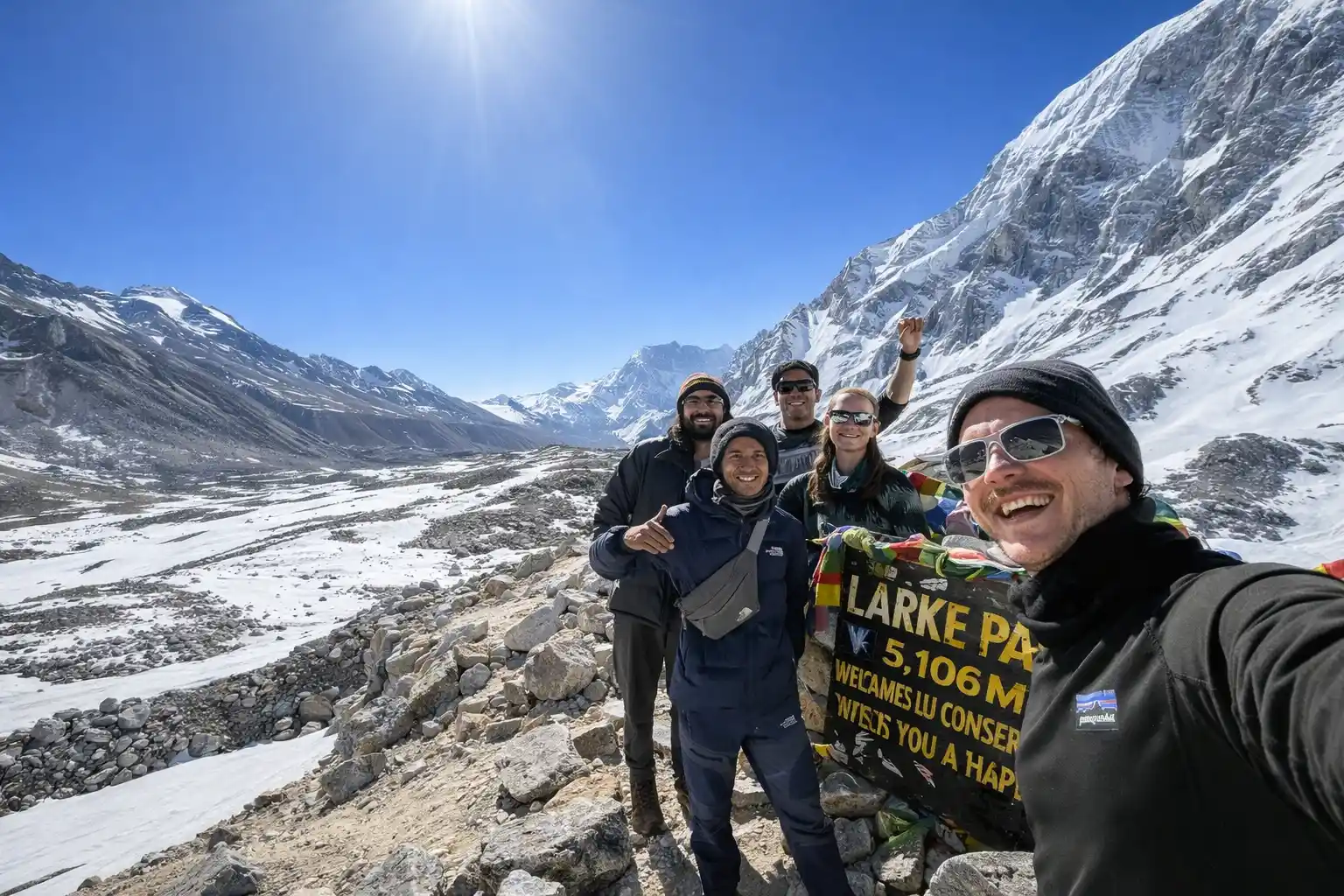
- The safest window of the year to cross Larkya La Pass (5,106 m)
- Active wildlife – blue sheep, Himalayan tahr, and spring birdlife in the conservation area
- Long daylight hours for relaxed, unhurried walking days
- Cheaper permit – the restricted-area fee drops to USD 75 in spring vs USD 100 in autumn
- Quiet trails – far fewer trekkers than Everest or Annapurna, even in peak April
Weather and Trek Conditions of Manaslu in Spring
Spring (March to May) is one of the best times to trek the Manaslu Circuit. The weather is generally stable, skies are clear, and temperatures are comfortable. Colorful rhododendron forests, fresh greenery, and excellent mountain views make this the most popular trekking season.
Daytime Temperatures
- Lower elevations (700–2,500m): Daytime temperatures typically range from 15°C to 25°C (59°F to 77°F), providing warm and comfortable trekking conditions.
- Mid-altitudes (Philim to Namrung): Temperatures usually range between 10°C and 18°C (50°F to 64°F) during the day.
- Higher elevations (Samagaun and Samdo, 3,500–3,900m): Expect daytime temperatures of around 5°C to 12°C (41°F to 54°F), with cooler mornings and evenings.
Nighttime Temperatures
- Samagaun and Samdo: Nighttime temperatures generally fall between -2°C and -8°C (28°F to 18°F), depending on the month and weather conditions.
- Dharamsala (4,460m) and Larkya La Pass (5,106m): Early morning temperatures can drop to -10°C to -15°C (14°F to 5°F) in March, while April and May are usually a few degrees warmer.
- Pack a four-season sleeping bag and wear warm layered clothing to stay comfortable during cold nights at higher elevations.
Trail Conditions
Spring trails are mostly dry and well-maintained, making walking easier than in winter or the monsoon season. Some snow and ice may remain near Larkya La Pass in early March, but conditions usually improve by April. Late May may bring occasional pre-monsoon showers in the lower valleys, so a lightweight waterproof jacket is useful.
Spring is also the most colorful season on the Manaslu Circuit. Hillsides are covered with blooming rhododendrons, waterfalls are fed by melting snow, and wildlife such as Himalayan thar, blue sheep, and many bird species are more active, adding to the beauty of the trek.
Why Spring Is One of the Best Times for the Manaslu Circuit Trek
Spring packs color, clarity, and comfort into a single window. Rhododendrons reach full bloom just as winter snow melts off the trail. Pre-monsoon skies stay clear through most mornings. Days are warm enough to hike in a light layer down low, while the high passes stay crisp and dramatic.
There is a reason trekkers call the spring trail a “forest of fire.” Between 2,000 and 3,500 meters, entire hillsides burn red and pink with rhododendron blossoms while snow-covered peaks rise behind them. Add warmer days, longer daylight, and a cheaper restricted-area permit, and it is easy to see why the Manaslu Circuit Trek in spring is a favorite among both first-timers and seasoned Himalayan hikers.
This guide covers everything spring-specific: month-by-month weather, trail and pass conditions, what blooms when, honest pros and cons, and practical planning advice for permits, costs, packing, and teahouses.
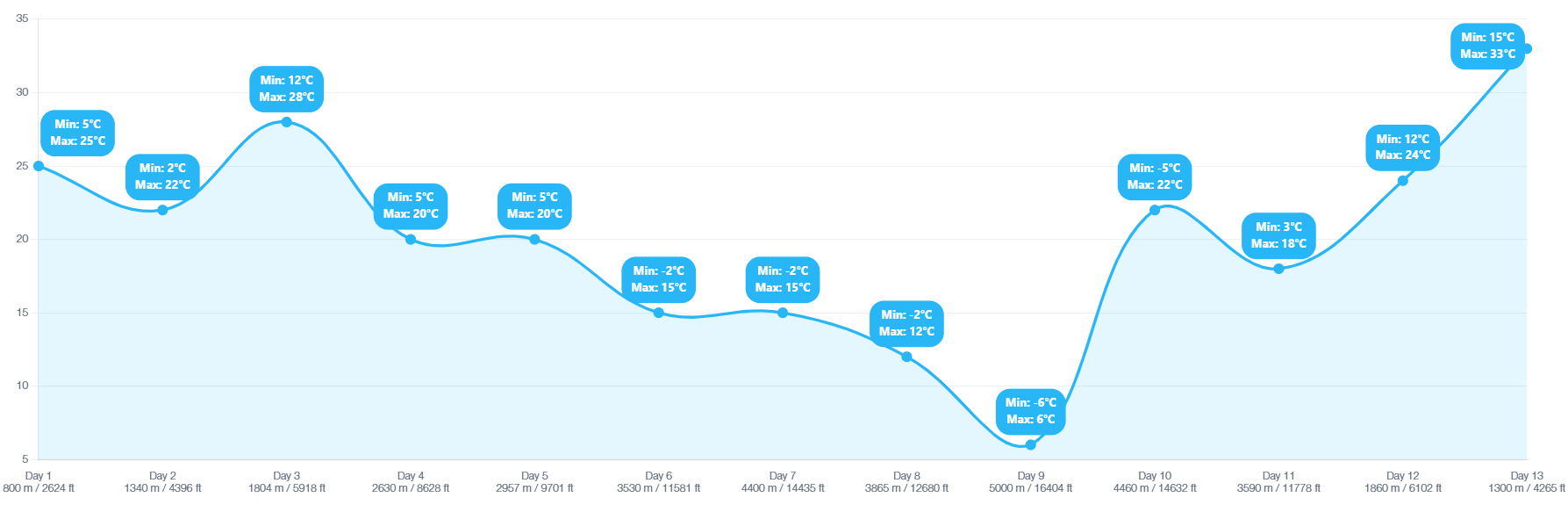
Manaslu Circuit Trek Weather in Spring: Month-by-Month
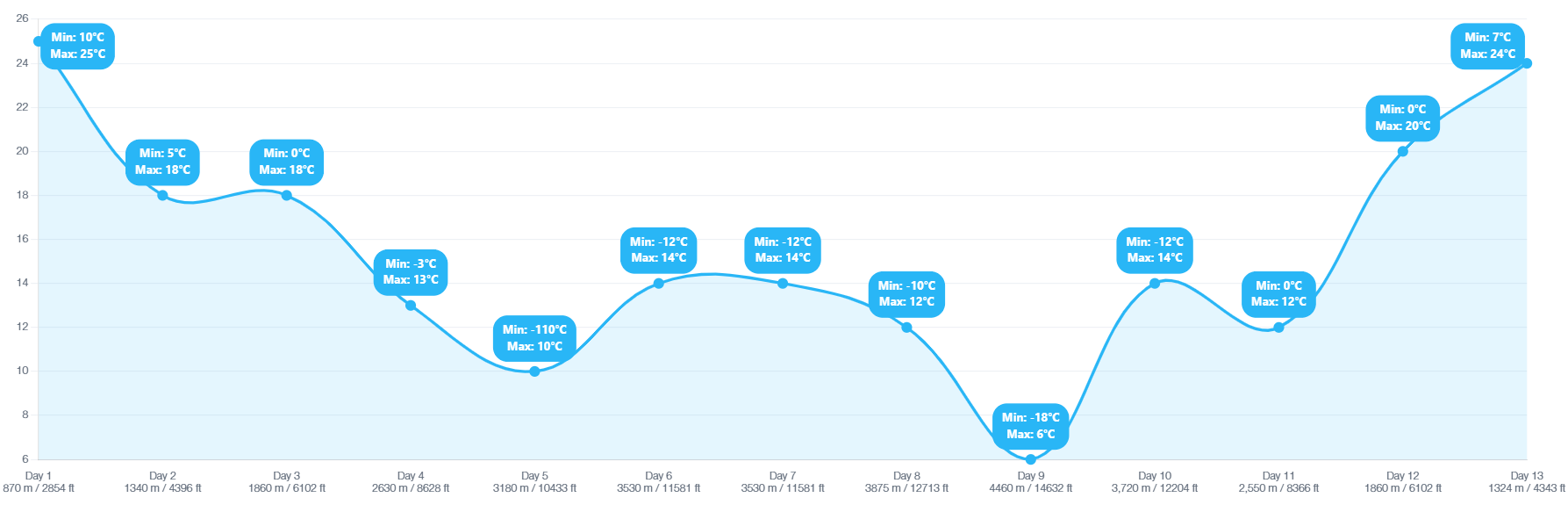
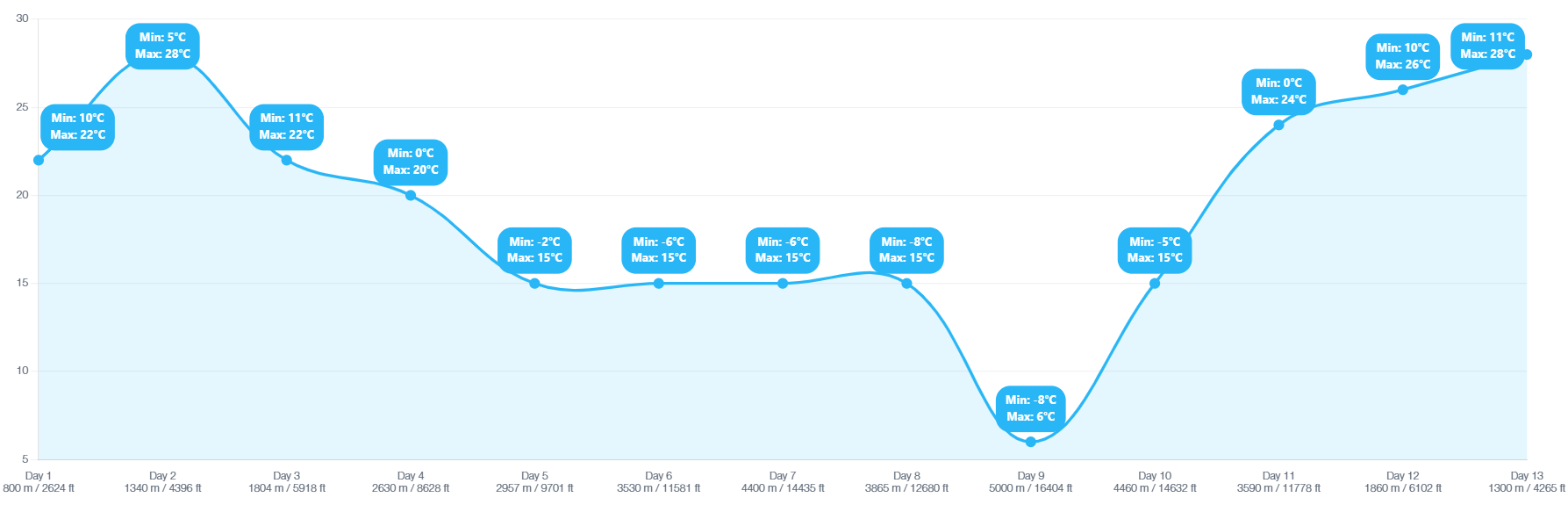
Temperatures climb steadily from March to May, but high-camp nights stay below freezing all season. The table below shows typical ranges treat them as historical averages, not forecasts.
| Zone | March | April | May |
| Lower elevations (700–2,000 m), day | 8–18°C | 12–22°C | 20–25°C |
| Mid elevations (2,000–3,500 m), day | 6–14°C | 8–16°C | 10–20°C |
| Samagaon (3,530 m) | Day ~8°C / night −8 to −5°C | Day ~10°C / night ~−5°C | Day ~12°C / night ~0°C |
| Larkya La region (4,800–5,106 m) | Day −5 to 5°C; nights −10°C or below | Day −3 to 5°C; pre-dawn −6 to −2°C | Day 0 to 6°C; pre-dawn −3 to 2°C |
Manaslu Circuit Trek in March: Quiet Trails and Late Snow
March is the quietest month of spring. Winter has just released its grip, the air is crisp, and the mountains carry their heaviest coat of snow which makes for the sharpest, most dramatic scenery of the season. The first rhododendron blooms appear at lower elevations by mid-month.
Be honest with yourself about early March, though. Leftover winter snow can still slow or even block Larkya La in the first two weeks, and nights above Samdo stay bitterly cold. Some high teahouses are only just reopening. Plan for mid or late March, carry microspikes, and keep a buffer day in your schedule.
Best for: experienced trekkers who want solitude and don’t mind the cold.
Manaslu Circuit Trek in April: The Best Month of Spring
Best for: first-timers and photographers. If you can only pick one month, pick April.
April is when everything comes together:
- Rhododendron forests between Deng and Namrung hit peak bloom
- The weather is at its most stable of the whole season
- Larkya La is reliably open
- Daylight stretches long enough for unhurried walking days
The one trade-off is popularity. April is the busiest month of spring, and rooms at Samdo and especially Dharamsala which have very limited beds fill quickly.
Bottom line: book your April departure early, or trek with Himalaya Hub that reserves teahouses in advance.
Tell us your travel plans and we’ll create a personalized itinerary based on your budget, interests, and schedule.
Manaslu Circuit Trek in May: Warm Days and Early Haze
Best for: Trekkers who prefer warmth and quieter trails over picture-perfect visibility.
May brings the warmest days of spring – lower valleys reach 20–25°C. Blooms linger at higher altitudes, alpine wildflowers open above Samdo, and the April crowds thin noticeably.
The compromises: afternoon haze starts to soften long-range views, brief pre-monsoon showers can pass through the lower valleys, and melting snow leaves a few muddy sections. Mornings at altitude usually stay clear, so early starts still deliver the views. Aim to finish your trek by mid-May.
Month-by-month verdict:
| Month | Verdict |
| Early March | Caution – lingering snow risk on the pass |
| Late March | Good – quiet, clear, cold nights |
| April | Excellent – the best overall month |
| Early–mid May | Good – warm, some afternoon haze |
| Late May | Acceptable – pre-monsoon buildup begins |
Pros and Cons of the Manaslu Circuit Trek in Spring
Every season involves trade-offs. Here’s the honest picture:
The Pros
- Vibrant Flora: The trail transforms into a colorful window of blooming rhododendrons.
- Ideal Conditions: Stable pre-monsoon weather creates the safest window for Larkya La Pass.
- More Sun: Warmer days and longer daylight hours than in autumn.
- Budget-Friendly: Cheaper restricted-area permit ($75 vs. $100).
- Better Wildlife: Animals are highly visible as the snowline retreats.
- Smoother Start: Trailhead roads are freshly repaired after winter.
The Cons
- Peak Crowds: April is the busiest month; teahouses fill up fast.
- Early March Snow: Lingering snow can slow progress or block the pass.
- Late-May Haze: Afternoon haze can reduce visibility of distant peaks.
- Spring Showers: Occasional pre-monsoon rain at lower elevations in May.
- Muddy Trails: Snowmelt makes certain sections muddy in late spring.
- Freezing Nights: High-altitude camps still drop well below freezing.
The verdict: for most trekkers, the pros decisively outweigh the cons. Better still, every single con on this list can be managed: pick the right month, book ahead, and pack for cold nights.
Spring Details Trail Conditions on the Manaslu Circuit
Spring gives you the friendliest trail conditions of the year.
Here’s what that means section by section:
- Lower route (Budhi Gandaki valley): dry and firm, with none of the mud or leeches that plague the monsoon months. Landslide-prone sections stay stable, and the suspension bridges are in good shape after the quiet winter.
- Middle section (Deng to Namrung): the path runs beneath a canopy of blooming rhododendrons. Many trekkers say this stretch alone justifies choosing spring.
- High section: the trail dries out progressively as the snowline retreats through the season.
Crossing Larkya La Pass (5,106 m) in Spring
Larkya La is the highest point of the trek and the day every trekker thinks about most. Here’s what spring changes:
- March: residual snowfields near the top demand a pre-dawn start (usually 2:00–4:00 AM), and microspikes are a smart carry. Your guide will read the conditions and set the departure time.
- April–May: the trail over the pass is mostly clear, the safest crossing window of the year. The early start still matters, because strong winds hit the pass by late morning in every season.
Don’t underestimate the day itself. The crossing is non-technical, but it’s a long, demanding push of 8 to 12 hours at serious altitude, the toughest stage of the entire circuit. If you want to know exactly what you’re signing up for, here’s a closer look at how demanding this trek really is. Whatever your fitness, the acclimatization day at Samagaon before the pass is non-negotiable.
Rhododendron Blooms, Wildlife, and Culture on the Spring Trail
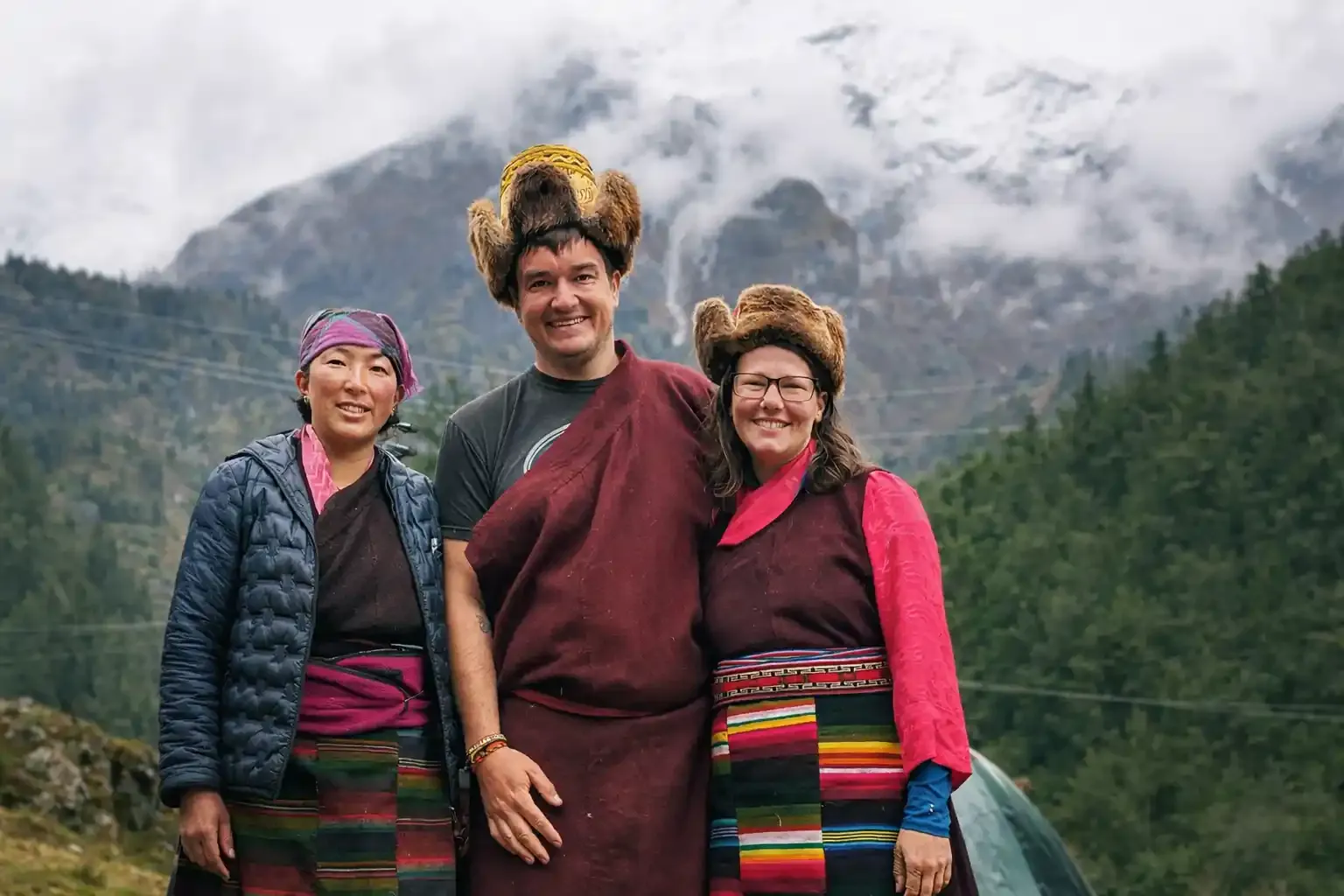
The bloom climbs the mountain as spring progresses, time your trek to catch it at its peak.
The bloom calendar:
- March: magnolias open first in the lower valleys
- April: rhododendrons Nepal’s national flower peak between 2,000 and 3,500 m, painting whole hillsides red, pink, and white
- May: delicate alpine wildflowers emerge in the meadows above Samdo
The wildlife follows the melting snow. Blue sheep and Himalayan tahr graze the slopes above Samagaon and Samdo, and sharp-eyed trekkers may spot the danphe, Nepal’s colorful national bird, in the forested sections. The entire route lies inside the Manaslu Conservation Area, one of Nepal’s richest habitats.
Spring village life is a highlight of its own. In Lho and Samagaon, fields are being planted, monasteries like Pungen Gompa sit against still-snowy backdrops, and May trekkers may witness Buddha Jayanti celebrations. Before you go, you can see exactly where these villages sit along the route and plan your photo stops.
Top three photo spots in spring: Lho at sunrise, Birendra Lake near Samagaon, and the rhododendron slopes around Bimthang.
Planning a Spring Manaslu Trek: Itinerary, Permits, and Cost
13-Day Manaslu Circuit Itinerary for Spring
The essentials: Machha Khola to Dharapani, roughly 160–177 km of walking, an acclimatization day at Samagaon, and the Larkya La crossing on Day 10. Spring’s long daylight makes each stage feel comfortable, and April’s stable weather keeps the schedule reliable.
| Day | Route |
| 1 | Drive Kathmandu → Machha Khola |
| 2 | Machha Khola → Jagat |
| 3 | Jagat → Deng |
| 4 | Deng → Namrung |
| 5 | Namrung → Lho |
| 6 | Lho → Samagaon via Pungen Gompa |
| 7 | Acclimatization day in Samagaon |
| 8 | Samagaon → Samdo |
| 9 | Samdo → Dharamsala |
| 10 | Dharamsala → Larkya La Pass → Bimthang |
| 11 | Bimthang → Gho |
| 12 | Gho → Dharapani |
| 13 | Drive Dharapani → Kathmandu |
For village-by-village details, follow the full day-by-day plan for the 13-day route, including how far you’ll walk each day and how long each stage takes.
Manaslu Trek Permits in Spring: Cheaper Than Autumn
Here’s the detail most trekkers miss: spring falls under the off-season permit rate – so you pay less.
What you’ll need:
- Restricted Area Permit (RAP): USD 75 for the first 7 days + USD 10 per extra day in spring (vs USD 100 + 15/day in the September–November peak). A spring departure quietly saves you USD 25–40.
- Manaslu Conservation Area Permit (MCAP): NPR 3,000 (about USD 25)
- Annapurna Conservation Area Permit (ACAP): NPR 3,000 required because the trek exits through the Annapurna region
- Chumnubri Rural Municipality permit: NPR 1,000, one-time – new from 2026, and many older blogs still omit it.
Three rules to remember: a licensed guide is mandatory, the RAP must be processed through a registered trekking agency, and a TIMS card is not required. Our step-by-step permit guide covers the documents, rules, and application process in full.
Manaslu Circuit Trek Cost in Spring
Budget USD 900–1,300 per person for a standard 13-day trek and thanks to the permit discount, spring runs marginally cheaper than autumn.
Quick numbers to plan around:
- Meals: roughly USD 30 per day
- Cash: there are no ATMs beyond the trailhead – carry enough Nepali rupees from Kathmandu
- Package: with Himalaya Hub, the 13-day trek starts at USD 940
For a line-by-line budget, see what the trek costs across 12, 14, and 16-day plans.
Spring Packing List for the Manaslu Circuit Trek
The golden rule of spring packing: layering beats bulk. Spring brings the biggest day-to-night temperature swing of the year. You might hike in a T-shirt at noon and sleep in a −5°C room that same night.
Beyond the standard kit, make these six spring-specific adjustments:
- Microspikes – early March departures only; unnecessary from April
- Lighter base layers – lower valleys get genuinely warm, especially in May
- A packable rain shell – for occasional late-May showers
- SPF 50+ sunscreen and category-3 sunglasses – spring UV bouncing off snowfields is fierce
- A sleeping bag still rated to −10°C – high-camp nights stay freezing all season
- Allergy medication – bloom season means pollen, if you’re sensitive
The complete gear checklist covers every item, plus what to buy or rent cheaply in Kathmandu.
Teahouses and Food on the Manaslu Circuit in Spring
Good news first: Every teahouse on the route is open in spring unlike winter and fresh vegetables return to the menus in the lower villages.
What to expect:
- Simple, warm, family-run lodges the entire way
- Dal bhat – the unlimited-refill national dish as your most reliable fuel
- Around USD 30 per day for three meals
The one spring-specific rule: book ahead in April. Samagaon, Samdo, and especially Dharamsala (which has very few rooms) fill up fast. Trek with an agency that reserves in advance, or plan to arrive early in the afternoon.
Curious what’s on the menu? Here’s what you’ll actually eat on the trail, with real teahouse prices by altitude.
Manaslu Circuit Trek: Spring vs Autumn – Which Is Better?
| Factor | Spring (Mar–May) | Autumn (Sep–Nov) |
| Mountain views | Excellent mornings; some haze by late May | Sharpest, most reliable visibility |
| Scenery | Rhododendron blooms, wildflowers, wildlife | Golden post-monsoon landscapes |
| Crowds | Moderate; April busiest | Highest of the year (October peak) |
| Permit cost (RAP, first 7 days) | USD 75 | USD 100 |
| Weather-disruption risk | Low and predictable | Late-monsoon landslides and early snow possible in Sep–Oct |
Autumn earns its reputation for crystal visibility but it’s also the more crowded and more expensive season, and its opening weeks can be disrupted by late-monsoon weather. Spring counters with color, warmth, lower fees, and calmer conditions.
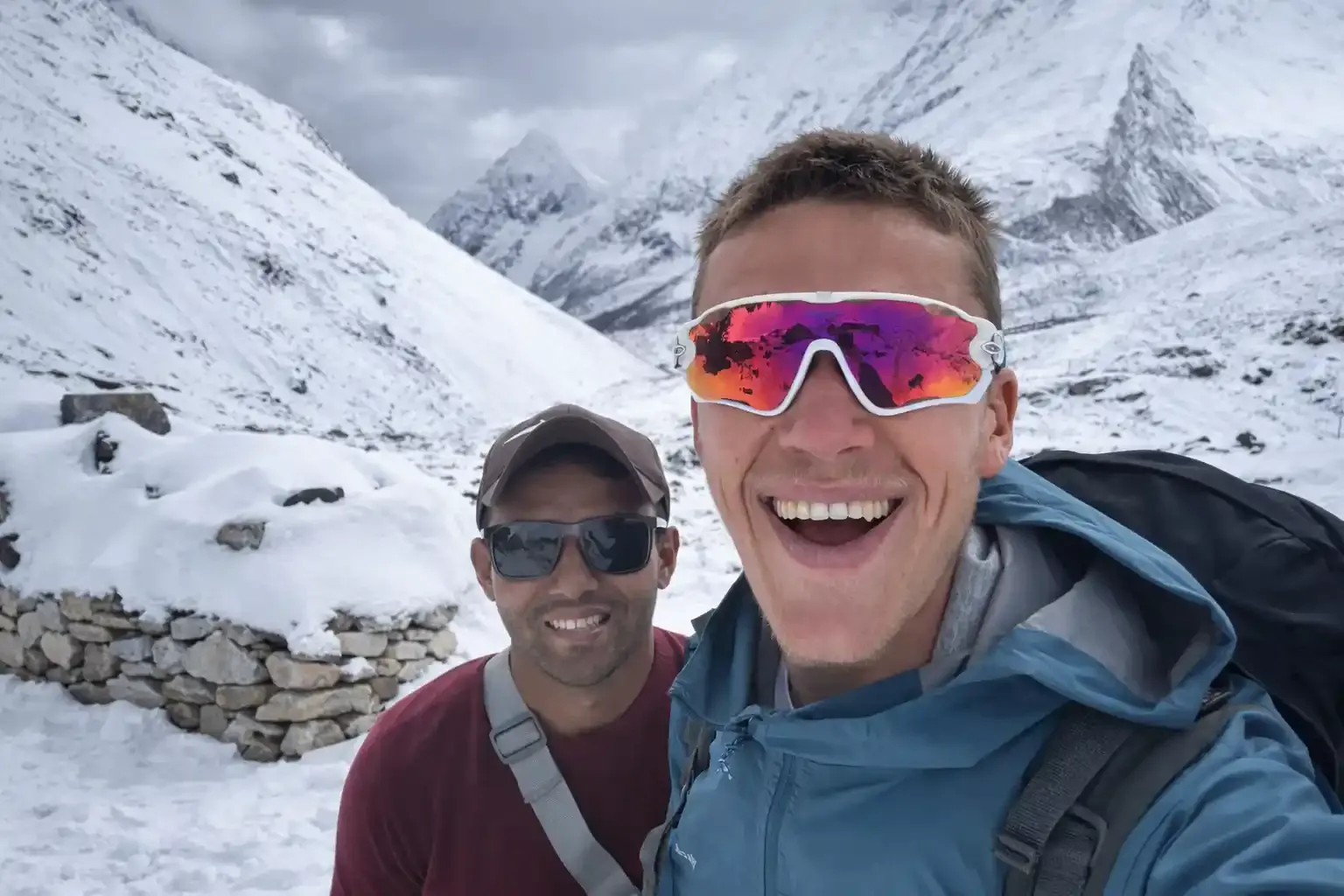
Who Should Trek the Manaslu Circuit in Spring?
Spring is your season if you are:
- A first-time Himalayan trekker who wants forgiving weather
- A photographer or nature lover chasing blooms and wildlife
- Someone who feels the cold easily and prefers warmer trekking days
- A budget-conscious traveler happy to save USD 25–40 on permit fees
Consider autumn instead if:
- Razor-sharp, long-range mountain visibility is your single highest priority
- Your holiday calendar only allows travel between September and November
Both seasons deliver a spectacular trek. Spring simply trades a little visibility for a lot of color and warmth.
Expert Tips for Trekking the Manaslu Circuit in Spring
Straight from our guides who lead this route every season:
- Book April departures 4–6 weeks ahead. Permits are quick – teahouse beds at Dharamsala are not.
- Start pass day early. Leave Dharamsala by 3:00 AM in March, 4:00 AM in April–May, to beat the late-morning winds on Larkya La.
- Build in one buffer day. Spring is stable, not guaranteed.
- Carry microspikes until the end of March. Your guide will tell you if you need them.
- Shoot photos in the morning. Spring afternoons cloud over first at altitude.
- Check your insurance. It must cover trekking to 5,106 m and helicopter evacuation.
- Start training 8–12 weeks out. Cardio, leg strength, and weekend hikes with a loaded pack this training and preparation plan walks you through it week by week.
Is Spring the Right Season for Your Manaslu Circuit Trek?
For most trekkers, yes and April is the sweet spot.
Your quick decision guide:
- April → the best all-round month for most trekkers
- Late March → if solitude matters more than warmth
- Early May → if warmth matters more than perfect visibility
Whichever month you pick, spring delivers a rare combination: blooming trails, a safely open pass, and a lower permit bill.
Ready for spring? Join our 13-day departure from USD 940 – group discounts available, and custom dates arranged on request.
Discover More About the Manaslu Region
Remote Area Treks in Nepal: Top 5 Hidden Himalayan Adventures
How Difficult is the Manaslu Circuit Trek? Complete Difficulty Guide
Manaslu Circuit Trek in Autumn: Weather, Views & Trekking Tips
Manaslu Circuit Trek in September: Weather, Trail Conditions & Tips
Manaslu Circuit Trek in October: Best Weather, Clear Views & Festivals
Manaslu Circuit Trek in November: Weather, Temperature & Trekking Guide
Reviews


Himalaya Hub Adventure executive director Ramesh gave us all the necessary in…
Himalaya Hub Adventure executive director Ramesh gave us all the necessary information to make our holiday really special and memorable. He attended to all our needs and gave a highly competitive quote. He provided us excellent vehicles and drivers and guide.
We set out from Kathmandu by road and visited Manakamana temple on the way to Pokhara. After a day of sightseeing in Pokhara including watching sunrise from Sarangkot viewpoint, we took next day early morning public bus to Ghandruk from where started our trek towards Tadapani . It is an ancient trade route and gives really memorable and special experiences but unfortunately we had continuous rain from the moment we started the trekking. Due to the clouds we missed the beautiful views of Himalayas which this trekking route is really famous for. We also spent some tense time in Tatopani due to the landslides along Kali Gandaki river where our guide took some excellent decisions to keep us safe.
Overall it was a great experience.
Ramit is a very good guide – very caring, knowledgeable, and always making sure I was safe and comfortable. He managed everything perfectly from hotels to food to permits. The only downside was the weather. Because of heavy rain, we couldn't see the good views from Ghorepani/Poon Hill and the trail became quite slippery and dangerous in some parts. But that's nature, nothing anyone can control, and he handled it very professionally and kept me safe. He took excellent decisions when faced with challenges posed by extreme weather conditions such as choosing a hotel accommodation at higher ground to keep us in safety in case of a flood and landslide. He sought required information for taking decisions regarding our trekking progress in difficult weather. He tested the path for safe crossing to minimise the risks that we were exposed to. He listened to our special needs and requirements and tried his best to meet with them such as ensuite accommodation, hot water, vegetarian food etc. His choice of teahouses and hotels were excellent.
Highly recommend Himalaya Hub Adventures for Nepal holiday packages.
Highly recommend Ramit Surkheti for anyone planning to trek in Nepal.
This tour is in the Himalayan hills and is relatively easy (ave. 6 hrs trekking per day). Lovely village sceneries, see Nepali agriculture, walks through the jungle and stiff climbs sometimes. 💪🏽
Communication with Puru of Himalaya Hub Adventures to book the tour and get all the details was very smooth.
Highly recommended!
From the morning pickup, bus transport, and hotel in Pokhara, through each day of trekking and our return to Kath…
From the morning pickup, bus transport, and hotel in Pokhara, through each day of trekking and our return to Kathmandu, everything was taken care of seemlessly.
Their well trained guide/porter Karan made every effort to see that we had a great experience.
This was our second time using Himalaya Hub, we had an excellent Everest Base Camp trek with them in 2018, so naturally they were our first choice when we arrived in Kathmandu this year.

Kind thanks from Julie and Ida, we will always remember🙏🏼


A huge thank you to our guides, Rosha…
A huge thank you to our guides, Roshan and Bipin, who were outstanding—professional, knowledgeable, kind, and went above and beyond to make sure everyone felt safe, comfortable, and well looked after. Roshan was especially organised at the guesthouses and meal times, quickly getting us settled in after each day’s trekking and clearly explaining the plan for the next day.
I also have a severe nut allergy, which Roshan managed with great care throughout the trek, something I really appreciated.
If you’re considering trekking in Nepal, I couldn’t recommend Himalaya Hub Adventure highly enough.












FAQs About the Manaslu Circuit Trek in Spring
Which is the best month for the Manaslu Circuit Trek in spring?
April is the best month. It combines peak rhododendron bloom, the most stable weather of the season, a reliably open Larkya La Pass, and long daylight hours. Late March is the top alternative for trekkers who prefer quieter trails.
Is there snow on Larkya La Pass in spring?
In early March, yes – lingering winter snow can slow or occasionally block the crossing. It thins steadily from late March, and by April and May the trail over the pass is mostly clear, making spring the safest crossing window.
Is spring cheaper than autumn for the Manaslu Circuit?
Yes. The Restricted Area Permit costs USD 75 for the first 7 days in spring versus USD 100 in autumn, with a lower per-day extension fee too (USD 10 vs 15). Most trekkers save USD 25–40 on permits with a spring departure.
How crowded is the Manaslu Circuit in April?
April is the busiest month of spring, and small settlements like Dharamsala fill quickly. Even so, the trail remains far quieter than Everest Base Camp or the Annapurna Circuit – the restricted-area rules keep total numbers low.
When do rhododendrons bloom on the Manaslu Circuit?
The main bloom runs from late March through April between 2,000 and 3,500 meters, with the finest displays on the forested stretch between Deng and Namrung. Alpine wildflowers continue at higher elevations into May.
Do I need microspikes for a spring trek?
Only for early-to-mid March departures, when leftover snow may sit on the approach to Larkya La. From April onward, microspikes are generally unnecessary, though your guide will make the final call based on conditions.
Can beginners do the Manaslu Circuit in spring?
Yes. Spring’s mild temperatures, dry trails, and long daylight make it the most beginner-friendly window for this strenuous trek. Commit to 8–12 weeks of training beforehand and follow the acclimatization schedule strictly.
Is May too late for the Manaslu Circuit Trek?
No, early to mid-May is still a good time, with warm days, lingering high-altitude blooms, and thinner crowds. Expect some afternoon haze and pack a light rain shell. Late May is best avoided as the pre-monsoon buildup begins.
0 Comment