

You are three days into the trail, the village kitchen is small, and the menu is in front of you. Almost every line seems to mention egg, cheese, butter or milk tea. If you follow a plant-based diet, that moment worries a lot of trekkers before they even book.
Here is the good news. Vegan food on Manaslu Circuit Trek is very doable, because the mountain diet in Nepal is built on rice, lentils, potatoes, buckwheat, barley and seasonal vegetables. This guide covers what you will eat each day, how to order without animal products, what to pack from Kathmandu, and how food changes as you climb.
Is the Manaslu Circuit Trek Vegan-Friendly?
Yes, with some planning. The trek runs through the Manaslu Conservation Area and is a teahouse trek, meaning you eat all meals in family-run lodges. It is a remote, restricted-area route (you need a Restricted Area Permit and a licensed guide) , so menus are simpler than on Everest or Annapurna.
The upside is that traditional Nepali and Himalayan cooking is largely plant-based already. The things to watch are:
- Ghee (clarified butter), often added to rice, bread and dal
- Dairy: milk tea, yogurt (dahi), cheese and butter
- Eggs: common in pancakes and breakfast sets
- Yak or sheep dairy in higher villages such as Samagaun and Samdo
Once you know these hiding places, ordering vegan becomes routine.
Manaslu Circuit Trek Food Guide
The route usually starts near Soti Khola or Machha Khola and ends around Dharapani, passing through Jagat, Deng, Namrung, Lho, Samagaun, Samdo and Dharamsala (Larkya Phedi), then crossing Larkya La (about 5,100 m) to Bimthang. These itineraries take 12 to 16 days.
Food changes with elevation:
| Zone | Typical elevation | What the food is like |
| Lower valley (Soti Khola to Jagat) | 700 to 1,400 m | Widest menu: fresh vegetables, rice, noodles, fried potatoes |
| Mid-hills (Deng to Lho) | 1,800 to 3,100 m | Good dal bhat, potatoes, buckwheat, momos |
| High valley (Samagaun, Samdo) | 3,500 to 3,900 m | Shorter menus, local barley, potato and Tibetan-style dishes |
| Pass zone (Dharamsala, Bimthang) | 4,400 m and below the pass | Basic menus, ingredients carried in by porters |
Expect prices to climb with altitude, because everything above the lower valley is carried in by porters or mules. As a rough guide, many trekkers budget around US$20 to 35 per day for meals and drinks on this route, but costs vary by season and lodge, so check with your operator.

Best Vegan Food on Manaslu Circuit
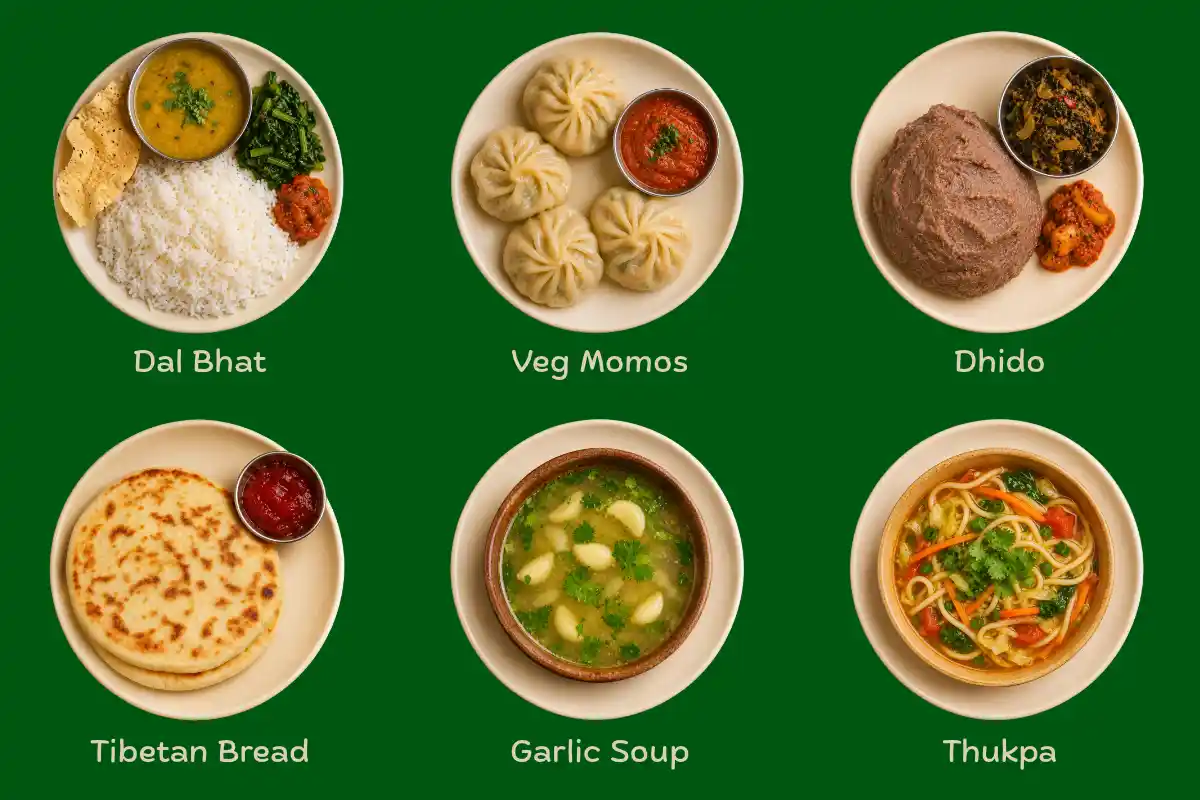
Dal Bhat: Your Everyday Vegan Staple
Dal bhat (lentil soup, rice, vegetable curry, greens and pickle) is the backbone of trekking nutrition in Nepal. It is usually vegan by default, and in most teahouses you get free refills, which helps when you are burning thousands of calories a day.
Just ask for it without ghee, and skip the yogurt or papad if you are unsure about ingredients. Locals say “Dal bhat power, 24 hour,” and after a day on the trail you will see why.
Dhido and Local Grain Dishes
Dhido is a thick, stew-like dish made by stirring millet, buckwheat or maize flour into hot water, traditionally eaten with gundruk (fermented greens) or lentil soup. It is naturally vegan, filling and gluten-light when made from millet or buckwheat. Ask your guide if the lodge makes it, since not every teahouse does.
Tibetan Bread, Chapati and Roti
Plain Tibetan bread (deep-fried dough) and chapati are common in the Manaslu area, which has a strong Tibetan-influenced culture in its upper villages. They are usually made with flour, water and oil. Confirm that no butter or egg is used, and ask for peanut butter or jam as a topping.
Veg Momos and Thukpa
Vegetable momos (dumplings) are widely available, especially in lower and mid-level villages. Ask for veg filling and check that the wrapper contains no egg. Thukpa (noodle soup) and vegetable soup are warm, easy to digest and good for cold evenings.
Garlic Soup
Garlic soup is a classic on high-altitude treks in Nepal. Many people believe it helps at altitude, though scientific evidence is limited. It is hot, light and usually vegan. Ask for it without butter.
Potatoes in Every Form
Potatoes are grown across the Manaslu region, so you will find boiled, fried, mashed, roasted or in curry. They are cheap, safe and easy on the stomach.
Vegan Breakfast on Manaslu Trek
Breakfast sets many trekkers up for the day’s climb. Good vegan options:
- Porridge or oatmeal made with water instead of milk (add honey-free sweetener, or jaggery if available)
- Tibetan bread with jam or peanut butter
- Chapati with vegetable curry
- Buckwheat or wheat pancakes (confirm no egg)
- Boiled or fried potatoes
- Black tea, lemon tea, ginger tea or hot lemon honey (skip the honey, ask for sugar)
Order breakfast the night before, since kitchens are busy and many trekkers leave early.
Vegan Lunch and Dinner in Manaslu
Lunch is often eaten at a teahouse along the trail, and dinner at your overnight stop.
Good lunch options:
- Vegetable fried rice (no egg)
- Veg noodle soup or thukpa
- Veg momos
- Potato dishes or vegetable curry with rice
Good dinner options:
- Dal bhat, the best choice after a long day
- Dhido with lentil soup
- Vegetable curry with chapati
- Spaghetti with tomato sauce (skip the cheese)
- Veg chowmein
Quick rule: If the dish is a Nepali staple (dal, rice, vegetable curry, greens), it is probably vegan. If it is a Western-style dish (pizza, pancakes, sandwiches, fried-egg anything), assume dairy or egg until you confirm.
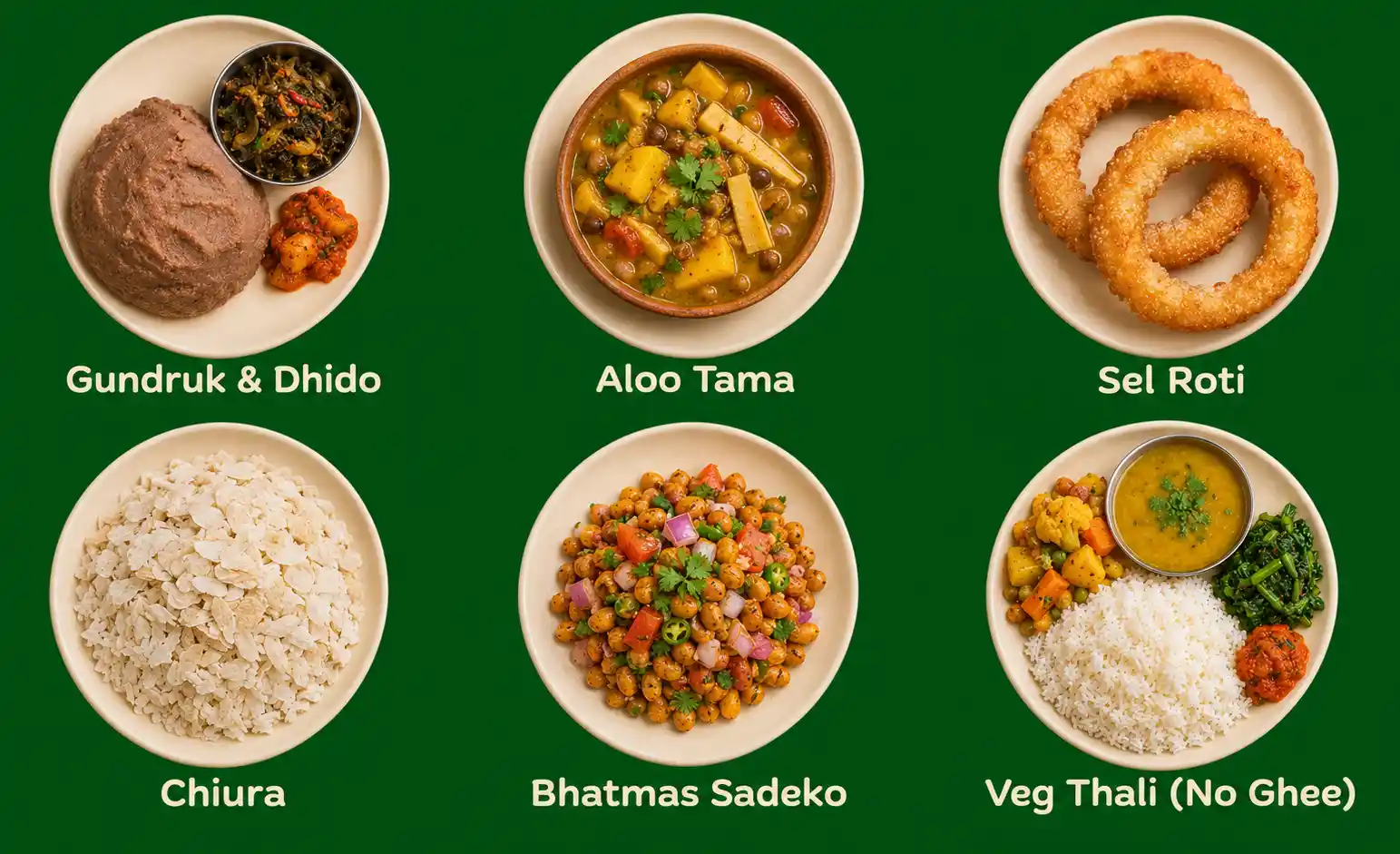
If you spend time in Kathmandu or Pokhara before or after the trek, look for these plant-based dishes:
- Gundruk and dhido, fermented greens with millet porridge
- Aloo tama, potato and bamboo shoot curry
- Sel roti, ring-shaped rice bread (often fried in oil)
- Chiura, beaten rice, a good trail carbohydrate
- Bhatmas sadeko, spiced roasted soybeans
- Veg thali sets at local restaurants (specify no ghee)
How to Order Vegan Food in Nepal Without Confusion
Most teahouse staff understand “vegetarian” well. “Vegan” is still less familiar, so be specific about each ingredient.
English phrases that work:
- “No egg, no milk, no butter, no ghee, no cheese, please.”
- “Is this cooked with oil or butter?”
Simple Nepali phrase:
- “Ma dudh, ghiu, dahi, anda ra maasu khaadina.” (I don’t eat milk, ghee, yogurt, egg and meat.)
Useful words:
| English | Nepali |
| Milk | Dudh |
| Ghee | Ghiu |
| Yogurt | Dahi |
| Egg | Anda |
| Meat | Maasu |
| Butter | Makhan |
Tell your guide on day one that you are vegan. A good guide will pass this to each teahouse kitchen ahead of time, which prevents most mistakes.
Vegan Diet During Manaslu Trek: Fueling for Altitude
Trekkers burn far more energy than usual on long mountain days, so eating enough matters as much as what you eat.
Practical tips:
- Eat carbohydrates first. Rice, potatoes and noodles give steady energy.
- Take refills of dal bhat. It is free in most places.
- Drink 3 to 4 litres of water daily. Hydration supports acclimatization.
- Eat small amounts often if altitude lowers your appetite.
- Watch your protein. Lentils, soy, peanuts and chickpeas help. Bring extra protein snacks.
- Consider vitamin B12. If you are vegan, discuss supplementation with your doctor before the trip.
Appetite often drops above 3,500 m. Even when you don’t feel hungry, keep eating warm, simple food.
Vegan Snacks for High-Altitude Trekking
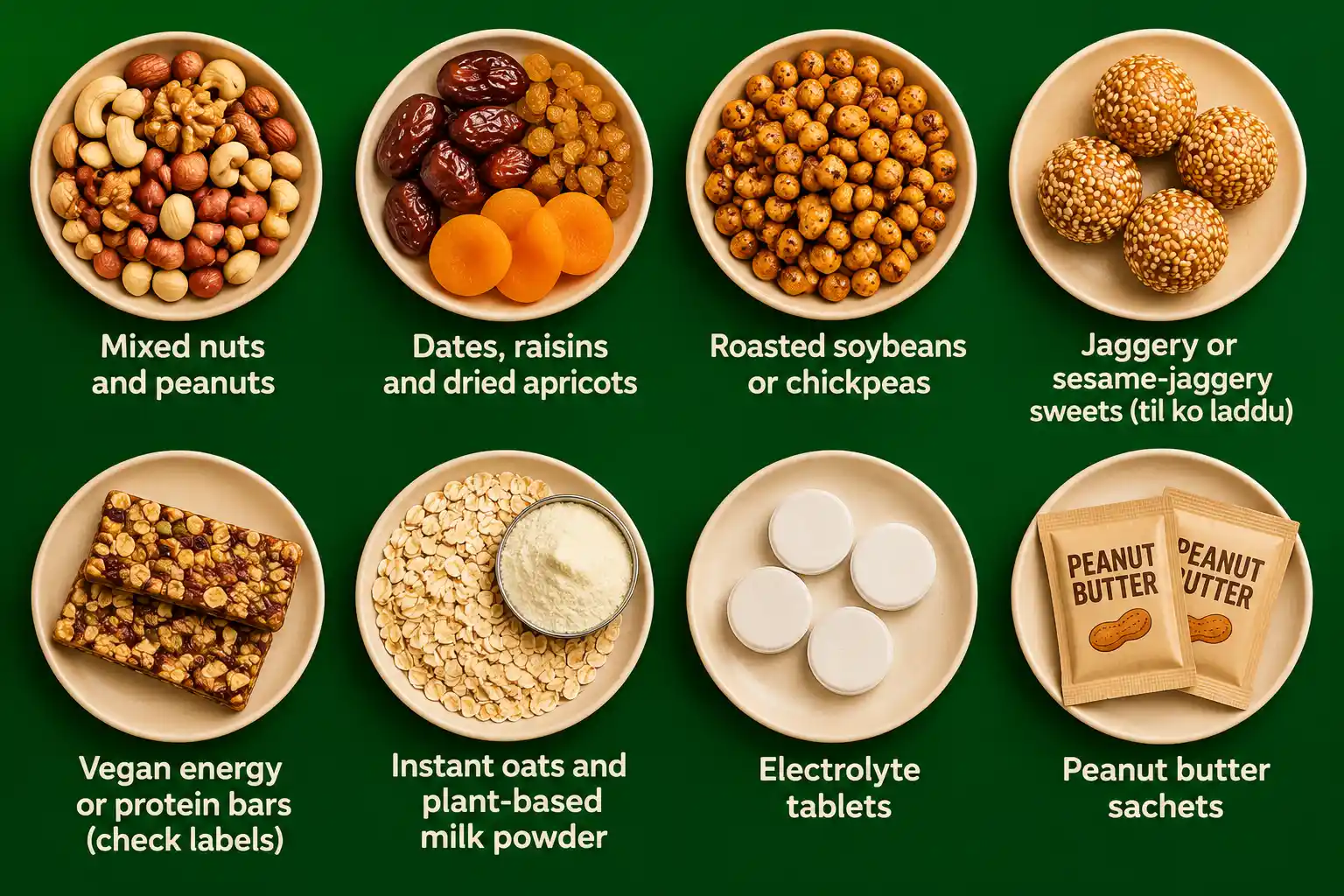
Snack selection in remote villages is limited and expensive, so bring supplies from Kathmandu (Thamel has plenty of shops).
Pack these:
- Mixed nuts and peanuts
- Dates, raisins and dried apricots
- Roasted soybeans or chickpeas
- Jaggery or sesame-jaggery sweets (til ko laddu)
- Vegan energy or protein bars (check labels)
- Instant oats and plant-based milk powder
- Electrolyte tablets
- Peanut butter sachets
Watch out for: many chocolate bars, biscuits and energy bars contain milk powder, whey or honey. Read ingredient lists carefully.
Vegetarian and Vegan Food in Manaslu: Quick Comparison
| Meal | Vegetarian-friendly | Vegan-friendly (with a small request) |
| Dal bhat | Yes | Yes, ask for no ghee |
| Tibetan bread | Yes | Yes, check for butter or egg |
| Momos | Yes | Yes, confirm egg-free wrapper |
| Porridge | Yes | Ask for water instead of milk |
| Pancakes | Often | Only if made without egg and milk |
| Pizza | Yes | Only without cheese |
| Tea | Yes | Ask for black, lemon or ginger tea |
Safe Food and Water Tips
- Choose freshly cooked, hot meals.
- Avoid raw salads and unpeeled fruit in lower villages unless properly washed.
- Use purification tablets, filters or boiled water instead of buying plastic bottles. Bottled water is discouraged in the conservation area.
- Wash or sanitize hands before eating.
Best Time for Food Variety
The two main trekking seasons are spring (March to May) and autumn (September to November). Lodges are fully open and supplies move more reliably. Winter and monsoon months can mean limited menus and closed teahouses at high elevations.
Plan Your Vegan Manaslu Trek With Himalaya Hub
Manaslu is a restricted area, so you need a licensed guide and a Restricted Area Permit arranged through a registered agency. Himalaya Hub can organize your Manaslu permits and the rest of the trek logistics, so food is planned from day one instead of sorted out in a teahouse kitchen.
When you book with Himalaya Hub, we suggest you:
- Add your vegan diet to the booking form. Tell us what you avoid (milk, ghee, egg, honey, butter) so it is on record before you arrive in Nepal.
- Let us brief your guide and the teahouses. Your guide passes your diet to each lodge kitchen ahead of time, so you are not explaining it at every stop.
- Ask for a Kathmandu supply list. We can point you to what to buy in Thamel, such as nuts, dates, peanut butter and plant-based protein bars, before the remote villages begin.
- Add extra acclimatization days. A rest day at Samagaun gives your body time to adjust and your appetite time to recover.
A short conversation before departure removes most of the food worry. Then you can focus on the trail: the views of Manaslu (8,163 m), the Larkya La crossing and the villages along the way.
Ready to plan your trek? Contact Himalaya Hub with your dates and dietary needs, and we will build the itinerary around them.
Chat with us — real trekking experts, not bots.
Explore More About the Manaslu Circuit Trek
Food is one part of a good Manaslu trip. These Himalaya Hub guides cover the rest of the planning, from fitness and gear to the best month for your dates.
Prepare for the Trek
- Manaslu Circuit Trek Difficulty: Find out what the daily walking, the altitude and the Larkya La crossing demand, so you can judge whether the trek suits your experience.
- How to Prepare for the Manaslu Circuit Trek: Get training, fitness and acclimatization advice to start the trail in good shape.
- Manaslu Circuit Trek Packing List: Check the clothing, gear and essentials to bring, alongside the vegan snacks from this guide.
Understand the Route
- Manaslu Circuit Trek Map: See the route from the starting point through each village to the end of the trek.
- Manaslu Circuit Trek Distance: See how far you walk each day and in total, which helps you plan meals, rest stops and acclimatization days.
Choose the Right Month
Each season changes the weather, the trail conditions and which lodges are open. The month also affects how many teahouses are running and how wide the menu is.
- Manaslu Circuit Trek in September: The end of the monsoon, with green landscapes and some lingering rain.
- Manaslu Circuit Trek in October: Peak season, with clear skies and the most reliable conditions. It is also the busiest month.
- Manaslu Circuit Trek in November: Crisp, stable weather and quieter trails, with colder nights at altitude.
- Manaslu Circuit Trek in December: A winter trek with very cold temperatures and snow possible on the high sections. It suits experienced, well-equipped trekkers.
Whichever month you choose, plan your meals and supplies early. If you have questions about the trek, the season or your vegan diet, contact Himalaya Hub and we will help you build the right itinerary.
Reviews


Himalaya Hub Adventure executive director Ramesh gave us all the necessary in...
Himalaya Hub Adventure executive director Ramesh gave us all the necessary information to make our holiday really special and memorable. He attended to all our needs and gave a highly competitive quote. He provided us excellent vehicles and drivers and guide.
We set out from Kathmandu by road and visited Manakamana temple on the way to Pokhara. After a day of sightseeing in Pokhara including watching sunrise from Sarangkot viewpoint, we took next day early morning public bus to Ghandruk from where started our trek towards Tadapani . It is an ancient trade route and gives really memorable and special experiences but unfortunately we had continuous rain from the moment we started the trekking. Due to the clouds we missed the beautiful views of Himalayas which this trekking route is really famous for. We also spent some tense time in Tatopani due to the landslides along Kali Gandaki river where our guide took some excellent decisions to keep us safe.
Overall it was a great experience.
Ramit is a very good guide - very caring, knowledgeable, and always making sure I was safe and comfortable. He managed everything perfectly from hotels to food to permits. The only downside was the weather. Because of heavy rain, we couldn't see the good views from Ghorepani/Poon Hill and the trail became quite slippery and dangerous in some parts. But that's nature, nothing anyone can control, and he handled it very professionally and kept me safe. He took excellent decisions when faced with challenges posed by extreme weather conditions such as choosing a hotel accommodation at higher ground to keep us in safety in case of a flood and landslide. He sought required information for taking decisions regarding our trekking progress in difficult weather. He tested the path for safe crossing to minimise the risks that we were exposed to. He listened to our special needs and requirements and tried his best to meet with them such as ensuite accommodation, hot water, vegetarian food etc. His choice of teahouses and hotels were excellent.
Highly recommend Himalaya Hub Adventures for Nepal holiday packages.
Highly recommend Ramit Surkheti for anyone planning to trek in Nepal.

From the morning pickup, bus transport, and hotel in Pokhara, through each day of trekking and our return to Kath...
From the morning pickup, bus transport, and hotel in Pokhara, through each day of trekking and our return to Kathmandu, everything was taken care of seemlessly.
Their well trained guide/porter Karan made every effort to see that we had a great experience.
This was our second time using Himalaya Hub, we had an excellent Everest Base Camp trek with them in 2018, so naturally they were our first choice when we arrived in Kathmandu this year.


Kind thanks from Julie and Ida, we will always remember🙏🏼


A huge thank you to our guides, Rosha...
A huge thank you to our guides, Roshan and Bipin, who were outstanding—professional, knowledgeable, kind, and went above and beyond to make sure everyone felt safe, comfortable, and well looked after. Roshan was especially organised at the guesthouses and meal times, quickly getting us settled in after each day’s trekking and clearly explaining the plan for the next day.
I also have a severe nut allergy, which Roshan managed with great care throughout the trek, something I really appreciated.
If you’re considering trekking in Nepal, I couldn’t recommend Himalaya Hub Adventure highly enough.














Frequently Asked Question
Is it easy to find vegan food on the Manaslu Circuit Trek?
Yes. Dal bhat, vegetable curry, potatoes, momos, noodle soups and Tibetan bread are widely available, and most are vegan with small changes. Options narrow as you go higher, so tell your guide early.
Is dal bhat vegan?
Usually, yes. Traditional dal bhat is rice, lentil soup and vegetables. Ask for it without ghee, and check the yogurt and pickle if you are strict.
What should I avoid eating as a vegan on the Manaslu Trek?
Avoid milk tea, yogurt, cheese, butter, ghee, eggs, and any pancakes or baked goods made with dairy or egg. Also check bars and biscuits for milk powder or honey.
What vegan snacks should I bring for the Manaslu Trek?
Bring nuts, dates, dried fruit, roasted soybeans, peanut butter, jaggery sweets and vegan protein bars from Kathmandu. Supplies in higher villages are limited and costly.
0 Comment