
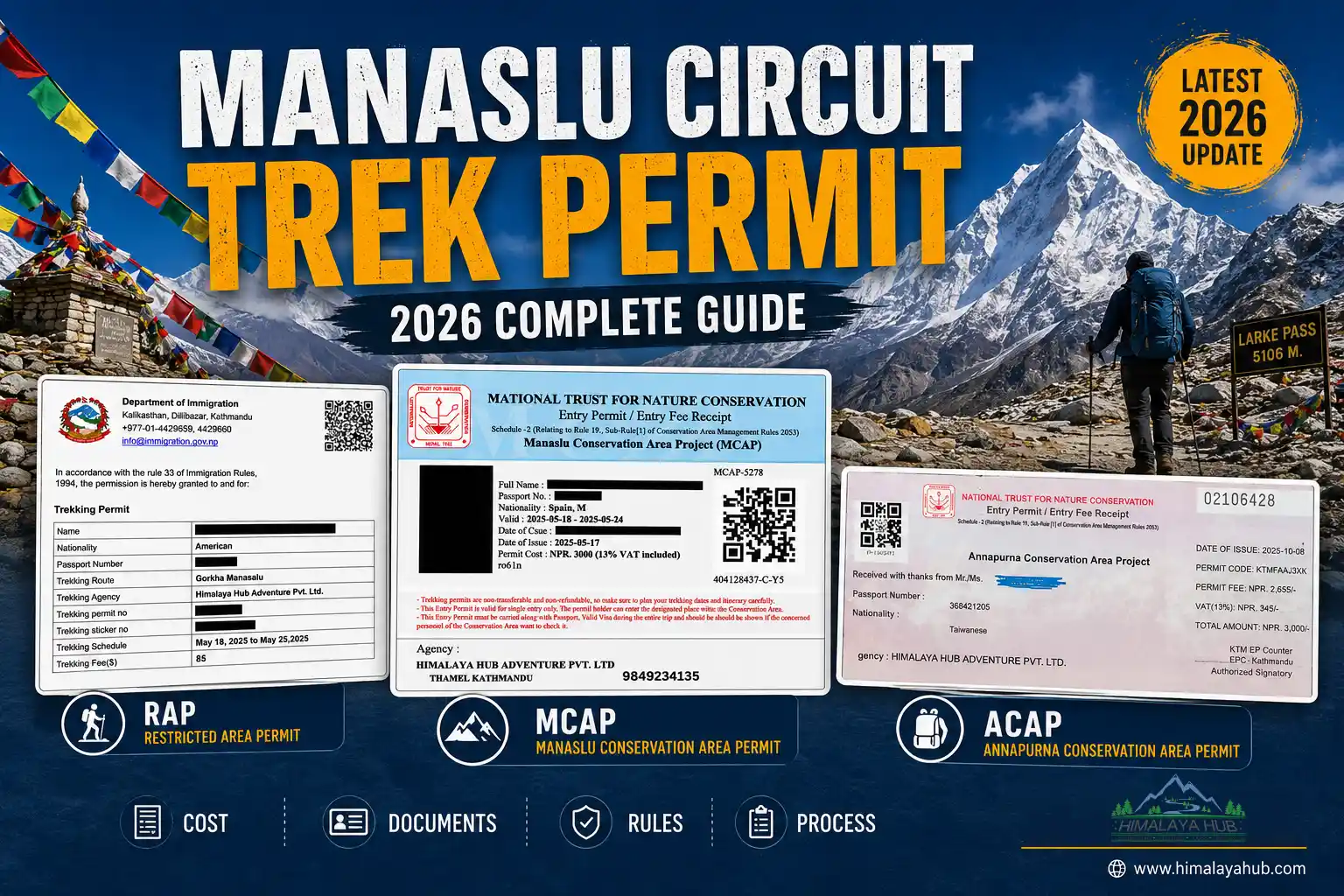

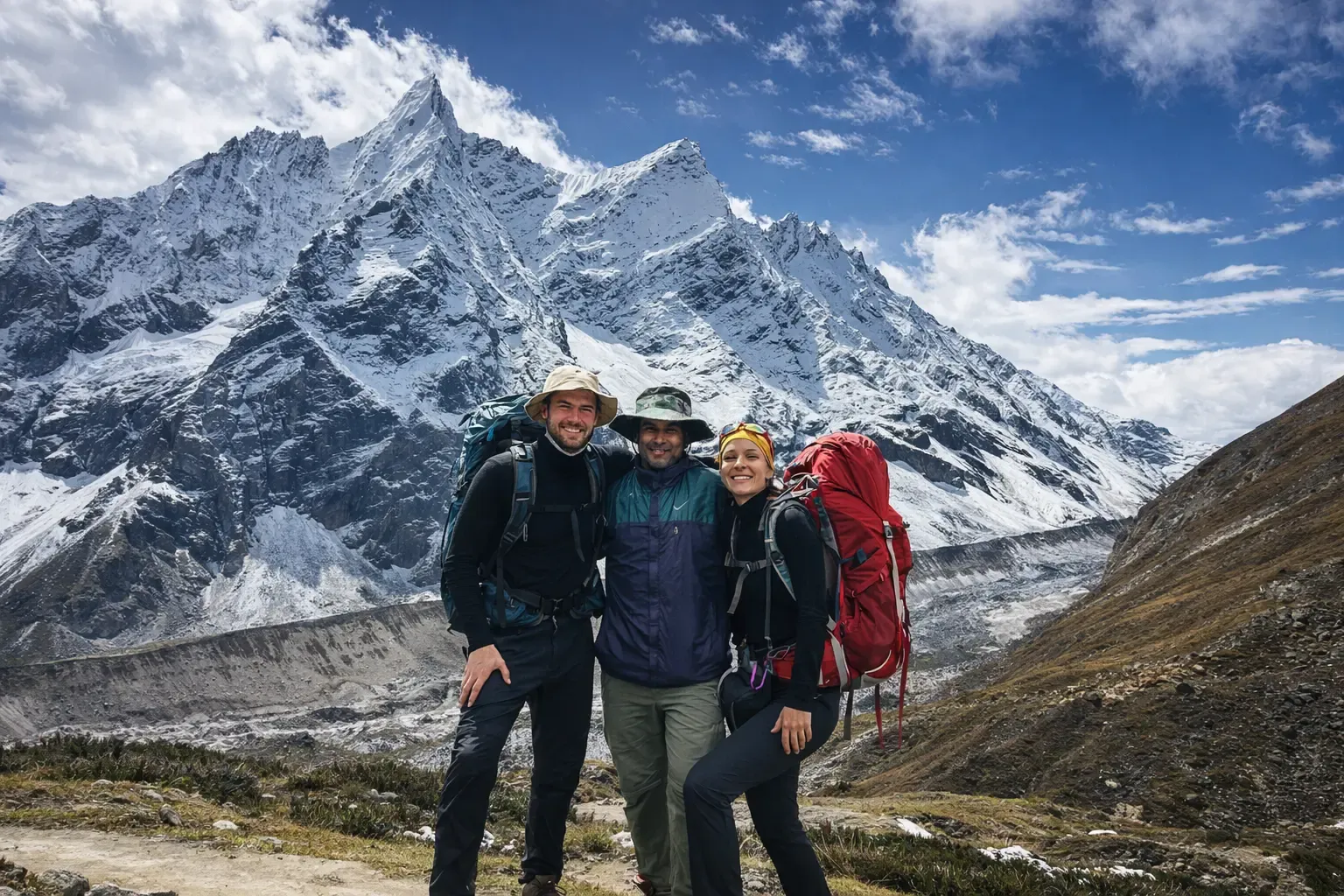
The Manaslu Circuit Trek is one of Nepal’s most beautiful trekking routes. It takes you through remote mountain villages, rich cultural areas, and stunning Himalayan landscapes around Mount Manaslu 8,163m (26,781 feet), the world’s eighth-highest mountain. Many trekkers choose this route because it is less crowded than other popular treks in Nepal.
Before starting the trek, it is important to understand the permit requirements. Unlike some trekking routes in Nepal, the Manaslu region is a restricted area. This means the Nepal government has special rules for visitors to help protect local communities, preserve cultural heritage, and improve safety in remote mountain areas. Because of these regulations, all trekkers must obtain the required permits before entering the region.
Understanding the permit process in advance can save you time, prevent delays, and help you plan your trip with confidence. Trekking without the correct permits can result in fines, denied entry at checkpoints, or being required to leave the trail.
For the Manaslu Circuit Trek in 2026, trekkers need three permits:
- Manaslu Restricted Area Permit (MRAP)
- Manaslu Conservation Area Permit (MCAP)
- Annapurna Conservation Area Permit (ACAP)
In this guide, you will learn who needs each permit, the latest permit costs, required documents, processing times, and important rules you must follow before trekking in the Manaslu region.
All Required Permits for Manaslu Circuit Trek
If you plan to trek the Manaslu Circuit, you have three required permits. The Nepal government requires these permits because part of the route is a restricted area and other parts pass through protected conservation zones.
Trekkers need three permits:
- Manaslu Restricted Area Permit (MRAP)
- Manaslu Conservation Area Permit (MCAP)
- Annapurna Conservation Area Permit (ACAP)
You must carry these permits throughout the trek. Officials check them at several checkpoints along the trail. Without the correct permits, you may not be allowed to continue your trek.
Because the Manaslu Circuit enters both the Manaslu and Annapurna conservation areas, all three permits are required for the complete trek.
Manaslu Restricted Area Permit (MRAP)
What Is the Restricted Area Permit?
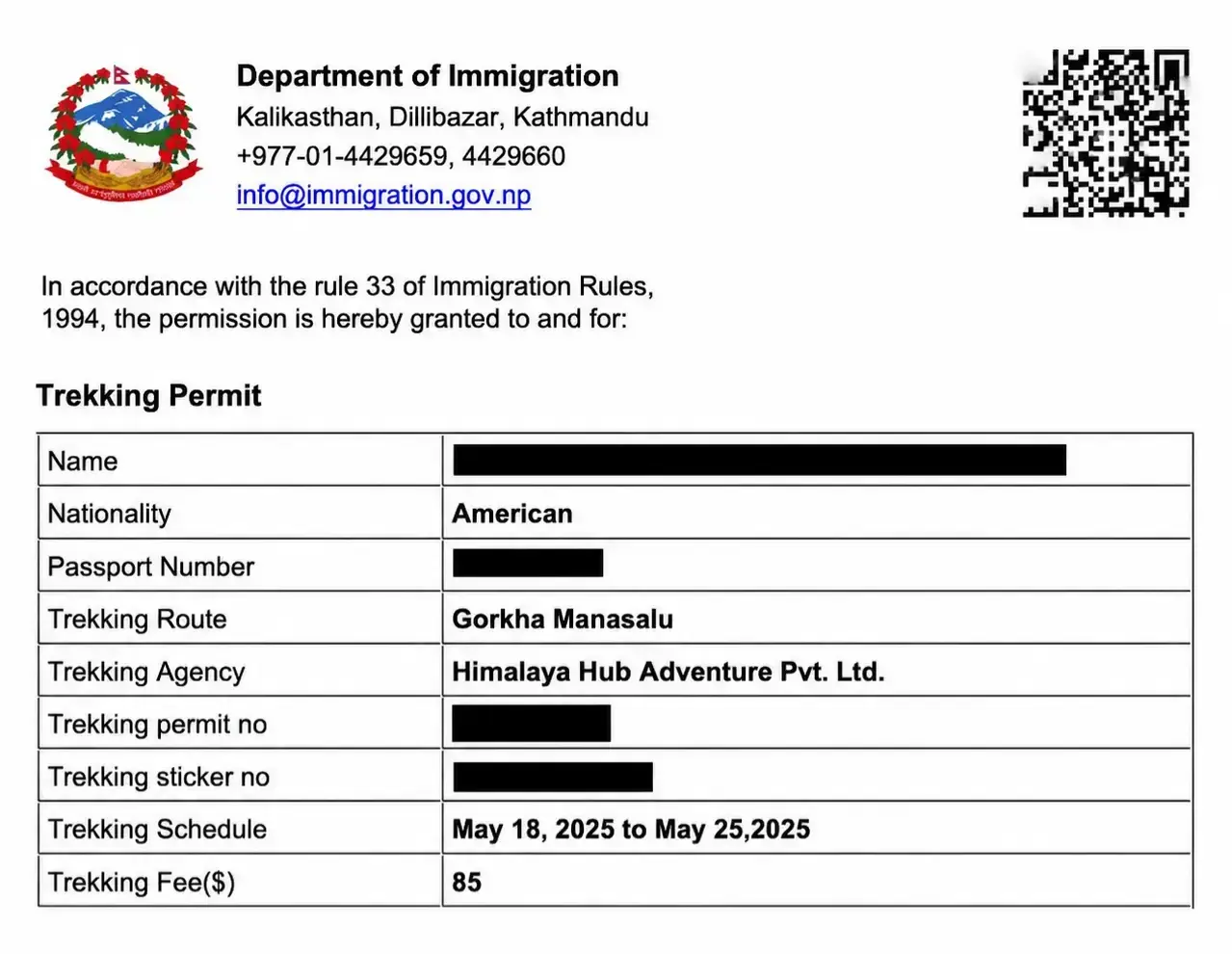
The Manaslu Restricted Area Permit (MRAP) is the most important permit for the Manaslu Circuit Trek. The Nepal government requires this permit for all trekkers who enter the restricted section of the trail.
This permit covers villages and trekking areas such as Jagat, Philim, Deng, Namrung, Sama Gaun, Samdo, and Dharamsala and nearby villages within the restricted zone. The government classifies this region as restricted because it lies close to the Nepal-Tibet border. The rule helps protect local culture, manage tourism, and improve safety in remote mountain areas.
Unlike other trekking permits, you cannot apply for the MRAP on your own. A registered trekking agency must arrange it for you. The permit is also one reason why trekkers must travel with a licensed guide in the Manaslu region.
How Long Does Permit Processing Take
The Manaslu Restricted Area Permit processed within one business day after you submit all required documents. During busy trekking seasons, processing may take slightly longer. Most trekkers receive their permit through their trekking agency before the trek begins. To avoid delays, submit your passport details and travel documents several days before your departure date.
Manaslu Restricted Area Permit Cost
Peak Season (September–November)
- USD 100 per person for the first 7 days
- USD 15 per person per day after the initial 7 days
Off-Season (December–August)
- USD 75 per person for the first 7 days
- USD 10 per person per day after the initial 7 days
Required Documents for Restricted Area Permit
To obtain a Manaslu Restricted Area Permit, trekkers must provide several documents to their trekking agency. Make sure all documents are accurate and up to date before applying.
Required documents:
- Original passport (valid for at least 6 months)
- Copies of your passport
- Valid Nepal visa
- 4 passport-sized photos
- Travel insurance details
- Detailed trekking itinerary (day-by-day schedule)
Your trekking agency will use these documents to process the permit with the Nepal immigration authorities. Submitting complete documents early can help prevent processing delays.

Important Rules for MRAP
The Nepal government has strict rules for the Manaslu Restricted Area Permit. First, there must be at least two trekkers listed on the permit application. Solo trekking is not allowed in the restricted area.
A licensed trekking guide is also mandatory. Every trekking group must travel with a government-licensed guide while inside the restricted zone.
In addition, trekkers cannot obtain the permit independently. A registered trekking agency must arrange and process the permit on their behalf. Agencies such as Himalaya Hub Adventure can handle the permit application and ensure all requirements are met before the trek starts.
Manaslu Conservation Area Permit (MCAP)
What Is MCAP?
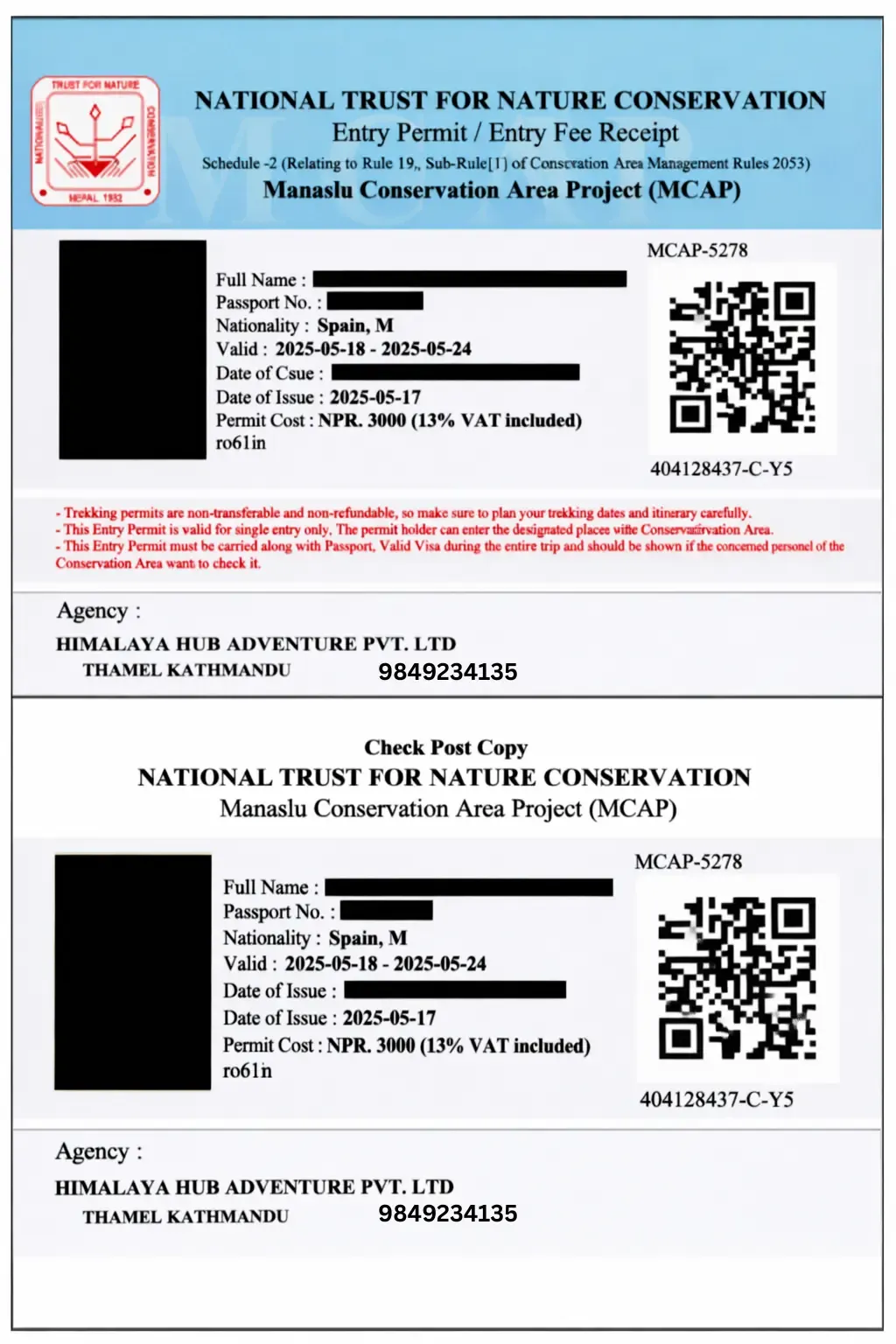
The Manaslu Conservation Area Permit (MCAP) is a required permit for trekkers visiting the Manaslu region. The permit allows you to enter the Manaslu Conservation Area, a protected region managed to preserve nature, wildlife, and local culture.
The Manaslu Conservation Area covers forests, rivers, mountains, and traditional villages. It is home to many plants and animals, including Himalayan tahr, musk deer, and snow leopards. The conservation area also protects the natural beauty that makes the Manaslu Circuit Trek so popular.
Money collected from MCAP fees helps support conservation projects, environmental protection programs, and local communities. It also helps manage tourism in the region.
Trekkers can obtain the MCAP permit through a registered trekking agency or from the Nepal Tourism Board office in Kathmandu before starting the trek.
How Long Does Permit Processing Take
The MCAP permit process is very fast. Officials issue the permit on the same day you apply, so you do not have to wait long to start your adventure. Most trekkers receive the permit before leaving Kathmandu. If you book your trek through a registered agency like Himalaya Hub Adventure, the agency can arrange the permit for you and help avoid delays.
MCAP Permit Cost
- Foreign Nationals: NPR 3,000 per person
- SAARC Nationals: NPR 1,000 per person
- Nepali Citizens: NPR 100 per person
Required Documents For MCAP
To get a Manaslu Conservation Area Permit, you must provide a few basic documents. Make sure your passport and visa are valid before applying.
Required documents:
- Original passport (valid for at least 6 months)
- Copies of your passport
- Valid Nepal visa
- 2 passport-sized photos
- Detailed itinerary (day-by-day trekking schedule)
Your trekking agency or permit office will use these documents to issue the permit. Bringing complete documents helps make the process quick and easy.
Areas Covered Under MCAP
The MCAP covers the entire Manaslu Conservation Area along the trekking route. This protected area stretches across a large part of the Manaslu region and includes forests, mountain valleys, rivers, and traditional villages.
The permit helps protect important wildlife habitats and natural attractions found throughout the conservation area. Many rare animals and bird species live here. The area also contains beautiful landscapes, glaciers, waterfalls, and views of Mount Manaslu and surrounding peaks. Anyone trekking through these protected areas must carry a valid MCAP permit.
Why MCAP Is Required
The MCAP plays an important role in protecting the Manaslu region. Permit fees help fund environmental conservation projects that preserve forests, wildlife, and natural resources. The permit also supports trail maintenance, making trekking routes safer and easier to use.
In addition, part of the permit revenue goes toward community development projects in local villages. These projects may support schools, health services, waste management, and tourism programs. By purchasing an MCAP permit, trekkers help protect the environment while supporting the people who live in the Manaslu region.
Annapurna Conservation Area Permit (ACAP)
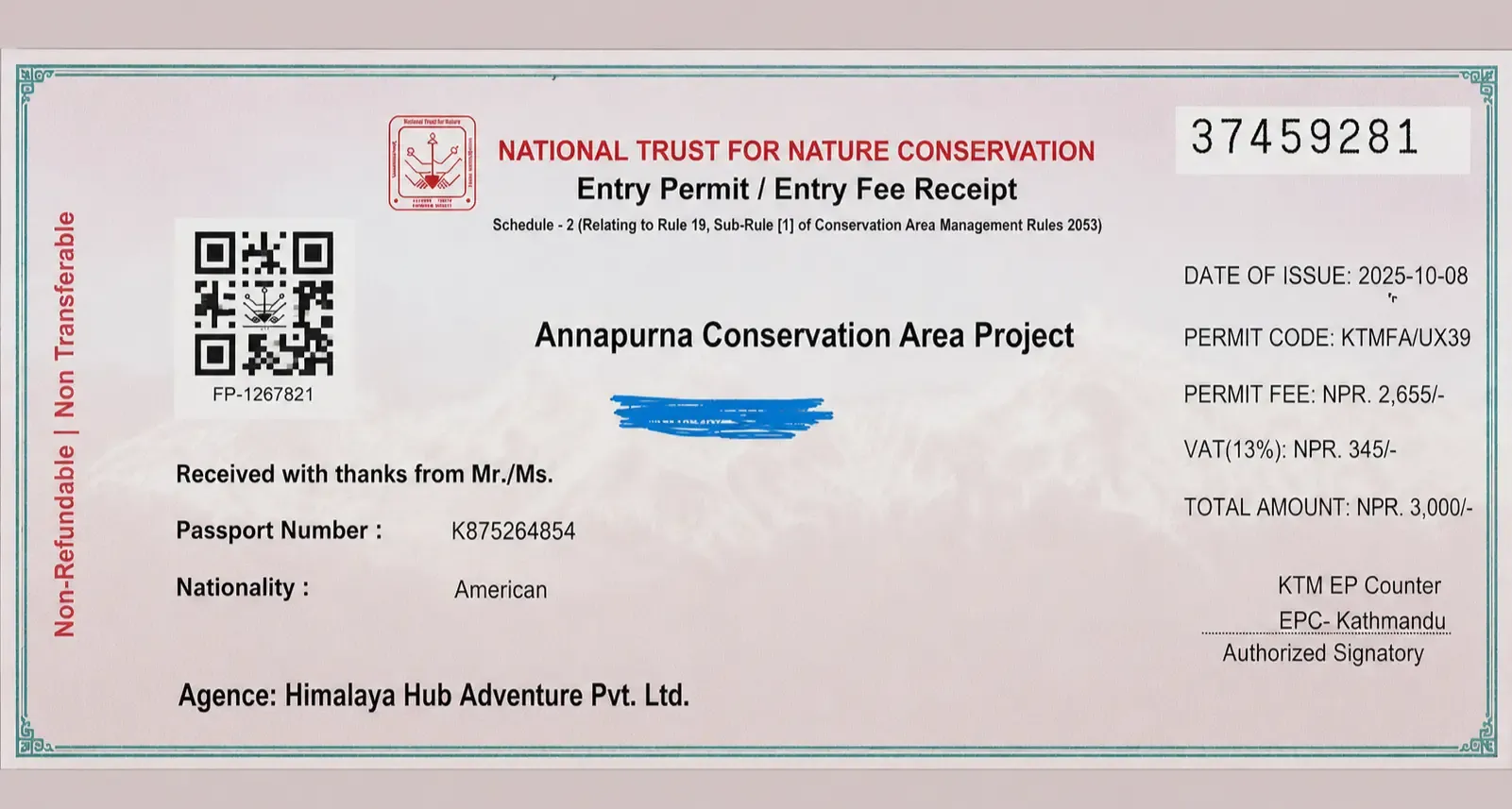
Why ACAP Is Needed for Manaslu Circuit Trek
Many trekkers are surprised to learn that the Manaslu Circuit Trek requires an Annapurna Conservation Area Permit (ACAP). This is because the full Manaslu Circuit route does not stay only in the Manaslu region. After crossing the high Larke Pass (5,106 m), the trail enters the Annapurna Conservation Area.
As you descend from Larke Pass, you pass through places such as Bimthang and Dharapani, which lie inside the Annapurna Conservation Area. Because part of the trek takes place in this protected region, all trekkers must carry a valid ACAP permit.
The Annapurna Conservation Area is Nepal’s largest protected area. It protects mountain landscapes, forests, wildlife, and local communities. The permit fee helps support conservation programs and tourism management throughout the region.
You can obtain an ACAP permit through a registered trekking agency or from the Nepal Tourism Board office in Kathmandu before your trek begins.
How Long Does Permit Processing Take
The ACAP permit is processed on the same day after you submit the required documents. In most cases, the permit is issued within a few hours. During busy trekking seasons, there may be a short wait. Many trekkers choose to have their agency arrange the permit before the trek begins.
ACAP Cost
- Foreign Nationals: NPR 3,000 per person
- SAARC Nationals: NPR 1,000 per person
- Nepali Citizens: NPR 100 per person
Required Documents For ACAP
To obtain an Annapurna Conservation Area Permit, you must submit a few important documents. Make sure all information is correct and matches your travel plans.
Required documents:
- Original passport (valid for at least 6 months)
- Copies of your passport
- Valid Nepal visa
- 2 passport-sized photos
- Detailed itinerary (day-by-day trekking schedule)
Citizens of SAARC countries, including India, Bangladesh, Pakistan, Sri Lanka, Bhutan, Maldives, and Afghanistan, must show valid proof of nationality to receive the discounted SAARC permit fee. Without proper identification, the standard foreign national fee may apply.
Areas Covered by ACAP
The ACAP covers the sections of the Manaslu Circuit Trek that fall inside the Annapurna Conservation Area. After crossing Larke Pass, trekkers enter this protected region and travel through several important locations.
The permit covers areas such as:
- Bimthang
- Dharapani
- Other Annapurna Conservation Area sections along the route
Anyone trekking through these areas must carry a valid ACAP permit. Officials may check permits at checkpoints along the trail.
Purpose of ACAP
The main purpose of the ACAP is to protect the natural and cultural heritage of the Annapurna region. Permit fees help fund conservation efforts that protect forests, wildlife, rivers, and mountain ecosystems.
The permit also supports tourism management. Funds help maintain trails, improve visitor facilities, manage waste, and support local communities. By purchasing an ACAP permit, trekkers help preserve the Annapurna region for future generations while supporting responsible tourism.
Book your Manaslu Circuit Trek with Himalaya Hub Adventure, a government-registered Manaslu trekking agency, and enjoy a hassle-free trekking experience. We take care of all the required permits for you.
We offer both 13-day and 16-day Manaslu Circuit Trek packages to suit your schedule and preferences. You can also join a group trek and enjoy special group discounts. Contact us today to plan your unforgettable Manaslu adventure!
Can You Trek Manaslu Without a Guide?
No, you cannot trek the Manaslu Circuit without a guide. The Nepal government requires all trekkers to travel with a licensed guide in the Manaslu Restricted Area. This rule helps improve safety in remote mountain regions and supports responsible tourism.
A guide leads the trek, helps with navigation, manages permits, and assists during emergencies. A porter only carries luggage and cannot replace a guide. The cost of hiring a licensed guide for the Manaslu Circuit Trek usually ranges from USD 25 to USD 35 per day, depending on experience and services included.
Can You Do the Manaslu Circuit Trek Solo?
No, you cannot do the Manaslu Circuit Trek completely solo. The Nepal government requires at least two trekkers to obtain the Manaslu Restricted Area Permit. This rule applies because the region is a restricted area near the Nepal-Tibet border. The policy helps improve safety and makes it easier to manage tourism in remote mountain areas.
If you are traveling alone, you can join another trekker or join a group through a registered trekking agency. Many agencies organize group departures, making it easy for solo travelers to meet the permit requirements and enjoy the trek.
Where Are Permits Checked During the Trek?
Officials check trekking permits at several points along the Manaslu Circuit Trek. These checkpoints help the government track visitors, ensure trekkers follow permit rules, and improve safety in remote areas. During an inspection, officers may ask to see your permits, passport, and visa details. They will verify that your documents are valid and match your Manaslu trekking itinerary.
Permit checks commonly take place in the following locations:
- Soti Khola
- Jagat
- Philim
- Namrung
- Sama Gaun
- Samdo
- Dharapani
- Other official checkpoints along the route
You should carry your permits and passport copies at all times during the trek. Keep them in a safe and easy-to-reach place. If you cannot show your permits when requested, officials may stop you from continuing your trek until the issue is resolved. Carrying the correct documents helps you pass checkpoints quickly and avoid unnecessary delays.
Reviews


Himalaya Hub Adventure executive director Ramesh gave us all the necessary in...
Himalaya Hub Adventure executive director Ramesh gave us all the necessary information to make our holiday really special and memorable. He attended to all our needs and gave a highly competitive quote. He provided us excellent vehicles and drivers and guide.
We set out from Kathmandu by road and visited Manakamana temple on the way to Pokhara. After a day of sightseeing in Pokhara including watching sunrise from Sarangkot viewpoint, we took next day early morning public bus to Ghandruk from where started our trek towards Tadapani . It is an ancient trade route and gives really memorable and special experiences but unfortunately we had continuous rain from the moment we started the trekking. Due to the clouds we missed the beautiful views of Himalayas which this trekking route is really famous for. We also spent some tense time in Tatopani due to the landslides along Kali Gandaki river where our guide took some excellent decisions to keep us safe.
Overall it was a great experience.
Ramit is a very good guide - very caring, knowledgeable, and always making sure I was safe and comfortable. He managed everything perfectly from hotels to food to permits. The only downside was the weather. Because of heavy rain, we couldn't see the good views from Ghorepani/Poon Hill and the trail became quite slippery and dangerous in some parts. But that's nature, nothing anyone can control, and he handled it very professionally and kept me safe. He took excellent decisions when faced with challenges posed by extreme weather conditions such as choosing a hotel accommodation at higher ground to keep us in safety in case of a flood and landslide. He sought required information for taking decisions regarding our trekking progress in difficult weather. He tested the path for safe crossing to minimise the risks that we were exposed to. He listened to our special needs and requirements and tried his best to meet with them such as ensuite accommodation, hot water, vegetarian food etc. His choice of teahouses and hotels were excellent.
Highly recommend Himalaya Hub Adventures for Nepal holiday packages.
Highly recommend Ramit Surkheti for anyone planning to trek in Nepal.

This tour is in the Himalayan hills and is relatively easy (ave. 6 hrs trekking per day). Lovely village sceneries, see Nepali agriculture, walks through the jungle and stiff climbs sometimes. 💪🏽
Communication with Puru of Himalaya Hub Adventures to book the tour and get all the details was very smooth.
Highly recommended!

From the morning pickup, bus transport, and hotel in Pokhara, through each day of trekking and our return to Kath...
From the morning pickup, bus transport, and hotel in Pokhara, through each day of trekking and our return to Kathmandu, everything was taken care of seemlessly.
Their well trained guide/porter Karan made every effort to see that we had a great experience.
This was our second time using Himalaya Hub, we had an excellent Everest Base Camp trek with them in 2018, so naturally they were our first choice when we arrived in Kathmandu this year.


Kind thanks from Julie and Ida, we will always remember🙏🏼


A huge thank you to our guides, Rosha...
A huge thank you to our guides, Roshan and Bipin, who were outstanding—professional, knowledgeable, kind, and went above and beyond to make sure everyone felt safe, comfortable, and well looked after. Roshan was especially organised at the guesthouses and meal times, quickly getting us settled in after each day’s trekking and clearly explaining the plan for the next day.
I also have a severe nut allergy, which Roshan managed with great care throughout the trek, something I really appreciated.
If you’re considering trekking in Nepal, I couldn’t recommend Himalaya Hub Adventure highly enough.








Conclusion
Before starting the Manaslu Circuit Trek, make sure you have all the required permits. Trekkers need three permits: the Manaslu Restricted Area Permit (MRAP), the Manaslu Conservation Area Permit (MCAP), and the Annapurna Conservation Area Permit (ACAP). The total permit cost depends on the season, your nationality, and the length of your trek.
Remember that you must trek with a licensed guide, and the restricted area permit requires at least two trekkers. Because of these rules, it is best to arrange your permits through a registered trekking agency. A professional agency can handle the permit process and help you avoid delays.
Permit rules and fees can change, so always check the latest regulations before you travel. To help you prepare for your adventure, download our Manaslu Circuit Trek Packing Checklist and make sure you bring all the essential gear for a safe and comfortable trek.
Download 13days Packing Checklist
Download 16days Packing Checklist
Useful Resources for Planning the Manaslu Circuit Trek
- Manaslu Circuit Trek Cost: Complete Budget & Price Guide
- Manaslu Circuit Trek Packing List & Required Documents
- Best Time for the Manaslu Circuit Trek: Weather by Season
- Manaslu Circuit Trek Map: Complete Route & Trail Guide
- Manaslu Circuit Trek Distance: Daily Walking & Total Mileage
- Manaslu Circuit Trek Preparation: Training, Fitness & Tips
- Foods on the Manaslu Circuit Trek: What to Eat on the Trail
- Manaslu Circuit Trek in Autumn: Weather, Views & Trail Conditions
- Manaslu Circuit Trek Difficulty: How Challenging Is the Trek?
Frequently Asked Questions (FAQ)
Is the Manaslu Restricted Area Permit mandatory?
Yes. The Manaslu Restricted Area Permit is mandatory for all foreign trekkers entering the restricted section of the trail. Without this permit, you cannot legally trek through the restricted area.
Can I obtain the permit myself?
No. You cannot obtain the Manaslu Restricted Area Permit on your own. A registered Nepal trekking agency must apply for and arrange the permit on your behalf. You can apply for the Manaslu Conservation Area Permit (MCAP) and Annapurna Conservation Area Permit (ACAP) yourself.
Can solo trekkers get a Manaslu permit?
Not directly. The restricted area permit requires a minimum of two trekkers. If you are traveling alone, you can join another trekker or a group organized by a trekking agency.
Is a TIMS card required?
No. As of 2026, a TIMS (Trekkers’ Information Management System) card is generally not required for the Manaslu Circuit Trek. The required permits are MRAP, MCAP, and ACAP.
How much do all Manaslu permits cost in total? (13–16 Days)
For most foreign trekkers, permit costs are approximately:
- Peak season (September–November): Around USD 160–205 per person (Around 13–16 Days)
- Off-season (December–August): Around USD 135–155 per person (Around 13–16 Days)
The final amount depends on your itinerary length and the number of days covered by the Restricted Area Permit.
Are permit fees refundable?
No. Permit fees are generally non-refundable once they have been issued. This applies even if you cancel your trek, shorten your itinerary, or leave the trail early.
How long are permits valid?
The MRAP is valid only for the dates and route listed on your permit application. The MCAP and ACAP are typically valid for a single entry during your trek. Always follow the itinerary approved on your permit.
What happens if permits are lost?
If you lose your permits during the trek, contact your guide or trekking agency as soon as possible. They can help provide permit details or arrange replacement documents if needed. Keeping digital and printed copies is a good idea.
Can children get Manaslu permits?
Yes. Children can obtain permits for the Manaslu Circuit Trek. There is no special age restriction for permit issuance. However, children must be included in the permit application and travel with the required guide and trekking group.
Do Nepali citizens need the same permits?
No. Nepali citizens do not need the Manaslu Restricted Area Permit. However, they may need conservation area entry permits when entering protected areas. Permit requirements for Nepali citizens can differ from those for foreign visitors, so it is best to check current regulations before the trek.
0 Comment