
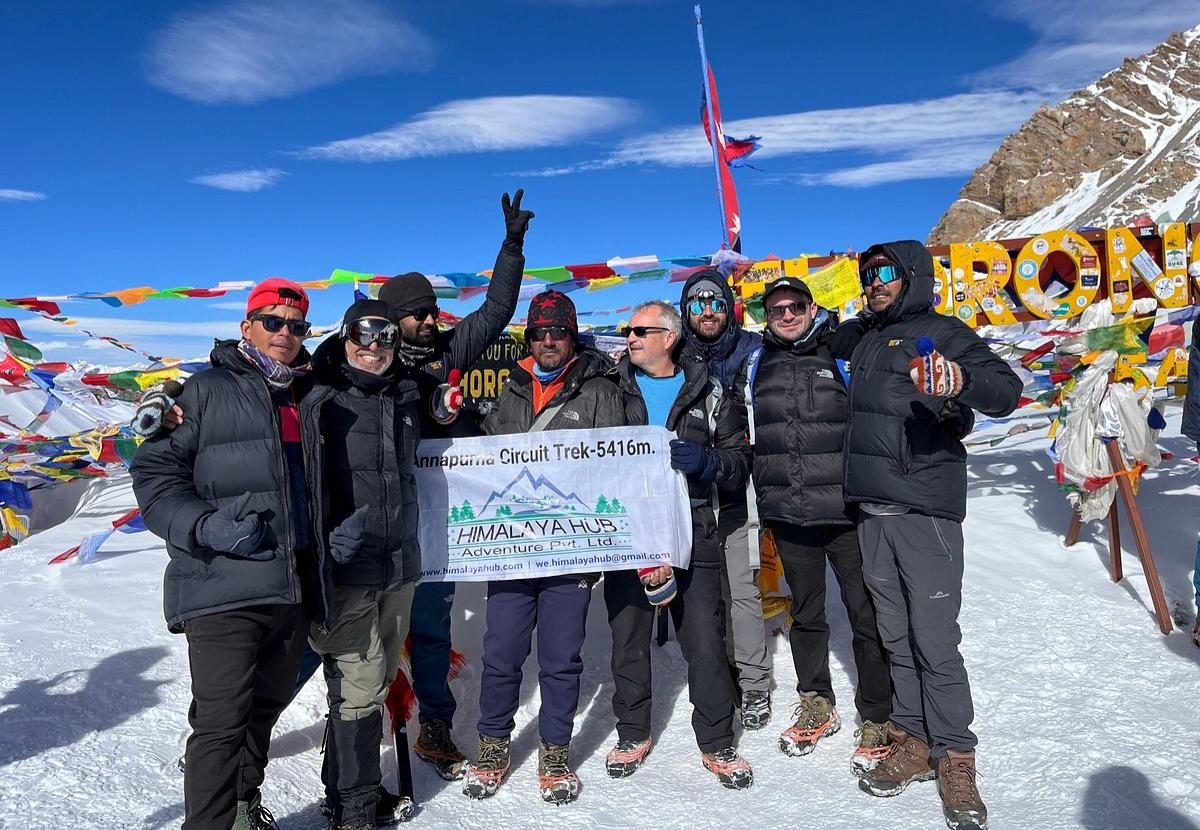

The Annapurna trek requires two mandatory permits: the ACAP (Annapurna Conservation Area Permit) and the TIMS Card (Trekkers’ Information Management System). Both permits are valid for 2026 and apply to every route in the Annapurna region, including the Annapurna Circuit, Annapurna Base Camp (ABC) trek, Annapurna Sanctuary trek, and the Tilicho Lake trek. Trekking without these permits is illegal under Nepalese law and results in fines, forced removal from the trail, and potential blacklisting from future entry.
Quick Answer
- Permits required: ACAP + TIMS Card, both mandatory for all trekkers
- Applies to: Annapurna Circuit, ABC trek, Sanctuary trek, Tilicho Lake extension
- Cost (2026): USD 30 ACAP + USD 20 TIMS = USD 50 total (Non-SAARC)
- Where to get them: Kathmandu (NTB office) or Pokhara (ACAP office, most common)
- Online booking: NOT available in 2026
- Trekking without permits: Fines, removal, blacklisting, no exceptions
What Permits Are Required for the Annapurna Base Camp Trek?
The Annapurna Base Camp trek requires two permits: the ACAP and the TIMS Card. Every trekker entering the Annapurna region, whether on a guided tour or solo, must carry both. Checkpoint officers verify permits at multiple points along each route. Missing either permit means you cannot continue the trek.
ACAP (Annapurna Conservation Area Permit)
ACAP stands for Annapurna Conservation Area Permit. The National Trust for Nature Conservation (NTNC) issues ACAP under the authority of the Government of Nepal. ACAP exists to fund conservation, wildlife protection, and community development inside one of the world’s most biodiverse trekking regions.
ACAP covers the entire Annapurna Conservation Area- 7,629 km² of terrain spanning Manang District and surrounding valleys. This zone includes the full Annapurna Circuit trek, the Annapurna Base Camp approach, the Annapurna Sanctuary, and the Tilicho Lake area.
Key ACAP facts:
- Issuing authority: National Trust for Nature Conservation (NTNC)
- Coverage area: 7,629 km² Annapurna Conservation Area
- Validity: Single-entry permit valid for the duration of your trek
- Exempt: Nepali citizens and children under 10 years of age
TIMS Card (Trekkers’ Information Management System)
The TIMS Card registers trekkers into Nepal’s national safety database. In case of injury, altitude sickness, or emergency, rescue teams use TIMS data to locate and identify trekkers. TIMS exists to protect you, not just to collect fees.
Two types of TIMS cards exist:
| Type | Who Uses It | Cost (2026) |
| Green TIMS | Individual / independent trekkers | ~USD 15 |
| Blue TIMS | Agency / group trekkers | ~USD 7.50 |
Green TIMS applies to solo trekkers and self-organized groups not booked through a registered agency. Blue TIMS applies to trekkers whose itinerary is managed by a licensed Nepalese trekking agency. The abc trek route, the Annapurna Circuit, and the Annapurna Sanctuary trek all require a TIMS card.
Do You Need Both? The Definitive Answer
Yes. Most trekkers need both ACAP and TIMS. There are no exceptions based on route length, nationality, or experience level (except Nepali citizens and children under 10 for ACAP). Here is the breakdown:
| Trek Route | ACAP | TIMS |
| Annapurna Circuit trek | Required | Required |
| Annapurna Base Camp trek | Required | Required |
| Annapurna Sanctuary trek | Required | Required |
| Tilicho Lake trek | Required | Required |
Note: If you book through a licensed Nepalese trekking agency, you do not need to be physically present, they can collect the ACAP and TIMS Card permit for you using your documents.
Why Do You Need Permits?
Nepal requires Annapurna trek permits for three core reasons:
- Conservation funding: ACAP fees directly fund wildlife protection, trail maintenance, and reforestation projects across the 7,629 km² Annapurna Conservation Area.
- Trekker safety: TIMS registration allows rescue teams to locate missing or injured trekkers quickly. At elevations like Annapurna Base Camp’s 4,130 meters, rapid rescue coordination saves lives.
- Community development: Revenue from permits supports local schools, health posts, and sustainable tourism infrastructure in remote villages across Manang, Nepal and surrounding districts.
What Happens If You Trek Without a Permit?
Trekking on the Annapurna Circuit without the required ACAP permits is illegal under Nepalese law. Checkpoint officers stationed across the trail enforce this strictly. The consequences are real and immediate.
Heavy Fines at Checkpoints
Checkpoint officers at Besisahar, Chomrong, and other entry points verify permits for every trekker. Officers impose on-the-spot fines ranging from NPR 5,000 to NPR 20,000 (approximately USD 37 to USD 148) for trekking without valid permits. No exceptions exist, not even for partial completion of the trek.
Denied Further Access
Officers deny entry to permit-restricted zones for trekkers who cannot produce valid ACAP and TIMS documents. Trekkers are physically escorted back to the nearest checkpoint. No refund exists for transport, accommodation, or guide costs already incurred.
Legal Complications and Blacklisting
Repeat violations result in blacklisting from Nepal’s trekking registry. Blacklisted trekkers face permanent denial of future permits across all Nepal trekking regions, including Everest Base Camp and Manaslu Circuit.
No Access to Rescue or Support Services
TIMS registration is the system rescue teams use to deploy helicopter rescue. Trekkers without TIMS cards have no official rescue coordination record. Helicopter companies and insurance providers may deny rescue claims to unregistered trekkers.
Annapurna Trek Permit Cost in 2026, Full Price Breakdown
ACAP Permit Fee, SAARC vs Non-SAARC
ACAP fees differ by nationality. SAARC member countries (India, Bangladesh, Pakistan, Sri Lanka, Bhutan, Maldives, Afghanistan) pay a reduced rate.
| Nationality | ACAP Fee (NPR) | ACAP Fee (USD approx.) |
| Non-SAARC | NPR 3,000 | ~USD 22 |
| SAARC nations | NPR 1,000 | ~USD 7.50 |
| Nepali citizens | Free | Free |
| Children under 10 | Free | Free |
Note: Exchange rates fluctuate. Always carry USD or NPR equivalents. Verify current rates at the ACAP office Pokhara or NTB office Kathmandu before departure.
TIMS Card Fee for 2026
| Trekker Type | TIMS Type | Fee (NPR) | Fee (USD approx.) |
| Individual / Solo | Green TIMS | NPR 2,000 | ~USD 15 |
| Agency / Group | Blue TIMS | NPR 1,000 | ~USD 7.50 |
Total Permit Cost Estimate Per Person (2026)
| Trek Route | ACAP | TIMS (Solo) | Total (Solo, Non-SAARC) |
| Annapurna Circuit cost (permits only) | ~USD 22 | ~USD 15 | ~USD 37 |
| Annapurna Base Camp trekking cost (permits only) | ~USD 22 | ~USD 15 | ~USD 37 |
| Annapurna Sanctuary trek | ~USD 22 | ~USD 15 | ~USD 37 |
| Tilicho Lake trek add-on | No extra fee | No extra fee | Same as above |
The Tilicho Lake trekking extension uses the same ACAP and TIMS, no additional permit fee applies.
Are Permit Fees Included in Package Tours?
Most reputable annapurna trek agency packages include permit fees in the quoted price. Always confirm this before booking. Ask your agency: “Do your ABC trek package rates include ACAP and TIMS fees?” Budget trekking packages sometimes exclude permits to show lower headline prices. When comparing abc trek tours or abc trek package prices, always check the permit inclusion explicitly.
Where to Get Annapurna Trek Permits- Step-by-Step
Option 1: Get Permits in Kathmandu
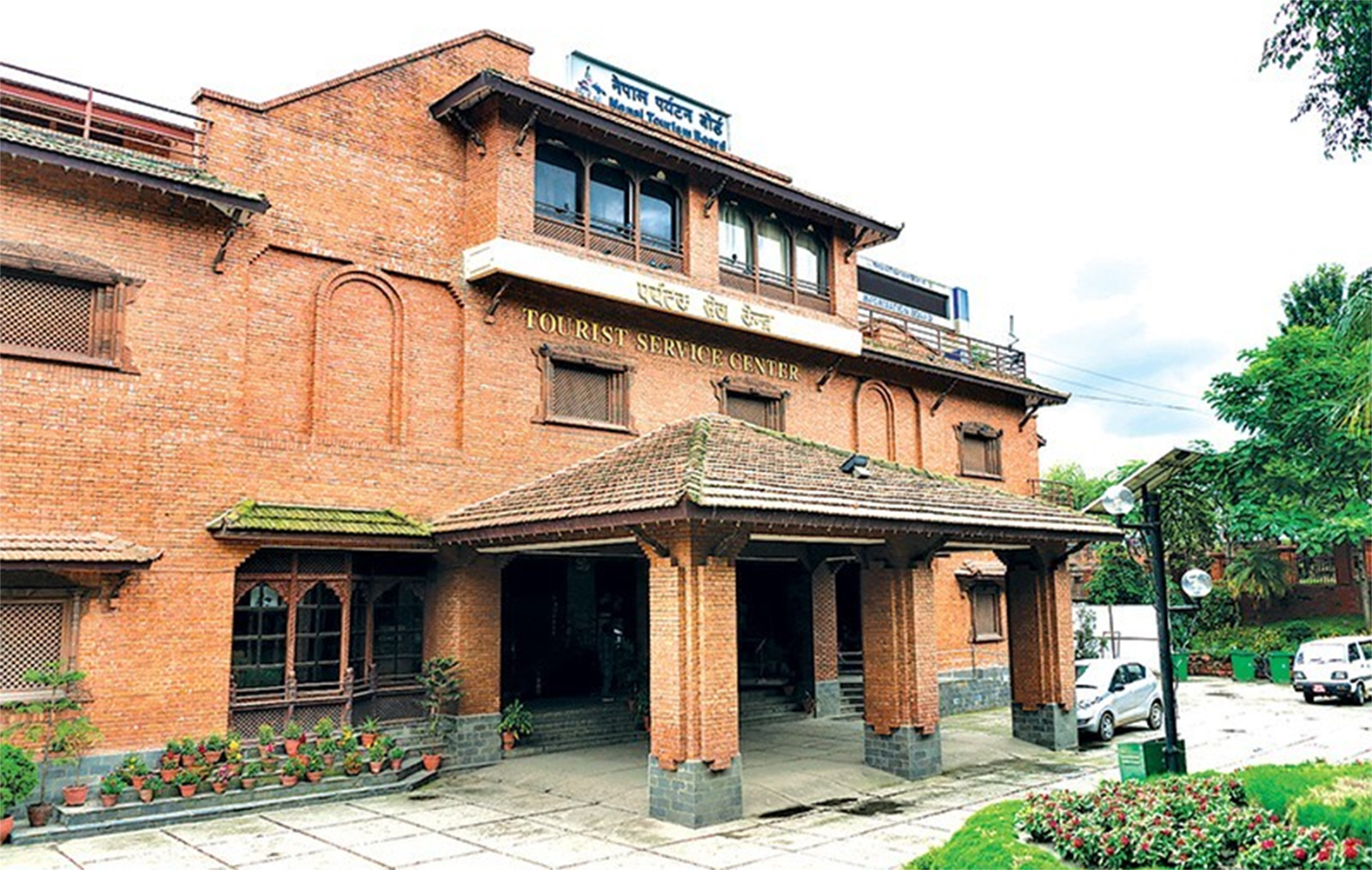
Nepal Tourism Board (NTB) Kathmandu and the TAAN (Trekking Agencies’ Association of Nepal) office both issue permits in Kathmandu. This option suits trekkers flying into Kathmandu who want permits sorted before traveling to Pokhara.
- NTB Office Address: Bhrikutimandap, Kathmandu (opposite NTB main gate)
- TAAN Office Address: Maligaon, Kathmandu
- Opening hours: Sunday–Friday, 9:00 AM – 5:00 PM (closed Saturdays and public holidays)
- Documents required: Passport (original + photocopy), 2 passport-sized photos, completed application form
- Processing time: Same day, typically within 1–2 hours
Option 2: Get Permits in Pokhara (Most Common)
Pokhara is the most popular place to obtain Annapurna trek permits. The ACAP office Pokhara sits in the Damside area (also called Pardi), a short walk from Lakeside. Most trekkers flying or busing from Kathmandu get permits here the day before beginning their annapurna hike.
- ACAP Office Pokhara Address: NTNC Building, Damside (Pardi), Pokhara
- Opening hours: 9:00 AM – 5:00 PM, Sunday–Friday
- Expected wait time: 20–45 minutes (longer during peak season: October–November, March–May)
- Payment: Cash only (NPR preferred; USD accepted at some counters)
- Nearest ATM: Multiple ATMs within 200 meters of the Damside office
Option 3: Through a Trekking Agency
Licensed annapurna trek agency operators handle full permit procurement on behalf of clients. The agency submits your documents and collects Blue TIMS cards (for group trekkers). This is the most convenient option for trekkers who prefer not to handle paperwork.
- Pros: No queuing, agency handles all documentation, included in most abc trekking package prices.
- Cons: Slight markup is possible on budget packages; you must trust the agency is using a legitimate office.
Can You Get Permits Online?
No. Annapurna trek permits are NOT available online in 2026. Physical appearance at either the Kathmandu NTB/TAAN office or the Pokhara ACAP office is mandatory. The Government of Nepal has discussed online permit systems, but no digital portal exists for ACAP or TIMS as of April 2026.
Documents Required to Apply for Annapurna Permits
Carry these documents to the permit office:
- Passport, original and one photocopy of the photo page (must be valid for at least six months)
- 2 recent passport-sized photos (35mm × 45mm, white background)
- Nepal valid tourist visa
- Completed application form (available free at the office)
- Travel insurance details (strongly recommended, see below)
- Trekking agency letter (only if applying for Blue TIMS through a registered agency)
Do You Need Travel Insurance for the Permit?
Travel insurance is not technically mandatory to obtain the permit, but it is essential for safe trekking in the Annapurna region. At Annapurna Base Camp elevation of 4,130 meters, altitude sickness, cold injuries, and falls are real risks. Helicopter rescue from abc base camp costs between USD 2,000 and USD 5,000 per flight. Without helicopter evacuation coverage, you pay the full cost.
Most reputable annapurna trek nepal operators require proof of insurance before guiding clients above 3,000 meters. Purchase a policy that explicitly covers helicopter rescue at high altitude.
Photo Requirements and Payment Tips
Bring exactly 2 passport-sized photos per permit office. Photo studios near both the Damside (Pokhara) and Bhrikutimandap (Kathmandu) offices print photos for NPR 150–250 per set. Carry cash, NPR is the preferred currency. Most offices do not accept credit cards. USD 100 bills are occasionally accepted but may result in unfavorable exchange rates.
Permit Requirements by Trek Route
Annapurna Circuit Trek Permits
The Annapurna Circuit trek requires both ACAP and TIMS. The circuit covers approximately 160–230 km depending on the starting point. Officers check permits at the major entry checkpoint in Besisahar and again at Chame, Manang, and Thorong La. The Manang District checkpoint at Chame is strictly enforced.
- Does the Circuit also need Manaslu permits? No. The Annapurna Circuit stays within the ACAP zone. Manaslu Circuit trek permits are separate (see below).
- Tilicho Lake trekking extension from the main circuit uses the same ACAP and TIMS, no additional permit required.
Annapurna Base Camp (ABC) Trek Permits
The Annapurna Base Camp trek requires ACAP and TIMS. Officers check permits at Nayapul/Birethanti (the trail entry point) and at the major checkpoint in Chomrong. ABC sits at 4,130 meters altitude, making it a high-altitude destination with significant weather and health considerations.
Annapurna Sanctuary Trek Permits
The Annapurna Sanctuary and ABC trek follow the same route. Both require ACAP and TIMS, no separate sanctuary permit exists. The terms “Sanctuary” and “Base Camp” refer to the same destination and approach trail. Trekkers often see both terms in abc trekking itineraries, they are interchangeable.
Manaslu Circuit, Separate Permits Needed
The Manaslu Circuit trek is a restricted area requiring a completely separate permit process. Unlike the open Annapurna region, Manaslu trekking requires:
- Restricted Area Permit (RAP): issued by the Government of Nepal
- Manaslu Conservation Area Permit (MCAP)
- Annapurna Conservation Area Permit (ACAP): only if entering the ACAP zone from Manaslu
Manaslu circuit trekking also requires a minimum group size of 2 trekkers plus a licensed guide, solo trekking is prohibited. Manaslu trek cost is significantly higher than the Annapurna region due to restricted area fees. Do not confuse Manaslu circuit trek permits with Annapurna permits, they are entirely different systems.
Permit Checkpoints on the Trail, What to Expect
Major Checkpoints: Annapurna Circuit Route
Officers at each checkpoint record your permit number in an entry/exit logbook. Carry your original permits, photos on your phone are not accepted.
| Checkpoint | Location | Approximate Day |
| Besisahar | Circuit entry point | Day 1 |
| Chame | Manang District entry | Day 3–4 |
| Manang, Nepal | Upper valley checkpoint | Day 5–6 |
| Thorong La Pass | High-pass crossing | Day 8–9 |
| Muktinath | Descent checkpoint | Day 9–10 |
Major Checkpoints: ABC / Sanctuary Route
| Checkpoint | Location |
| Nayapul / Birethanti | Trail entry point |
| Chomrong | Upper valley checkpoint |
| Himalaya Hotel | High-altitude zone entry |
| Annapurna Base Camp gate | 4,130m, final checkpoint |
What Happens If You Forget Your Permit?
Forgetting your permit means you cannot pass the checkpoint, no exceptions. Officers do not accept smartphone photos of permits. You must carry originals. If you forget permits at your hotel, you must return to retrieve them before checkpoint officers allow you through. This costs time, money, and energy. Develop a habit: permits go in your day pack every morning before anything else.
Best Time to Get Your Permits and Plan Your Trek
Seasonal Permit Demand, Peak vs Off-Season
The best trekking season in the Annapurna region runs October–November and March–May. During these months, the ACAP office Pokhara processes hundreds of trekkers daily. Queue times extend to 1–2 hours during peak weeks. Off-season months (December–February and June–September) see faster processing, often under 30 minutes.
| Season | Months | Queue Time |
| Peak (Spring) | March–May | 45–90 minutes |
| Peak (Autumn) | October–November | 45–90 minutes |
| Off-Season | December–February, June–September | 15–30 minutes |
How Early Should You Apply Before the Trek?
Same-day permit processing is possible at both the Kathmandu and Pokhara offices. However, arriving at the office the day before your trek begins is strongly recommended. This removes the risk of unexpected delays, long queues, missing documents, or office closures, derailing your Day 1 schedule. No advance online booking exists, so plan for in-person processing.
Permit Validity Duration
ACAP and TIMS permits are valid for the duration of your declared trek itinerary. Standard permits cover 30 days from the issue date. If your trek extends beyond the original end date, due to weather delays, health issues, or route changes, visit the nearest checkpoint to request an extension. Extensions require a written explanation and an additional fee.
Tips for Obtaining the Annapurna Circuit Trek Permit Easily
Follow these 7 tips to get your permits quickly and without stress:
- Arrive at the permit office early: Opening time (9:00 AM) has the shortest queues, especially during peak season.
- Carry two extra passport photos: Having spares prevents a second trip to the photo studio.
- Bring NPR cash: Credit cards and USD are unreliable at permit offices. Withdraw NPR from an ATM before arriving.
- Keep photocopies ready: Make 2–3 copies of your passport photo page. Offices accept photocopies; do not hand over your original passport.
- Know your itinerary dates: The application form asks for trek start and end dates. Have your annapurna circuit itinerary finalized before the office.
- Use your agency if applicable: If you booked an abc trek package or annapurna trek agency service, let the agency handle permits. They know the process faster.
- Don’t wait until the morning of Day 1: Get permits the evening before at the latest. Pokhara offices close at 5:00 PM and do not open on Saturdays.
Do You Need a Guide or Porter? Impact on Permit Process
Is a Guide Mandatory for Annapurna?
No, a guide is currently NOT mandatory for the Annapurna region in 2026. Unlike the Everest Base Camp trek (which introduced a mandatory guide rule in 2023), the Annapurna Nepal region allows independent trekking. However, the Government of Nepal has discussed extending mandatory guide requirements to popular regions. Check the latest regulations before finalizing plans.
Guide and Porter Permits, Crew TIMS
Guides and porters working in the Annapurna region require their own TIMS cards, called Crew TIMS. Crew TIMS cost NPR 400 per person. Reputable annapurna trek agency operators always provide Crew TIMS for their staff. Before booking, ask your agency: “Do your guides and porters carry valid Crew TIMS?” This is a reliable indicator of a legitimate, licensed operator.
Solo Trekking With Permits, Is It Safe and Allowed?
Solo trekking is fully permitted in the Annapurna region, and TIMS registration is your safety lifeline. TIMS data is what rescue teams use when deploying a search in case of accident or disappearance. Solo trekkers on the Annapurna hiking trail should also register their daily accommodation at each teahouse logbook. Mobile network coverage exists in many areas, but portions of the circuit and annapurna sanctuary route have dead zones. Carry a satellite communicator if trekking solo at high altitude.
Annapurna Trek Permits vs Other Nepal Trek Permits
Annapurna vs Everest Base Camp Permits
| Factor | Annapurna | Everest Base Camp |
| Permits required | ACAP + TIMS | Sagarmatha NP permit + TIMS |
| Guide mandatory | No | Yes (from 2023) |
| Permit cost (non-SAARC) | ~USD 37 total | ~USD 50+ total |
| Ease of obtaining | Easy, Pokhara or Kathmandu | Kathmandu only |
| Highest point | 5,416m (Thorong La) | 5,364m (EBC) |
Annapurna is more accessible for independent trekkers, lower cost, no mandatory guide, and permit offices in both Kathmandu and Pokhara.
Annapurna vs Manaslu Circuit Permits
| Factor | Annapurna | Manaslu Circuit |
| Area classification | Conservation Area | Restricted Area |
| Permits required | ACAP + TIMS | RAP + MCAP + ACAP (if applicable) |
| Guide mandatory | No | Yes |
| Minimum group size | 1 | 2 |
| Permit cost | ~USD 37 | USD 100+ (RAP alone) |
| Manaslu trek cost overall | Lower | Significantly higher |
Manaslu circuit trekking requires significantly more logistical preparation. The mount Manaslu trek and Manaslu base camp trek both fall under this restricted area permit system.
Annapurna vs Langtang Permits
| Factor | Annapurna | Langtang |
| Permits required | ACAP + TIMS | Langtang NP entry + TIMS |
| Guide mandatory | No | No |
| Permit cost (non-SAARC) | ~USD 37 | ~USD 30 |
| Trek difficulty | Moderate–Challenging | Moderate |
| Highlights | Annapurna himalaya nepal, Annapurna Sanctuary | Langtang Valley, Gosaikunda |
Langtang suits trekkers with less time (7–10 days vs 14–21 days for the annapurna circuit). Annapurna offers greater route diversity and the globally iconic annapurna mountain range nepal scenery.
Conclusion
Annapurna trek permits are straightforward, but skipping steps causes serious problems. Every trekker entering the Annapurna region needs two permits: ACAP (NPR 3,000 / ~USD 22 for non-SAARC) and TIMS (NPR 2,000 / ~USD 15 for solo trekkers). Get both at the ACAP office Pokhara or NTB Kathmandu the day before your trek. Carry originals. Register at every checkpoint. These permits fund the conservation and safety systems that make the annapurna trek Nepal experience world-class.
Pre-Trek Permit Checklist
- Passport: original + 2 photocopies of photo page
- 2 passport-sized photos: 35mm × 45mm, white background, per permit office
- NPR cash: NPR 5,000+ covers ACAP + TIMS for one solo non-SAARC trekker
- ACAP office location saved: Damside, Pokhara (or NTB Kathmandu)
- Trek itinerary confirmed: start and end dates needed on the application form
- Travel insurance purchased: helicopter evacuation coverage required for high altitude
- Agency permit status confirmed: if booked through an annapurna circuit trek agency, confirm permits are included
- Permits in day pack every morning: do not leave them at the hotel
Frequently Asked Questions
How much do Annapurna Conservation Area permits cost?
The Annapurna Conservation Area Permit (ACAP) costs NPR 3,000 for foreign nationals and NPR 1,000 for SAARC nationals. Children under 10 years do not need a permit. Nepal SAARC countries include India, Bangladesh, Pakistan, Sri Lanka, Bhutan, Maldives, and Afghanistan. The National Trust for Nature Conservation (NTNC) issues this permit in Kathmandu, Pokhara, or online at epermit.ntnc.org.np.
How much does an Annapurna trek permit cost in 2026?
The ACAP permit costs NPR 3,000 (approx. USD 25) for foreign trekkers and NPR 1,000 for SAARC nationals. Nepalgatewaytrekking TIMS cards are no longer enforced on Annapurna trails. Checkpoints across the Annapurna region verify only the ACAP permit. Nepal Hiking Team Budget NPR 3,000 total for your Annapurna permit in 2026.
Do I need a permit for Annapurna Base Camp trek?
Yes. All trekkers in the Annapurna region must carry a valid Annapurna Conservation Area Permit (ACAP). Conservation authorities check this permit on-site. Nepal Hiking Team The ACAP costs NPR 3,000 for foreign trekkers. Carry printed copies, digital copies are often not accepted due to limited connectivity in remote areas. Nepal Hiking Team
What is the difference between ACAP and TIMS?
ACAP (Annapurna Conservation Area Permit) is a mandatory entry pass for the entire Annapurna region, issued by the NTNC to fund conservation. TIMS (Trekkers’ Information Management System) is provisioned by Nepal Tourism Board in association with TAAN. Its core objective is to track tourists and provide emergency services. Nepaltrekkingroutes As of 2023, ACAP is enforced at checkpoints; TIMS is not.
Is TIMS card compulsory for all Annapurna treks?
No. TIMS cards are no longer required for trekking in the Annapurna region. In actual practice, checkpoints verify ACAP permits only. TIMS may still appear on official documents, but it is not enforced at trailheads or along Annapurna routes. Nepal Hiking Team Many outdated websites still list TIMS as mandatory, this information is incorrect for 2026.
Can I trek Annapurna without a guide?
Technically, the ACAP permit does not require a guide. However, as of government directives effective from April 1, 2023, solo trekking without a licensed guide is prohibited in most high-altitude regions including Annapurna. Hiring a government-licensed guide is mandatory for safety and accountability. Adventure Nepal In 2026, the NTNC e-permit system allows independent trekkers to apply for permits themselves The Longest Way Home, but the guide rule still applies officially.
What happens if I trek without a permit?
Obtaining permits at the checkpoint after entering may involve paying double the regular cost. Peregrine Treks There is a heavy fine (2x) if you trek without a genuine permit. Shikhar Adventure Rangers check permits at multiple points, including Birethanti, Ghorepani, Chhomrong, and Besisahar. Authorities can turn trekkers back or impose on-the-spot penalties. Always secure the ACAP before starting the trail.
Are permits required for Tilicho Lake trek?
Yes. The ACAP permit covers all trekking routes in the Annapurna region, including the Tilicho Lake trek. Adventurevisiontreks Tilicho Lake, located in Manang north of the Annapurna massif, is the world’s highest-altitude freshwater lake Ntnc and falls entirely within the Annapurna Conservation Area. One ACAP permit (NPR 3,000 for foreigners) covers the full route.
How long is the Annapurna permit valid?
Annapurna Circuit permits are valid until the trekker’s visa expiration date. Ensure your permits align with your visa duration to avoid any issues. Peregrine Treks The ACAP permit becomes void if any trekkers descend through the departure point, but trekkers can use it as long as they remain within the Annapurna region. Discover Altitude Each new trek requires a new permit.
Where exactly do I get the Annapurna permit in Pokhara?
The NTNC office in Pokhara is near the Tourist Police Station in the Lakeside area. This location is convenient for trekkers starting their trek from Pokhara. Nepal Many trekkers complete the ACAP permit in Pokhara on the day before the trek begins. Shikhar Adventure Bring your original passport, one photocopy, and two passport-sized photos. The office is closed on weekends and public holidays.
Can I get Annapurna trek permits online before my trip?
Yes. In 2026, the NTNC revamped its e-permit system and now issues e-permits for the Annapurna Conservation Area Permit (ACAP). Trekkers can get ACAP permits themselves before arriving in Nepal or while in Nepal. The Longest Way Home Apply at epermit.ntnc.org.np. Note that there is an additional surcharge for foreigners using the online system, making it more expensive than obtaining the permit at an NTB office. The Longest Way Home Print a hard copy for checkpoints.
Can a trekking agency handle my Annapurna permit application?
Yes. Trekking agencies can arrange permits on your behalf with just a copy of your passport and photos. Nepalgatewaytrekking The agency will get the permits a day or two before the trek starts. Himalayan adventure trek Agencies registered with the Trekking Agencies’ Association of Nepal (TAAN) deal directly with NTB and NTNC conservation offices. This option saves time, avoids mistakes, and is especially recommended during peak seasons (March–May, September–November).
Which websites offer official Annapurna trek permit registration?
Two official sources handle Annapurna permit registration:
- epermit.ntnc.org.np, The National Trust for Nature Conservation (NTNC) introduced this online permit system for the Annapurna, Manaslu, and Gaurishankar regions. Tripadvisor Trekkers apply directly, pay online, and print the permit with a QR code.
- Nepal Tourism Board (NTB), Physical offices in Kathmandu (Bhrikutimandap) and Pokhara (Lakeside) issue permits in person. TIMS can be obtained in Kathmandu, Pokhara, online from NTNC, or from trekking agencies. Avoid third-party websites not linked to NTNC or NTB.
0 Comment