



















17 Days
Daily Tour
18 people
English
The 17-day Tsum Valley Trek winds through the remote Manaslu region. Starting in Kathmandu, the journey heads west into Gorkha District. After a drive to Soti Khola, you trek along the Budhi Gandaki river, entering the hidden Tsum Valley via traditional villages and forests. The route climbs gradually into high Himalayan meadows and Buddhist hamlets (e.g. Chisopani, Chumling), reaches Mu Gompa (3,700m), and then returns via Lokpa and Lapubesi downriver back to Arughat. Key highlights include Mu Gompa monastery, Rachen Nun’s Gompa, and scenic Himalaya vistas.
Chat with us — real trekking experts, not bots.
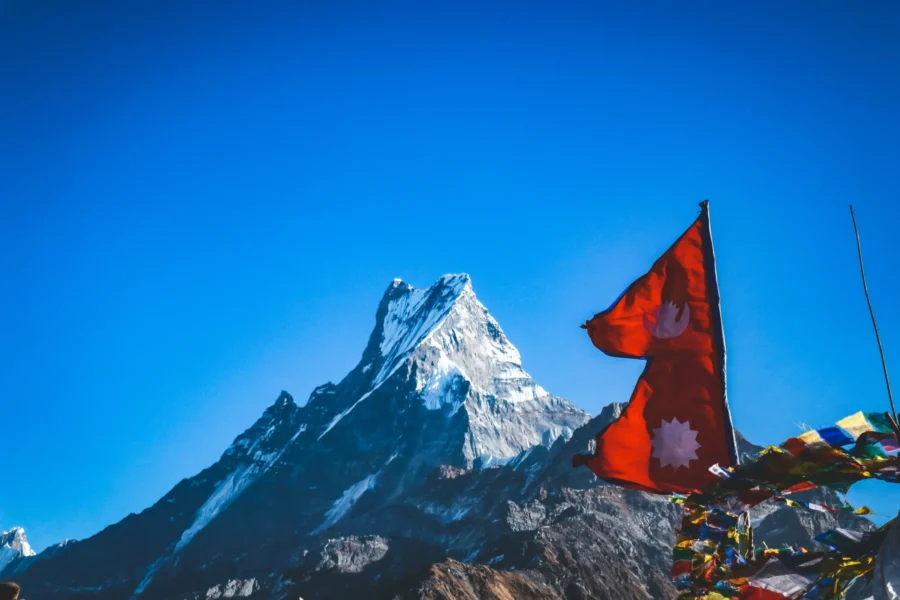
Tsum Valley is dotted with Buddhist heritage sites and stunning scenery. The ancient Mu Gompa monastery (founded in 1113) and Rachen (a nunnery) are spiritual highlights, as are Chhokang Paro’s mani-stone walls and Chumling’s chortens. Prayer flags flutter at every village and mountain pass, and you’ll encounter mani stones and stupas throughout the valley.
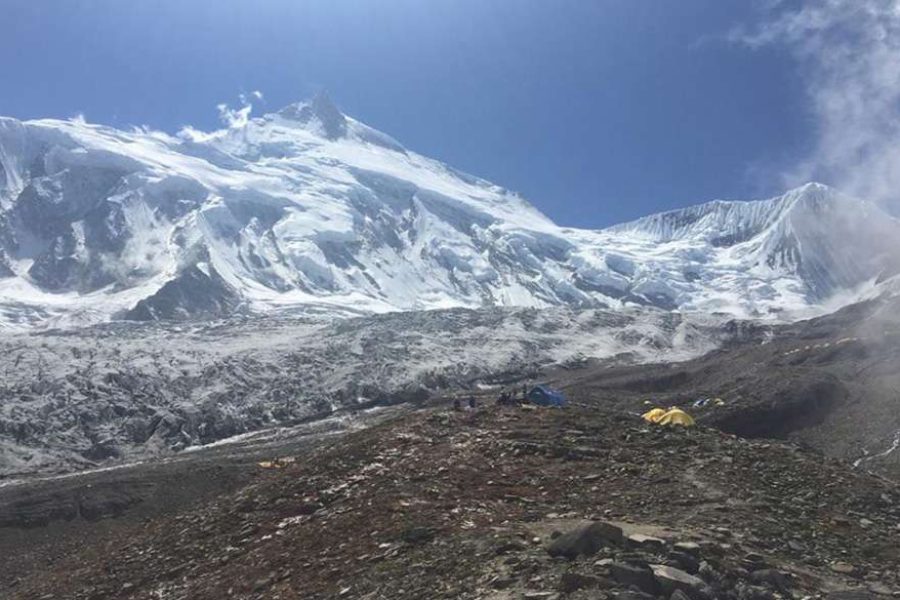
Local festivals like Dawa and Dumje bring color and dance to the trek if you time it right. The trek offers panoramic views of Ganesh Himal, Himal Chuli, Sringi Himal and other peaks guarding the valley. Villages like Tsum, Chekamparo and Chule showcase Tibetan-style stone houses with yellow-tiled roofs and yak herds grazing in terraced fields.
Chat with our experts and get special discounts tailored for your group size.
The Tsum Valley Trek is rated moderate to challenging. Trails are often rocky, with daily hikes of 6–8 hours and several steep sections as you approach 3,000–3,700 meters. While Mu Gompa (3,700m) is the highest point, much of the trek stays between 1,000–3,400m. Altitude is a factor: acclimatization days (e.g. at Chhokang Paro) are important.
For example, one guide notes you “will typically walk six to eight hours per day” and should be ready for “higher elevations” and “lengthy walking days”. Trekkers should be in good cardiovascular shape, with strong legs and stamina. Training (hiking, stair-climbing, jogging) is recommended. Basic trekking experience helps. You will carry only a daypack (porters carry the rest), but be prepared to walk multiple days in a row, sometimes on uneven steps or uphill paths. Good endurance and a gradual pace will make the journey smoother.
Chat with us — real trekking experts, not bots.
Spring (March–May) and Autumn (September–November) are the prime seasons for the Tsum trek. These periods offer stable weather, clear mountain views and blooming rhododendrons. Day temperatures are mild and skies are often cloud-free. Autumn (post-monsoon) is especially popular due to crisp air and festival celebrations in the villages. Summer (June–August) brings monsoon rains: trails become muddy and landslides can occur, making trekking difficult. Winter (December–February) is cold and snow can cover higher paths, but offers solitude and sparkling snowy scenery for those prepared for sub-zero nights. In short, plan your trek for spring or autumn if possible.

 18°C
18°C


Chat with our travel experts and get a personalized itinerary tailored to your needs.
A day on trek starts early. You’ll usually rise by 6–7 AM, enjoy tea and a hearty breakfast (often porridge, eggs or Tibetan bread). Around 7–8 AM you begin hiking with your guide. Morning hikes typically last 3–4 hours before a midday lunch stop. Then after a rest, you trek another 2–3 hours to reach the next village or campsite. Along the way you pass streams and forests; guides share insights on local culture and nature. Tea breaks allow photo stops at overlooks or monasteries.
By late afternoon (around 4–5 PM) you arrive at the guesthouse. Evenings are leisurely: dinner comes around 6–7 PM and you plan the next day’s route with the guide. Afterwards there’s time to relax, chat or play cards. Lodges are basic but warm (often with a communal dining area and stove). At night you sleep early (often by 9 PM) to rest for the following day. Overall, each day rewards trekkers with new scenery and cultural experiences, from forest trails to mountaintop views.
Chat with us — real trekking experts, not bots.
Accommodations are simple mountain lodges (“tea houses”) plus hotels in Kathmandu. In Kathmandu your package includes a 3-star hotel (twin-share) with breakfast. Once trekking starts, you stay in local tea houses: these are small, family-run guesthouses in the villages. Rooms are usually private twin (two single beds) with foam mattresses, pillows and blankets.
You should bring a warm sleeping bag for extra comfort at night (lodges provide blankets but rarely duvets). Amenities are basic – bathrooms are shared and often squat-style, and showers may be cold or lukewarm (hot water, if available, usually costs extra). Electricity can be intermittent. Meals are cooked communally. Despite the spartan facilities, these tea houses offer warm hospitality and a glimpse of village life.
No shared groups. No fixed schedules. Just a personalized journey made for you.
Food on the trail is hearty and simple. Breakfasts often include porridge, eggs, pancakes or Tibetan bread (often served with butter, jam or honey). Lunches and dinners usually feature dal bhat (the Nepalese staple – rice with lentil soup and vegetables) as a staple for trekkers. Dal bhat provides much-needed energy and is often served with extra vegetables or occasional meat. Other common menu items are noodles, pasta, fried rice or chow mein, and soups or stews.
You may also find momos (dumplings), vegetable curry or baked potatoes, depending on the lodge. Portion sizes are generous and most tea houses allow unlimited refills of dal bhat. Hot drinks (tea, coffee, hot lemon) are available at any lodge for a small fee. As altitude rises, menu options slightly thin out (for example, far upper Tsum tea houses may lack fresh eggs or meat), but generally the variety is sufficient. Note that trekking itineraries usually include three meals a day (breakfast, lunch, dinner).
Chat with us — real trekking experts, not bots.
Tsum Valley is steeped in Tibetan Buddhist culture. Dress respectfully: shoulders and legs should be covered (long pants and shirts), especially when visiting monasteries. Remove hats and shoes upon entering any temple or home. Always ask permission before photographing people or sacred sites. When you encounter prayer flags, mani walls or stupas, walk around them clockwise (and spin prayer wheels clockwise) as a sign of respect. Common greetings are “Namaste” (Nepali) or “Tashi Delek” (Tibetan), which you can use when meeting villagers. Learning a few local phrases (e.g. thank you: “Dhanyabad”) goes a long way.
Hospitality is warm: villagers may offer you yak butter tea or invite you to visit a home or monastery. Tipping is customary: at trip’s end, it is polite to tip your guides and porters (e.g. split an appropriate amount among the trekking team). Also respect local customs: for example, avoid public displays of affection and be mindful during religious ceremonies. In short, be humble and observant – showing genuine respect will deepen your cultural experience on the trail.
Chat with us — real trekking experts, not bots.
The trek begins at Sotikhola (700m) on the Budhi Gandaki, reached by road from Kathmandu. The most common approach is a scenic but rough road journey of about 8–9 hours. Many itineraries use a combination of transport: first a public bus from Kathmandu to Arughat Bazaar (about 6–8 hours), then a jeep or van from Arughat onward to Sotikhola. (Buses often cannot go beyond Arughat due to road conditions.)
Alternatively, travelers may hire a private 4×4 jeep all the way from Kathmandu to Sotikhola. A private jeep (for up to 6–7 people) can make the trip in one day (typically leaving early morning). The return route on Day 16 is by jeep/bus along the same road back to Kathmandu. Roads are bumpy and landslide-prone, so allow extra time; local drivers are experienced with the terrain. In Nepal, transportation schedules and vehicles can change; your tour operator will arrange all the logistics.
The Tsum Valley is in a restricted area, so special permits are mandatory. You must trek with a registered agency and guide. Required permits include:
Permits are arranged by your trekking agency in Kathmandu before departure. Be sure to carry printed copies. National park and local permits support conservation and local communities.
Chat with us — real trekking experts, not bots.
| Item | Description | Quantity |
| Underwear | Breathable, quick-dry synthetic underwear (bring your own) | 5–6 |
| Socks | Warm wool trekking socks (bring your own) | 5–6 pairs |
| Bra | Supportive sports bra suitable for trekking (bring your own) | 2–3 |
| Base Layer Pants | Merino wool thermal bottoms for warmth and insulation (bring your own) | 2 |
| Trekking Shirts | Lightweight synthetic trekking shirts; bring your own or buy in Kathmandu | 4–5 |
| Rain Pants | Lightweight waterproof synthetic pants (Frogg Toggs recommended) | 1 |
| Trekking Pants | Durable, lightweight synthetic trekking pants; bring your own or buy in Kathmandu | 3 |
| Hiking Shoes / Boots | Well-broken-in trekking boots such as Salomon Quest 4D or X Ultra 3/4 | 1 pair |
| Camp Shoes | Comfortable down booties or lightweight camp shoes; bring your own or buy in Kathmandu | 1 pair |
| Gloves | One thin merino wool pair and one thick insulated pair for cold weather | 2 pairs |
| Hat | Sun hat or cap with neck protection for daytime trekking | 1 |
| Down Jacket | Insulated down jacket for cold mornings, evenings, and high altitude | 1 |
| Windbreaker | Lightweight, windproof outer shell for variable mountain weather | 1 |
Chat with us — real trekking experts, not bots.
Trek safety depends on preparation. The main risks are altitude and weather. Altitude sickness is possible above 3,000m, so ascend slowly and drink plenty of water. Your itinerary includes acclimatization time; do not rush. Always trek with your licensed guide and porter. In remote terrain like upper Tsum, services are basic, so bring any needed medications and a solid travel insurance policy that covers helicopter rescue (insurance is compulsory). The trek is in a secure region (no political issues), but trails can be slippery when wet and river crossings require care.
Follow your guide’s advice on route and weather. Lodges provide simple first-aid, but hospital access is only in Kathmandu; your guide can arrange evacuation if needed. Leave valuables locked in Kathmandu. Drink only boiled/filtered water or water treated with purification tablets. Keep informed of weather forecasts – heavy rain or snow can cause delays. In general, Tsum Valley is very safe culturally (crimes are rare in the countryside). By trekking with a reputable agency, carrying permits and insurance, and listening to your guide, you ensure a secure and enjoyable experience.
Chat with our travel experts and get a personalized itinerary tailored to your needs.
Important Note: The Manaslu–Tsum Valley region is classified as a restricted trekking area. A minimum of two trekkers is required to obtain the permit. Solo travelers are not allowed on this route unless an additional permit arrangement is made.
If you prefer private transportation instead of public buses to the trek starting point and back at the end of the journey, or if you wish to arrange your own hotel in Kathmandu and book only the trekking portion, please feel free to contact us. We are happy to customize the trip to suit your needs.
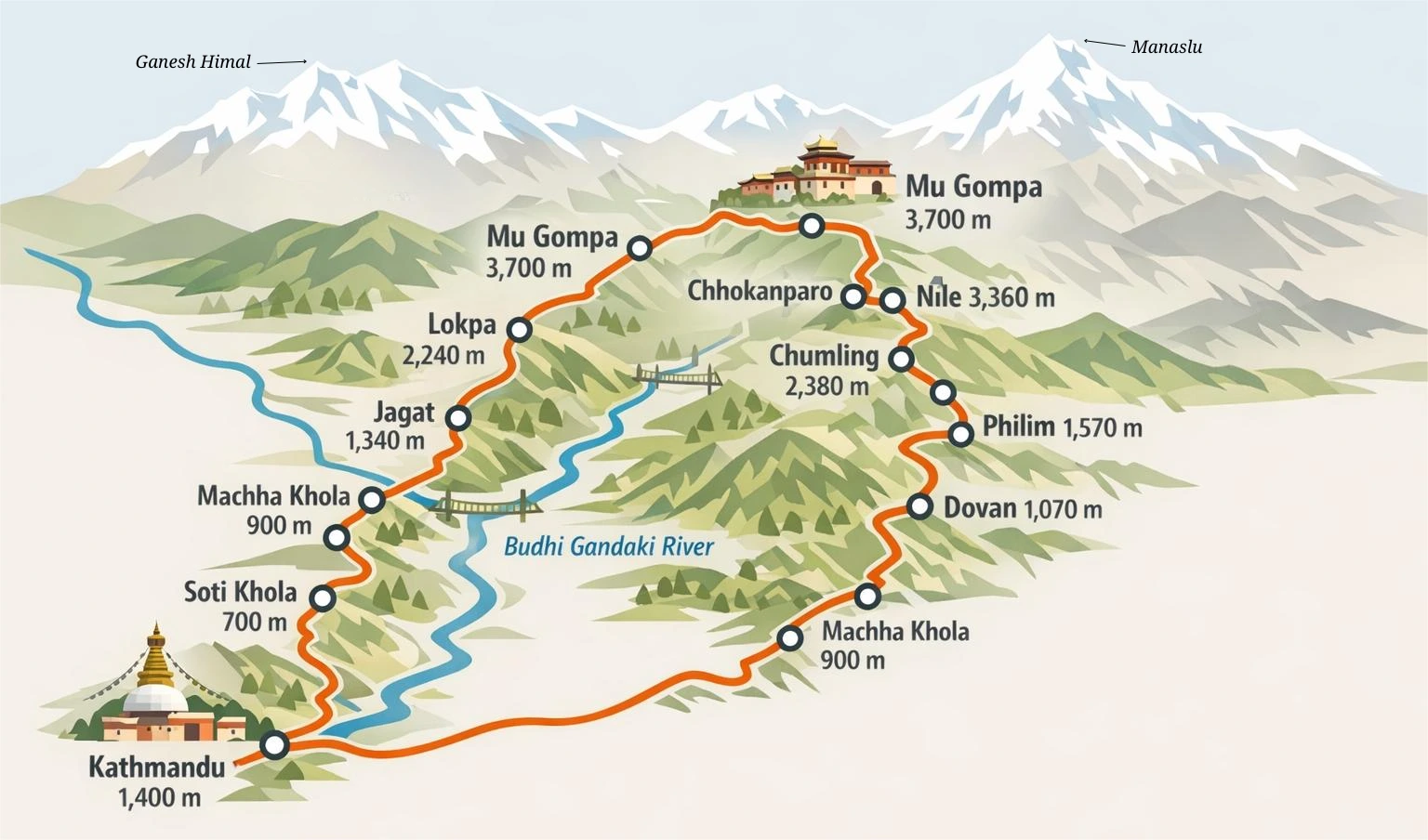
Tsum Valley lies in the Budhi Gandaki watershed of Nepal’s Gorkha District. (Coordinates: ~28.54°N, 85.11°E.) On maps, you’ll see the trail enter Tsum near Chumling and loop among peaks like Ganesh Himal. Many trek operators provide detailed route maps. For navigation, refer to printed topographic maps of the Manaslu region or GPS tracks – popular guides can share GPX files. The valley is sandwiched between the Himal Chuli and Ganesh mountain ranges. While on trek you’ll see signposts at major villages, but GPS/mapping apps can help track your progress.
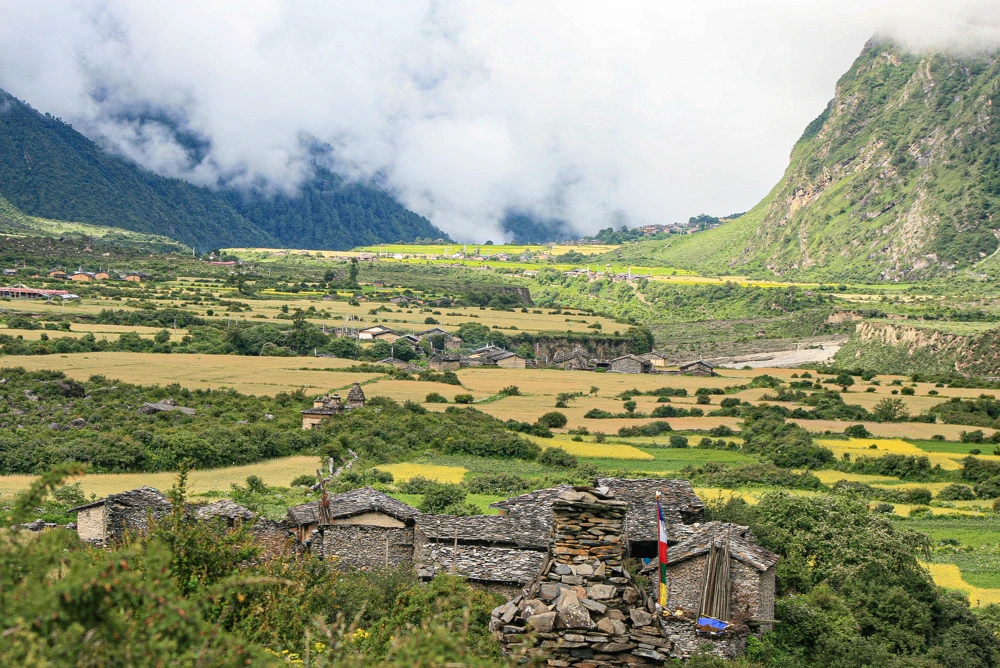
Chumling village in the lower Tsum Valley, with golden barley fields and surrounding peaks. Such rural vistas are a highlight of the trek.
HimalayaHub (Himalaya Hub International) is an experienced Nepali operator specializing in Manaslu and Tsum Valley treks. By booking with them you benefit from local expertise and reliability. Their 17-day Tsum Valley package includes all logistics: airport transfers, Kathmandu accommodation, meals, permits, and ground transport. They provide licensed, English-speaking guides (1 per 2 trekkers) and porters, handle all permit paperwork and conservation fees, and even supply duffel bags and sleeping bags for the trek.
Guides from HimalayaHub are trained in first aid and bring deep local knowledge. The company is fully authorized by Nepal’s tourism authorities, and practices sustainable trekking (e.g. hiring local porters, supporting village lodges). As one client notes, the included guide and porter, their insurance, permits and even return duffel bags demonstrate “getting everything needed”. In short, booking with HimalayaHub ensures a smooth, safe journey – from secure permit processing to warm guesthouse bookings – backed by their commitment to customer care. Their track record and professional service make them a top choice for the off-the-beaten-track Tsum Valley experience.
Chat with us — real trekking experts, not bots.

You go through the numerous villages while hiking up to Lokpa. The Syar Rivers' junction is seen from the Tsum Valley as the rivers get narrow. To get to Lokpa village, the first settlement in Tsum valley that offers unobstructed views of the Manaslu mountain, we travel down the valley's bank.
The route to Chumling from Lokpa is filled with stunning views of Baudha Himal (6672m) and Ganesh Himal VI. You pass through the Lingwa river valley and climb to a dense rhododendron forest and after many hours of walking settle down in Chumling.
Today, we go across the inner Himalayan region's higher valley. The route continues down to Domje, the biggest city in the Tsum Valley, following the Syar River. We continue to ascend from Domje till we reach Chhokangparo. Chhokangparo offers stunning views of Himalchuli and Ganesh Himal on clear days. Along with Tibetan Chiya (butter tea), traditional cuisine, and the hospitality of the locals are all available to you in Chhokangparo.
The highest point of the Tsum Valley Trek, Mu Gompa, is reached after a short hike from the Chhokanparo along the west side of the valley near the Tibetan border. Through the usually dry and dusty Himalayan environment, we trek up through yak farms. The Mu Gompa monastery offers stunning mountain views and a number of chortens. You also have the chance to visit Dhephu Doma Gompa, one of the Tsum's oldest monasteries.
The next day, you cross the Shikhar River on the upper north Tsum valley. In addition, you get the opportunity to visit historically important places cross a suspension bridge over the Shiar River and go on through a number of villages until you reach the Nile.
As we approach Gho, we resume our trek from the Nile. To go to Rainjam Village, you will have to cross a suspension bridge close to Gho and continue walking. After leaving Rainjam Village and traveling through Tsum Valley, you arrive in Chumling, where you will spend the rest of the day.
We will traverse through terraced farmlands and cross Siyar River enjoying the majestic view of the magnificent landscape. It is worthy to be published as a post card. Yes, we will trek through this post card like place towards the village of Philim largely habituated by Gurung community of Nepal.
After breakfast at Philim, we continue our journey to reach Doban by the end of the day. The trek begins with a gradual descent, passing through scenic trails and terraced fields, and continues through Thado Bharyang below Jagat. We cross a river to reach Jagat, a Tibetan-style settlement, and then cross another river as we make our way toward Doban, a peaceful stop nestled along the trail.
The trek from Machha Khola to Soti Khola follows the Budhi Gandaki River through a warm, subtropical landscape. The trail passes rocky cliffs, sandy riverbanks, and small settlements, with several suspension bridge crossings. Gentle ascents and descents lead through forested paths before reaching the peaceful riverside village of Soti Khola by day’s end.
After breakfast at Machha Khola, we begin our trek toward Soti Khola, following the Budhi Gandaki River through a warm, subtropical landscape. The trail winds along rocky cliffs, sandy riverbanks, and small settlements, crossing suspension bridges and forested paths. With gentle ascents and descents along the gorge, we arrive at the peaceful riverside village of Soti Khola by the end of the day.
After breakfast at Soti Khola, we conclude our journey and drive back to Kathmandu. Leaving the riverside village behind, the route follows scenic hills and rural settlements before joining the main highway. As we pass terraced farmland and winding mountain roads, the landscape gradually changes, and we arrive in Kathmandu by late afternoon, marking the end of the trek.
Your Tsum Valley trek is officially ended here.
Absolutely. You don’t need prior trekking experience to take on this journey. If you are in decent physical condition, comfortable walking 5–6 hours a day, and able to handle some uphill trails, the Tsum Valley Trek is well within your reach. With the dedicated support of the HimalayaHub team at every step, your dream of exploring Tsum Valley can confidently become a reality.
Spring and autumn are considered the ideal seasons for the Tsum Valley Circuit Trek. The spring months, March, April, and May, and the autumn months, September, October, and November, offer the most favorable trekking conditions. During these periods, the weather is generally stable with clear skies and minimal disturbance, making the trails more enjoyable and safe. Trekkers are also rewarded with spectacular views of the high Himalayan peaks, including the breathtaking, snow-covered landscapes of the Tsum Valley.
There is no fixed age restriction for the Tsum Valley Trek. However, participants should be physically fit and mentally prepared for the journey. We strongly recommend consulting a medical professional before the trip to ensure you are healthy enough for high-altitude travel and to receive appropriate medical advice or medications. Proper preparation and a positive mindset are key to enjoying the trek safely.
During the Tsum Valley trek, meals are enjoyed in local teahouses that reflect the simplicity of mountain life. You can expect hearty, filling dishes such as noodles, rice, pasta, and potato-based meals, usually served with vegetables and accompanied by eggs, chicken, or meat. Breakfasts are equally comforting and energizing, commonly featuring eggs, pancakes, bread, porridge, muesli, and toast served with peanut butter or honey.
Most teahouses along the Tsum Valley trekking route are equipped with squat-style toilets, although some of the newer lodges now offer Western-style toilets as well. With the growing number of trekkers, flush toilet systems are gradually being introduced in certain places. It is strongly advised that trekkers bring their own toilet paper and personal toiletries, as these are not always provided. Full bathrooms or regular showers should not be expected during the trek. Hot showers are available in some teahouses, but they come at an extra cost, usually a few dollars per use. If you prefer to shower daily, be prepared for additional expenses throughout the trek.
Your clothing choices will ultimately depend on personal comfort, but for the Tsum Valley trek we strongly recommend packing appropriate cold-weather gear. Useful items include a down jacket, thermal base layers (top and bottom), comfortable trekking pants, t-shirts, a fleece layer, a windproof outer jacket, as well as a warm hat, scarf, and gloves. If you don’t already have these, Kathmandu makes it easy to prepare. Thamel is filled with trekking shops offering both local and international brands at a wide range of prices. If needed, HimalayaHub can also assist and guide you with purchasing or arranging the necessary equipment before your trek begins.
Our itinerary has been carefully designed to minimize the risk of Acute Mountain Sickness (AMS) as you gain altitude. In general, altitude-related issues tend to appear above 3,600 meters. To support proper acclimatization, the trek is conducted at a slow and steady pace, allowing your body time to adjust naturally.
To reduce the chances of AMS, avoid caffeine, alcohol, and smoking during the trek. Maintaining hydration is essential, aim to drink at least 4 liters of water each day. Walk slowly, follow your guide’s pace, and never skip scheduled acclimatization days. If any symptoms of AMS appear, continuing with Diamox (if prescribed) can be helpful. Consuming garlic soup is also recommended, as it may aid circulation at higher elevations.
At higher altitudes, oxygen levels decrease, especially while crossing high passes, which can increase physical strain. Our experienced guides are trained to monitor your condition closely and will provide guidance on preventing altitude sickness and managing it promptly if it arises.
Yes, insurance is essential for Tsum Valley trekking. Before traveling to Nepal, be sure to arrange both medical and emergency evacuation insurance. Since Nepal is a Himalayan destination, it’s important to carefully review your policy. Some insurance providers place restrictions or exclusions on adventure or high-altitude travel. If you’re unsure whether your coverage is adequate, feel free to let us know and we’ll be happy to guide you. In most cases, it’s best to secure suitable insurance in your home country prior to departure.
You’ll need to walk for about 5–7 hours each day, depending on the terrain and where you’re headed.
The standard Tsum Valley Trek takes 17 days, including arrival, sightseeing in Kathmandu, trekking days, and final departure.
At HimalayaHub, your safety, comfort, and satisfaction are always our top priority. We are dedicated to ensuring you have an incredible and unforgettable trekking experience in the majestic Himalayas.
Our experienced team members are fully equipped with all essential gear, equipment, and well-stocked first aid kits. They also possess extensive first aid training to handle emergencies effectively.
If a trekker falls ill at high altitude, the trek leader will carefully assess the situation and decide whether it is safe to continue the journey. In the event of an emergency, HimalayaHub has access to a rescue helicopter for prompt evacuation from higher elevations.
To ensure your well-being, we also provide an oximeter to monitor oxygen levels at high altitude and offer regular health check-ups throughout the trek.
Yes, it is possible to do the Tsum Valley Trek independently, but there are restrictions. Since Tsum Valley is a restricted trekking area, you must book through a local agency to obtain the required permit.
Tsum Valley has a long and fascinating history shaped by Tibetan culture and the presence of ancient Buddhist monasteries. The valley’s historical roots go deep, reflecting a strong Tibetan influence in its language, traditions, and way of life. Over centuries, Buddhism has played a central role in Tsum Valley, with many ancient monasteries serving as spiritual centers for the local people. These monasteries not only reflect the valley’s religious devotion but also its enduring cultural heritage, passed down through generations.
You should carry about USD 250–400 (≈ NPR 33,000–54,000) in cash for the Tsum Valley trek. This covers extras not included in the tour package, like tea/coffee, snacks, Wi-Fi, hot showers, charging, souvenirs, and tips.
The Tsum Valley Trek is located in the remote Manaslu region of northern Nepal, close to the Tibetan border.
The highest point of the trek is Mu Gompa (3,700 meters), the largest monastery in the Tsum Valley.
Yes, trekkers need a Tsum Valley Restricted Area Permit, Manaslu Conservation Area Permit (MCAP), and TIMS card.
Altitude sickness is possible, especially near Mu Gompa. Proper acclimatization, slow ascent, and hydration reduce the risk.
Accommodation is mainly tea houses and guesthouses, offering basic but comfortable lodging throughout the route.
Meals typically include Nepali dal bhat, noodles, rice, soups, potatoes, and Tibetan-style food, along with tea and coffee.
Yes, it is suitable for beginners with good physical fitness and some prior hiking or trekking experience.
Yes, hiring a licensed guide is mandatory because Tsum Valley is a restricted area.
The trek is known for its untouched landscapes, ancient monasteries, Tibetan-influenced culture, and peaceful villages.
Temperatures can drop below freezing at higher altitudes, especially at night, so warm clothing is essential.
Mobile networks and the internet are limited and unreliable, especially after entering deeper parts of the Tsum Valley.
| # | Discount group | From adult | To adult | Value |
|---|---|---|---|---|
| 1 | Pax | 2 | 5 | $1030.00 |
| 2 | Pax | 6 | 11 | $970.00 |
| 3 | Pax | 12 | 18 | $889.99 |

Member Since 2025




Tsum Valley & Manaslu Base Camp Trek