9Oct
Manaslu Circuit Trek 13 Days
18 spaces open
USD $9401 traveller - USD $940 each












13 Days
Daily Tour
18 people
English
Chat with us — real trekking experts, not bots.
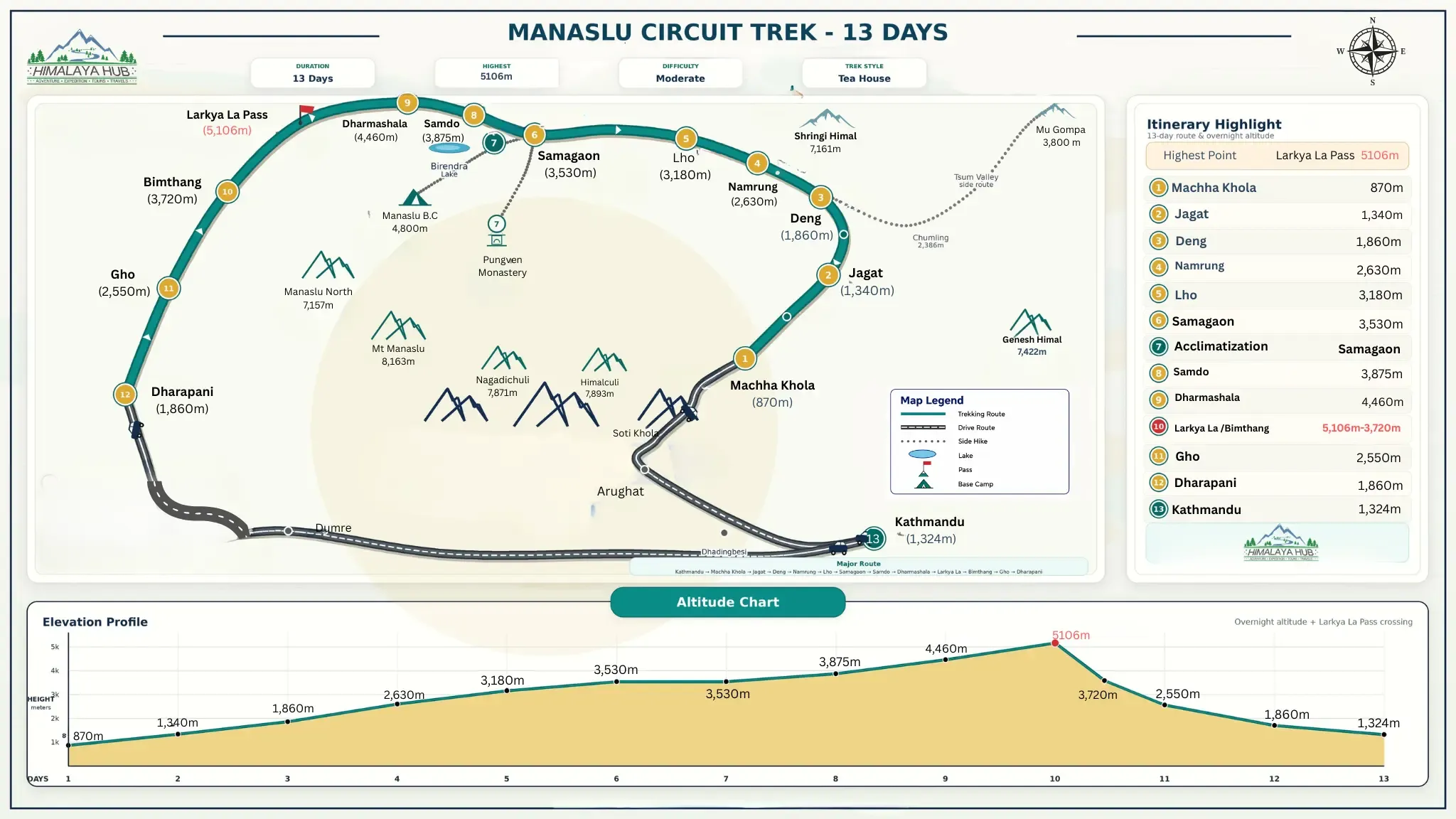
The Manaslu Circuit Trek is one of the most beautiful and exciting trekking adventures in all of Nepal. This 13-day challenging trek takes you completely around Mount Manaslu, the 8th highest mountain in the world at 8,163 meters. At Himalaya Hub Adventure, we take you on a journey that very few travelers ever get to experience. Your adventure begins with a scenic drive from Kathmandu to the small riverside village of Machha Khola, where the mountains and river valleys of Nepal start to open up beautifully around you.
From there, the trail follows the stunning Budhi Gandaki River through lush subtropical forests, rocky gorges, bamboo groves, and traditional ethnic villages where life has remained simple and peaceful for centuries. As you walk deeper into the valley, the landscape and culture both change dramatically. Ancient mani walls, colorful prayer flags, spinning prayer wheels, and centuries-old Tibetan Buddhist monasteries begin to appear at every turn, making you feel like you have stepped into a completely different world.
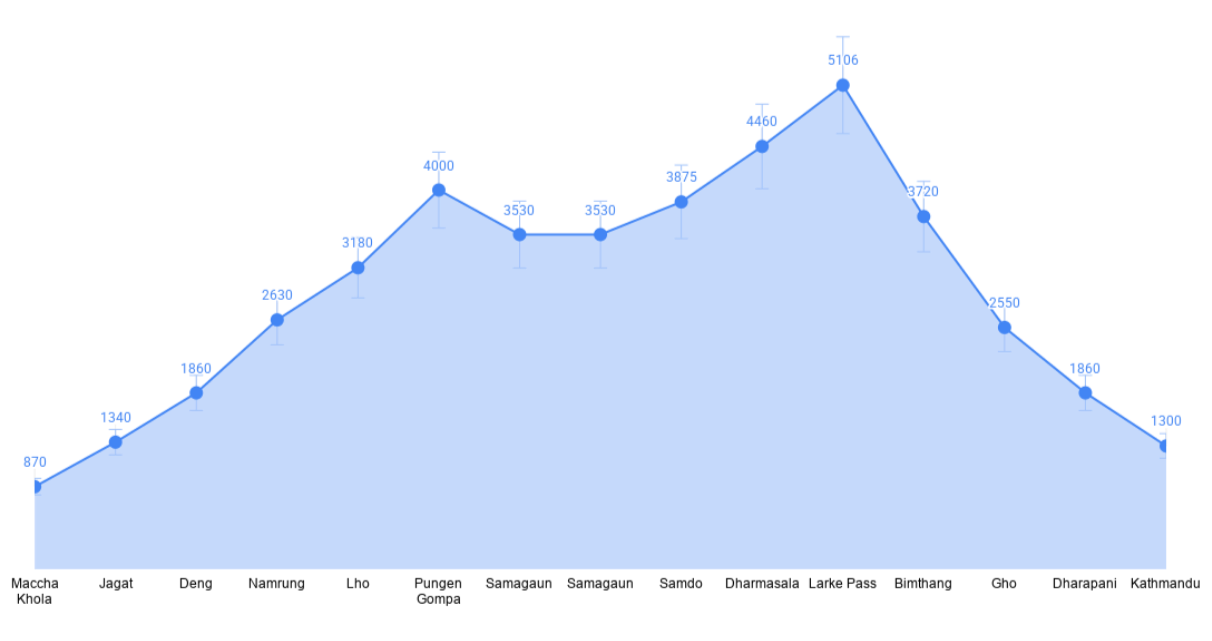
The highlight of the entire trek is crossing the legendary Larkya La Pass (Larke Pass) at 5,106 meters. You begin the climb at 2:00 AM under a sky full of stars, push through the cold and dark mountain night, and reach the top just as the sun rises over the Himalayas. The panoramic views from the summit, showing Manaslu, Annapurna II, Himlung Himal, Kang Guru, and countless other giants, are absolutely breathtaking and something you will remember for the rest of your life.
Along the way, you will also visit the ancient Pungen Gompa monastery at 4,000 meters, hike to Manaslu Base Camp, and explore the stunning Birendra Glacial Lake. A built-in acclimatization rest day keeps you safe and healthy as you gain altitude. Our expert licensed guides are with you every single step of the way, making sure your safety always comes first.
This trek is perfect for fit and adventurous trekkers who want to explore a remote and rarely visited corner of the Himalayas. And if you want an even bigger adventure, we can extend the journey to 18 days by adding the hidden and sacred Tsum Valley Trek (Tsum valley and Manaslu Circuit Trek). Contact Himalaya Hub Adventure today and take the first step toward the greatest adventure of your life.
Chat with our experts and get special discounts tailored for your group size.
Your adventure begins today with an early morning departure from Kathmandu. You will travel by private jeep or local bus along the Prithvi Highway, following the beautiful Trishuli and Budhi Gandaki rivers. The drive takes you through green terraced hills, small roadside towns, and rural Nepali villages, a great introduction to the country’s stunning landscapes.
After a long but scenic 10-hour drive, you arrive at Machha Khola, a small riverside village sitting at 870 meters. Tonight you settle into your teahouse, enjoy a warm meal, and get a good night’s rest before your first real trekking day tomorrow.
Today is your first full day of walking on the Manaslu Circuit trail, and it’s a beautiful one! The path follows alongside the Budhi Gandaki River, crossing several traditional suspension bridges as you make your way upstream. You walk through lush subtropical forests, past terraced farmlands, and through small ethnic villages where life has remained simple and peaceful for centuries.
The trail is relatively manageable today, a perfect warm-up for the bigger days ahead. You finish the day in Jagat, which is the first official checkpoint village on the Manaslu Circuit. Your permits will be checked here by the authorities.
Leaving Jagat behind, the trail today takes you deeper into the Budhi Gandaki River valley. The path winds through rocky gorges, dense bamboo forests, and narrow canyon sections that hug the riverbanks tightly. You will cross the river several more times on swinging suspension bridges, great fun and great photo opportunities!
As you walk further, you will begin to notice a gradual shift in culture. The villages here start showing more and more Tibetan Buddhist influence, you’ll spot mani walls (carved stone prayer walls), colorful prayer flags strung between houses, and the sound of spinning prayer wheels. By the time you reach Deng, you’ll feel like you’ve stepped into an entirely different world.
Today is another rewarding full day on the trail. The path climbs steadily through a mix of rhododendron and oak forests, with the roaring Budhi Gandaki River as your constant companion below. The landscape grows more dramatic with every step, steep valley walls, cascading waterfalls, and the first hints of snowcapped peaks appearing through the clouds above.
You pass through several remote villages along the way, each one more traditional and charming than the last. As you arrive in Namrung, you are rewarded with your first truly impressive mountain views. On a clear evening, you can see the magnificent Ganesh Himal and Sringi Himal glowing in the golden light of sunset.
Today is a shorter but very scenic day as you make your way to the beautiful village of Lho. The trail climbs gently through high-altitude terrain, and the mountain views just keep getting better. This is the day when Mount Manaslu (8,163m), the 8th highest mountain in the world, truly reveals itself in all its glory. Seeing Manaslu up close for the first time is a moment you will never forget.
Lho is a traditional Tibetan-style village with stone houses, winding alleyways, and a beautiful old monastery overlooking the valley. We highly recommend taking a short walk up to the Lho Monastery in the afternoon, the views of Manaslu from there are absolutely spectacular and the monks are very welcoming.
Today’s route is one of the most memorable days of the entire Manaslu Circuit Trek. You begin by climbing up to the stunning Pungen Gompa (4,000m), an ancient monastery dramatically perched high above the valley with jaw-dropping, unobstructed views of Mount Manaslu and the surrounding glaciers. This is arguably the best viewpoint of Manaslu on the entire circuit and a truly magical place to spend some time.
After soaking in the views and exploring the monastery, you descend and continue along the trail toward Samagaun. This large and welcoming village sits in a wide open valley completely surrounded by towering Himalayan peaks. Samagaun has a strong Tibetan cultural identity, you can see traditional stone houses, local people in traditional dress, yaks grazing nearby, and beautiful monasteries dotting the hillsides.
Today is your important acclimatization day in Samagaun, and this rest day is not just recommended, it is essential for your safety. Spending a full extra day at this altitude allows your body to slowly and naturally adjust before you climb higher. Skipping this day would put you at serious risk of altitude sickness at the Larkya Pass.
But don’t worry, “rest day” doesn’t mean you have to stay in bed! There are plenty of wonderful things to do in and around Samagaun:
Acclimatization Day
Today is a short and relatively easy walking day, but that is completely intentional. This shorter day gives your body one more opportunity to continue acclimatizing as you gradually gain altitude. The trail from Samagaun to Samdo crosses open, high-altitude terrain with wide valley views and a landscape that feels increasingly remote and wild.
Samdo is a tiny but fascinating village located very close to the Tibetan border. On a clear day, you can actually see across into Tibet from the village, a remarkable feeling. The village has a small but lively local market where Tibetan and Nepali traders exchange goods. It’s a great place to explore in the afternoon.
Today’s walk is short in distance but big in importance. You make your way from Samdo up to Dharamsala (also known as Larkya La Phedi, meaning “foot of Larkya Pass”), which serves as the base camp for tomorrow’s big pass crossing. The trail climbs steadily through a wide glacial valley, and the terrain becomes increasingly rocky and barren as you gain altitude.
The teahouse facilities at Dharamsala are very basic, this is one of the most remote points on the entire trek. Arrive early, eat a filling meal, stay well hydrated, and go to bed as early as possible. You will be waking up in the middle of the night tomorrow for the biggest challenge of the entire Manaslu Circuit Trek.
Tip: Lay out all your cold-weather gear tonight. Pack your bag the night before so you don’t have to do it in the dark at 2 AM!
⭐ This is the most thrilling and challenging day of the entire Manaslu Circuit Trek!
Your alarm goes off at 2:00 AM. You pull on your warmest layers, strap on your headlamp, and step out into the cold, dark mountain night. The climb to Larkya La Pass (5,106m) begins immediately and is steep, snowy, and physically demanding, but absolutely worth every single step.
As you near the top of the pass, the first light of sunrise begins to paint the Himalayan peaks in shades of orange and gold. And then, as you step onto the summit of Larkya La, the world opens up in front of you. The panoramic views from the top are nothing short of breathtaking, you can see Manaslu, Himlung Himal, Cheo Himal, Gyagi Kung, Kang Guru, Annapurna II, and countless other Himalayan giants stretching endlessly in every direction.
Take your photos, celebrate with your team, and then begin the long descent down the other side. The path down to Bimthang is steep and can be icy in sections, so careful footing is essential. As you lose altitude, the air gets warmer, the vegetation returns, and the beautiful valley of Bimthang welcomes you like a reward at the end of a hard day’s work.
⚠️ Note: This day involves an early 2 AM start, 10 hours of walking, freezing temperatures, and high altitude. Your guide will be with you every single step of the way. Follow their instructions closely and walk at a slow, steady pace.
After yesterday’s epic Larkya Pass crossing, today is a well-deserved easier descent day. The trail drops steadily from Bimthang through gorgeous high-altitude meadows, crossing rocky streams and passing through patches of pine and rhododendron forest. The air is noticeably warmer and thicker at this altitude, and your legs, while tired, will feel the joy of the descent.
You pass by the beautiful Ponkar Lake and enjoy wide open views of the Manaslu massif from behind as you walk away from it for the first time on the trek. By the time you reach the small and peaceful village of Gho, your body is ready for a good meal and a long, deep sleep.
Today is your final day of trekking on the Manaslu Circuit, and it ends on a wonderful note. The trail descends gently through terraced fields, small villages, and lush lower-valley forests as you make your way down to Dharapani. The air is warm, the sounds of birds fill the trees, and the weight of the high Himalayas slowly gives way to a more relaxed, comfortable feeling.
At Dharapani, the Manaslu Circuit trail officially connects with the Annapurna Circuit trail. This is a significant junction, a place where two of Nepal’s greatest trekking routes meet. Take a moment to look back at the mountains behind you and let it all sink in. You have just completed the Manaslu Circuit Trek!
Tonight, celebrate with your guide over a warm dinner and a well-earned rest.
On your final day, you board a private jeep or local bus from Dharapani for the long but scenic drive back to Kathmandu. The road winds through beautiful mountain valleys, terraced hillsides, and the busy highway towns of the Gandaki Province. It’s a long journey, but you’ll have plenty of great memories to replay in your mind as you watch the mountains slowly disappear behind you.
When you arrive back in Kathmandu, our team will be there to welcome you. In the evening, we invite you to a farewell dinner to celebrate your incredible achievement. You have trekked through one of Nepal’s most remote and beautiful regions, crossed a 5,106-meter mountain pass, and experienced a side of the Himalayas that very few people in the world ever get to see.
Congratulations, you did it!
Are you interested in planning a custom trip? Tell us your travel plans and we'll create a personalized itinerary
based on your budget, interests, and schedule.
Plan Your Trip
Chat with us — real trekking experts, not bots.
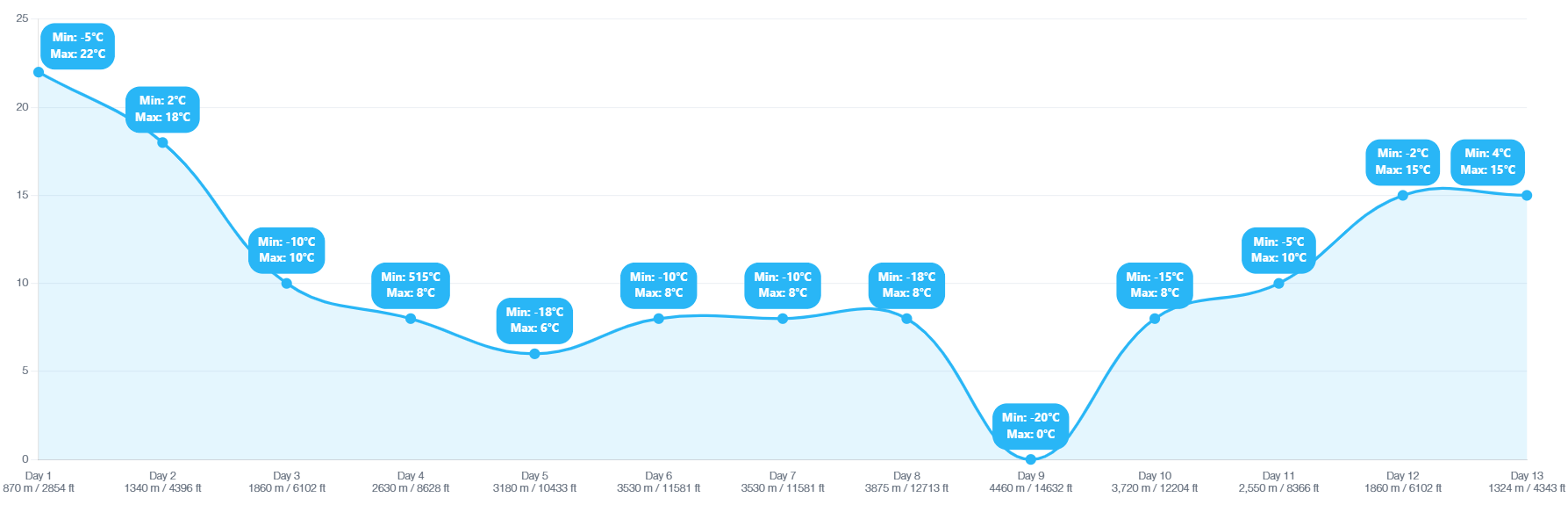
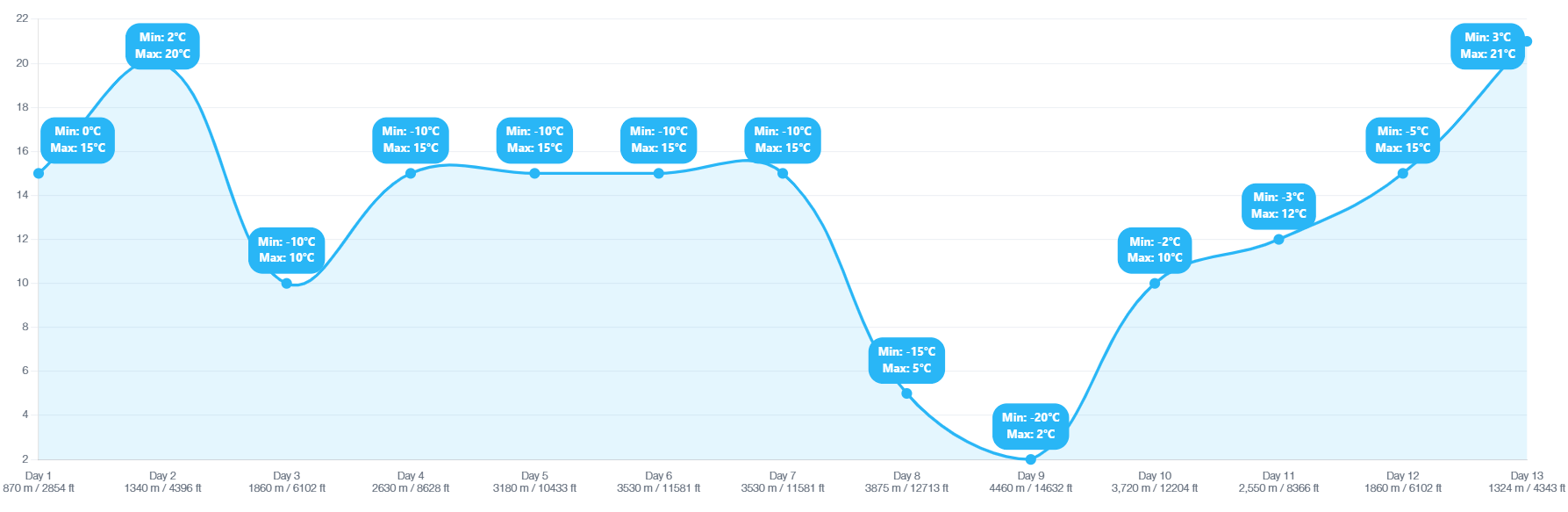
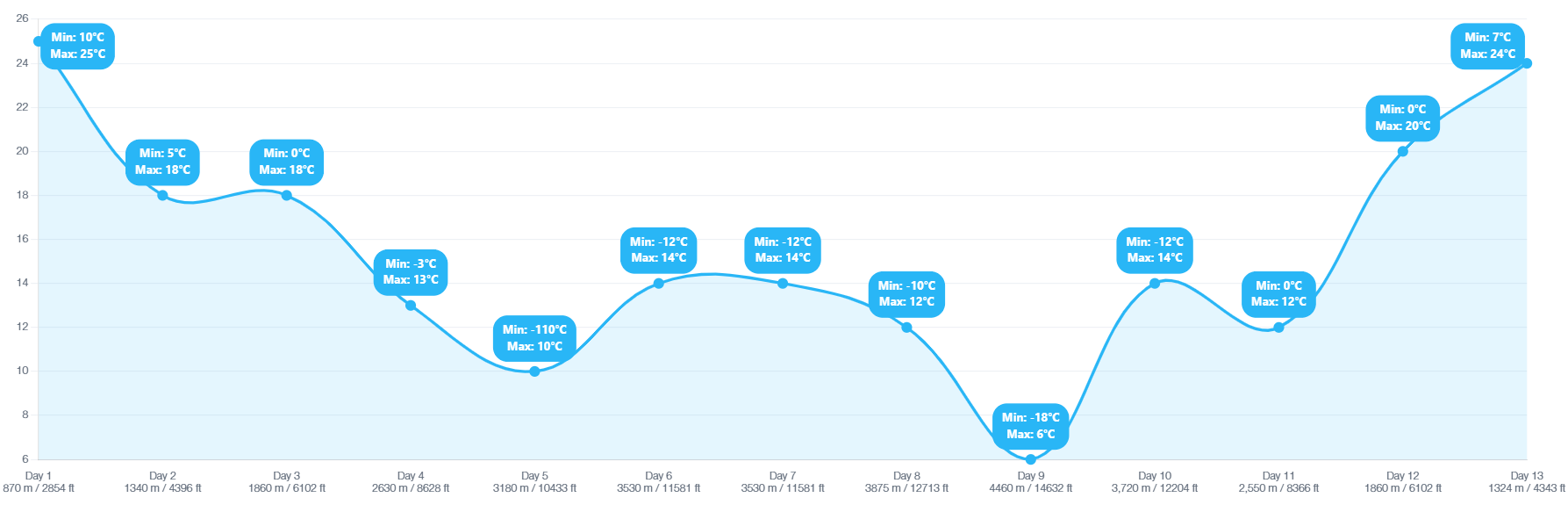
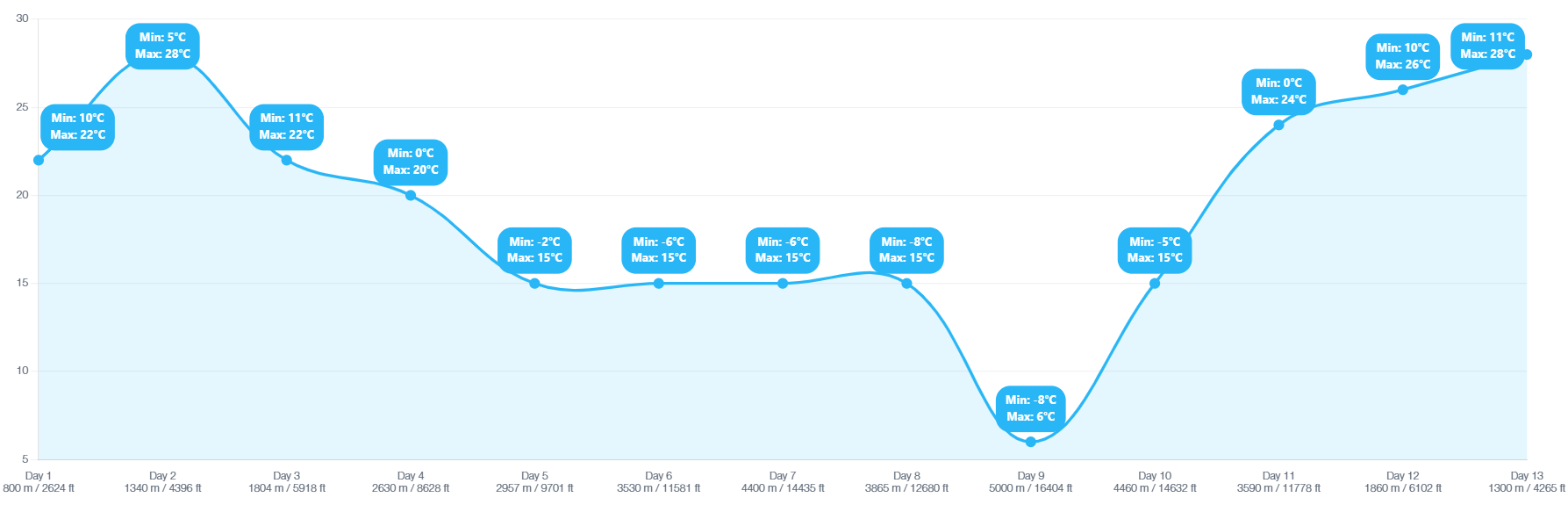
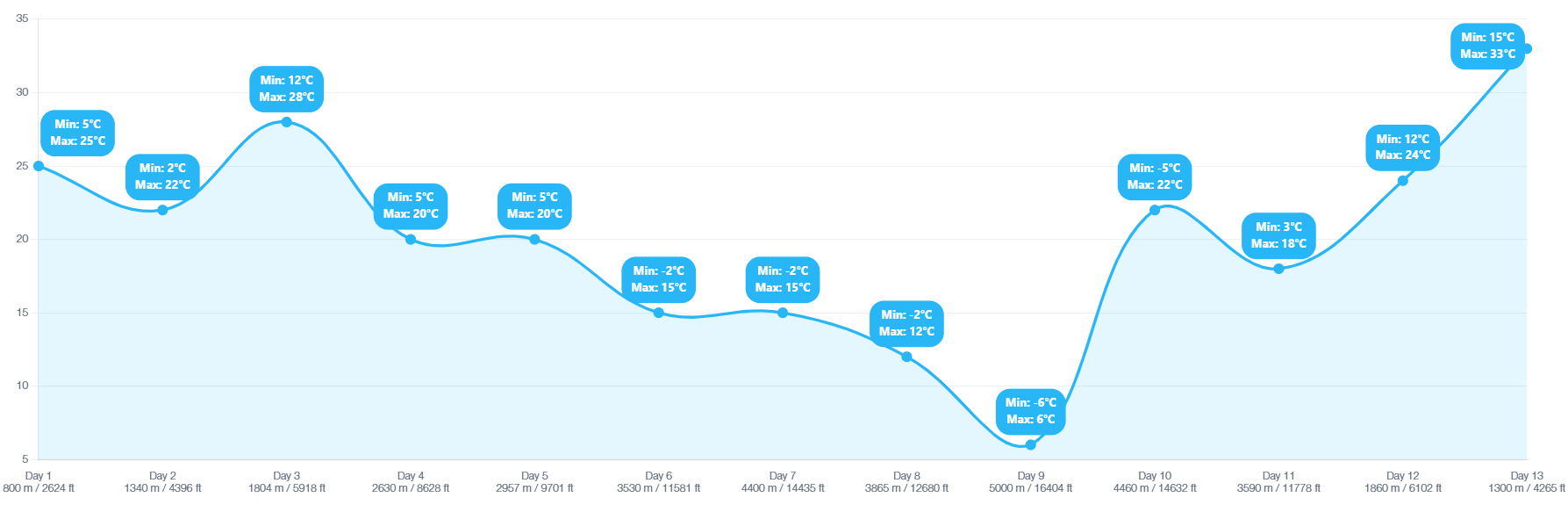
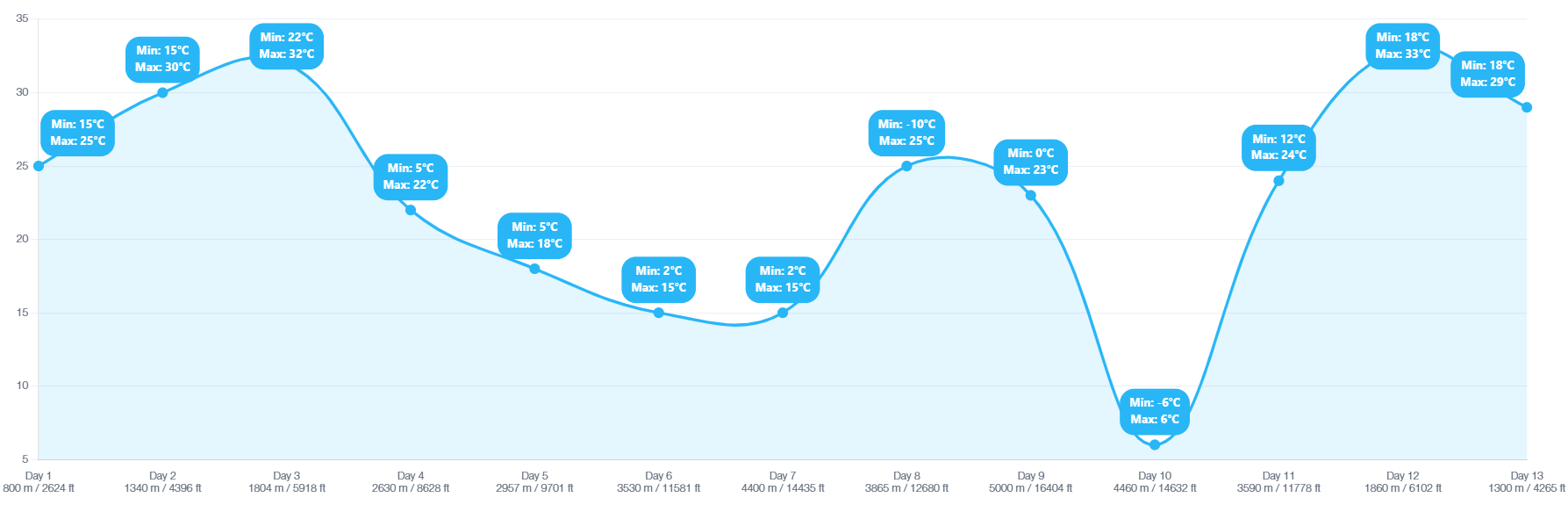
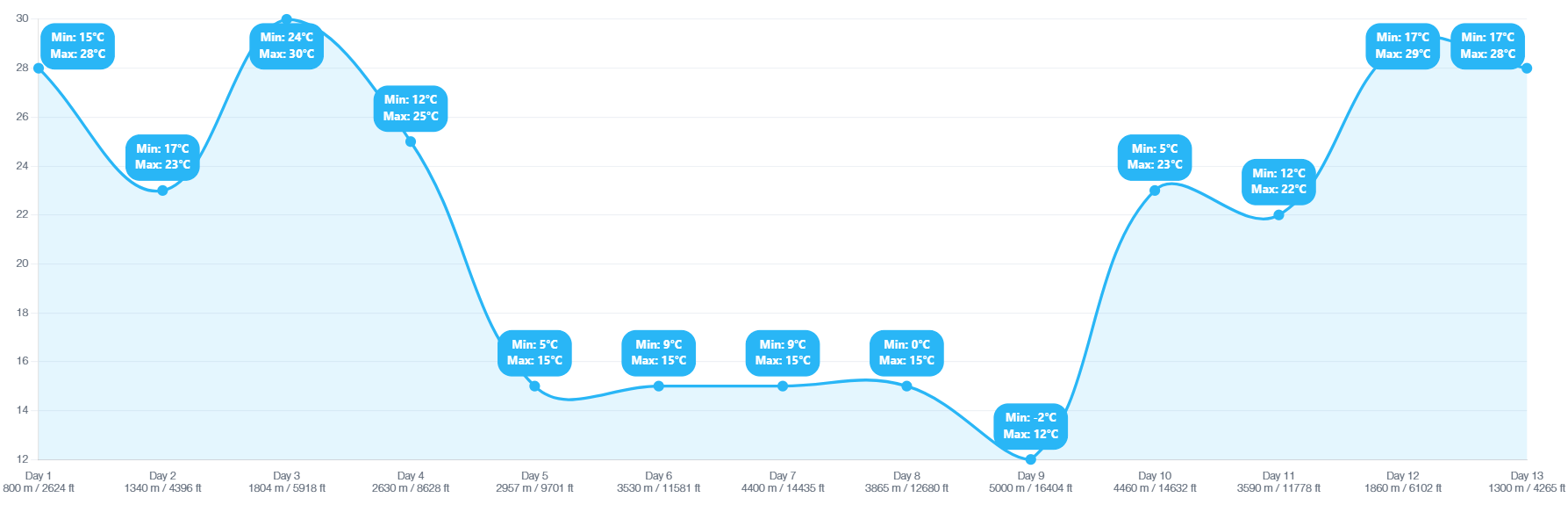
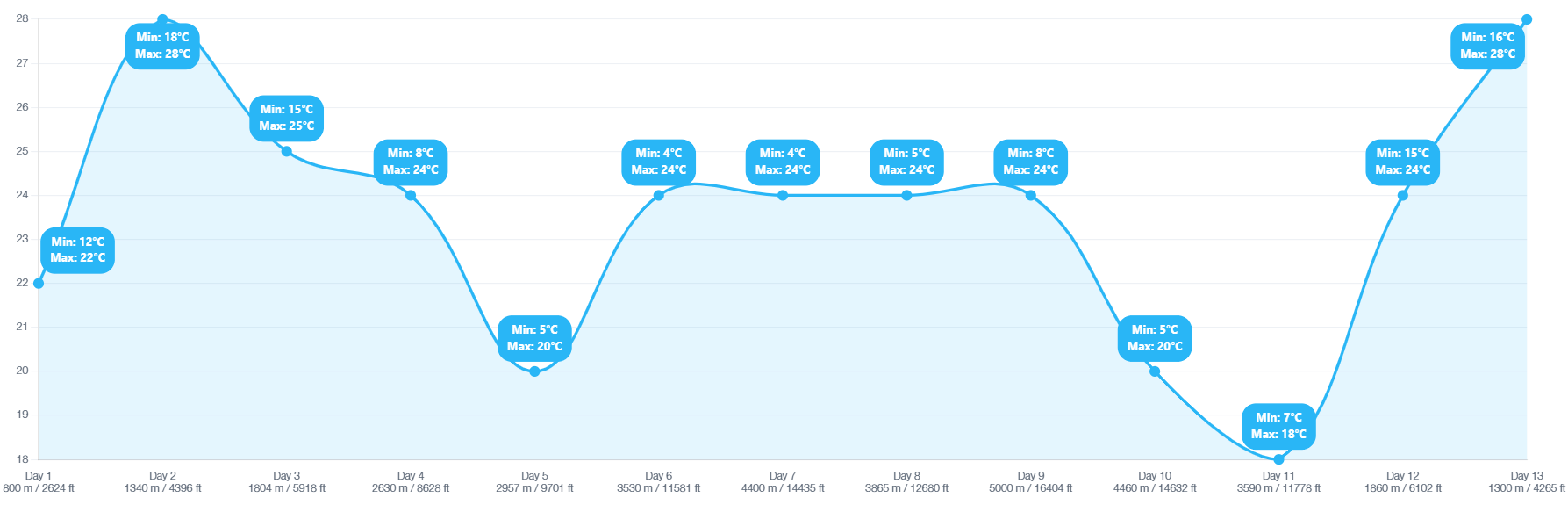
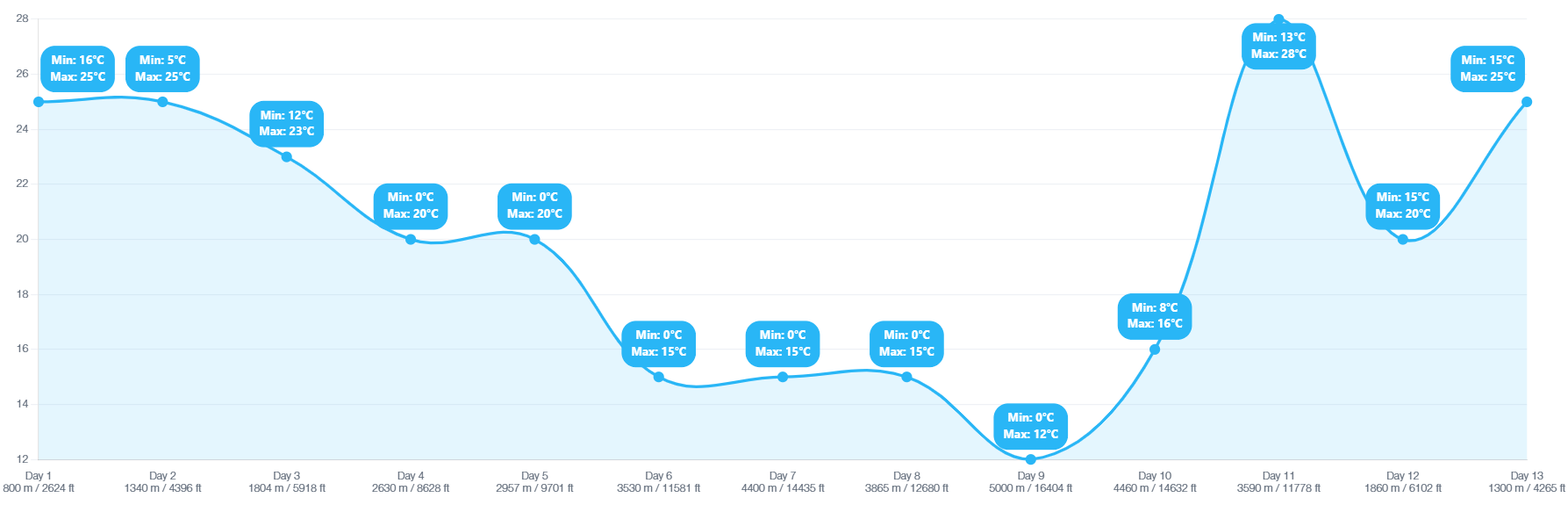
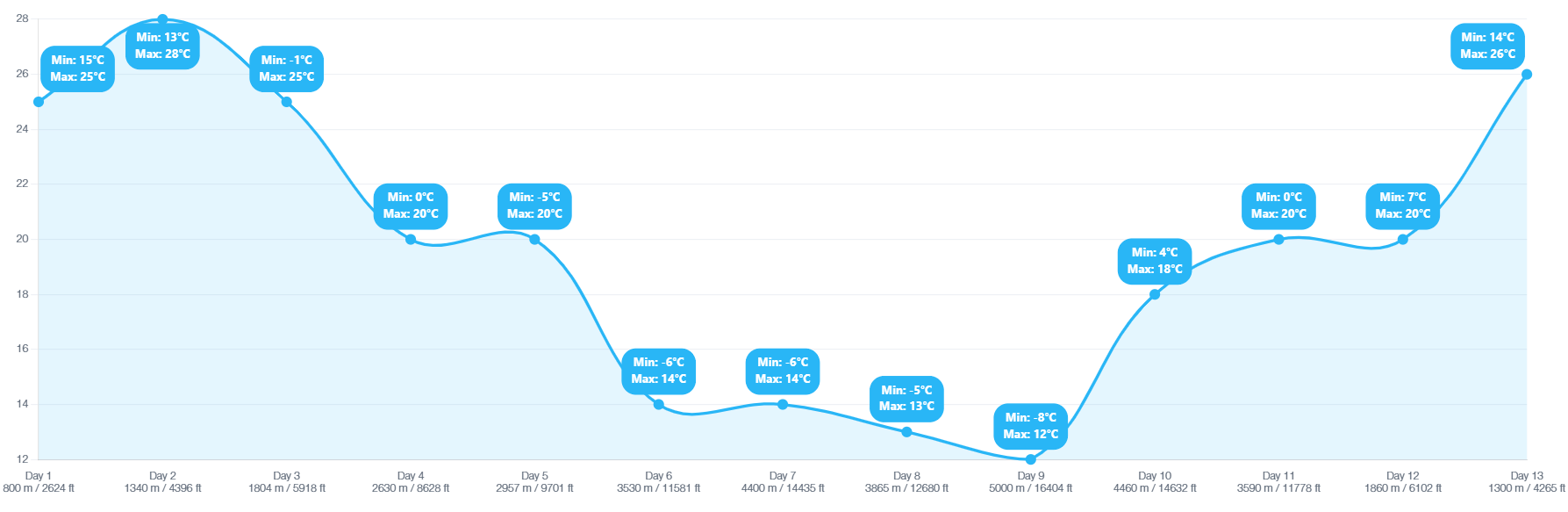
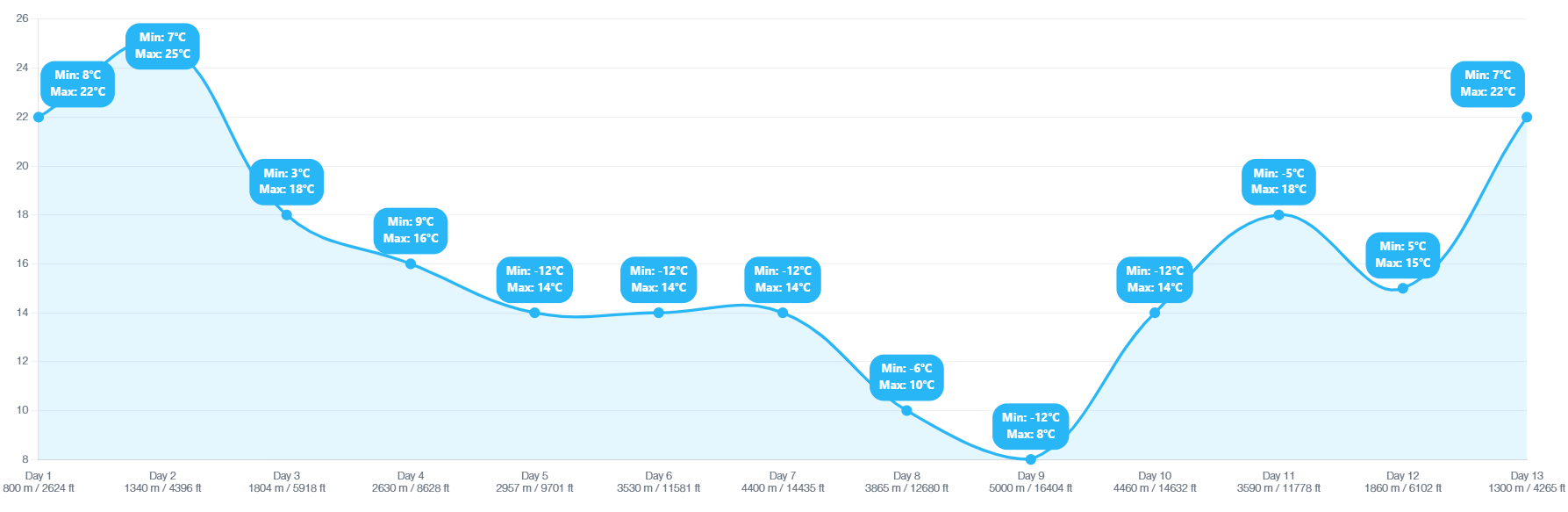
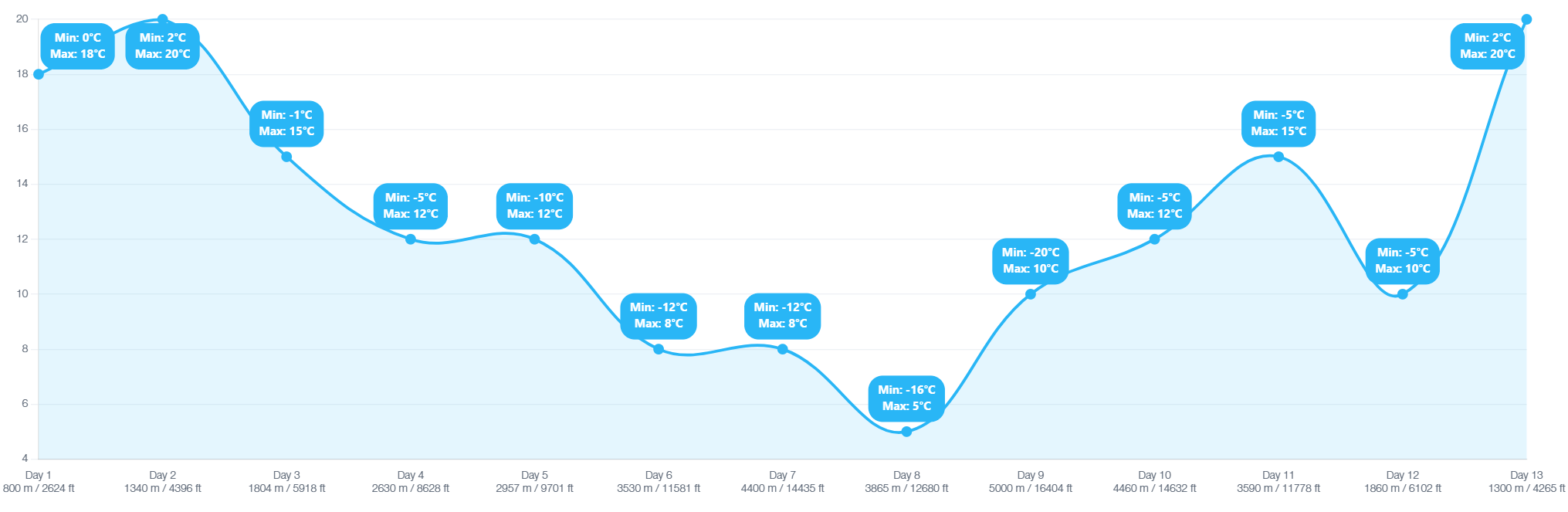
Temperature is for the reference only and may not be accurate
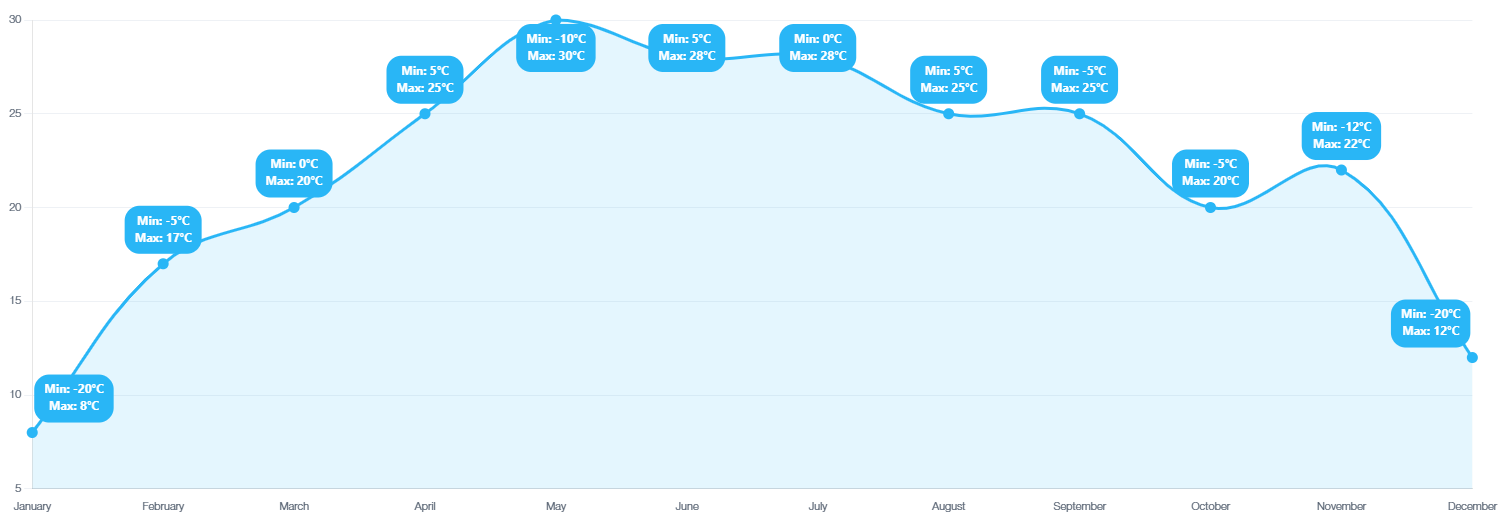
Temperature is for the reference only and may not be accurate
Chat with our travel experts and get a personalized itinerary tailored to your needs.
Layered Clothing: Lightweight, moisture-wicking base layers paired with thermal and insulating layers to adjust easily to changing temperatures.
Trekking Pants: Comfortable and quick-drying for long days on the trail.
Shirts: Long-sleeve shirts for sun and wind protection, along with short-sleeve options for warmer conditions.
Warm Hat and Gloves: Essential for cold mornings, evenings, and higher elevations.
Hiking Boots: Durable, waterproof boots that provide comfort and support on varied terrain.
Casual Footwear: Light shoes or sandals for villages, teahouses, and indoor use.
Socks: Wool or synthetic socks, including several thicker pairs designed for trekking.
Scarf/Buff: Useful for added warmth and protection from dust or wind.
Daypack: A small, comfortable backpack for daily walks and short excursions (30–40L backpack with rain cover.)
Trekking Poles: Useful for balance and support on steep or uneven trails.
Sleeping Bag: Available for rent in Kathmandu if you prefer not to bring one.
Water Bottle: A reusable bottle, ideally insulated to maintain temperature.
Headlamp or Torch: Essential for early starts, late evenings, or low-light conditions.
Power Bank: Helps keep your phone, camera, and other devices charged during the trek.
| Item | Description | Qty |
|---|---|---|
| Underwear | Breathable synthetic material (BYO) | 3 |
| Socks | Wool socks (BYO) | 3 |
| Sports Bra | Supportive sports bra (BYO) | As needed |
| Base Layer Pants | Merino wool thermal bottoms (BYO) | 1 |
| Trekking Shirts | Lightweight synthetic; bring your own or buy in Kathmandu | 2 |
| Rain Pants | Lightweight synthetic; Frogg Toggs recommended | 1 |
| Trekking Pants | Lightweight synthetic; BYO or purchase in Kathmandu | 2 |
| Hiking Shoes / Boots | Well-broken-in trekking boots (e.g. Salomon Quest 4D, X Ultra 3 or 4) | 1 pair |
| Camp Shoes | Down booties; BYO or available in Kathmandu | 1 pair |
| Gloves | One thin merino pair and one thick insulated pair | 2 pairs |
| Hat | Sun hat or cap with neck protection (BYO) | 1 |
| Down Jacket | Warm insulated jacket (BYO) | 1 |
| Windbreaker | Lightweight windproof jacket (BYO) | 1 |
Personal Toiletries: Bring biodegradable soap, a toothbrush, toothpaste, and any other essential personal care items.
Sun Protection: A high-SPF sunscreen is essential to protect your skin at higher altitudes.
Lip Care: Use an SPF lip balm to guard against dryness and cracking.
Insect Protection: Pack insect repellent, particularly if you’re trekking during warmer seasons.
Basic First Aid Kit: Carry your personal medications along with bandages, antiseptic wipes, and blister care supplies.
Camera or Smartphone: Ideal for photographing the breathtaking landscapes and memorable moments.
Book or E-reader: Bring your favorite book or a Kindle for relaxed reading time.
Notebook and Pen: Perfect for recording thoughts, memories, and daily experiences along the trek.
Note – The Manaslu Trek is considered a restricted trekking route, so you need a minimum of 2 people for this trip. Alternatively, you may need to purchase an extra permit, as single travellers are not permitted on this trail.
This 13-day Manaslu Circuit Trek is a budget-friendly and spectacular journey filled with breathtaking views, unique cultural encounters, and challenging terrains. We are offering this Manaslu Circuit Trek at the lowest price, making it an excellent choice for trekkers seeking exceptional value without compromising on experience or safety. To ensure a safe and enjoyable trek, proper preparation is key.
No shared groups. No fixed schedules. Just a personalized journey made for you.
Before you book, we recommend reading the sections below. They cover everything you need to know, including Accommodation, Food, Best Time to Trek, Cost, Safety, Culture and Etiquette, and more. If you prefer watching instead of reading, you can also check out our video, which explains the main points.
If you don’t see your preferred date in our fixed departure schedule, let us know. We’ll be happy to check if we can arrange it for you. Choose HimalayaHub for the Manaslu Circuit Trek to experience expert organization, knowledgeable guides, and a less-crowded Himalayan adventure. We are the best tracking company in Nepal. We ensure seamless trips with positive traveler feedback. Their focus on sustainable tourism enhances your journey around Mount Manaslu. We provide deep insights into local culture, peaks, and safe navigation over Larkya La Pass. They foster a supportive team atmosphere, making challenging sections enjoyable. Personalized care ensures comfort throughout the 13-day itinerary. From Kathmandu headquarters in Thamel, Himalaya Hub handles permits, logistics, and responsive planning flawlessly. Travelers praise affordable packages, group discounts, and impeccable execution for treks like Manaslu Circuit with Tsum Valley. Government-authorized status guarantees reliability. Access remote trails along the Budhi Gandaki River, ancient salt routes, and Tibetan-influenced villages for cultural immersion. Fewer crowds mean pristine views of Manaslu (8,163m) and surrounding peaks. Testimonials highlight unforgettable scenery and rewarding challenges. The Manaslu Circuit is a teahouse-based trek, where accommodation is provided in simple, family-run lodges scattered along the route. Each night, you’ll stay in a basic twin room furnished with two single beds, thin mattresses, and pillows. These teahouses offer an authentic Himalayan experience, but the facilities are quite simple. Bathrooms are usually shared and are often located outside the main lodge building. Guest rooms are not heated; however, the dining area is typically warm and welcoming, usually heated by a wood or yak-dung stove. This communal space becomes the heart of the teahouse in the evenings, where trekkers gather to relax and share stories. All meals are prepared and served at the teahouses, with menus commonly featuring dal bhat, noodles, soups, and a small selection of basic international dishes. Lunch is taken at teahouses along the trail, except during acclimatization hikes from Samagaun and Samdo, where no teahouses are available. On those days, your guide will arrange packed lunches for you to carry. Although the amenities are minimal, the teahouses provide warm hospitality, hearty meals, and a wonderful chance to connect with local communities and fellow trekkers in the remote Himalayan setting. Explore the available Manaslu Circuit accommodation options for more details. A teahouse on the Manaslu Circuit is a modest, family-run lodge located along the trekking route. It provides simple lodging, home-cooked meals, and a shared common area where trekkers can unwind and mingle after a day on the trails. Most teahouses offer twin rooms with basic beds, often equipped with thin mattresses and blankets. Bathrooms and toilets are shared, with a combination of Western-style and squat toilets depending on the village and altitude. Despite the simplicity of the facilities, teahouses provide a welcoming, authentic Himalayan experience and a cozy refuge in the mountains. The optimal time to trek the Manaslu Circuit is in spring (March–May) or autumn (September–November). During these months, you can expect stable weather, unobstructed mountain views, and favorable trail conditions for crossing the high-altitude Larkya La Pass (5,106 m). Each season brings its own unique charm, so the best choice depends on your personal trekking goals and what kind of experience you’re seeking. For an optimal trekking experience, autumn (September–November) is the best season for the Manaslu Circuit Trek, offering stable weather, crystal-clear mountain views, and excellent trail conditions. If you love vibrant landscapes and blooming forests, spring (March–May) is a great alternative. Trekking during winter or the monsoon is suited for adventurous travelers seeking solitude, but it requires extra preparation and flexibility. Pick the season that matches your style of adventure, and let HimalayaHub handle everything, from trekking permits and expert guides to comfortable teahouse accommodations and trail safety. Each day on the Manaslu Circuit begins early to make the most of daylight. After a restful night in a cozy teahouse, you’ll enjoy breakfast at your lodge to fuel up for the day ahead. The trail takes you through a variety of landscapes, crossing rivers, navigating rocky paths, wandering through forests, and occasionally sharing the trail with mules, all while soaking in the grandeur of the surrounding mountains. Due to the region’s closeness to Tibet, you’ll notice Tibetan cultural influences along the way, from colorful prayer flags fluttering in the wind to ancient Buddhist artifacts scattered along the paths. The highlight of the trek, naturally, is Mount Manaslu, standing tall amidst a range of breathtaking, snow-capped peaks in this remote and tranquil area. Lunch is usually taken on the trail at small local eateries that serve travelers, though on some days a packed lunch may be necessary depending on the route and conditions. Dinner is enjoyed back at the teahouse, where you’ll stay for the night. This is the perfect opportunity to share stories and connect with fellow trekkers and guides. During dinner, your guide will also brief you on the next day’s trek, pointing out key sights and answering any questions. It’s common practice to pre-order your breakfast the night before so it’s ready for an early start and another day of Himalayan adventure. At HimalayaHub, we take care of every transport detail so your journey is smooth from the moment you leave the city until you return from the mountains. Whether you choose the comfort of a private vehicle or the authentic experience of local transport, all logistics are managed for you, allowing you to fully immerse yourself in the trek and the spectacular Himalayan landscapes. Your adventure starts with a memorable drive from Kathmandu to Maccha Khola, traveling via Soti Khola. Covering roughly 160 kilometers, the route winds through rural Nepal and combines paved highways with rugged off-road sections, offering stunning countryside views along the way. For those choosing private transport, a jeep will collect you directly from your hotel, with your guide accompanying you from the very beginning. We suggest departing at around 8:00 a.m. to avoid heavy city traffic and to allow for a comfortable lunch stop en route. This timing also gives you the chance to enjoy a relaxed breakfast at your hotel before setting off. If you opt for local transportation, your guide will meet you at your hotel and accompany you by taxi to the bus station. Local buses usually depart between 7:00 and 8:00 a.m., and the exact schedule will be confirmed during your pre-trek briefing. As the departure is early, we recommend requesting a packed breakfast from your hotel the night before. After completing the trek, your return journey begins in the mountain village of Dharapani. From here, you’ll travel by local jeep to Besisahar, a drive of approximately 6 hours along dramatic mountain roads. This transfer is arranged in advance, so you can sit back and enjoy the final views of the Himalayas. If you have chosen private transport, it will be organized locally, as this section involves off-road travel. From Besisahar, onward travel can be arranged based on your plans: We are happy to organize transportation to whichever destination you require, ensuring a comfortable and hassle-free conclusion to your Manaslu adventure.
Trekking the Manaslu Circuit is more than a journey through mountains, it’s an immersion into a world where time flows differently. In these remote Himalayan villages, perched on steep slopes and framed by towering snow-capped peaks, the wind carries the soft hum of prayer wheels. Ancient mani walls line the trails, and prayer flags flutter with messages sent skyward. This region is home to the Nubri people, whose lives are closely tied to Tibetan Buddhism. Stone houses, flickering butter lamps in temples, and the warm hospitality of locals define the villages of Lho, Shyala, Samagaun, and Samdo. You’ll notice monks in crimson robes, elderly women softly chanting mantras, and children running barefoot through barley fields, all beneath the watchful presence of Mt. Manaslu. Being here comes with respect. You are a guest in sacred spaces. Walk on the left side of the mani walls, turn prayer wheels clockwise, and always ask before photographing anyone. Dress modestly, cover your shoulders and legs when entering villages. Remove your shoes before entering homes or monasteries. Approach each interaction with calmness and courtesy. Every step offers a chance to connect, not just with the mountains, but with a culture that has endured for centuries. Trek gently, speak with kindness, and open yourself to the stories of the people around you. These mountains will remember your respect. Mountain weather in the Manaslu region can change quickly, causing occasional delays. Staying flexible and prepared will help you enjoy the trek no matter the conditions. 🌸 Spring (March–May) Day: 10°C–20°C (50°F–68°F) Night: -6°C–5°C (21°F–41°F) Mild temperatures and stable conditions make this a comfortable trekking season. 🌧 Summer / Monsoon (June–August) Day: Up to 25°C (77°F) Night: Around 10°C (50°F) Warm temperatures with frequent rain; trails can be wet and humid. 🍂 Autumn (September–mid-December) Day: 12°C–18°C (54°F–64°F) Night: -3°C–5°C (27°F–41°F) Clear skies and pleasant temperatures make this one of the best trekking seasons. ❄ Winter (mid-December–February) Day: 6°C–12°C (43°F–54°F) Night: -15°C–-6°C (5°F–21°F) Cold conditions, especially at night, but quieter trails and crisp mountain views. On the Manaslu Circuit, meals are simple yet comforting. You’ll savor each serving of hot dal bhat, enjoy freshly made pancakes, and relish a warm cup of tea after a chilly day on the trail. Make sure to eat well, stay hydrated, and bring along a few snacks to keep your energy and morale up. You can view the full food menu here. Above all, relax and embrace your journey, enjoy the adventure with HimalayaHub! It’s advisable to carry around USD 15–20 per day during your trek. This amount can cover extras such as hot showers, device charging, and the occasional soft drink or beer. Please note that this does not include tips for your guide or trekking crew. Learn more about the overall cost of the Manaslu Circuit Trek. The Manaslu Circuit Trek is considered challenging to strenuous, depending on your experience, fitness, and the season. Here’s a detailed breakdown of its difficulty: Nepal is known for its friendly hospitality and is generally a safe destination for visitors. That said, trekking in remote, high-altitude regions such as the Manaslu Circuit requires awareness and sensible preparation. At Himalaya Hub, your safety and comfort are our top priorities, and we take every measure to ensure a secure and rewarding trekking experience. Below are key safety considerations to help you trek with confidence. High-altitude trekking comes with the possibility of Altitude Sickness, also known as Acute Mountain Sickness (AMS). Typical symptoms may include headaches, nausea, dizziness, fatigue, and a reduced appetite. The most effective prevention is gradual ascent, proper acclimatization, and staying well hydrated. Trek at a steady pace, give your body time to adapt, and avoid alcohol or heavy meals at higher elevations. If you experience any symptoms, inform your guide immediately. Our guides are fully trained to identify and manage altitude-related conditions and will take appropriate action if needed. For more detailed information, please refer to our dedicated Altitude Sickness guide. Although uncommon, emergencies such as landslides, avalanches, or sudden health issues can occur in mountainous terrain. In such situations, it is essential to follow your guide’s instructions at all times. Our team is trained in first aid and emergency response and can arrange further assistance, including helicopter evacuation, when necessary. We strongly advise all trekkers to obtain comprehensive travel insurance that covers high-altitude trekking and emergency evacuation services. This provides added security and ensures quick access to support if required. Before traveling to Nepal, consult your healthcare provider regarding recommended vaccinations. Commonly advised immunizations include hepatitis A, typhoid, tetanus, and others depending on your health history and travel itinerary. Carrying a small personal first-aid kit is also recommended. Essentials may include antiseptic cream, blister treatment, oral rehydration salts, pain relief medication, and any prescribed medicines. While basic medical supplies can be found in Kathmandu, bringing your own ensures familiarity and convenience during the trek.
Why Choose Our Manaslu Circuit Trek?
Expert Local Guides
Proven Organization
Authentic Off-the-Beaten-Path
Accommodation for the Manaslu Circuit Trek
Note:
● Lodging is based on twin-sharing arrangements.
● Private rooms can be requested for an extra fee at checkout.
● Facilities in Dharamsala are basic and limited, especially before crossing the Larke Pass.
What to Expect in a Teahouse in Manaslu?
Rooms:
● Usually compact and simple, featuring two single beds.
● Basic bedding is provided, including thin mattresses, pillows, and blankets, though bringing a sleeping bag is recommended.
● Many rooms have wooden walls with minimal insulation, so nights can feel chilly.
● Electricity is limited, and charging devices may incur an extra fee.
Meals:
● Food is prepared from a set menu, typically including dal bhat, noodle soup, fried rice, momos, pancakes, and tea.
● All meals are cooked fresh, though ingredient options can be limited at higher altitudes.
● Lunch is usually served at teahouses along the trail, except on acclimatization hikes from Samagaun and Samdo, when you’ll carry a packed lunch provided by your guide.
Toilets and Showers:
● Bathrooms are generally shared, with squat toilets being most common; Western-style toilets can be found at lower elevations.
● At higher altitudes, toilets are often located outside the main lodge building.
● Some teahouses offer hot showers for an additional charge, usually heated with gas or solar energy.
● In colder regions, water in the pipes may freeze, limiting shower availability.
Heating:
● Guest rooms are not equipped with heating.
● In the evenings, the dining area is warmed by a stove, usually fueled with wood or yak dung. This becomes the central spot for eating, staying warm, and socializing with fellow trekkers.
Other Notes:
● Charging your phone or camera often comes with an additional fee.
● Many teahouses offer snacks, toilet paper, and other essentials, usually at higher prices than usual.
● Wi-Fi may be available in certain villages for a small charge, but connections are often slow or intermittent.
Best time to Trek the Manaslu Circuit
HimalayaHub's Recommendation
Life on the Trail: A Day in the Manaslu Circuit
Transport Information for the Manaslu Circuit Trek
Transportation: From Urban Roads to Remote Mountain Paths
Kathmandu to Maccha Khola (via Soti Khola)
● Local Bus: Around 8–9 hours
Private Transport Option
Local Bus Option
Dharapani to Besisahar
Besisahar to Kathmandu or Pokhara
● To Pokhara: Approximately 5 hours by jeep or local bus
Culture and Etiquette in the Manaslu Region
Unforgettable Cultural Experiences
● Sipping tsampa or butter tea with a monk at Pungyen Monastery, perched above the glacial valley.
● Listening to morning chants ripple through the valleys of Samdo.
● Seeing a child carry firewood twice their size, smiling up at the towering snow-capped peaks.
● Stumbling upon a local festival such as Tibetan Losar, and being welcomed into a circle of masked dancers and resonating cymbals.
Manaslu Circuit Trekking Season Temperatures
Food on the Manaslu Circuit Trek
Breakfast Options
Lunch and Dinner Options
Dal Bhat
Rice, lentils & veggies
Momo
Tibetan dumplings
Thukpa
Noodle soup
Chowmein
Fried noodles
Macaroni/Pasta
With egg or vegetables
Soups
Vegetable, garlic
Spring Roll
with Egg, tuna or potato
Fried Rice
With egg, vegetables, or tuna
Noodles
with Vegetable, Egg
Spaghetti
with Tomato Sauce
Fried Rice
With egg or vegetables
Curry
Vegetable, Egg, Potato
Food Safety Tips:
Important Notes for the Manaslu Trek
Common Areas & Trek Guidelines
● Transport: The trek typically uses public buses. If you prefer private transport, it can be arranged for an extra fee.
● Solo Travelers: There’s no additional charge for traveling alone. However, single rooms on the trek are very rare, so you should expect to share with another participant of the same sex.
● Accommodation in Kathmandu: Lodging in Kathmandu is not included. If you need us to book a hotel before or after the trek, please inform us in advance.
● Porters: Porters are not included in the trek price. If you wish to hire one, please request this before the trek. The additional cost is USD 299, and each porter can carry a maximum of 20 kg. Kindly respect this limit.
● Meals: Three main-course meals per day on the trek are included. Drinks (hot or cold), alcohol, snacks, or extra food are not included.
● Extras: Hot showers ($3–$5) and charging electronics ($1–$3) are payable directly at teahouses.
● Guides: Always follow your guide’s instructions. They are experienced in the region and will make decisions if sudden changes are necessary due to weather or landslides.
● Drones: Flying drones is not allowed without a special permit, which can be difficult to obtain. Unless essential, leave drones at home.
● Insurance: Please arrange comprehensive trekking insurance before your departure. We do not provide insurance coverage.
Manaslu Circuit Trek Difficulty
1. Altitude
● The trek reaches a maximum altitude of 5,106 meters (Larkya La Pass).
● Altitude sickness is a serious risk, especially above 4,000 meters, so acclimatization days are essential.
2. Distance & Duration
● Total trek distance: ~177–200 km (depending on route variations).
● Typical duration: 14–18 days, including acclimatization.
● Daily trekking: 5–9 hours on average, with some long days crossing high passes.
3. Terrain
● Mixed terrain including steep ascents, descents, rocky trails, and narrow paths.
● Larkya La Pass can be icy or snowy, particularly in early spring and late autumn.
● Rivers, landslides, and occasional muddy trails add to the challenge.
4. Physical Fitness Required
● Good cardiovascular fitness and leg strength are needed.
● Previous trekking experience above 4,000 meters is strongly recommended.
5. Weather & Seasonal Challenges
● Spring (March–May): Moderate difficulty; pleasant weather but possible snow at high altitudes.
● Autumn (Sept–Nov): Clear skies, moderate difficulty; Larkya La can be icy.
● Winter (Dec–Feb): Very difficult; extreme cold, heavy snow.
● Monsoon (June–Aug): Difficult and risky; landslides and slippery trails.
6. Logistics
● Less commercialized than the Annapurna or Everest regions, so some sections may be remote with limited lodges.
● Carrying a light backpack helps; porters are available but not as common as other trekking regions.
Safety and Security in Nepal and on the Manaslu Trek
Altitude Sickness on the Manaslu Circuit
Emergency Procedures
Health Precautions and Vaccinations
Chat with us — real trekking experts, not bots.
Our complete collection of Manaslu Circuit Trek guides helps you plan every stage of your adventure. Explore detailed resources on costs, itineraries, permits, maps, packing, accommodation, food, weather, safety, and the culture of the Manaslu region.
Still have questions? Feel free to contact us by email or WhatsApp. Our local trekking experts are happy to help and usually respond within 24 hours. If your preferred departure date isn’t available, we can also arrange a private Manaslu Circuit Trek customized to your schedule and travel preferences.
Chat with us — real trekking experts, not bots.

 -10°C
-10°C



Chat with our travel experts and get a personalized itinerary tailored to your needs.
To initiate a cancellation request, please write to us at [email protected] from your registered email ID.
Cancellations prior to 25 days from the start of the Trip
Cancellations Between 24 and 15 Days Before the Trip Start Date
Cancellations Between 14 and 10 Days Before the Trip Start Date
Cancellation less than 9 days to the start of the trek.
In the unfortunate event of a death in the immediate family (parents, siblings, spouse, or children), or if the trekker is hospitalized for a minimum of 48 hours, or sustains a fracture (arm or leg) within one week prior to the trek, even if the cancellation is made a day before departure:
50% of the trek fee will be refunded in cashValid supporting documents must be submitted. We understand these are difficult times and are here to help.
HimalayaHub reserves the right to alter, shorten, or cancel any part of the trip due to transportation delays, adverse weather conditions, health emergencies, or any other unforeseen circumstances, including Force Majeure events.
HimalayaHub shall not be held liable for any cancellations, delays, or changes to services resulting from events beyond its control. These include, but are not limited to, earthquakes, landslides, strikes, curfews, wars, pandemics, government-imposed restrictions, heavy rainfall or snowfall, storms, road blockages, trail disruptions, or permit withdrawals.
Chat with us — real trekking experts, not bots.

Mt. Manaslu, also known as Kampunge is located in the west-central part of Nepal. It is part of Manisiri himal, Nepalese Himalayas.
Entire trek takes around 13 days for completion (18 days if you count transport time and days in Kathmandu).
The Manaslu Circuit Trek is considered moderately difficult. It involves walking 6-8 hours daily at high altitudes, reaching up to 5,106m at Larkya La Pass. Good physical fitness and prior trekking experience are recommended. Proper acclimatization, preparation, and a positive mindset make this trek achievable for most determined trekkers.
The best weather for the 13-day Manaslu Circuit is during spring (March–May) and autumn (September–November). These months offer stable temperatures, clear blue skies, and breathtaking mountain views. You’ll avoid heavy monsoon rains and extreme winter snow, ensuring a safer and more enjoyable trek over the pass.
Yes, you need three permits: the Manaslu Restricted Area Permit (RAP), plus MCAP and ACAP conservation area permits. Because it’s a restricted zone, you cannot trek alone; you must hire a licensed guide and have at least two trekkers in your group. All paperwork is easily handled by your local trekking agency.
At 8,163 meters (26,781 feet) above sea level, Manaslu ranks as the eighth-highest mountain in the world.
No, you cannot trek the Manaslu Circuit without a guide. The Nepal government classifies this as a restricted area, making a licensed local guide mandatory for safety and regulation. Additionally, you must trek with at least one other person; solo trekking is strictly prohibited in this majestic region.
The cost for a 12-16 day Manaslu Circuit trek typically ranges from $900 to $1,400 per person. This price covers restricted area permits, a mandatory guide, basic teahouse lodging, and meals. Costs vary based on group size, transportation choices, and the level of service provided by your local trekking agency.

Member Since 2025






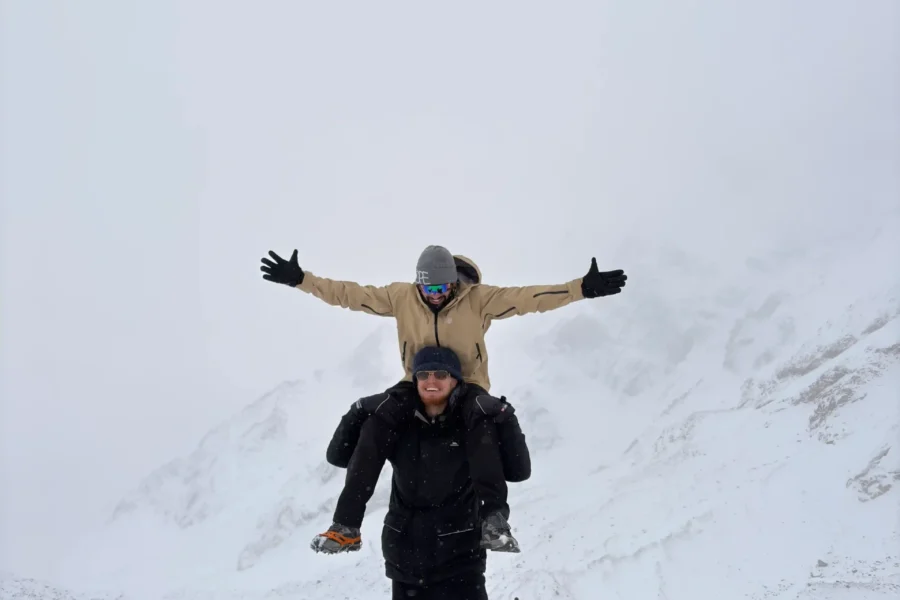
Wonderful experience on the Manaslu Circuit Trek