
12 Days
Daily Tour
15 people
English
Embarking on an Everest Base Camp trek 12-day package is an unforgettable adventure through the heart of the Khumbu (Everest) region. This guided Everest Base Camp trek (short Everest Base Camp trek) takes you from Kathmandu over Lukla’s high-altitude runway and up through Sherpa villages to Everest’s doorstep. Along the way, you’ll experience Sherpa hospitality in family-run tea houses, challenging but gradual ascents, and world-class mountain scenery. The 12-day itinerary covers roughly 65 km one-way (about 130 km round-trip) and reaches elevations up to Kala Patthar (~5,545 m) and Everest Base Camp (5,364 m). While the overall difficulty is strenuous (due to length, altitude, and terrain), it is well-suited to beginners in good shape who prepare accordingly. With proper pacing and acclimatization, even first-time trekkers can complete the trek. (Local guides will take care of logistics and safety so you can focus on the adventure.)
Here’s a day-by-day overview of the 12-day Everest Base Camp itinerary (short Everest Base Camp trek):
This compact 12-day schedule includes key acclimatization days and covers all the main highlights (Namche, Tengboche, Lobuche, Everest Base Camp, Kala Patthar) in a short Everest Base Camp trek format.
Most Everest Base Camp packages begin and end in Kathmandu. Transportation to/from the trail is usually via small aircraft: early mornings, you’ll fly 35–40 minutes from Kathmandu’s domestic airport to Lukla (2,800 m). Lukla’s Tenzing-Hillary Airport is famous (it’s one of the world’s most thrilling short-runway mountain airports). (During busy seasons, some flights are diverted to Manthali Airport in Ramechhap, about a 5–6 hours’ drive from Kathmandu, due to Kathmandu air traffic and weather.) Due to volatile weather in the mountains, flights are often delayed or rerouted, so itineraries buffer extra days to accommodate “Lukla delays”.
On the return, you’ll fly Lukla→Kathmandu (40 min) on day 12. In good seasons, flights operate daily, but flexibility is key. Alternative road transport exists only for part of the route – there’s no road all the way to Lukla.
For trekkers short on time or seeking a deluxe option, helicopters offer an alternative Everest Base Camp route. Instead of trekking the final descent, helicopters can be used to shorten the trek. For example, on a 12-day Everest Base Camp trek with helicopter return, you trek normally to EBC and Kala Patthar. Then, on the last day, you fly by helicopter from Gorak Shep (near Everest Base Camp) back to Lukla (a scenic 15–20 min ride), and from Lukla, a scheduled flight takes you to Kathmandu. (This eliminates the 2–3 day return trek down the valley.) The 11-day heli-shuttle option even includes a night at a Kathmandu hotel instead of Lukla, making the trip more luxurious. Note that heli options require good weather windows and high-altitude helicopter insurance.
Lukla Airport, officially known as Tenzing-Hillary Airport, sits at an elevation of 2,840 meters (9,317 feet). It is widely recognized as one of the most challenging airports in the world. This small mountain airport serves as the main gateway for trekkers heading to the Everest region.
At certain times of the year, airlines operate Lukla flights from Ramechhap/Manthali Airport instead of Kathmandu. These changes depend on seasonal demand and air traffic volume.
Ramechhap, also called Manthali Airport, lies about 5 to 6 hours by road from Kathmandu. From there, the flight to Lukla takes around 20 minutes.
During busy trekking seasons: March, April, May, October, and November, most Lukla flights operate from Ramechhap. Airlines make this adjustment to manage heavy air traffic and reduce congestion at Kathmandu Airport.
If you travel in these months, plan for an early morning drive to Ramechhap before your flight.
In quieter months such as January, February, June, July, August, September, and December, most flights to Lukla usually depart directly from Kathmandu Airport. These flights take approximately 35 minutes.
However, airlines make final decisions based on passenger volume, weather conditions, and airport operations. Flight schedules can change at short notice.
Because of Lukla’s location and short runway, factors like:
Often cause delays or cancellations.
To stay flexible, always add one or two extra days to your trekking itinerary. This buffer helps protect your travel plans and reduces stress if flights are postponed.
Lukla flights follow strict weight limits due to small aircraft and mountain conditions. The standard baggage allowance is 15 kg (33 pounds) per passenger, including:
If your luggage exceeds this limit, airlines may charge USD 2 to USD 5 per extra kilogram.
However, even if you agree to pay the additional fee, airlines may still refuse extra weight during busy periods or bad weather.
To avoid inconvenience, pack light and aim to stay within the 15 kg limit. Smart packing ensures a smoother journey and helps you board your flight without delays.
The Everest trek is not just stunning scenery – it’s also a rich cultural journey through Sherpa villages. Sherpa people are the ethnic group native to the Khumbu region, renowned for their mountaineering heritage. You’ll learn about their deep connection to the mountains: Sherpas grow barley, potatoes, and buckwheat in terraced fields and raise yaks for milk and meat. Buddhism permeates daily life: nearly every trail crosses mani stones (inscribed prayer stones), prayer flag-draped stupas, and holy monasteries (e.g., Tengboche Monastery). Along the way, you might even hear the rhythmic trill of monastery prayer wheels.
You’ll observe unique festivals and customs if your trek coincides with them. Sherpa celebrations like Losar (Tibetan New Year) involve traditional dances, music, and blessings at monasteries, while Saga Dawa marks Buddha’s birth and enlightenment with pilgrimage and ritual. Many tea houses feature family altars and small chapels.
Perhaps most memorable is Sherpa hospitality and community life. Tea houses are usually family-run, and hosts welcome you like guests in their home. They often share local stories, serve hot butter tea (salty yak’s milk tea), and hearty Nepali meals. Sitting around a lodge stove in the evening, you’ll feel the warmth of Sherpa community spirit. Guides and locals are proud of their heritage and eager to answer your questions. In remote villages, people still live simply, cooking on wood stoves and fetching water from springs – encountering this traditional lifestyle is a highlight of the trek.
Trekkers are expected to respect local customs: dress modestly in villages and monasteries, remove shoes in homes, and accept offered tea. By showing respect and interest in Sherpa culture, you contribute to sustainable tourism.
Tip: Try Nepali staples like dal bhat (lentil soup with rice) and momo dumplings – these local flavors are an important part of the Everest experience.
Lodging on the Everest Base Camp trek is in local teahouses (guesthouses) along the trail. These are simple family-run lodges with basic amenities. At lower altitudes (Lukla to Namche), the teahouses are relatively comfortable. Rooms usually have twin beds and wooden floors, and many offer attached bathrooms or Western-style toilets. Hot showers (solar or gas-heated) are often available for a fee (~200–300 NPR). You will share the dining room with other trekkers, enjoying mountain views. Electricity and Wi-Fi are common in larger villages like Namche, though you’ll pay a small charge to use them.
As you ascend above Tengboche/Dingboche, accommodations become more rustic. Walls are thinner, rooms smaller, and usually unheated – so sleeping bags are essential. Bathrooms are shared (often squat-style toilets), and hot water is scarce. At the highest lodges (Lobuche, Gorak Shep), hot showers may not be available, or if so, they cost extra and may be lukewarm. Because porters/pack animals must carry all supplies, even fuel, high-altitude guesthouses charge more for basics. A single night in Gorak Shep might cost $5–8 USD equivalent.
Key tips: It’s customary to order dinner and breakfast where you stay (food sales pay for lodging). Many teahouses waive or reduce room fees if you eat all meals there. Peak season (spring/autumn) is busy – rooms fill by mid-afternoon, so try to arrive early to claim your beds. Overall, teahouses are basic but friendly: expect simple wooden furniture, shared bathrooms, cold floors, and great views from the dining room!
Food on the trek is surprisingly varied. At lower villages (Lukla, Namche, Tengboche), menus offer both Nepali and Western dishes. You’ll fuel up on hardy options like Dal Bhat (lentil soup with rice and curry – the Himalayan staple), vegetable noodle soups, Momos (dumplings filled with meat or veggies), and “Sherpa stew”. Popular trekkers’ choices also include fried rice, omelets, fried potatoes, macaroni, or pasta with sauce. Many lodges also serve cheeseburgers, pizzas, or French fries in towns like Namche or Lukla, thanks to supplies brought up from Kathmandu.
Breakfast typically includes porridge, pancakes, chapati (flatbread), eggs, or Tibetan bread, with tea or coffee. On longer days, you’ll buy lunch on the trail (noodle soup, momos, omelets, etc.) at a tea house en route. Dinner is generally dal bhat with vegetable curry – it’s filling and popular.
Tip: Carry snacks like energy bars or nuts for between meals. Fresh fruits (bananas, oranges) are available only at lower stops (Lukla, Namche) and get scarcer higher up. Trekking farther, you’ll rely on dried fruits (raisins, apricots) and locally-made tsampa (roasted barley flour balls) for quick energy.
Beverages include a mix of local and Western options: hot lemon-ginger tea, instant coffees, sodas, and alcohol (beer, whiskey) can be bought (prices rise with altitude). Always drink boiled or purified water: nearly every lodge provides boiled water (often free). Carry a reusable bottle and purification tablets for safety.
Your day will start early and follow a steady routine. Expect to wake around 6–7 AM. A hot breakfast (porridge, eggs, toast, or pancakes with tea) is served around 7 AM. By 7:30–8:00 AM, you’ll be on the trail. Each day’s hike is broken by short rest and tea breaks (10–15 min each) as needed. Midday, you’ll reach a lunch lodge in 3–4 hours, where you’ll eat and rest. After lunch (often quick sandwiches, dal bhat, or noodle soup), you typically hike another 2–3 hours to your afternoon camp.
You should plan to arrive at your afternoon lodge by 4–5 PM. Evening time is for resting, charging devices (for a small fee), and interacting with fellow trekkers. Dinner is usually around 6–7 PM – often again dal bhat, pasta, or soup. Lights often go out by 9 PM, as everyone calls it a night (hard to sleep with the thin air, so early to bed is common). Throughout the day, stay hydrated (sip water every 15–30 min) and keep a steady pace – slow and steady is the best way to manage altitude. Your guide will set a comfortable pace and remind you to drink water, snack, and adjust layers for the changing temperature as you climb.
Everest’s weather dictates the best trekking seasons. Spring (March–May) and Autumn (September–November) are the peak seasons with stable weather and clear skies. In spring, the trail blooms with rhododendrons, and Everest expeditions are underway, creating lively base camps. Autumn, especially October and November, is favored for crystal-clear mountain views and festive local celebrations. According to seasoned guides, the optimal months are late February, March, late April, and late September through December. These times offer dry weather, minimal clouds, and comfortable daytime temperatures (typically 0–15 °C at high altitudes in spring).
By contrast, Monsoon (June–mid-August) brings heavy rain and clouds that obscure the mountains, and frequent flight delays. The winter months (December–February) are very cold: at EBC, it can drop below –20 °C at night. In winter, many lodges above Namche close, though trails are quiet and scenery can be dramatically snowy. In summary, for most trekkers, plan on April–May or September–November for the best combination of weather, views, and open accommodations.

This route map illustrates the classic Everest Base Camp trail and its elevation profile. The trek begins in Kathmandu (1,400 m) and quickly flies to Lukla (2,800 m) as the gateway. From Lukla, the trail climbs through Namche Bazaar (3,440 m), Tengboche (3,860 m), and Dingboche (4,400 m) before reaching Lobuche (4,900 m), Gorak Shep (5,170 m), and finally Everest Base Camp (5,364 m). An optional peak in the itinerary is Kala Patthar (5,545 m) for panoramic views. This map (sourced from NepalHikingTeam) shows how the elevation steadily rises throughout the trek and highlights daily segments. (Distances and walking times vary by guide, but typically each day involves a net gain or loss of 300–800 m.) The map underscores the high altitude of the trek – your lungs will feel the thin air well above 4,000 m – and the rugged, winding path through the valleys.
The EBC trek is often called “challenging but doable.” It is long and high: the round-trip trek is ~130 km, and you’ll climb a total of ~6,000 m of elevation gain (and descent). The most strenuous aspects are the high altitude and the length of each day’s hike. By Kala Patthar, you’ll be at 5,545 m – above 5,500 m, the air has ~50% less oxygen than at sea level. That, plus daily 5–8 hour hikes on rocky, steep trails, makes the trek physically demanding.
Other factors increase difficulty: the terrain varies from steep staircases and suspension bridges to rocky glacial paths. The weather can change rapidly (sunny mornings can turn stormy). Facilities are basic (shared rooms, simple meals). However, many novice trekkers complete it successfully each year. With proper preparation – good cardiovascular fitness, leg/ankle strength, and a cautious pace – the difficulties can be managed. It’s crucial to acclimatize properly (the itinerary’s rest days at Namche and Dingboche help) and to stay hydrated. In short, the trek is strenuous due to altitude and distance, but not impossible for prepared beginners.

 -12°C
-12°C


The weather on the trail varies greatly by season and altitude. At high camps (Lobuche, Gorak Shep), nighttime lows can fall well below –15 °C in winter, while daytime highs in the warm seasons may reach 0–15 °C on the trail (warmer in Kathmandu). In spring (Apr–May) and autumn (Sept–Nov), the days are generally sunny, and nights are cold but tolerable. For example, in April–May the temperature at high altitude typically ranges from about 0 °C (morning) to 10–15 °C (afternoon).
Monsoon season (June–August) brings frequent afternoon rains and low clouds, obscuring views and making trails muddy. Winter (Dec–Feb) features clear skies but bitter cold: Mt. Everest’s base camp area often drops below –20 °C at night. Always prepare for temperature swings: a sunny afternoon in a t-shirt can turn to a snowy early evening in down jacket. Layered clothing, a warm sleeping bag, and good gloves/hat are essentials.
When you land at Lukla Airport, you immediately arrive at an altitude of 2,860 meters, after leaving Kathmandu at just 1,440 meters about an hour earlier. This rapid gain in height means your body must quickly adjust.
By the time you reach Namche Bazaar, you will be at 3,440 meters above sea level. At this altitude, some trekkers may begin to feel the effects of reduced oxygen.
Our experienced guides are trained to recognize the early signs of altitude sickness and respond quickly. They also carry an oximeter to check oxygen levels whenever needed. However, prevention is always better than treatment. That’s why we encourage you to stay well hydrated and inform your guide immediately if you notice any physical changes.
To help your body adapt safely, we include two planned acclimatization days, one in Namche Bazaar and another in Dingboche.
These rest days do not mean staying inactive. Instead, you will take short hikes to higher elevations during the day and return to sleep at a lower altitude. This “climb high, sleep low” method helps your body adjust naturally. During these days, you can also enjoy scenic walks and local attractions.
Your journey into the Everest region begins at Lukla (2,860m / 9,383ft). On the first day, you walk for about four hours to Phakding (2,651m / 8,697ft), your first overnight stop. Even on day one, you are already at a high altitude.
Because of this, we carefully schedule two acclimatization days to reduce the risk of altitude-related illness:
These stops give your body time to adapt to thinner air and physical strain.
While altitude sickness cannot be completely avoided, our guides are highly trained in first aid and have at least seven years of experience leading Himalayan treks. They closely monitor every trekker and watch for early warning signs.
If you feel unwell at any time, even if the symptoms seem mild, please inform your guide immediately. Your safety and comfort remain our top priority, and our goal is to make this journey both memorable and secure.
Acute Mountain Sickness (AMS) is a common concern on high-altitude treks like Everest Base Camp. Early recognition and quick action can prevent serious health problems.
Common symptoms of AMS include:
Never ignore these signs. Acting early protects your health.
If you or a fellow trekker experiences symptoms of AMS, follow these steps immediately:
Trekking in the Everest region requires official permits. Two mandatory permits are the Sagarmatha National Park Entry Permit and the Khumbu Pasang Lhamu Rural Municipality Entry Permit. These must be obtained before or at the start of the trek. You can secure them in Kathmandu through the Nepal Tourism Board’s office, or at trailhead offices in Monjo or Lukla if not already arranged. (Trekkers’ Information Management System (TIMS) cards are no longer required for the Sagarmatha trek as of recent regulations.)
Permit fees are non-refundable and non-transferable, so make sure your travel documents and dates are set. As a practical tip, carry several passport-sized photos and copies of your passport for the application. Guides typically handle permit paperwork, but double-check that your permits are to avoid fines. Having these permits and your passport with you ensures a smooth, hassle-free trek to Everest Base Camp.
Safety is a priority on any high-altitude trek. For Everest Base Camp: be aware of altitude sickness, weather, and evacuation plans. Acute Mountain Sickness (AMS) can affect anyone, so ascend gradually and monitor symptoms (headache, nausea, fatigue). If someone feels unwell at high camp, the first remedy is often descent: dropping 500–1,000 m in elevation can dramatically improve breathing and reduce swelling. This “climb high, sleep low” strategy is built into the itinerary.
Medical facilities along the trail are basic. Himalayan Rescue Association (HRA) health posts are available (e.g., in Pheriche) and know how to treat altitude sickness. Guides typically have satellite communication to consult doctors if needed. It’s essential to have good travel insurance that covers emergency evacuation. Helicopter rescue is available (from villages like Pheriche, Gorak Shep, or Lobuche) but depends on weather and landing feasibility. Pilots make the call on conditions – in bad weather or late afternoon, they may not fly. Helicopters are usually a last resort after ground options are exhausted. If evacuation is needed, coordination is done by the guide with local agencies.
Safety is one of the biggest concerns for anyone trekking at high altitude. Understanding what happens if you feel unwell during the Everest Base Camp trek can give you confidence and peace of mind. While conditions like Acute Mountain Sickness (AMS), High Altitude Pulmonary Edema (HAPE), and High Altitude Cerebral Edema (HACE) are possible risks, a well-planned emergency system helps keep you protected throughout the journey.
With the right preparation and professional support, you can focus on enjoying your trek while knowing help is always available when needed.
If you experience severe altitude sickness, injury, or sudden illness, helicopter evacuation offers the fastest and safest solution.
This system ensures you receive advanced medical care as quickly as possible.
Along the EBC trail, trained medical professionals are available to support trekkers.
These facilities play a vital role in early treatment and recovery.
Your safety depends greatly on the experience of your guide.
This proactive approach helps prevent small issues from becoming serious problems.
Reliable communication is essential in remote mountain regions.
Clear communication ensures timely support when every minute matters.
By trekking with Himalaya Hub, you benefit from trained guides, trusted medical support, and proven evacuation systems. Even if unexpected challenges arise, you can rely on professional care, quick decision-making, and safe transportation back to Kathmandu. This commitment allows you to trek with confidence, comfort, and peace of mind.
Enjoy the Trek with Peace of Mind: By respecting altitude rules, staying aware of weather, and relying on experienced guides, most trekkers safely reach Everest Base Camp. Keep calm if delays or issues arise, as Nepalese trekking culture is used to unpredictable mountain challenges. With sensible precautions and the right support, your short Everest Base Camp trek can be a thrilling and secure adventure.
Here’s a comfortable and practical clothing guide to help you stay prepared every day:
This approach helps you stay comfortable, protected, and ready for every part of your journey.
Make sure you’re well-prepared for your adventure with these must-have items:
| Item Category | Description | Quantity |
| Underwear | Breathable synthetic fabric | 3 |
| Socks | Wool socks (Bring Your Own) | 3 |
| Bra | Sports bra (BYO) | — |
| Base Layer – Pants | Merino wool thermal pants (BYO) | 1 |
| Trekking Shirt | Lightweight synthetic shirt (BYO or buy in Kathmandu) | 2 |
| Rain Pants | Lightweight synthetic (Frogg Toggs recommended) | 1 |
| Trekking Pants | Lightweight synthetic (BYO or purchase in KTM) | 2 |
| Hiking Boots/Shoes | BYO (Salomon Quest 4D or X-Ultra 3/4) | 1 |
| Camp Footwear | Down booties (BYO or buy in KTM) | 1 |
| Gloves | One thin merino pair + one thick insulated pair | 2 |
| Headwear | Sun hat or peaked cap with neck cover (BYO) | 1 |
| Down Jacket | Insulated down jacket (BYO) | 1 |
| Windbreaker | Lightweight windproof jacket (BYO) | 1 |
Note: Please note that sleeping bags and down jackets are available for rent in Kathmandu, and all other trekking gear can be easily purchased locally. At Himalaya Hub, we’ll gladly help you arrange everything you need, so you can head into your adventure fully prepared and confident.

Normally, the trek to Everest Base Camp is 14 days with two days acclimatization: one at Namche and the other at Dingboche including arrive and departure. If you exclude arrival and departure, then, it will be 12 days trek to Everest Base Camp. Some people also prefer doing Rapid Everest Base Camp Trek which will be of 10 days excluding two acclimatization days but it will be too rush and there you are highly prone to altitude sickness if ascend quickly without proper acclimatization. So, the most popular itineraries for Everest Base Camp are: 12 days Everest Base Camp and 14 days Everest Base Camp Trek.
Everest Base Camp Trek is taken as a moderate adventure trekking in Nepal located in Khumbu region. However, sometimes, it is also considered as a strenuous trek by some trekkers since the trek takes us above 5000m. Definitely, trekking above 5000m is not an easy job. It demands a lot of sacrifices. More, specifically, one requires doing a lot of preparation with prior trekking experiences. Everest Base Camp Trek is not for the beginners and the trekkers who are preparing for Everest Base Camp Trek must own prior trekking experiences.
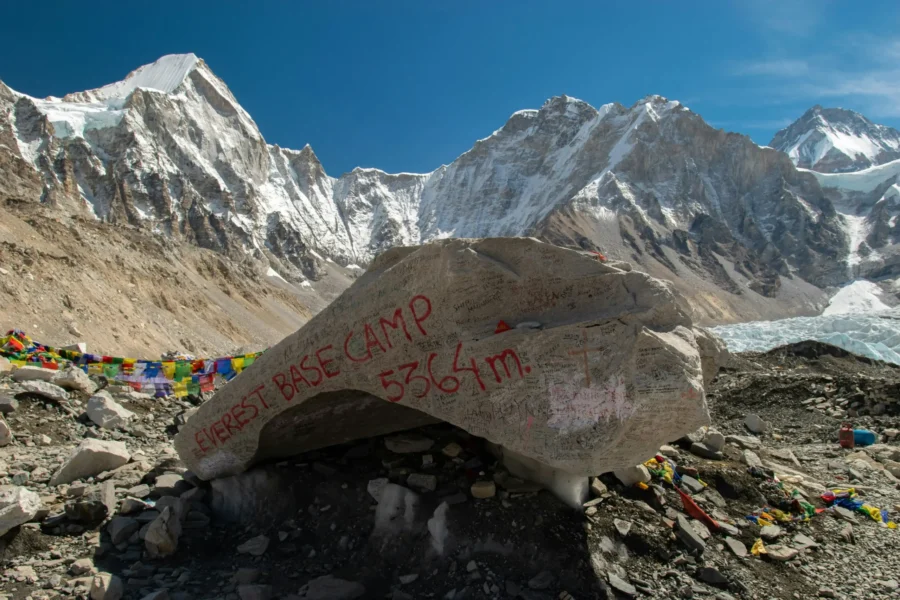
The long established height of Mt. Everest is 8848m but nowadays the height of Mt. Everest has been increased by 2 meters after the new measurement by China. So, the new height of Mt. Everest is 8850m and the Everest Base Camp is the highest mountain base camp of the world and it is 5364m. 17164ft high above the sea level.
There is not only the best season/time to trek to Everest region; there are two best times of the year: Spring ( Mar-May) and Autumn( Sept. Nov). Frankly telling, if you can tolerate crowd, you can trek in Everest Region in Autumn and if you want to avoid it, you are suggested to trek in Spring. But, both seasons/timings offer you the finest and the rewarding views of the mountain summits and the weather condition will absolutely be fine with no rainfall and snowfall.
Everest Base Camp Trek Cost is the most common concern of the people who are planning their trek to Everest Base Camp but it is very tough to determine the exact cost of the trek. The things like accommodation, foods, extra expenses, permits etc determine the Everest Base Camp Trek cost. One night accommodation varies from USD 10-15 and one item of meal costs between USD 5-10. TIMS Card costs Rs.1000 and the National Park Permit costs Rs. 3000. Similarly, Lukla flight cost (USD 170-180) or optionally jeep ride to Bupsa(USD 30) also contribute to fix the Everest Base Camp Trek Cost. The extra expenses like donations, shopping, drinks etc add some more cost to Everest Base Camp Trek Cost. So, normally Everest Base Camp Trek cost ranges between USD 1050-1300. But if you prefer Everest Base Camp Luxury Trek, then, the cost will go higher than that.
Yes, a beginner can trek to Everest Base Camp (EBC), but it requires preparation, realistic expectations, and careful planning. The trek is physically challenging due to long days of walking, steep ascents, and high altitude, but it does not require technical climbing skills.
Here are key points for beginners:
Bottom line: Beginners can trek Everest Base Camp, as long as they prepare, respect the altitude, and pace themselves. It’s a life-changing adventure that rewards patience, effort, and resilience.
Himalayas are wild and savage all the time. So, all of sudden, one may have an emergency risks including high altitude sickness. In case of emergency, you have to report to your trekking leader/guide in no time and he will try to apply the first aid in order to keep you out of the risks and if the problem worsens, then, you will be rescued by helicopter from the mountain for the further treatment to the cities like Kathmandu and Pokhara in coordination between guide and the company.
Yes, travel insurance is a must document to be made beforehand the trek. Your travel insurance must cover all the risks including the rescue cost by helicopter and the further treatment at the hospitals. You can not go for trekking without your travel insurance.
Yes, these days, the guesthouses, lodges, teahouses and restaurants offer the facility of Wifi to the trekkers along the trail where they stay. From Lukla to Gorekhshep, all along the trail, you can enjoy the facility of Wifi but they charge you some money like Rs.200-500 per device. Alternatively, you can buy data pack from Kathmandu with local SIM card. This will help you a lot throughout the trip.
We require to pack up all the trekking equipments including the light, battery charger, the plugs, first-aid kit, trekking poles, a down jacket that resists the temperature below than 1 Celsius, the hat, sunglasses, gloves, sun block cream, extra pairs of trousers an shirts, warm shocks etc. If you want some more information about the pack list, you can click our packlist.
You can charge your phone at the guesthouse/restaurant/teahouse on the way. But, you need to have your own charger and plugins to fit your phone. In fact, you are to pay some amount of money like Rs. 100 -200 per device because they have their community hydroelectricity or solar power.
Everest Base Camp Trek Accommodations are basic and ordinary at the local teahouses/guesthouses. The accommodation will be on twin sharing basis and the toilet will be outside and should be shared with other trekkers. But the rooms and beds are neat and clean. Importantly, you may need extra covering to keep your body warm at higher altitude, for this, you need to carry your own sleeping bag or don’t forget to ask with the company you are using for your Everest Base Camp Trek. However, you can enjoy luxury accommodations at Namche and Dingboche. These Himalayas towns have adopted the trend of modernization and have built some luxury hotels where you can enjoy luxury accommodation if you plan it prior to the trekking with your travel company.
The local teahouse and the restaurants have their own menus where you can get the item of the food you like. The most common item of foods are: noodles, breads, egg items, curries, rice, soups, dumpling etc. Even some of the teahouses/restaurants offer continental, Indian, Japanese, Chinese, Italian and other item of foods. You can also taste some local food items like Tsampa, yak meat and many other Tibetan and Sherpa food items on the trail.
Actually, the last human settlement before Everest Base Camp is Gorekhshep. There are no teahouses/guesthouses/hotels at Everest Base Camp. Therefore, you can not stay overnight at Everest Base Camp. However, if you carry all the required food items, tents and equipment for accommodation, you can stay overnight at Everest Base Camp. But, you need to have that permit prior to the trekking.
If an individual trekker asks to arrange his/her Everest Base Camp Trek, then, the trek/tour operator has to do it. It means even an individual traveler can do this trek with his/her guide and the porter. So, you don’t need to panic that you are the only traveler in the group; you still can do this trek. The group size ranges between 1-18 people. If there are more than 10 people in a group, then, the company will hire an assistant guide too to take a good care of the trekkers.
Yes, you can do this. We also suggest you do the same because carrying/taking your own sleeping bag and down jacket will be more reliable for you during the trek because you can fully trust in your equipment. But, some trekking companies also provide sleeping bag and the down jacket which may be fresh and reliable enough.
You can leave your excess gear at hotel in Kathmandu. The hotel you used in Kathmandu will store your excess gear until you come back to claim them from the trekking. They will be safe and don’t forget to take the tags of the luggage/gears and keep them safe.
Yes, you cannot do Everest Base Camp Trek without proper acclimatization. At least, 2 days of acclimatization is must beforehand you go to step your foot at Everest Base Camp. We will take first day acclimatization at Namche and the second day acclimatization at Dingboche in Everest Base Camp Trek. You are prone to the risk of altitude sickness if you do not get proper acclimatization. Do not ascend quickly in rush while doing your Everest Base Camp Trek. Your body needs acclimatization.
There is not any diet plan that you have be trained with for EBC trek. You can just go with regular diet that you have in your daily life. But most importantly, you should use fresh and well-cooked food items during the trek. Furthermore, we suggest you not to drink and smoke a lot above 5000m during the trek.
The weather in Everest Base Camp trek is always unpredictable because the weather condition switches in every 15 minutes. Normally, the weather is fairly perfect in the morning and get worse in the afternoon. The evenings and the nights are very cold on the trek. If you do Everest Base Camp Trek during Autumn( Sep-Nov) and Spring ( Mar-May), you will have incredibly good weather. In summer ( Jun-Aug), you will have rain and in winter ( Dec-Feb) you will have snow.
There are two ways of getting to Lukl. The one is by flight and the other is by road. The road connects Kathmandu to Bupsa. Bupsa is the village located just below Lukla. You get Bupsa by jeep ride. If you take a flight to Lukla, it is 40 mins flight with spectacular mountain views. During the bad weather, no flights are operated to and from Lukla and during the rainy season, no jeep ride is possible to get to Bupsa.
There is no age limit for doing EBC Trek. However, the children below 10 are recommended to trek to Everest Base Camp. Otherwise, people of any age can do Everest Base Camp Trek.
Normally, toilets are shared. Do not expect the separate toilet for you; be ready to share the toilets. Carry toilet paper on your own because it’s hard to use water at higher altitude. However, some hotels/guesthouses on the trail may provide you separate toilet for you. For this you have to ask the company to provide you luxury accommodation.
You can use ATM at two places in Everest Base Camp Trek. You can find them in Lukla and Namche. After Namche, there is no ATM booth. So, you are suggested to prepare the money you need during Everest Base Camp Trek in Kathmandu. But, at least, you can use the ATMs located in Lukla and Namche Bazaar in case of emergency and when you are running out of money on the trek.
You’d better carry a medical kit which will help you in case of emergency. Yes, your guide will carry one during the trek but if you carry your own medical kit that will really be reliable and authentic. If you have your own, you can use it at any time you want which can save you from bigger risks.
While it’s possible to trek solo, hiring a guide or joining a group is highly recommended for safety, navigation, and cultural insights.
Acclimatization days are built into most itineraries to reduce the risk. Listen to your body and descend immediately if symptoms worsen.
Tea houses along the route provide basic lodging and meals, including Nepali staples like dal bhat, noodles, and soups.
Limited connectivity is available, but it’s best to inform loved ones in advance of the potential communication delays.
Costs vary but typically range from $1,320 to $2,500 USD, including permits, accommodations, meals, and guide/porter services.
When planning your trip, it’s wise to schedule an extra day or two both before and after your trek. This buffer helps accommodate possible flight delays or cancellations and gives you time to purchase any clothing, equipment, or gear you may need.
Please note that Himalaya Hub cannot be held responsible for any disruptions to your travel plans, including missed international flights, flight delays, cancellations, or changes at the airport due to unforeseen circumstances.
Yes, our guides speak English. Most begin their careers as porters, gaining 3–4 years of hands-on experience before becoming trekking guides. Their English skills come from real-life interactions rather than formal education, so while they communicate effectively, they may not have the fluency of a native speaker. They are also ready to help bridge communication with locals, such as shopkeepers and teahouse hosts, who often don’t speak English.
Yes, you can hike to Kala Patthar first to enjoy breathtaking sunsets. But mountain weather can change quickly in the evening. For a safer and more enjoyable experience, it’s better to trek to Everest Base Camp first and then climb Kala Patthar early the next morning.
Our sleeping bags are rated for temperatures as low as -15 °C (5 °F), ensuring you stay warm during your trek. If you need extra warmth, our guides can arrange additional blankets at the teahouses.
Yes! You can conveniently get a Nepal visa right at the airport. Upon arrival, you’ll find kiosks in the arrival hall where you can fill out the required forms. The fees are:
It’s best to carry cash (USD) to pay the visa fees, as card payments or digital options are often unavailable.
To save time, you can fill out the online visa application form before your trip. Submitting it about two weeks in advance will make the process at the airport faster and smoother.
Our team will be waiting for you just outside the airport terminal, holding a signboard that says Himalaya Hub. From there, you’ll be comfortably escorted to your hotel in a private tourist vehicle.
When you arrive at Tribhuvan International Airport, you can typically complete the visa process and collect your baggage within 1 to 1.5 hours. Keep in mind that this time may vary depending on factors like the time of day, how many flights are arriving, and the number of passengers at the airport.
Yes! You can easily buy a SIM card at Kathmandu Airport from local providers like Ncell and Nepal Telecom (NTC). For the best coverage, we suggest choosing Ncell. The SIM card counters are open 24/7 in the arrivals area, so you can purchase one right after collecting your baggage.
To complete your purchase, make sure to have a passport-sized photo and a copy of your passport with you.
When you arrive in Nepal, you can easily exchange currency at the money exchange counters located in the arrivals area of Tribhuvan International Airport, which are open 24 hours a day. You also have the option to exchange money at authorized exchange centers near your hotel, which usually operate during daytime hours.
You’ll generally need around USD 15–20 per day per person. This covers essentials like water, tea or espresso, snacks, and hot showers in the mountains, as well as lunch or dinner in Kathmandu. If you plan to buy souvenirs or traditional Nepali items, consider bringing a little extra cash to enjoy those purchases without worry.
Absolutely! Credit cards are accepted in Nepal, especially in bigger cities like Kathmandu and Pokhara. Most hotels, restaurants, and shops welcome Visa, Mastercard, and American Express. Keep in mind, though, that some places may charge a small fee for credit card transactions.
While trekking in the mountain regions, it’s best to carry Nepalese Rupees rather than relying on a credit card. The easiest way is to exchange your money into Nepali Rupees in Kathmandu before your trek begins. You can do this at the airport, banks, or your hotel, though hotels usually exchange only up to USD 100 per transaction. Some ATMs are available as far as Namche Bazaar, but they can be unreliable. For the best exchange rates, Kathmandu is your ideal option.
To secure your trip, a 30% deposit is required at the time of booking. You can pay the remaining balance either before your arrival or upon reaching Kathmandu. Payments can be made in U.S. dollars, either in cash or by credit card (Visa, Mastercard, or American Express). Please note that all credit card payments will include a 4% transaction fee.
You can settle your balance using US Dollars in cash or by credit card (Visa, MasterCard, or American Express). Please note that credit card payments incur a 4% transaction fee, so we recommend paying with USD cash if you plan to pay upon arrival.
If paying with cash, we prefer larger bills (USD 50 or 100). Make sure the bills are in good condition and not older than 2009, as banks will not accept worn, torn, or crumpled notes.
If you’re staying in Thamel, Kathmandu, you’ll find ATMs and money exchange centers almost every few meters. Using your card to withdraw cash is easy, with only a small fee deducted by the ATM. Exchanging your foreign currency is also simple, currency exchange centers offer exact rates, making the process convenient and hassle-free.
You don’t need prior trekking experience to reach Everest Base Camp. As long as you are in good health and motivated, you can enjoy the trek safely.
There are no strict age limits for our treks! As long as you are healthy and motivated, anyone can join this incredible adventure.
We’ve welcomed families with children as young as 5, as well as adventurous travelers in their late 70s. Everyone has the chance to experience the magic of the Everest region at their own pace.
Yes, trekking alone in Nepal is safe for women. Nepal is known for being welcoming and secure for female travelers. With Himalaya Hub, a solo woman can confidently join any of our treks and enjoy the journey safely.
To get ready for the Everest Base Camp (EBC) trek, your body needs to handle long walks on uneven, hilly terrain while carrying a backpack. Great ways to train include walking uphill, jogging, cycling, and going on extended hikes.
Aim to exercise for at least one hour, four to five times a week, starting at least two months before your trek. This routine will help build the stamina and strength needed for this unforgettable adventure.
If you are in good physical shape, you should be able to complete this trek comfortably. If you are not very active, we recommend starting a fitness routine at least two months before your trip. Aim for 1 hour of walking uphill, running, or cycling 4–5 times a week.
Adding hiking practice to your workouts is even better. If you have any health conditions that might affect your ability to finish the trek, consult your doctor before making travel plans.
In Kathmandu, you’ll stay in comfortable three-star hotels with breakfast included. Examples include Hotel Thamel House, Hotel Jampa, or other hotels of similar standard. During the trek, we provide clean and cozy teahouses, giving you a comfortable place to rest after each day’s adventure.
| # | Discount group | From adult | To adult | Value |
|---|---|---|---|---|
| 1 | Pax | 3 | 4 | 1170% |
| 2 | Pax | 5 | 9 | 1130% |
| 3 | Pax | 10 | 15 | 1070% |

Member Since 2025





Leave a review