





















15 Days
Daily Tour
18 people
English
The Annapurna Base Camp Trek is one of the most iconic trekking adventures in Nepal, offering an unforgettable journey into the heart of the Annapurna Himalayas. Also known as the ABC Trek, this classic Himalayan experience combines dramatic mountain scenery, rich cultural encounters, diverse landscapes, and a well-paced trekking route that leads you to the spectacular Annapurna Base Camp elevation of 4,130 meters.
The Annapurna Base Camp (ABC) trek, also known as the Annapurna Sanctuary Trek , is a mesmerizing journey through diverse landscapes, cultural richness, and awe-inspiring Himalayan views.
This 15-day Annapurna Base Camp trek itinerary is thoughtfully designed to provide proper acclimatization, scenic variation, and cultural immersion. The journey begins in Kathmandu with guided sightseeing of UNESCO World Heritage Sites, followed by a scenic drive to Pokhara. From lush subtropical forests and traditional Gurung villages to high alpine terrain and glacial valleys, the trail showcases the very best of trekking to Annapurna Base Camp in Nepal.
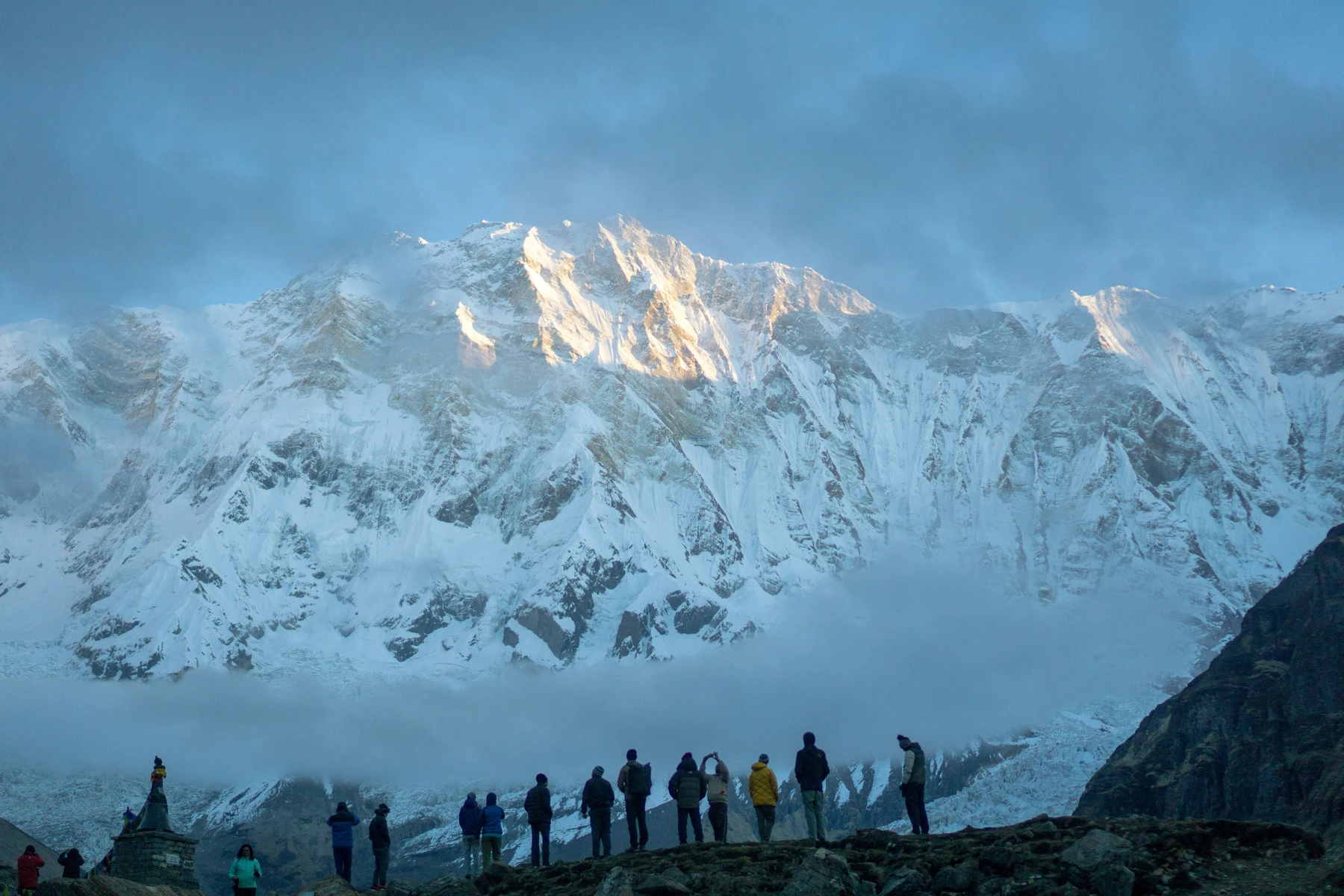
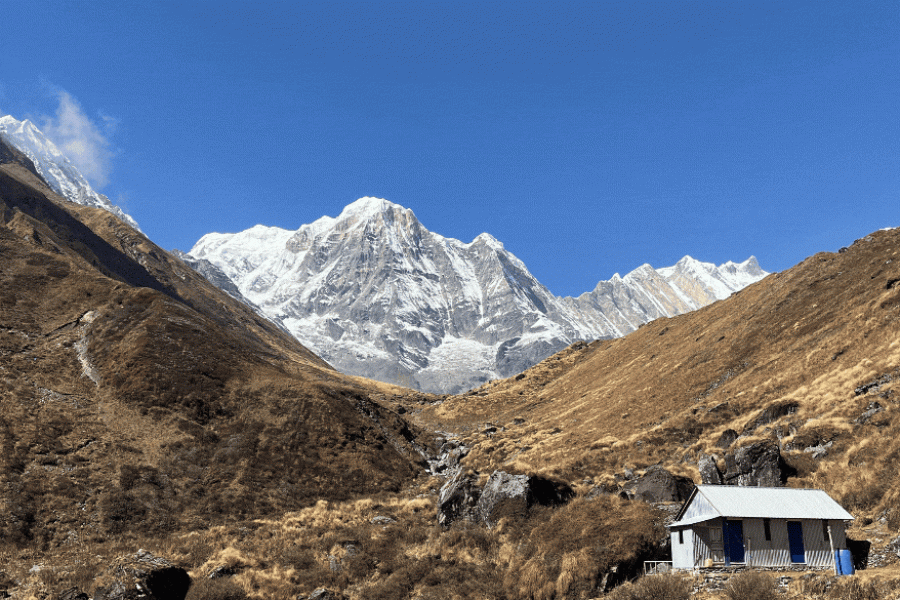
As you hike through rhododendron forests, bamboo groves, waterfalls, and river valleys, you’ll enjoy breathtaking views of Annapurna South, Hiunchuli, Machhapuchre (Fishtail), and Annapurna I. Highlights of this Annapurna Base Camp trekking package include sunrise views from Poon Hill, cultural villages like Ghorepani (a place situated in the Dhaulagiri Zone) and Chhomrong, natural hot springs at Jhinu Danda, and the awe-inspiring 360-degree Annapurna Base Camp view surrounded by towering snow-capped peaks and glaciers.
Suitable for both first-time trekkers and experienced hikers, this Annapurna Base Camp trek tour balances adventure and comfort with well-planned daily walks, experienced guides, and quality teahouse accommodations. With favorable Annapurna Base Camp weather during the best seasons, this trek is an ideal choice for those seeking a rewarding Himalayan adventure without technical climbing.
Whether you’re looking for a complete Annapurna Base Camp package, an authentic ABC trek itinerary, or a memorable Himalayan journey, this trek promises a once-in-a-lifetime experience in one of Nepal’s most beautiful mountain regions
Useful Information
If you prefer private transportation or flights instead of a tourist bus, want to arrange your own hotel in Kathmandu or Pokhara, or are interested only in the trekking portion, please feel free to contact us.
Accommodation on the Annapurna Base Camp Trek is primarily in well-established teahouses and guesthouses, offering trekkers a comfortable and authentic Himalayan experience. Throughout the Annapurna Base Camp trekking route, these lodges provide essential amenities, warm hospitality, and a cozy place to rest after each day’s hike.
In lower-altitude areas such as Nayapul, Ulleri, Ghorepani, and Chhomrong, teahouses are relatively more developed, with clean private or shared rooms, comfortable beds, and dining areas. As you gain altitude toward Sinuwa, Deurali, Machhapuchre Base Camp, and Annapurna Base Camp, accommodation becomes simpler, yet remains welcoming and well-maintained, designed to suit high-mountain conditions.
Rooms are generally twin-sharing with basic bedding, including a mattress, pillow, and blanket. Due to colder temperatures at higher elevations, trekkers are advised to bring a quality sleeping bag for added warmth, especially near the Annapurna Base Camp elevation of 4,130 meters. Most teahouses have shared bathrooms, with hot showers available in lower regions and limited or solar-heated options at higher altitudes.
Dining areas are communal and heated, creating a social atmosphere where trekkers can relax, enjoy meals, and share experiences. Meals typically include local Nepali dishes such as dal bhat, as well as international options like noodles, soups, pasta, and pancakes. Staying in teahouses along the ABC trek also supports local communities and promotes sustainable tourism in the Annapurna region Treks.
In cities like Kathmandu and Pokhara, accommodation is provided in comfortable tourist-standard hotels with modern amenities, ensuring proper rest before and after the trek. Overall, accommodation in this Annapurna Base Camp trekking package is designed to balance comfort, authenticity, and practicality, allowing trekkers to fully enjoy the journey through one of Nepal’s most iconic trekking destinations.
Transportation for the Annapurna Base Camp Trek is well-organized and thoughtfully arranged to ensure a smooth and comfortable journey throughout the trip. This Annapurna Base Camp trek tour includes a combination of private vehicles and tourist buses, allowing trekkers to enjoy Nepal’s scenic landscapes while traveling safely and efficiently.
Your journey begins upon arrival in Kathmandu, where airport transfers are provided from Tribhuvan International Airport to your hotel. During your stay in the capital, private transportation is arranged for guided sightseeing of UNESCO World Heritage Sites, making your pre-trek experience convenient and hassle-free.
To start the trekking adventure, you will travel from Kathmandu to Pokhara, either by tourist bus, private vehicle, or an optional domestic flight, depending on your preference. The scenic drive along the Prithvi Highway offers beautiful views of rivers, terraced hills, and rural villages, setting the tone for your Annapurna Base Camp trekking in Nepal. Pokhara serves as the main gateway to the ABC trek route.
From Pokhara, a private vehicle will take you to Nayapul, the official starting point of the Annapurna Base Camp trek itinerary. After completing the trek at Motkyu/Nayapul, transportation is again arranged to transfer you back to Pokhara comfortably. This seamless road connection makes the Annapurna Base Camp hike accessible and well-supported.
After the trek, return transportation from Pokhara to Kathmandu is provided via tourist bus, with options for private transport or a short domestic flight for those seeking added comfort or time efficiency. On the final day, a private transfer will take you from your hotel to the airport for your onward departure.
Overall, the transportation arrangements in this Annapurna Base Camp trekking package are designed to complement the trekking experience-safe, scenic, and reliable-ensuring that your focus remains on enjoying the mountains, culture, and natural beauty of the Annapurna region.
A comprehensive map of the Annapurna Base Camp Trek is provided to help you understand the route and follow your progress throughout the journey. Discover the stunning trail to Annapurna Base Camp with our specially designed interactive map, showcasing major landmarks, high mountain passes, and panoramic viewpoints along Nepal’s most famous trekking route. Whether you are preparing for your trek or simply exploring the region, this map offers clear guidance and helpful insights to navigate the trail with confidence. Get an immersive look at the trekking route and begin planning your Annapurna adventure today.
The day starts early so you can make the most of the daylight in the mountains. After a restful night in a warm, cozy teahouse, you’ll wake up to a delicious breakfast that gives you plenty of energy for your hike.
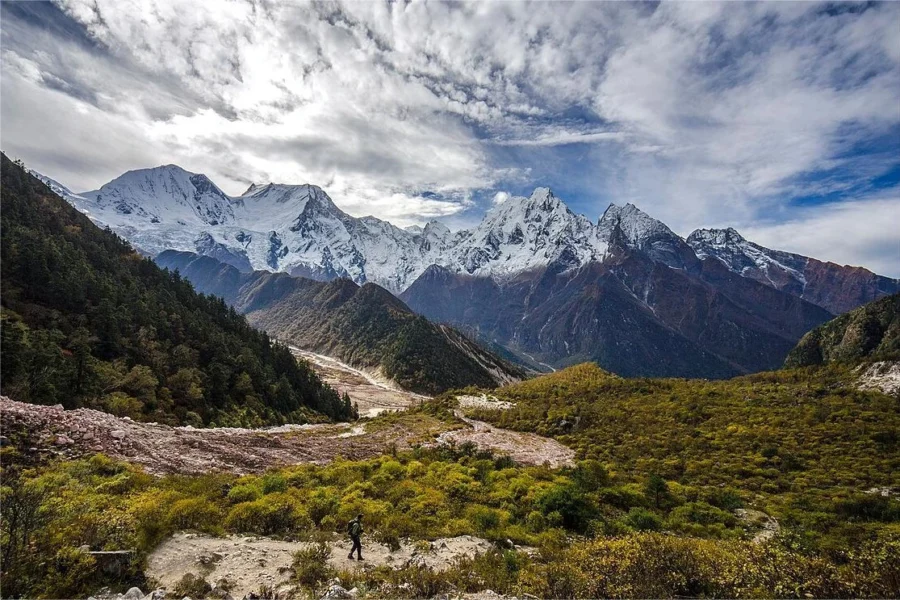
Your trek takes you through diverse landscapes. You may see mules carrying supplies along the trail, walk on rocky paths, cross wooden or suspension bridges over crystal-clear rivers, and wander through lush green forests. All around, massive snowy peaks rise like majestic guardians, watching over the trail.
Along the way, colorful prayer flags flutter in the wind, and small Buddhist shrines appear here and there. These are a glimpse into the local Tibetan-influenced culture and the region’s Buddhist traditions.
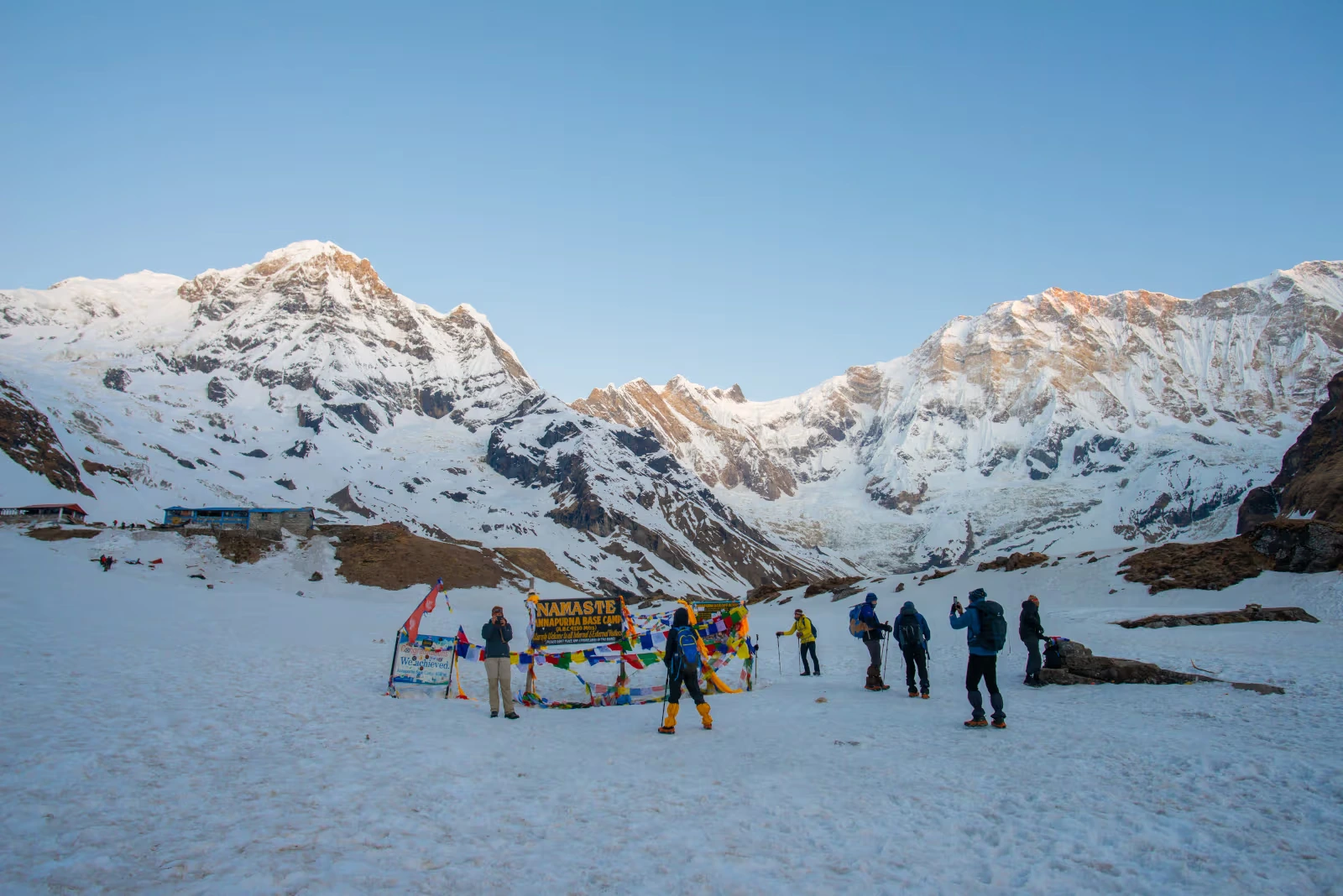
The highlight of the trek is reaching Annapurna Base Camp. Standing among towering, snow-covered mountains feels like stepping into a magical snow bowl!
Lunch is usually served at a small teahouse on the trail. If there isn’t one nearby, you might carry a packed lunch. Either way, it’s a perfect time to rest, enjoy the scenery, and refuel.
At the day’s stop, you’ll have dinner at the teahouse where you’ll spend the night. This is a great opportunity to chat, laugh, and share stories with your guide and fellow trekkers. Your guide will also brief you on the next day’s journey and answer any questions you may have.
Before bed, you’ll order your breakfast so it’s ready for an early start. Then, cozy in your sleeping bag, you can rest your tired legs and dream about the adventures still to come on the trail.
The Annapurna Base Camp Trek is moderate, suitable for beginners who prepare well and still enjoyable for experienced trekkers. You’ll walk 5–7 hours a day, through a mix of terrains: dense forests, terraced fields, picturesque villages, stone staircases, and high alpine meadows.
The trek reaches high altitudes at Deurali (3,230m / 10,595ft) and ABC (4,130m / 13,549ft). The itinerary allows sufficient time to acclimatize and minimize the risk of altitude sickness. Only one day involves a longer hike, up to 8 hours.
The main challenge is maintaining endurance while adjusting to altitude. Above 4,000 meters, oxygen levels drop, increasing the risk of AMS, which can affect anyone regardless of fitness. To reduce this risk:
Some parts of the trail are physically demanding with steep climbs, but focusing on the scenery and maintaining a positive mindset makes the trek easier. Patience, flexibility, and realistic expectations are key.
Prior trekking experience is not required, but physical preparation is important. Cardio exercises such as running, swimming, or cycling, along with strength training for legs and core, will make the trek easier. Practicing hikes with a weighted backpack and climbing stairs can also help prepare for the terrain and elevation gain.
The Annapurna Base Camp Trek is perfect for anyone who loves mountains, nature, and a moderate challenge. Beginners with average fitness and proper preparation can complete the trek successfully, while experienced trekkers will enjoy the scenery, cultural experiences, and sense of accomplishment at ABC.
Daily walks range from 5–7 hours, passing forests, fields, villages, stone steps, and alpine meadows. The trail can be steep and rough at times, but waterfalls, bridges, snowy peaks, and friendly villages make it rewarding.
The highest points are Deurali (3,230m) and ABC (4,130m). The itinerary is paced to allow acclimatization, reducing the risk of altitude sickness.
AMS can occur above 3,000 meters. Common symptoms include headache, dizziness, nausea, loss of appetite, shortness of breath, and trouble sleeping.
The ABC Trek is not technically difficult, but proper preparation makes it more enjoyable. Cardio workouts, stair climbing, and practice hikes with a backpack will help.
If you love mountains, nature, and a physical challenge, this trek is ideal. Move at your own pace, enjoy the views, listen to your guide, and communicate if you feel unwell. Take care, and you’ll have an unforgettable adventure in the Annapurna mountains.

 1°C
1°C


Experience the Annapurna Base Camp Trek at its best by choosing the right season. Spring and autumn offer clear skies, vibrant landscapes, and comfortable trekking conditions, while winter provides peaceful, snow-covered trails. Monsoon is less ideal due to heavy rain and slippery paths. Plan your trek wisely to enjoy safe, stunning, and unforgettable mountain adventures.
Spring is a wonderful time for trekking. The skies are often clear, the weather is comfortable, and the rhododendron forests burst with vibrant colors. It’s fresh, lively, and ideal for enjoying both nature and mountain views.
Autumn is the most popular time for the ABC trek. After the summer rains, the air is clean, the skies are sunny, and the mountain panoramas are spectacular. Many trekkers choose this season for ideal weather and incredible scenery.
The monsoon season is less popular for trekking due to heavy rainfall. Trails can be muddy and slippery, mountain views are often obscured, and lower paths may have leeches.
Winter trekking offers a serene experience with snow-covered mountains and peaceful trails. However, it’s very cold, paths can be slippery, and some teahouses may not operate.
The Annapurna Base Camp Trek is beautiful throughout the year, but spring (March–May) and autumn (September–November) are the best seasons. These months provide comfortable weather, clear skies, and stunning scenery, making hiking safer and more enjoyable.
Planning your trek in spring or autumn ensures the best weather, safe trails, and unforgettable views in the Annapurna region.
The Annapurna region is not only a paradise for trekkers but also a vibrant tapestry of Nepalese culture, traditions, and local lifestyles. Trekking to Annapurna Base Camp offers a unique opportunity to experience the rich cultural diversity of this mountainous region, where ancient customs blend seamlessly with stunning natural landscapes.
The trail passes through villages inhabited primarily by Gurung, Magar, and Thakali communities, each with their own distinct languages, traditions, and lifestyles. Villages such as Ghorepani, Chhomrong, and Sinuwa provide an authentic glimpse into rural mountain life. Visitors can observe local farming practices, traditional architecture, and daily routines that have remained unchanged for generations.
Religious and spiritual practices are central to life in the Annapurna region. Many villages feature Buddhist stupas, Mani walls, and Hindu shrines, reflecting the coexistence of Buddhism and Hinduism in the area. The Poon Hill sunrise trek and monasteries along the route highlight the spiritual connection locals have with the surrounding mountains, which are considered sacred.
Trekkers also get a taste of traditional cuisine, from simple dal bhat (lentils with rice) to local specialties like gundruk (fermented greens) and yak cheese. Guesthouses along the ABC trek route provide an opportunity to interact with local families, share stories, and participate in cultural practices, making the trekking experience deeply immersive.
Festivals and seasonal rituals further enrich the cultural landscape. Timing your Annapurna Base Camp trek around local festivals such as Dashain, Tihar, or Maghe Sankranti allows for a firsthand experience of vibrant celebrations, traditional dances, and music.
Overall, the cultural journey along the Annapurna Base Camp trekking trail complements the physical adventure, offering travelers a deeper understanding of Nepalese heritage, mountain communities, and the enduring traditions of the Annapurna region. It’s not just a trek, it’s a cultural exploration that enriches every step toward the majestic ABC.
To trek in the Annapurna region, all trekkers are required to carry official permits issued by the Government of Nepal. These permits help manage tourism, protect the environment, and ensure the safety of trekkers. Below are the two mandatory permits needed for the Annapurna Base Camp Trek.
The Annapurna Conservation Area Permit (ACAP) is required to enter and trek within the Annapurna Conservation Area, one of Nepal’s most protected and scenic regions. This permit supports environmental conservation, trail maintenance, wildlife protection, and local community development. The ACAP can be obtained through the Nepal Tourism Board offices in Kathmandu or Pokhara, or it can be arranged by a registered trekking agency. To apply, you need a copy of your passport and passport-sized photographs. The cost is fixed by the government and is generally paid once for the entire trek. It is recommended to apply at least one day before starting the trek, although most trekkers arrange it a few days in advance for convenience.
The TIMS Card (Trekkers’ Information Management System) is a mandatory permit designed to ensure the safety and proper tracking of trekkers in Nepal. It helps authorities and rescue teams locate trekkers in case of emergencies. The TIMS card is issued by the Nepal Tourism Board or trekking agencies and requires a copy of your passport, passport-sized photos, and basic trekking details. The cost varies slightly depending on whether you are trekking independently or with an organized group. It is best to apply for the TIMS card shortly before your trek, usually 1–2 days in advance, to ensure all travel details are accurate.
Don’t worry-Himalaya Hub will arrange all the required permits for you. The cost of both the ACAP and TIMS Card is already included in our Annapurna Base Camp Trek package, allowing you to focus fully on enjoying your adventure.
| Item | Description | Quantity |
| Underwear | Breathable synthetic underwear (bring your own) | 4 |
| Socks | Wool socks (bring your own) | 4 |
| Bra | Sports bra (bring your own) | As needed |
| Base Layer Pants | Merino wool base layer (bring your own) | 1 |
| Trekking Shirts | Lightweight synthetic shirts (bring your own or buy in Kathmandu) | 2-3 |
| Rain Pants | Lightweight synthetic rain pants; Frogg Toggs work well | 1 |
| Trekking Pants | Lightweight synthetic pants (bring your own or purchase in Kathmandu) | 2 |
| Hiking Shoes/Boots | Sturdy hiking shoes or boots (e.g., Salomon Quest 4D or X Ultra 3/4) | 1 pair |
| Camp Shoes | Down booties or comfortable camp shoes (bring your own or buy in Kathmandu) | 1 pair |
| Gloves | One thin merino wool pair and one thick insulated pair | 2 pairs |
| Hat | Sun hat or cap with neck protection (bring your own) | 1 |
| Down Jacket | Warm insulated down jacket (bring your own) | 1 |
| Windbreaker | Lightweight windproof jacket (bring your own) | 1 |
Note: Sleeping bags and down jackets are available for rent in Kathmandu, and most other trekking gear can be easily purchased there as well. At Himalaya Hub, we’re happy to help you arrange all the necessary equipment so you’re fully prepared and ready for your adventure.
This pricing offers great savings for friends, families, or trekking groups planning to explore the Annapurna region together.

The best seasons for trekking are spring (March to May) and autumn (September to November). During these times, the weather is clear, and you can enjoy breathtaking mountain views, vibrant rhododendron forests, and comfortable trekking conditions.
The trek is considered moderate in difficulty, suitable for both beginner and experienced trekkers. While it involves walking for 5-7 hours a day at high altitudes, no technical climbing skills are required.
The trek typically takes 7-12 days, depending on the itinerary and starting point. Shorter treks are available, but they require more physical endurance.
Yes, altitude sickness is a possibility as you climb above 4,000 meters. Proper acclimatization, staying hydrated, and taking it slow can help prevent it.
Meals on the trek are included in your package, providing three meals a day—breakfast, lunch, and dinner—at the tea houses. Accommodation is typically in teahouses, with a variety of basic amenities such as a bed, blanket, and meals. Some teahouses provide hot showers and Wi-Fi at an extra cost.
The trek offers a perfect mix of natural beauty, cultural experiences, and the close-up view of towering peaks like Annapurna I (8,091m), Machapuchare (6,993m), and Hiunchuli (6,441m).
Yes, the trek passes through traditional Gurung and Magar villages where you can experience local culture, temples, and monasteries.
With proper planning and pacing, the trek is suitable for children above 10 years and older adults in good health.
Annapurna Base Camp is situated in central Nepal, inside the Annapurna Sanctuary, a high glacial basin encircled by the Annapurna mountain range. It is located in the Kaski District of Gandaki Province, about 40 kilometers north of Pokhara, and rests at an elevation of 4,130 meters (13,550 feet).
The highest point on the Annapurna Base Camp Trek is Annapurna Base Camp, located at 4,130 meters (13,550 feet) above sea level. From here, trekkers are rewarded with breathtaking panoramic views of Annapurna I, Machapuchare (Fishtail), Hiunchuli, and the surrounding Himalayan peaks.
Yes! The Annapurna Base Camp Trek is suitable for beginners. It’s a moderate-level trek and one of the more approachable routes in the Himalayas for those new to trekking. With proper preparation, a decent level of fitness, and guidance from experienced trekkers or guides, beginners can complete the trek safely and have a truly enjoyable experience.
Yes, you can trek to Annapurna Base Camp solo, but it is only safe when accompanied by a licensed guide.
Annapurna Base Camp lies roughly 160 kilometers (100 miles) in a straight line from Kathmandu. Since there are no direct roads, most travelers first reach Pokhara, about 200 km by road or a 25-minute flight, and then continue with a multi-day trek to the base camp.
Temperatures on the Annapurna Base Camp Trek depend on both the season and your altitude. At higher points like ABC (4,130 m), early mornings and nights in autumn and winter can get very cold, ranging from -10°C to -15°C (14°F to 5°F). Lower elevations are milder, with daytime temperatures typically between 10°C and 20°C (50°F to 68°F). Dressing in layers is essential to stay warm and comfortable throughout the trek.
On the Annapurna Base Camp route, you’ll trek through charming villages such as Ghandruk, Chhomrong, Sinuwa, Bamboo, Dovan, Himalaya, Deurali, Machhapuchhre Base Camp (MBC), and ultimately Annapurna Base Camp (ABC). Each stop offers cozy teahouses where you can enjoy meals, rest, and spend the night along your journey.
You don’t have to be a professional athlete, but good overall health is essential. You should be able to walk uphill and downhill for several hours each day. Strong legs, a healthy cardiovascular system, and a positive attitude are the key ingredients for enjoying the trek safely and comfortably.
Yes, a permit is required to trek to Annapurna Base Camp. You must obtain the Annapurna Conservation Area Permit (ACAP), and trekking must be done with a licensed guide. The TIMS card is no longer necessary.
Yes! Himalayahub’s guides are fluent in English and skilled at communicating with international trekkers. They also share fascinating insights about the local culture, history, and stunning landscapes along the trail.
Our guides are seasoned professionals with 5 to 15+ years of trekking experience in Nepal, particularly in the Annapurna region. They have in-depth knowledge of the trails, local villages, and weather conditions. Trained in first aid, altitude safety, and client care, they ensure your trek is safe, well-paced, and fully enjoyable.
To arrange your permits, we need a copy of your passport and a passport-sized photo. You can easily upload these when booking, and we’ll handle all the permit arrangements for you.
We suggest carrying approximately USD 15–20 per day in Nepali Rupees for personal expenses like drinks, snacks, Wi-Fi, hot showers, and charging devices. Since foreign currencies and credit cards are not accepted along the trail, and exchange rates are often unfavorable in remote areas, it’s best to exchange money in Kathmandu before starting your trek.
The price of the Annapurna Base Camp Trek depends on the group size:
These prices include a licensed guide, required permits, public transportation, accommodation, and three meals per day. Optional services such as a porter or private transport may increase the total cost slightly.
| # | Discount group | From adult | To adult | Value |
|---|---|---|---|---|
| 1 | Pax | 2 | 5 | $990.00 |
| 2 | Pax | 6 | 11 | $910.00 |
| 3 | Pax | 12 | 18 | $850.00 |

Member Since 2025





Annapurna Base Camp Trek 12 days.