
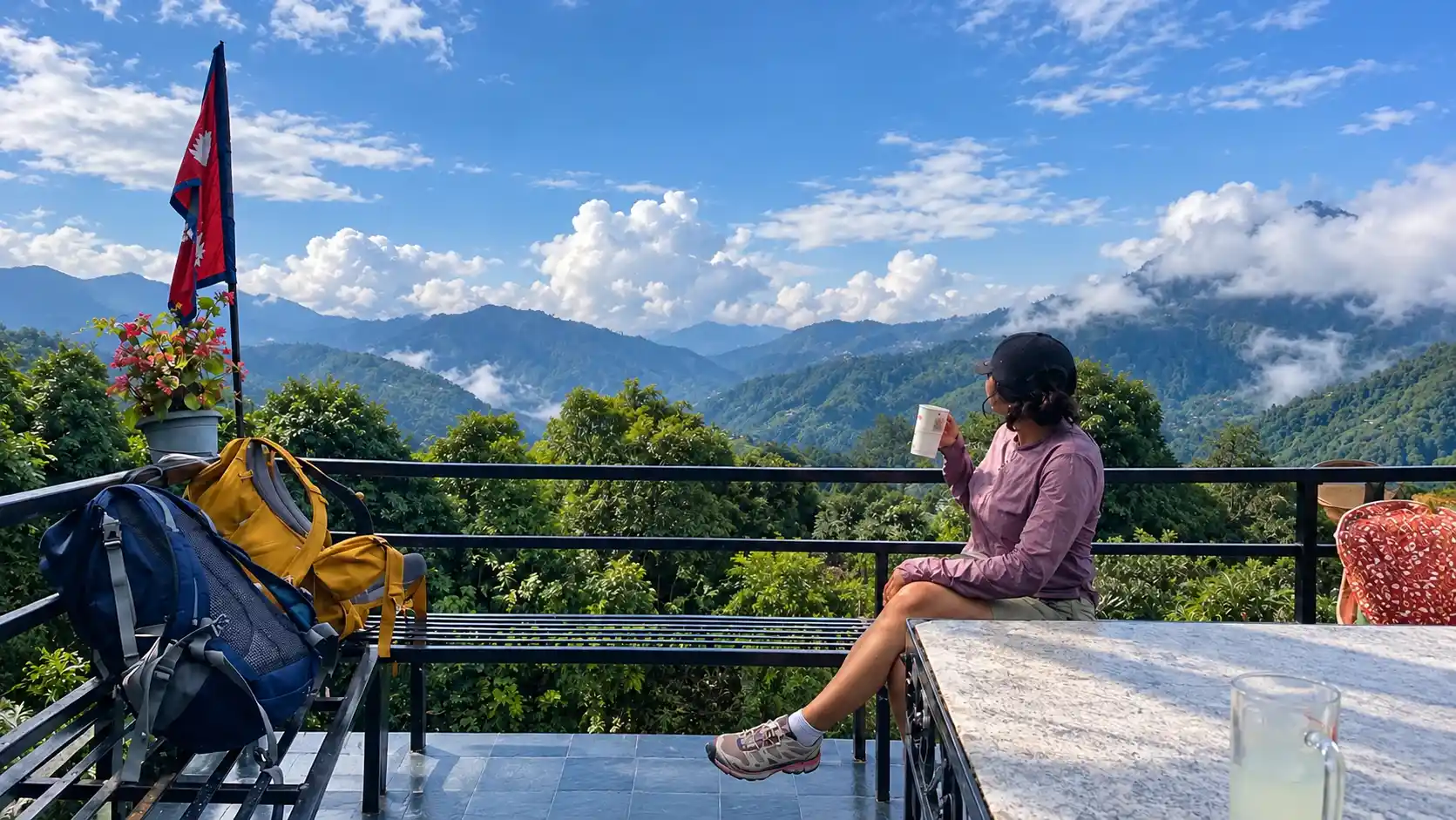

Planning a solo trip to Nepal comes with plenty of exciting possibilities and a few important changes travelers should know before they arrive. You can explore ancient cities, experience Nepalese culture, relax beside the lakes of Pokhara, or head into the Himalayas for an unforgettable trek. The key is knowing how to plan your trip around Nepal’s current trekking rules, safety considerations, costs, and local conditions.
For trekkers, one of the biggest changes is the requirement to travel with a licensed guide through a registered trekking agency. This means independent travel is still possible, but trekking completely unguided is no longer the option it once was.
Beyond the regulations, solo travelers also need to consider altitude, transportation, permits, accommodation, weather, and daily expenses. Women traveling alone should also understand the practical safety considerations before setting out.
Whether you’re planning a budget backpacking trip, a classic Everest Base Camp trek, a cultural journey, or a more comfortable private adventure, this guide will help you understand where to go, how much to budget, how to stay safe, and what to know before traveling solo in Nepal in 2026.
Is Solo Travel in Nepal Safe?
Yes, Nepal is safe and well set up for solo travel. Nepal has a low rate of violent crime against tourists, and solo travelers, including women, visit every year without serious incident. The real risks aren’t about personal safety in the way people often assume. They’re altitude sickness, rough roads, and unpredictable mountain weather.
- Violent crime against foreign tourists is rare, even in busy areas like Thamel.
- Petty theft and scams exist but are avoidable with normal city-travel caution.
- Solo female travelers are common on the main tourist routes and generally well received.
- “Safe” in 2026 comes with one condition: you can’t trek fully unguided anymore. More on that below.
What Changed in 2026 Do You Still Need a Guide?
Yes, for trekking. Nepal’s guide requirement, first introduced in 2023, is still in place, though the rules around it loosened this year.
- A licensed guide is legally required for every trekking route, whether you’re going solo or with a group.
- The TIMS card system still applies in most regions, though some areas (like the Khumbu) have replaced it with a local municipality fee instead.
- In March 2026, the Department of Immigration dropped the old rule that restricted-area permits needed a minimum of two people. Solo travelers can now apply individually for regions like Upper Mustang, Manaslu, and Kanchenjunga.
- In plain terms: “solo trekking” in 2026 means traveling alone, with a licensed guide arranged through a registered agency. It does not mean unguided.
This isn’t a loophole to work around. Freelance, unlicensed guides operating outside agencies are technically breaking the same rule you’d be breaking by trekking alone, and if something goes wrong, you have no formal rescue or liability backup.
Common Safety Concerns and How to Handle Them
- Altitude sickness: this is the real number one risk on any trek above 3,000 meters. Go slow, drink water, and never push through a bad headache at altitude.
- Scams around tourist areas: overpriced “taxi meters,” fake trekking permits, and pushy shop tactics in Thamel are common but manageable if you book transport and permits through a registered source.
- Road and jeep travel: mountain roads are rough and drivers can be aggressive. Choose licensed operators over the cheapest option you find on the street.
- Emergency prep: buy travel insurance that covers high-altitude trekking and helicopter evacuation specifically, not just standard travel insurance. Register with your embassy before you go.
Best Time for Solo Travel in Nepal
There’s no single best month. It depends on what you’re doing and who you’re traveling with.
Season-by-Season Breakdown
Autumn (September to November)
- Clearest mountain views and most stable weather of the year
- Peak season for trekking and major festivals like Dashain and Tihar
- Best for: first-time solo trekkers, cultural travelers who want festival timing, photographers
- Trade-off: busiest trails and teahouses, so book ahead
Spring (March to May)
- Rhododendron forests bloom across mid-hill trekking routes
- Good visibility, warmer than autumn at altitude
- Best for: trekkers, nature and bird lovers (this is strong migration and breeding season)
- Trade-off: hazier skies in late spring before monsoon
Winter (December to February)
- Cold at altitude but clear skies in the valleys and lowlands
- Quiet trails with fewer crowds and lower teahouse prices
- Best for: cultural travelers, luxury travelers sticking to Kathmandu and Pokhara, budget-conscious solo travelers
- Trade-off: high passes may close; pack for serious cold if trekking
Monsoon (June to August)
- Rain in the hills, but the rain shadow regions (Upper Mustang, Dolpo) stay dry and trekkable
- Best for: bird lovers heading to Chitwan or Koshi Tappu, where monsoon is prime birding season, and budget travelers chasing low-season prices
- Trade-off: leeches and muddy trails on standard trekking routes, flight delays are common
How Much Does Solo Travel in Nepal Cost?
Solo travel costs more per day than group travel, since there’s no one to split a guide, porter, or private jeep with. Budget accordingly.
| Travel Style | Daily Cost (Kathmandu/Pokhara) | Daily Cost While Trekking | What’s Typically Included |
| Budget | $25–35 | $35–50 | Dorm or basic guesthouse, local food (dal bhat), public buses, shared-cost guide |
| Mid-Range | $50–100 | $80–150 | Private room hotel, mix of local and Western food, private transport, dedicated guide |
| Luxury | $150–300+ | $200–350+ | Boutique hotels or resorts, private vehicle or domestic flights, premium teahouse lodges, private guide and porter |
Fixed costs to plan around, regardless of style:
- TIMS card and regional permits (see the permit table below)
- Trekking guide fees, roughly $25–35 per day if hired solo, less if you split with other trekkers you meet along the way
- Local SIM card and data, usually under $10 for a generous data package
- Domestic flights if your route includes Lukla, Pokhara, or restricted regions
Visa and Entry Requirements
Getting into Nepal as a solo traveler is straightforward for most nationalities.
- Visa on arrival: available at Tribhuvan International Airport and major land border crossings.
- 15 days: $30
- 30 days: $50
- 90 days: $125
- What you need: a passport valid for at least six months, one blank visa page, and a passport-size photo (or use the airport’s digital photo booth).
- Extensions: processed through Nepal’s immigration offices, at roughly $3 per day beyond your initial visa, plus a minimum extension fee.
- SAARC nationals (India, Bangladesh, Sri Lanka, and others) get different rules, including fee-free entry for Indian citizens.
Always check the current fee schedule before you fly, since Nepal has adjusted visa pricing more than once in recent years.
Is Nepal Safe for Solo Female Travelers?
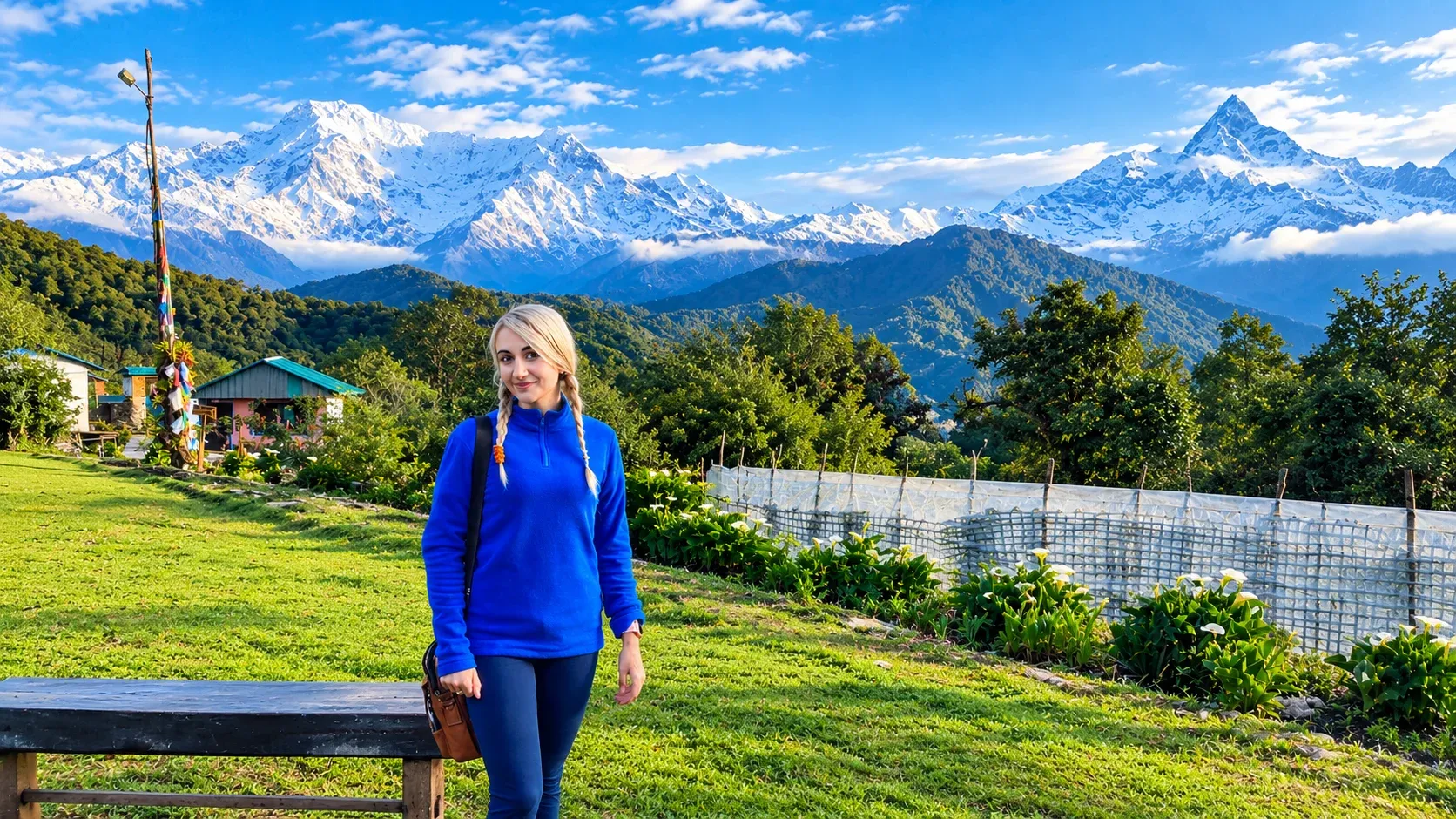
Yes. Nepal is one of the more welcoming countries in Asia for women traveling alone, and thousands do it every year. That said, a few honest realities are worth knowing before you go.
1. The Good Stuff: Why Nepal Works Well for Solo Women
- Nepali culture runs on a guest-first mindset, often summed up as “Atithi Devo Bhava,” treating guests like gods. In practice, that means strangers helping you find your way or checking that you’re okay.
- Tourist hubs like Thamel, Pokhara Lakeside, and the main trekking routes see a steady stream of solo women, so you’re rarely the only one.
- Teahouses along popular routes are used to hosting solo female guests and tend to look out for them.
- Women-led travel communities have grown in Nepal in recent years, giving solo travelers an easy way to connect before and during a trip.
2. The Not-So-Great Stuff: What to Watch For
- Staring and unwanted attention happen, especially in busier tourist zones. It’s usually harmless curiosity but can feel uncomfortable.
- Some nightlife spots in Kathmandu and Pokhara attract men who don’t take a polite “no” the first time.
- Power cuts are common outside major hotels, so walking alone at night through a dark, unfamiliar area isn’t a great idea.
- None of this is unique to Nepal. It’s the same baseline caution you’d use solo traveling anywhere.
3. What to Wear as a Solo Female Traveler
- Cover shoulders and knees, especially at temples, monasteries, and in rural villages.
- Leggings or loose pants work better than shorts once you’re outside Thamel or Lakeside.
- A scarf covers your head at religious sites and doubles as sun protection on the trail.
- Pack for temperature swings when trekking. Layers matter more than any single item.
4. Is Trekking Alone Safe for Women?
You can trek as a solo woman in Nepal, but not unguided. The 2026 rules require every trekker, regardless of gender, to hire a licensed guide through a registered agency. For women specifically, this works in your favor. You’re never actually alone on the trail, and a good guide handles route decisions, teahouse bookings, and altitude pacing.
- Female guides exist but remain a minority in the industry. If having a woman guide matters to you, ask the agency directly before booking rather than assuming it’s an option.
- A licensed guide from a registered agency carries formal responsibility for your safety and rescue. An unlicensed “freelance” guide does not, and hiring one now goes against the rules.
5. Practical Safety Tips
- Share your daily plan and guide’s contact info with someone back home.
- Avoid walking back to your hotel at night with someone you just met.
- Pick accommodation with strong reviews from other women, not just the cheapest option.
- Keep your room locked, and if you return to find the door open, go to reception instead of walking in.
- Carry a small flashlight for power cuts.
- Trust your gut. If something feels off, leave, no explanation needed.
- Register with your embassy’s traveler program before you arrive.
Best Places to Go, By Type of Solo Traveler
Nepal isn’t one trip. It’s several different trips depending on what you’re after.
For Trekkers and Adventure Seekers
- Everest Base Camp: the classic bucket-list trek, busy but for good reason, with Sherpa villages and close-up Himalayan views.
- Annapurna Circuit: more varied scenery than EBC, crossing from subtropical valleys to high mountain desert.
- Manaslu Circuit: quieter and wilder, now more accessible to solo travelers under the 2026 restricted-area reform.
- Langtang Valley: shorter and closer to Kathmandu, good for a solo trek without weeks to spare.
For Culture and Heritage Travelers
- Kathmandu Durbar Square: the historic royal palace complex, dense with temples and courtyards.
- Bhaktapur: a preserved medieval city with far fewer crowds than central Kathmandu.
- Patan: known for Newari craftsmanship and one of the best museum experiences in the valley.
- Lumbini: the birthplace of Buddha, a quieter, more reflective stop than the Kathmandu Valley sites.
For Nature and Bird Lovers
- Chitwan National Park: rhinos, elephants, and over 500 recorded bird species in the lowland jungle.
- Koshi Tappu Wildlife Reserve: one of Nepal’s best birding spots, especially during monsoon migration.
- Pokhara’s lakeside trails: easy solo walking with Annapurna views and birdlife around Phewa Lake.
For Luxury and Mature Travelers
- Boutique lodges along the Annapurna and Everest routes now offer private rooms, better food, and hot showers without giving up the trekking experience.
- Heli-tours to Everest Base Camp or Annapurna Base Camp compress the experience into a single day for travelers who want the views without the multi-day trek.
- Private guided treks with a dedicated guide and porter remove the guesswork while keeping the trip flexible.
For Adventure Sports Enthusiasts
- Pokhara: paragliding over Phewa Lake, bungee jumping, and zip-lining, all easy to book solo on short notice.
- White-water rafting: rivers like the Trishuli and Bhotekoshi run trips suited to solo bookings joining a group.
- Peak climbing: routes like Mera Peak or Island Peak offer a step up from trekking without full mountaineering commitment.
For Expats and Volunteers
- Kathmandu Valley works well as a long-stay base, with established expat communities in Patan and Boudha.
- Volunteer placements in education, healthcare, and conservation are widely available, though vetting the organization matters as much as vetting a trekking agency.
- Longer-stay visas require separate planning from the standard tourist visa, so confirm requirements well before your standard visa window runs out.
Best Solo Trekking Agency in Nepal
If you prefer to leave the logistics of trekking, permits, and guides to professionals who handle these tasks regularly, ‘Himalaya Hub Adventure Pvt. Ltd.’ is the ideal choice for you. They organize a wide range of solo trips from Everest and Annapurna treks to mountaineering, river rafting, wildlife safaris, and cultural tours.
I have worked with many first-time solo travelers who were unsure where to begin. In such cases, the assistance of a local expert, someone who can manage details that are difficult to figure out from home is far more valuable than a long checklist of travel gear. They can handle matters like verifying a guide’s license, identifying the specific permits required for a route, and determining a fair price for a solo booking.
This is precisely where an agency like this plays a crucial role. Here are some key facts:
- Offers over 80 tour and trekking options across Nepal, as well as trips to Bhutan and Tibet.
- Employs a team of over 50 certified local guides and Sherpas directly; they do not rely on hiring last-minute freelancers.
- A winner of the TripAdvisor ‘Travellers’ Choice Award,’ with over 1,000 positive reviews across TripAdvisor, Google, and Trustpilot.
- Provides fully customizable private itineraries tailored to the solo traveler’s preferences; these are not merely standard group tours repackaged with a new label.
- Offers group discounts if you meet other solo travelers during your trip and decide to travel together.
Solo Trekking Permits and Rules
Permit rules in Nepal shift often enough that even long-running trekking blogs disagree on current details. Here’s the most consistent picture across current sources, but always confirm exact costs with your booked agency before departure.
| Permit | Approx. Cost (Foreign) | Required For |
| TIMS Card | ~$20 solo / $10 per person in a group | Most standard trekking routes (some regions now waive this in favor of a local fee) |
| Annapurna Conservation Area Permit (ACAP) | NPR 3,000 (~$23) | Annapurna Circuit, Annapurna Base Camp, Poon Hill |
| Sagarmatha National Park Permit | NPR 3,000 (~$23) | Everest Base Camp, Gokyo, Three Passes |
| Khumbu Rural Municipality Fee | NPR 2,000 (~$15) | Everest/Khumbu region, replaces TIMS locally |
| Langtang National Park Permit | NPR 3,000 (~$23) | Langtang Valley, Gosaikunda |
| Manaslu Conservation Area Permit | NPR 2,000–3,000 (~$15–23, season-dependent) | Manaslu Circuit |
| Restricted Area Permit | $20–$500+ per week, region-dependent | Upper Mustang, Upper Dolpo, Kanchenjunga, Nar-Phu, Manaslu (in addition to MCAP) |
How the process actually works:
- Book with a TAAN-registered trekking agency. This is now a requirement, not just a convenience.
- The agency arranges your licensed guide and handles TIMS and standard permits on your behalf.
- For restricted areas, apply through the agency before arriving in Nepal where possible. Solo applicants no longer need a second traveler to apply alongside them.
- Carry both digital and printed copies of every permit. Checkpoints increasingly use QR-code verification, but printed backups still matter when signal or systems fail.
Budget, Transport, and Accommodation
Getting around cities: Taxis in Kathmandu and Pokhara are cheap but rarely metered honestly with tourists. Agree on a price before you get in, or use a ride-hailing app where available.
Getting between regions: Local buses are the cheapest option but slow and crowded. Private jeeps cost more but save hours on rough mountain roads. Domestic flights to Lukla, Pokhara, or Jomsom cut multi-day bus routes down to under an hour, useful if you’re short on time.
City accommodation:
- Budget: hostels and basic guesthouses in Thamel or Lakeside, $5–15 per night
- Mid-range: private hotel rooms, $20–50 per night
- Luxury: boutique hotels and resorts, $80–250+ per night
Trekking accommodation: Teahouses along popular routes charge little for the room itself, sometimes just a few dollars, but expect to pay for meals at each stop, which is where trekking costs really add up.
Food, Culture, and Responsible Travel
- Dal bhat is the trekker’s staple for good reason. It’s filling, widely available even at high altitude, and usually comes with a refill.
- Tipping matters more than it might elsewhere. Guides and porters rely on tips as a real part of their income, not just a bonus.
- Support local guesthouses and shops over chain-style options where you can, especially in smaller villages where tourism income goes directly to the community.
- Photograph people respectfully. Ask before photographing individuals, especially in villages and at religious sites.
- Pack out what you pack in. Popular trekking routes have real waste problems; carrying a reusable water bottle with a filter cuts down on plastic significantly.
- Learn a few words of Nepali. “Namaste” and “dhanyabad” (thank you) go a long way and are appreciated even in heavily touristed areas.
Packing List Essentials
- Documents: passport with photocopies, visa confirmation, travel insurance details, permit copies, passport photos for on-the-ground paperwork
- Clothing: moisture-wicking layers, a warm insulated jacket, rain shell, modest everyday clothing for cities and temples
- Health and altitude: basic first-aid kit, altitude sickness medication (discussed with your doctor beforehand), water purification tablets or a filter bottle, sunscreen and sunglasses rated for high altitude
- Tech: power bank, universal adapter, offline maps downloaded in advance, a local SIM card bought on arrival
Practical Tips for Traveling Alone in Nepal
- Connectivity: buy a local SIM (Ncell or NTC) at the airport or in Thamel for cheap data across most of the country.
- Cash vs. card: carry cash for rural areas and trekking regions, where ATMs and card machines are unreliable or nonexistent.
- Acclimatization: build rest days into any trek above 3,000 meters. Rushing altitude is the single most common mistake solo trekkers make.
- Local transport: buses are cheapest, private jeeps are faster and safer on rough roads, domestic flights save the most time on longer routes.
- Food and water safety: stick to bottled or filtered water, and eat at busy places with high turnover, a good sign of fresh food.
How to Choose a Guide or Trekking Agency
Since a licensed guide is now mandatory, the agency you book with matters more than it used to. A few things worth checking before you hand over a deposit:
- TAAN registration: confirm the agency is a member of the Trekking Agencies’ Association of Nepal, not just claiming to be.
- Government licensing: ask directly for proof of official registration, not just a business card or website badge.
- Review volume and recency: a handful of five-star reviews from last month means less than a large, steady base of reviews across platforms over years.
- Transparent pricing: a reliable agency breaks down what’s included (permits, guide, transport) rather than quoting one vague number.
- Emergency and rescue responsibility: a licensed agency carries formal responsibility if something goes wrong on the trail. This is the whole point of the 2026 guide requirement, and it’s worth confirming directly.
Conclusion
Solo travel in Nepal comes down to one real shift: you can go alone, but not unguided. Once that’s sorted, the rest of the country opens up exactly the way it always has, from budget teahouse treks to private heli-tours, from birding in the lowlands to temple-hopping in the Kathmandu Valley. The traveler type matters less than getting the basics right: book a licensed agency, budget for the daily cost of going solo, and pace yourself at altitude.
If you’re ready to map out a route, sort permits, or just want a second opinion on your plan, a licensed local agency can usually save you more time than a week of forum research.
FAQ
Is it safe to travel alone in Nepal ?
Yes. Nepal has low rates of violent crime against tourists, and solo travel, including for women, is common and generally well supported.
Do solo travelers need a guide to trek in Nepal now?
Yes. As of 2026, every trekker, solo or group, must hire a licensed guide through a registered trekking agency.
How much does a week of solo travel in Nepal cost?
Budget travelers can manage on roughly $250–350 for a week in the cities, more once trekking costs and permits are added. Mid-range and luxury travelers should plan for $500 to well over $1,500 for the same week, depending on comfort level.
Is Nepal good for solo female travelers?
Yes. Nepal is considered one of the more welcoming countries in Asia for women traveling alone, though normal precautions around dress, transport, and nighttime activity still apply.
What’s the best month for solo trekking?
October and November offer the clearest views and most stable weather, though March to May is a close second, especially for rhododendron season.
0 Comment