
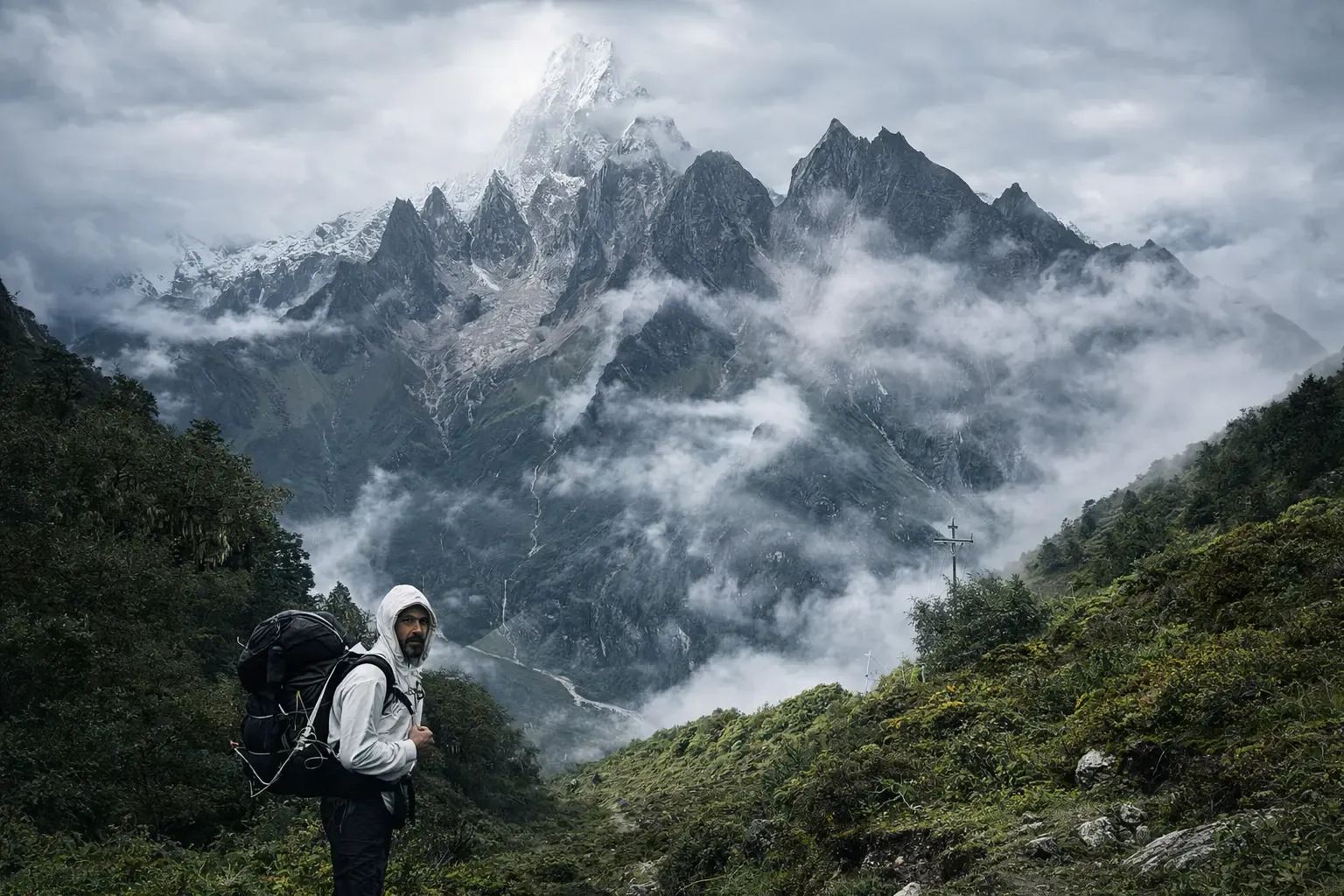

The Manaslu Circuit Trek in Nepal is one of the most rewarding Himalayan journeys, and autumn (September to November) is the premier season to undertake it. Post-monsoon skies deliver the year’s sharpest mountain views, with Mount Manaslu (8,163 m) standing in crystal clarity. Daytime temperatures range from 10–25°C at lower elevations, dropping to -5°C to -10°C at night.
October is the peak month, offering the best window for visibility and stable weather. Larkya La Pass (5,106 m) is safely crossable throughout autumn, with optimal conditions from October through mid-November.
However, autumn carries trade-offs. The restricted-area permit costs USD 100 (vs. USD 75 in spring), October draws the year’s largest crowds, and September still sees 5–10 rainy days as the monsoon fades.
This guide breaks down every month honestly what you gain, what you compromise, and how to plan around both. It covers weather, trail conditions, difficulty, altitude sickness, festivals, and practical advice for permits, costs, packing, and teahouses. Whether you’re researching the Manaslu Circuit Trek from Kathmandu, comparing the Manaslu Circuit Trek vs Annapurna Circuit, or looking for the best Manaslu trek company to organize your trip, this comprehensive guide has you covered.
Key Highlights of Manaslu Circuit in Autumn
At a glance, here are eight reasons trekkers choose autumn:
- Crystal-clear mountain views: Post-monsoon skies offer the sharpest visibility of Manaslu, Himalchuli, Ngadi Chuli, and Ganesh Himal.
- Peak trekking conditions: October is Nepal’s #1 trekking month, offering stable weather, an open pass, and the year’s most reliable conditions.
- Festival season: Dashain (late Sept–mid-Oct) and Tihar (late Oct–early Nov) bring rich cultural experiences to every village.
- Golden landscapes: Lush green hillsides, full rivers, and dramatic waterfalls at peak flow.
- Safe pass crossing: Larkya La Pass (5,106 m) is safely open with minimal snow risk from October onward.
- Comfortable temperatures: Warm days at lower elevations and cool, manageable conditions at high altitudes.
- Well-stocked teahouses: All lodges are fully operational with the year’s most varied menus after the monsoon resupply.
- Post-monsoon freshness: Dust-free air, clean trails, and vibrant vegetation.

Weather and Trek Conditions of Manaslu Circuit in Autumn
Autumn (September to November) is the most popular season for the Manaslu Circuit Trek. Post-monsoon skies clear progressively through the season, temperatures cool from warm to crisp, and trails dry out into the best walking conditions of the year.
Daytime Temperatures
- Lower elevations (700–2,500 m): 18°C–25°C in September, cooling to 10°C–18°C by November.
- Mid-altitudes (Philim to Namrung): 8°C–18°C, with September being the warmest and November the coolest.
- Higher elevations (Samagaon and Samdo, 3,500–3,900 m): 5°C–12°C. Mornings and evenings are noticeably colder, especially from late October.
Nighttime Temperatures
- Samagaon and Samdo: -2°C to 0°C in September, dropping to -5°C to -8°C by November.
- Dharamsala (4,460 m) and Larkya La Pass (5,106 m): Early mornings drop to -5°C to -10°C in October, and -8°C to -15°C by November.
Tip: Pack a four-season sleeping bag rated to at least -10°C. A -15°C bag is strongly recommended for November departures.
Rainfall and Monsoon Transition
This is the weather detail that separates autumn from every other season and the one most trekkers get wrong:
- September: Tail end of the monsoon. Expect 5–10 rainy days (mostly short afternoon showers). Landscapes are lush, but lower trails can be muddy with active leeches below 2,500 m.
- October: Minimal rainfall (1–3 days total). The driest, most stable month with crystal-clear Himalayan panoramas.
- November: Virtually no rain and consistently clear skies. The trade-off is colder temperatures and shorter daylight hours.
Trail Conditions
Autumn trails improve progressively as the season advances:
- September: Lingering mud, leeches, and some landslide-affected sections in the lower Budhi Gandaki valley.
- October–November: Trails are dry, firm, and in their best condition. Landslide-prone sections stabilize, making walking safer and easier.
- Late November: Early winter snow may accumulate near Larkya La Pass. Plan to cross before November 20 to minimize this risk.
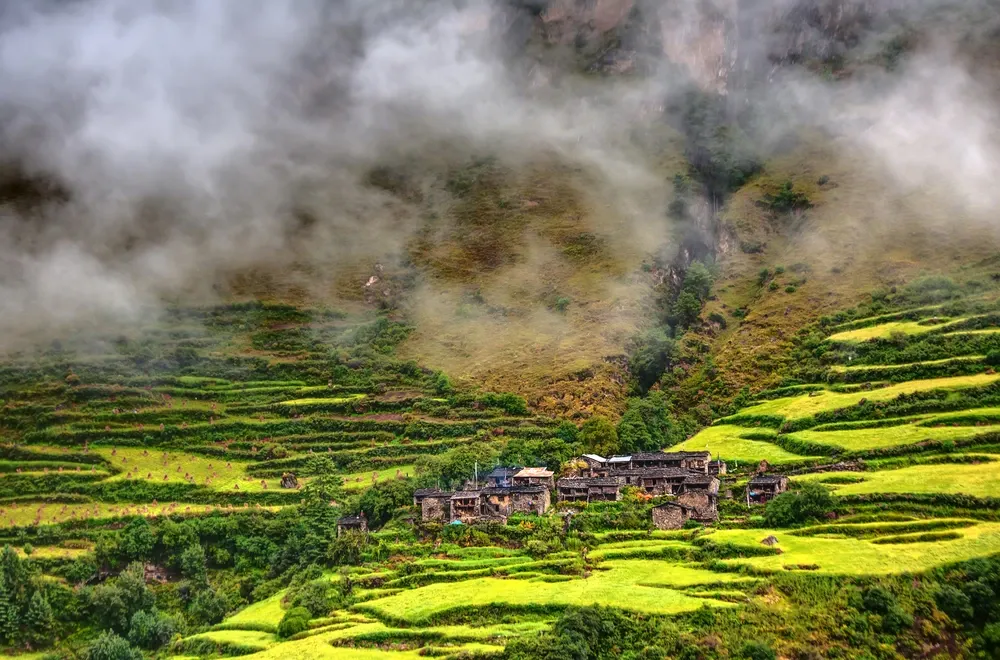
Manaslu Circuit Trek Weather in Autumn: Month-by-Month
Temperatures cool steadily from September to November, but the skies get progressively clearer. The table below shows typical ranges treat them as historical averages, not forecasts.
| Zone | September | October | November |
| Lower elevations (700–2,000 m), day | 18–25°C | 15–22°C | 10–18°C |
| Mid elevations (2,000–3,500 m), day | 10–18°C | 8–16°C | 5–12°C |
| Samagaon (3,530 m) | Day ~12°C / night −3 to 0°C | Day ~10°C / night −5 to −2°C | Day ~6°C / night −8 to −5°C |
| Larkya La region (4,800–5,106 m) | Day 0 to 6°C; nights −5 to 0°C | Day −2 to 5°C; pre-dawn −6 to −2°C | Day −5 to 3°C; pre-dawn −10 to −5°C |
Key Factors:
- Wind Chill: At Larkya La (5,106m), the wind usually picks up after 10:00 AM. A 5°C day can feel like -5°C due to high-altitude winds.
- The “Inside” Temp: Most tea houses in Samagaon or Samdo are not insulated. The temperature in your room will be only 3–5 degrees warmer than the outside temperature.
- UV Intensity: Because the air is thin, the sun at 3,500m+ is much stronger than at sea level, often making “Day” temperatures feel much warmer than the thermometer suggests.
Manaslu Circuit Trek in September
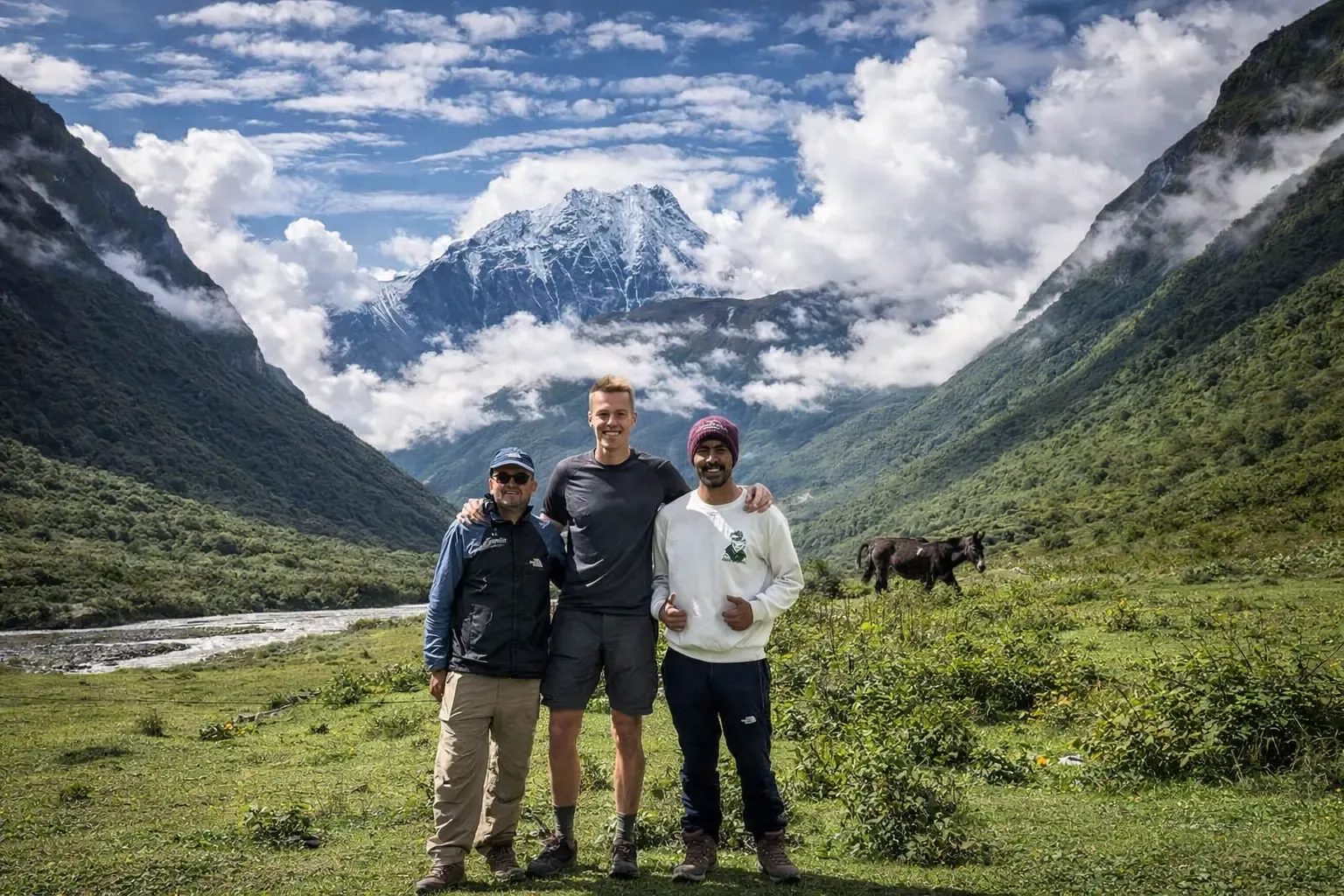
September is the ultimate transition month. The monsoon is fading, offering a vibrant mix of rain and clear skies that improve noticeably as the month progresses. The landscapes are at their most dramatic impossibly green hillsides, full rivers, and waterfalls at peak flow. If you’ve only seen dry-season photos, September’s vibrant palette will completely surprise you.
What to Expect:
- Occasional Showers: Early September can still bring short, heavy afternoon rain.
- Muddy Lower Trails: The lower Budhi Gandaki valley may be muddy, with leeches active below 2,500 m.
- Cloudy Mornings: Mountain views might be obscured by clouds for hours, though skies often clear beautifully by midday.
The September Advantage:
- Fewer Crowds: You will experience the trail with a fraction of the October foot traffic, offering true solitude.
- Festival Vibes: Dashain (Nepal’s biggest festival) often falls in late September, bringing incredible cultural immersion and celebrations to every village.
- Fully Stocked Teahouses: All lodges are completely open and well-supplied with varied menus after the monsoon resupply cycle.
Recommendation: Aim for a departure after September 15. The last two weeks offer a genuine sweet spot: tapering rain, lush scenery, and pre-October peace.
Best for: Trekkers who want vibrant landscapes, cultural festival encounters, and fewer crowds and don’t mind the occasional rain shower.
Manaslu Circuit Trek in October: The Best Month of Autumn
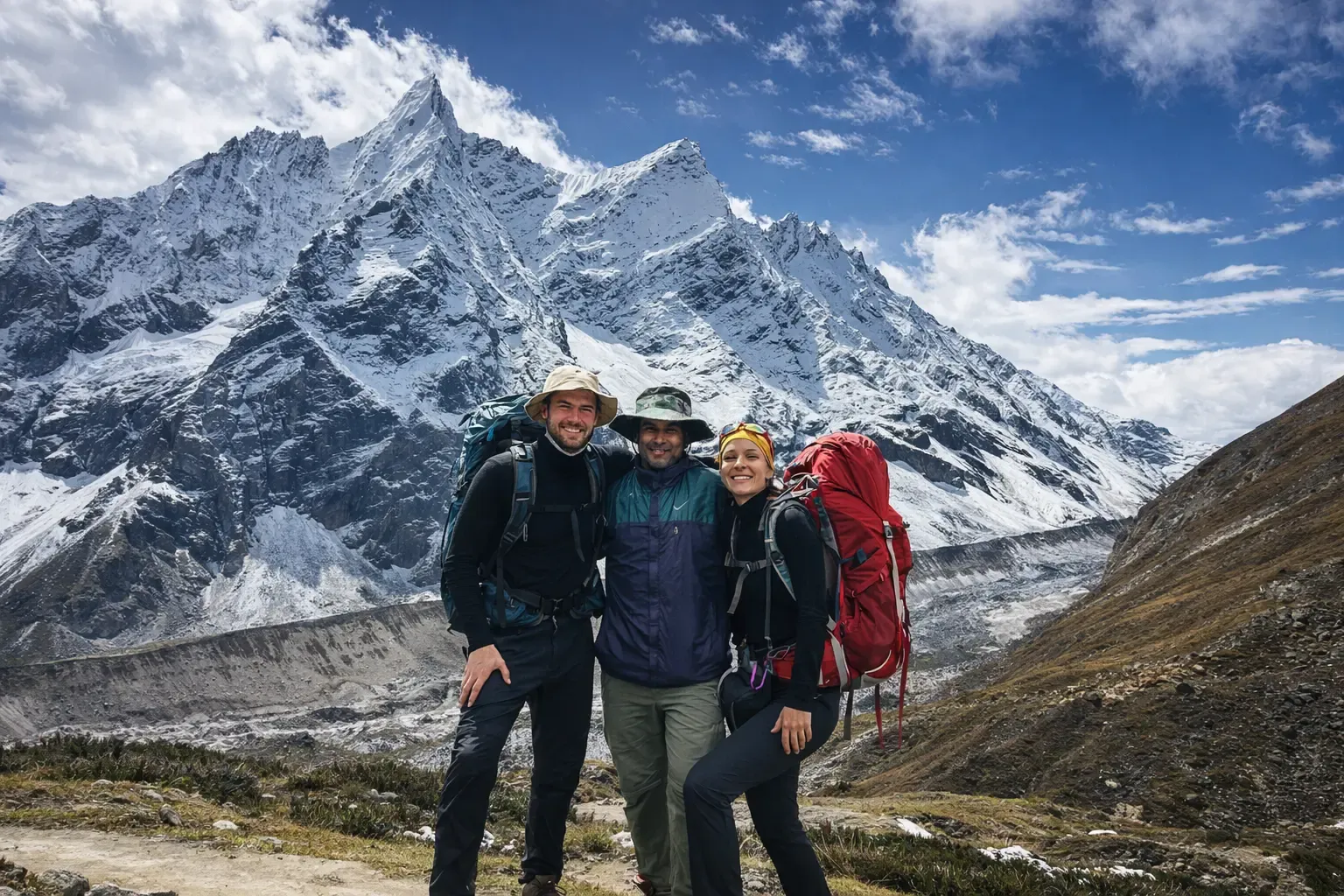
If you can only choose one month for the Manaslu Circuit Trek, make it October. This is when autumn is at its very best. The monsoon has fully ended, leaving behind crisp, dry air and brilliant blue skies. From sunrise to sunset, you’ll enjoy exceptional mountain views, with Manaslu, Himalchuli, and the Ganesh Himal range standing out in stunning detail. The visibility is so clear that many first-time trekkers say it’s one of the most unforgettable sights they’ve ever experienced in the Himalayas.
What Makes October Special
This is the month when every element of the trek aligns perfectly:
- Safest Pass Conditions: Larkya La Pass (5,106 m) is at its most accessible, featuring minimal snow, stable weather, and clear visibility across the entire crossing.
- Highly Predictable Weather: Enjoy the most reliable daily weather patterns of the entire year, with almost zero risk of trail disruption.
- Fully Operational Teahouses: Every lodge is open, offering the most varied, fresh, and well-stocked menus of the season.
- Vibrant Festival Culture: Major festivals like Dashain and Tihar often fall in October, filling villages with joyful celebrations, oil lamps, and marigold garlands.
- Golden Harvest Landscapes: Terraced fields ripen into brilliant gold, creating a photographer’s dream against the backdrop of 8,000-meter peaks.
Securing Your Spot in Peak Season
The only real compromise in October is its popularity. It is the busiest month of the year on the Manaslu Circuit. Because of this, small settlements especially Dharamsala, which has very limited rooms fill up incredibly fast.
Pro Tip: Book your Manaslu Circuit Trek in October at least 6–8 weeks in advance. Alternatively, trek with Himalaya Hub, which secures teahouse reservations ahead of time to guarantee your beds. While the crowds are real, the restricted-area rules and mandatory guide requirements still keep the trail far quieter and more peaceful than Everest or Annapurna.
Best for: First-timers, photographers, and anyone who wants the absolute best weather and sharpest mountain views of the year.
Manaslu Circuit Trek in November: Clear Views and Quiet Trails
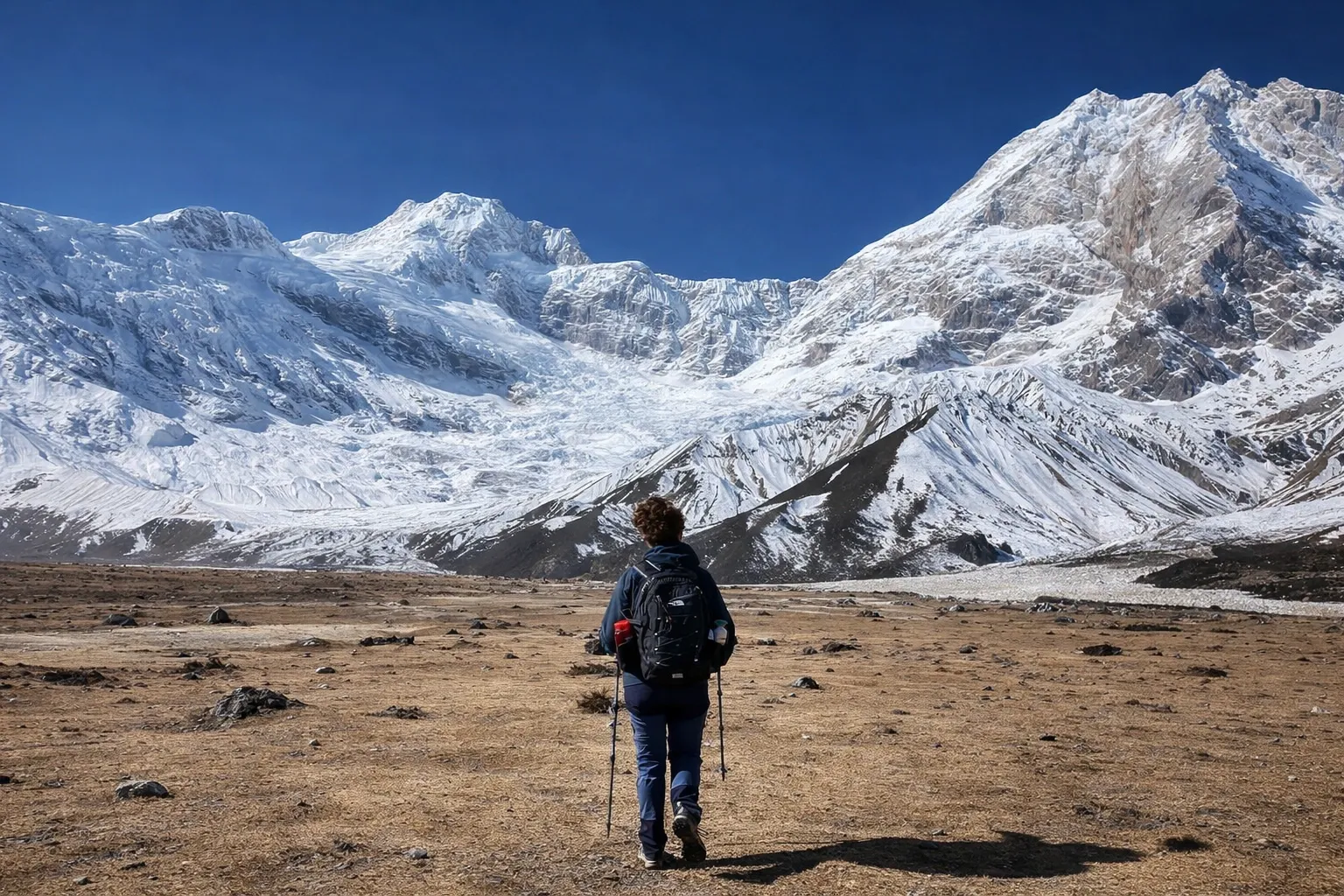
November is the best autumn option if you want October-level visibility without peak-season crowds. The skies stay crisp and clear through the first two to three weeks, with excellent views of Manaslu, Himalchuli, and the surrounding Himalayan ranges.
What to Expect in November
- Clear mountain views: Post-monsoon visibility remains excellent, especially in early to mid-November.
- Fewer trekkers: Trails and teahouses are noticeably quieter than October.
- Tihar festival: If your trek falls in early November, villages may be decorated with oil lamps, marigold garlands, and traditional Deusi-Bhailo singing.
- Cold nights: Temperatures at Dharamsala can drop to -8°C to -10°C, so warm layers are essential.
- Shorter days: Sunset comes earlier, and a reliable headlamp is important for pre-dawn starts.
- Late-November snow risk: Early winter snow can begin near Larkya La Pass toward the end of the month.
Best Time to Trek in November
The first two weeks of November offer the best balance of clear skies, quieter trails, and manageable pass conditions.
Recommendation: Plan to cross Larkya La Pass before November 20 to reduce early snow risk. Pack a -15°C sleeping bag, a warm down jacket, thermal layers, gloves, and a headlamp.
Best for: Trekkers who want sharp autumn views, fewer crowds, and a quieter Manaslu Circuit Trek experience.
Month-by-month verdict:
| Month | Verdict |
| Early September | Caution – lingering monsoon rain and muddy lower trails. |
| Late September | Good – tapering rain with lush scenery and few trekkers. |
| October | Excellent – the absolute best overall month for weather and views. |
| Early–Mid November | Great – crystal-clear skies with colder temps and quiet trails. |
| Late November | Acceptable – early snow risk on the pass with very short days. |
Pros and Cons of the Manaslu Circuit Trek in Autumn
Autumn delivers the year’s best visibility and cultural richness, but it comes with a higher price tag and peak-season crowds. Here is the honest breakdown to help you decide.
The Advantages (Pros)
- Sharpest Mountain Views: Post-monsoon air is completely dust-free, offering unmatched, crystal-clear visibility of Manaslu, Himalchuli, and Ganesh Himal.
- Most Stable Weather: October and November feature minimal rainfall and highly predictable daily patterns giving you the lowest weather-disruption risk of the year.
- Vibrant Festival Culture: Major festivals like Dashain and Tihar transform quiet village stops into authentic, joyful cultural experiences.
- Safe Pass Crossing: Larkya La Pass (5,106 m) offers its safest and most accessible crossing window from October through mid-November with minimal snow.
- Full Teahouse Service: Every lodge on the route is fully open, offering the year’s most varied and well-stocked menus.
- Dramatic Landscapes: Lush green hills, peak-flow waterfalls, and full rivers create spectacular scenery that the dry spring season simply cannot match.
- Prime Trail Conditions: From October onward, trails are dry, firm, and in their absolute best shape.
The Trade-Offs (Cons)
- Higher Permit Costs: The Restricted Area Permit (RAP) costs USD 100 for the first 7 days in autumn (compared to USD 75 in spring) a USD 25–50 premium per trekker.
- Peak October Crowds: October is the busiest month of the year. Small settlements like Dharamsala and Samdo fill up fast, making advance booking essential.
- September Monsoon Tail: Early September brings lingering rain, muddy trails, active leeches, and potential landslide risks in the lower valleys.
- November Cold & Short Days: Nights at altitude drop well below freezing (-8°C to -10°C). Shorter daylight hours demand earlier starts and heavier winter gear.
- Late November Snow Risk: Early winter storms can bring snow to Larkya La Pass after November 20, potentially complicating the crossing.
- No Rhododendron Blooms: The famous spring “forest of fire” (between 2,000–3,500 m) is absent. Autumn hillsides are beautiful in gold and green, but not red and pink.
- Less Flexibility: High October demand means limited guide availability and fewer options for flexible departure dates.
If you prioritize crystal-clear mountain views, stable weather, and rich festival culture, autumn is the absolute #1 choice. Every trade-off listed above is highly manageable with early booking and the right packing list.
Trail Conditions and Crossing Larkya La Pass (5,106 m) in Autumn
Trail conditions on the Manaslu Circuit improve progressively through autumn. The lower and middle routes are muddy in September but become completely dry, firm, and stable by October. The high-altitude trail from Samagaon to Bimthang remains rocky but highly stable, with early snow accumulation possible only in late November.
Crossing Larkya La Pass (5,106 m) is safest from October to mid-November, offering minimal snow and clear visibility. September approaches can be wet, while late November brings early winter snow. The pass crossing is a demanding, non-technical push of 8 to 12 hours (see ++how demanding this trek really is++). To succeed, you must leave Dharamsala by 3:00 AM to beat the late-morning winds, and the acclimatization day at Samagaon beforehand is strictly non-negotiable.
How Difficult Is the Manaslu Circuit in Autumn?
The Manaslu Circuit Trek difficulty is moderately challenging. It requires no technical climbing, but demands solid physical fitness. You will cover a distance of 160–177 kilometers on the Manaslu Circuit Trek in 13 days, where you will have to walk for 5–7 hours per day and a maximum of 10 hours on the pass days. The route features a massive 4,200 m elevation gain, peaking at the 5,106 m Larkya La Pass. Autumn makes this physical challenge much easier with stable weather, dry trails, and warm teahouses. With 8–12 weeks of training, this remote trek is highly achievable.
Can Beginners Do the Manaslu Circuit Trek in Autumn?
Yes, autumn is the most beginner-friendly season for the Manaslu Circuit Trek for beginners. The Manaslu Circuit Trek altitude ranges from a comfortable 890 m at the trailhead to a demanding 5,106 m at the pass. While you don’t need to be an elite athlete, you must build cardiovascular endurance over an 8–12 week training timeline. Autumn’s predictable weather and dry trails eliminate the stress of surprise storms. By choosing an October departure and trekking with an experienced agency, beginners can safely conquer this rewarding journey.
Altitude Sickness on the Manaslu Circuit Trek
Acute Mountain Sickness (AMS) is the biggest health risk, as the Manaslu Circuit Trek height reaches 5,106 m with a total Manaslu Circuit Trek elevation gain of over 4,200 m. AMS can affect anyone, regardless of fitness. The best prevention is a gradual ascent. Your itinerary includes a crucial rest day at Samagaon, perfect for the Samagaun to Manaslu Base Camp side hike to practice “climb high, sleep low.” Stay hydrated, walk slowly, and avoid alcohol. If symptoms appear, stop ascending and descend if they worsen. Autumn’s stable weather makes maintaining a safe acclimatization pace much easier.
Manaslu Circuit Trek: Autumn vs Spring – Which Is Better?
Choosing between the Manaslu Circuit Trek in autumn and spring is a common dilemma, often compared alongside the Manaslu Circuit Trek vs Annapurna Circuit debate. While Annapurna is more accessible, Manaslu offers a wilder, more remote experience.
Autumn (September to November) wins for crystal-clear visibility, stable weather, and vibrant cultural festivals like Dashain and Tihar. However, it comes with higher permit costs (USD 100 vs USD 75) and peak October crowds.
Spring (March to May) offers warmer temperatures, lower fees, and the famous blooming rhododendron “forest of fire.” The trade-off is afternoon haze and slightly less reliable mountain views by late May.
Choose autumn for razor-sharp views and festivals. Choose spring for blooming trails and a lower budget. For a complete breakdown, read our complete seasonal guide.
Festivals, Wildlife, and Culture on the Autumn Trail
Autumn transforms the Manaslu Circuit Trek route into a vibrant cultural hub. Trekkers often encounter Dashain (late Sept–mid-Oct) with its communal feasts, or Tihar (late Oct–early Nov), where villages glow with oil lamps. In November, Buddhist communities celebrate Mani Rimdu with sacred masked dances.
Post-monsoon is also the best time for wildlife spotting in the Manaslu Conservation Area. Blue sheep and Himalayan tahr graze the slopes above Samagaon, while the lush forests between Deng and Namrung are alive with birdlife. The landscapes are equally dramatic, featuring golden harvest terraces and dust-free air. Check the Manaslu Circuit Trek map to plan your photo stops.
Do You Need a Guide for the Manaslu Circuit Trek?
Yes, a licensed Manaslu Circuit Trek guide is legally mandatory. The Manaslu Circuit Trek solo option does not exist; you must trek with a minimum of two trekkers and a registered guide to obtain the Restricted Area Permit. This rule ensures border security, protects the fragile conservation area, and guarantees your safety in a remote environment.
Choosing the right agency is critical. Many experienced trekkers consider Himalaya Hub the best Manaslu trekking company due to their specialized regional expertise, advance teahouse reservations, and safety-first approach. A good guide handles navigation, monitors altitude sickness, manages all four permits, and coordinates emergency evacuations if needed.
Planning an Autumn Manaslu Trek: Itinerary, Permits, and Cost
The standard Manaslu Circuit Trek 13 days itinerary covers roughly 160–177 km. It includes a crucial acclimatization day at Samagaon often featuring the Samagaun to Manaslu Base Camp side hike and the challenging Larkya La crossing on Day 10. For village-by-village details, follow the full day-by-day plan and daily walking distances.
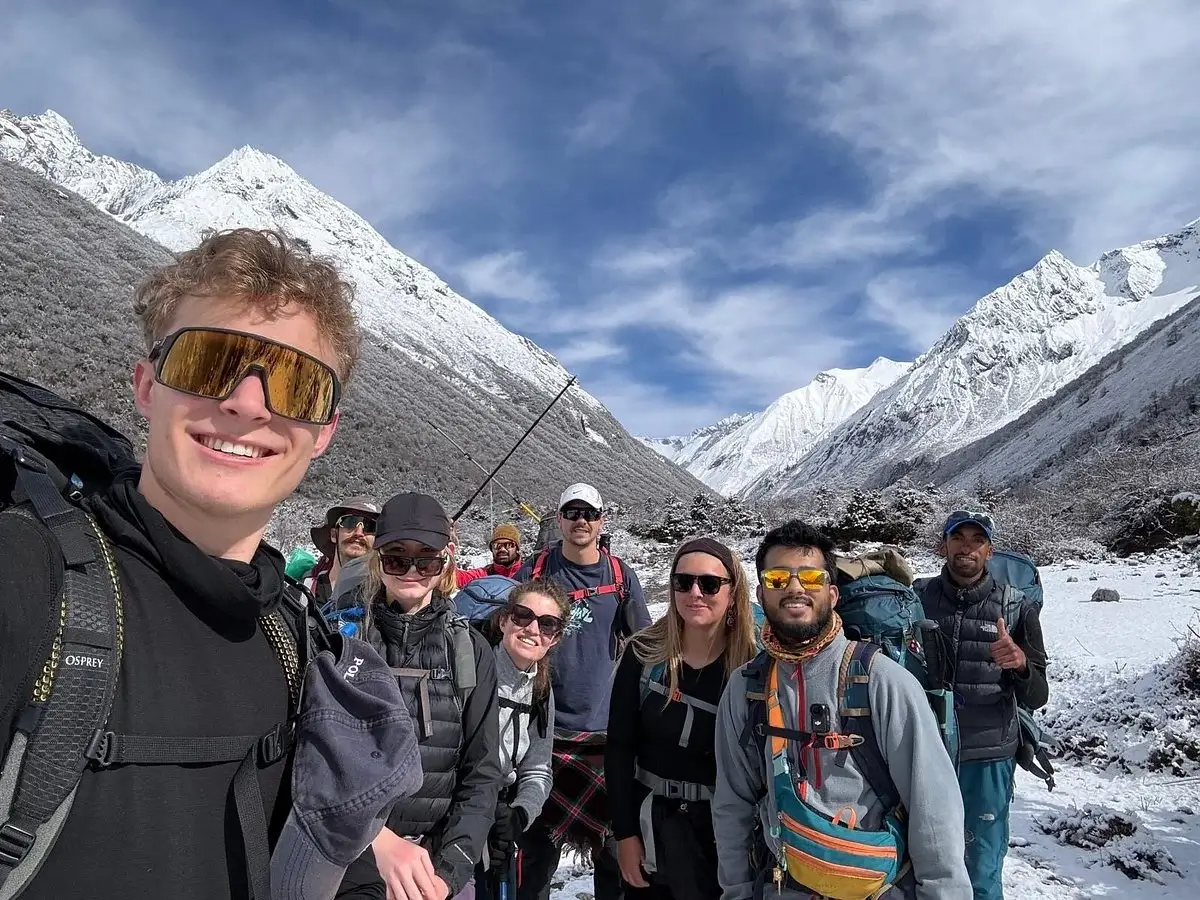
13-Day Quick Itinerary
| Day | Route |
| 1 | Drive Kathmandu to Machha Khola |
| 2 | Machha Khola to Jagat |
| 3 | Jagat to Deng |
| 4 | Deng to Namrung |
| 5 | Namrung to Lho |
| 6 | Lho to Samagaon via Pungen Gompa |
| 7 | Acclimatization day at Samagaon |
| 8 | Samagaon to Samdo |
| 9 | Samdo to Dharamsala |
| 10 | Dharamsala to Larkya La Pass to Bimthang |
| 11 | Bimthang to Gho |
| 12 | Gho to Dharapani |
| 13 | Drive Dharapani to Kathmandu |
Manaslu Circuit Trek Permits and Cost
Autumn is the peak season, so Manaslu Circuit Trek permits cost more. You need the Restricted Area Permit (RAP) (USD 100 for 7 days + USD 15/day extra), MCAP (NPR 3,000), ACAP (NPR 3,000), and the new 2026 Chumnubri Rural Municipality permit (NPR 1,000).
Budget around USD 1,000–1,400 per person for the Manaslu Circuit Trek 13 days. The total Manaslu Circuit Trek cost depends on group size. Expect to spend about USD 30 daily on meals. With Himalaya Hub, the all-inclusive Manaslu Circuit Trek package starts at just USD 940.
Autumn Packing List and Teahouse Life
The golden rule for your Manaslu Circuit Trek packing list is to prepare for extreme temperature swings. For September, pack a quality rain jacket and gaiters. For November, a -15°C sleeping bag, thermal layers, and a heavy down jacket are mandatory. Don’t forget SPF 50+ sunscreen, category-4 sunglasses, and a headlamp. Find the complete gear checklist before your Manaslu Circuit Trek booking.
Download 13 Days Packing Checklist
Download 16 Days Packing Checklist
Teahouse life in autumn is comfortable. Every lodge is fully operational, offering the Manaslu Circuit teahouse experience at its best. You can expect warm family-run lodges and unlimited dal baht for about USD 30 a day. However, October is incredibly busy. Samagaon, Samdo, and Dharamsala fill up fast, so booking through an agency like Himalaya Hub that reserves rooms in advance is highly recommended. Discover what you’ll actually eat on the trail with real prices.
Expert Tips and Final Verdict for Autumn
Autumn is the ultimate season for photographers, first-time Himalayan trekkers, and cultural travelers who prioritize crystal-clear mountain views and stable weather. If you prefer blooming rhododendrons and a lower budget, spring is your better option.
Top Expert Tips:
- Book Early: Secure your October Manaslu Circuit Trek package 6–8 weeks ahead to guarantee teahouse beds.
- Avoid Early Sept: Wait until after September 15 for drier trails and fewer leeches.
- Start Early: Leave Dharamsala by 3:00 AM on a past day to beat the harsh late-morning winds.
- Get Insured: Your Manaslu Circuit Trek insurance must explicitly cover high-altitude trekking up to 5,106 m and helicopter evacuation.
- Train Hard: Follow our training and preparation plan starting 8–12 weeks before departure.
Ready for the ultimate Himalayan experience? Join our 13-day departure with Himalaya Hub from USD 940. With hundreds of positive Manaslu Circuit Trek reviews, we guarantee advance teahouse reservations, expert altitude management, and seamless permit handling.
Reviews




We went to Nagarkot, did a saf...
We went to Nagarkot, did a safari in Chitwan, and went rafting by the Trishuli riverside. We also did a 5-day trek to Poon Hill and stopped at Jhinu for the hot springs. (It just take 3days to go to Poon hill, the remaining days is just chilling)
Our guide Shubash Bhattarai is a solid 10/10. He is super friendly and really knowledgeable. He shared a lot about the local culture, mountains, and wildlife along the way. If we come back to Nepal, we’ll definitely look for him again for our next trek.


A huge thank you to our guides, Rosha...
A huge thank you to our guides, Roshan and Bipin, who were outstanding—professional, knowledgeable, kind, and went above and beyond to make sure everyone felt safe, comfortable, and well looked after. Roshan was especially organised at the guesthouses and meal times, quickly getting us settled in after each day’s trekking and clearly explaining the plan for the next day.
I also have a severe nut allergy, which Roshan managed with great care throughout the trek, something I really appreciated.
If you’re considering trekking in Nepal, I couldn’t recommend Himalaya Hub Adventure highly enough.















FAQs About the Manaslu Circuit Trek in Autumn
Which is the best month for the Manaslu Circuit Trek in autumn?
October is the absolute best month, offering the clearest skies, most stable weather, and a safely open Larkya La Pass. Early November is a close second for those seeking fewer crowds.
Does it rain on the Manaslu Circuit in September?
Yes, early September experiences the tail end of the monsoon with 5–10 rainy days. However, conditions improve significantly after mid-month, and rainfall drops to just 1–3 days in October.
Is autumn more expensive than spring?
Yes. The autumn Restricted Area Permit costs USD 100 (compared to USD 75 in spring), adding a USD 25–50 premium per person. Teahouse and food costs remain similar year-round.
How crowded is the Manaslu Circuit in October?
October is the busiest month, and small villages like Dharamsala fill up fast. However, restricted-area rules and mandatory guides keep the trail far quieter than Everest Base Camp.
Is November too cold for the trek?
Early-to-mid November is highly doable with clear skies. Nights drop to -8°C to -10°C, so a -15°C sleeping bag is essential. Plan to cross the pass before November 20 to avoid early winter snow.
Can I see Mount Manaslu clearly in autumn?
Absolutely. Post-monsoon, dust-free air provides the sharpest, most reliable views of Mount Manaslu (8,163 m) of any season.
Will I experience Nepali festivals?
Very likely. You may witness the grand celebrations of Dashain or the beautiful oil-lamp decorations of Tihar in the local villages.
Is Larkya La Pass open in autumn?
Yes, it is safely crossable throughout the season. October to mid-November offers the best conditions with minimal snow and clear visibility.
1 Comment