
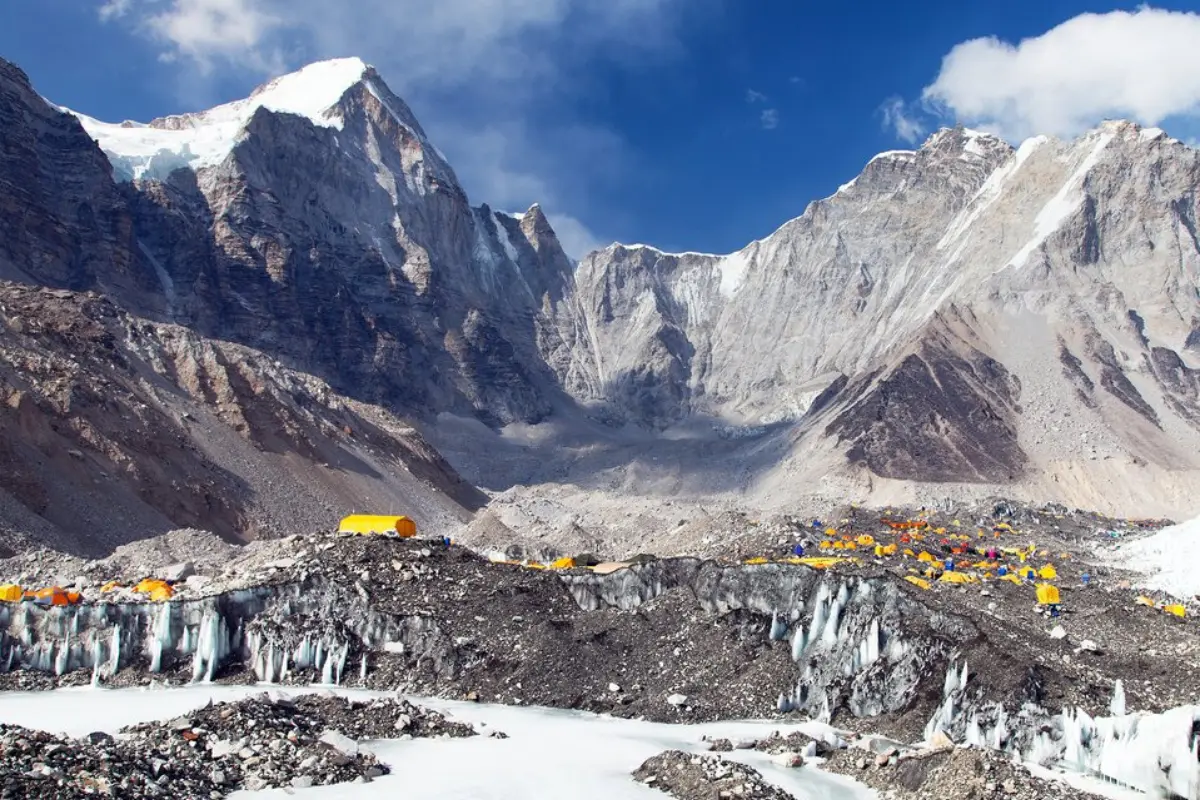

Mount Everest is the tallest mountain on Earth. It stands at 8,848.86 meters (29,032 feet) above sea level. Millions of people dream about it. Thousands try to climb it every year.
But here’s something most people don’t know, getting to the top isn’t just about one big climb. Climbers have to stop and rest at several camps along the way. These camps give their bodies time to adjust to the thin air at high altitude.
So, how many base camps are on Mount Everest?
There are two main base camps, one on the south side in Nepal and one on the north side in Tibet. On top of those, climbers use four more high camps (Camp 1 through Camp 4) to push toward the summit. That’s six camps in total on the south route.
If you’re planning to trek to Everest Base Camp, or just curious about what it’s like up there, this guide covers everything. We break down each camp by altitude, distance, temperature, difficulty, and weather. Let’s get into it.
[ez-toc]
The Two Main Base Camps of Mount Everest
Mount Everest sits right on the border between Nepal and Tibet (part of China). Because of this, people can approach the mountain from two very different sides. Each side has its own main base camp.
These base camps aren’t just a few tents on a snowy hillside. During the busy spring climbing season, they look more like small villages. You’ll find medical stations, cooking areas, satellite phones, and hundreds of tents of all sizes and colors.
South Base Camp in Nepal
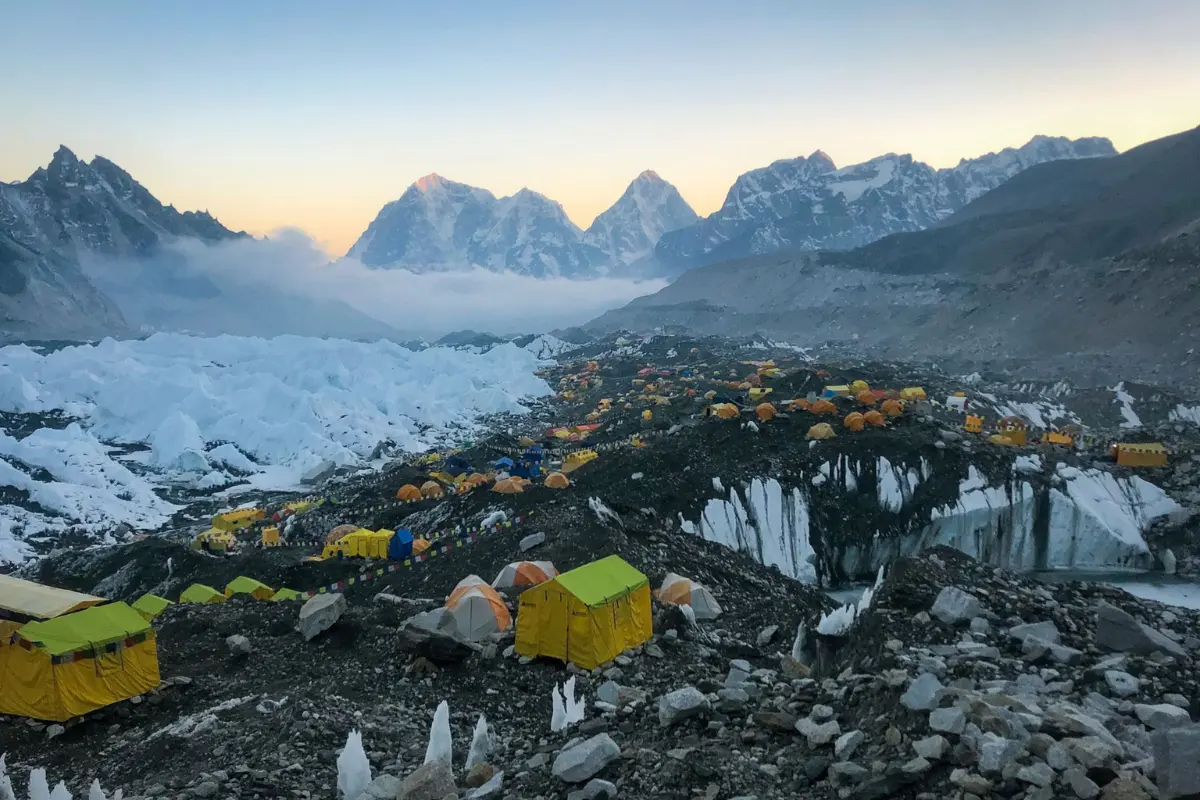
South Base Camp is the most famous and most visited base camp in the world. It’s the one you’ve likely seen in photos, colorful tents packed together on a rocky glacier with huge ice walls in the background.
Every year, tens of thousands of trekkers make the journey to this spot. You don’t need to be a trained climber to get here. It’s a trek, not a climb. But it’s still a serious challenge because of the high altitude.
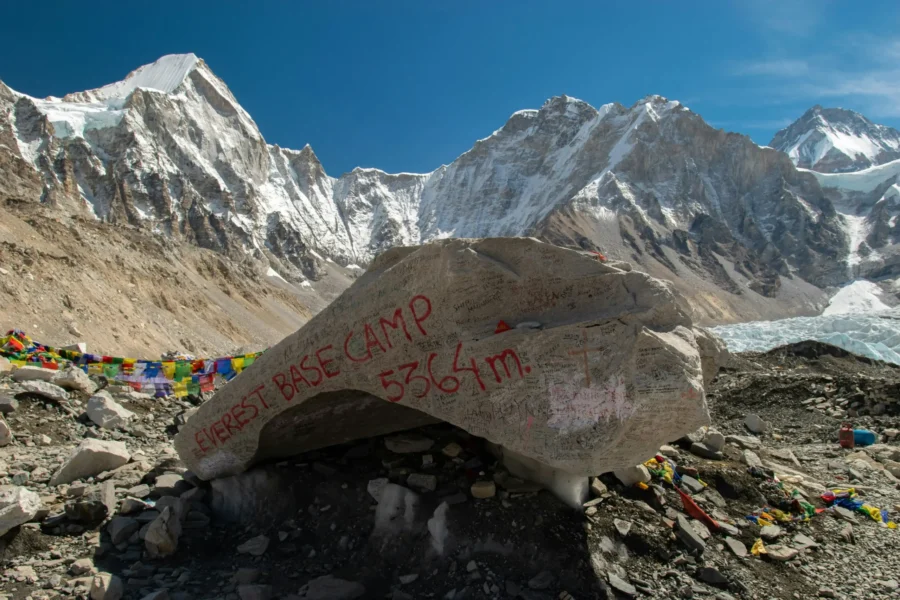
- Elevation: 5,364 meters (17,598 feet)
- Distance from Lukla: About 65 km (40 miles) one way via the main trail through the Khumbu Valley
- Duration: The walk up from Lukla takes about 8 to 12 days. Coming back down is faster, usually 4 to 5 days. A full round trip takes around 12 to 14 days for most trekkers.
- Risk & Difficulty Level: Moderate to Hard. You don’t need ropes or climbing gear to reach South Base Camp. But don’t let that fool you, this trek is still tough. You’ll hike 5 to 7 hours a day for nearly two weeks. The biggest danger is Acute Mountain Sickness (AMS). This happens when your body doesn’t get enough oxygen at high altitude. Symptoms include headaches, nausea, dizziness, and trouble sleeping. If you push too hard and ignore the signs, AMS can turn into something much more serious, even life-threatening. The golden rule: climb high, sleep low, and never rush your acclimatization days.
- Temperature: Temperatures at South Base Camp swing a lot. In spring (March to May), daytime temps sit around -10°C to +5°C (14°F to 41°F). At night, things get brutal, temperatures drop to -20°C (-4°F) or colder. In winter, nighttime lows can plunge to -35°C (-31°F).
- Weather Conditions: The weather here changes fast. Spring (March–May) and autumn (September–November) are the two best seasons for trekking. The sky is clearer and the trails are safer. During summer (June–August), the monsoon brings heavy rain, thick fog, and landslides on the lower trails. Snowstorms can hit without much warning at any time of year, so always check the forecast before heading out.
If You Want to Trek Everest Base Camp, Visit Our Affordable Packages.
Best Everest Base Camp Trekking Packages



Reviews




We went to Nagarkot, did a saf…
We went to Nagarkot, did a safari in Chitwan, and went rafting by the Trishuli riverside. We also did a 5-day trek to Poon Hill and stopped at Jhinu for the hot springs. (It just take 3days to go to Poon hill, the remaining days is just chilling)
Our guide Shubash Bhattarai is a solid 10/10. He is super friendly and really knowledgeable. He shared a lot about the local culture, mountains, and wildlife along the way. If we come back to Nepal, we’ll definitely look for him again for our next trek.


A huge thank you to our guides, Rosha…
A huge thank you to our guides, Roshan and Bipin, who were outstanding—professional, knowledgeable, kind, and went above and beyond to make sure everyone felt safe, comfortable, and well looked after. Roshan was especially organised at the guesthouses and meal times, quickly getting us settled in after each day’s trekking and clearly explaining the plan for the next day.
I also have a severe nut allergy, which Roshan managed with great care throughout the trek, something I really appreciated.
If you’re considering trekking in Nepal, I couldn’t recommend Himalaya Hub Adventure highly enough.


It was just the two of us for the entire trek, which made the experience feel …






North Base Camp in Tibet
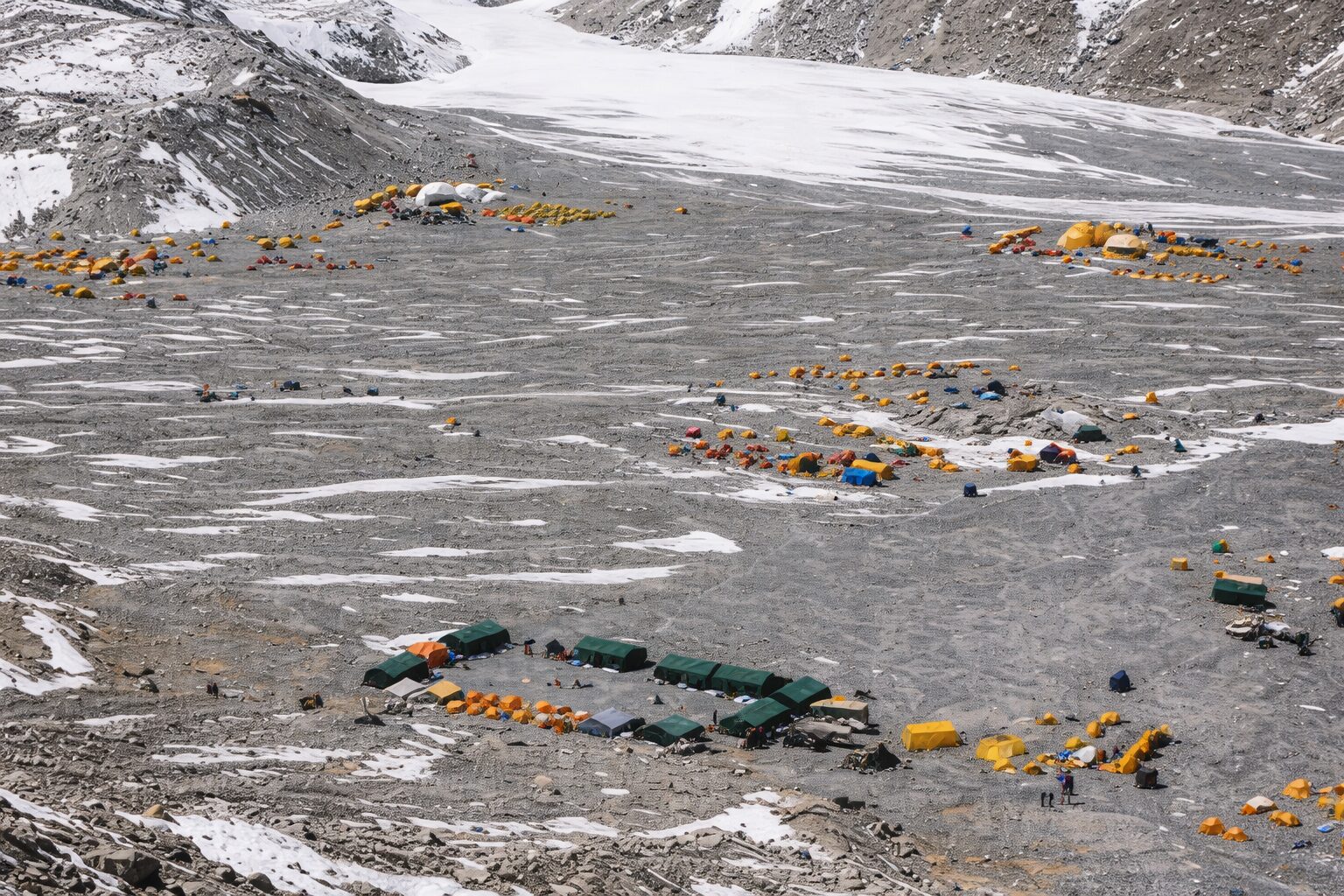
North Base Camp is the quieter, less-visited side of Everest. It sits on the Tibetan Plateau and has a very different feel compared to the Nepal side. Instead of trekking through lush Sherpa villages, you travel across wide-open, rocky plateau land with huge open skies.
Getting here requires special travel permits because Tibet has strict rules for foreign visitors. You’ll also arrive by vehicle instead of on foot, which makes this option appealing to people who can’t do a long multi-day trek.
- Elevation: 5,150 meters (16,896 feet), about 214 meters lower than South Base Camp
- Distance from Lhasa: Approximately 690 km (430 miles) by road
- Duration: The drive from Lhasa to North Base Camp takes about 2 to 3 days each way. You’ll stop overnight in towns like Shigatse and Tingri to acclimatize. The final 8 km from Rongbuk Monastery to base camp must be done by shuttle bus or horse-drawn cart, private cars aren’t allowed on that stretch.
- Risk & Difficulty Level: Low to Moderate for reaching the camp itself, after all, you’re arriving by road. But the fast altitude gain during the drive can still cause AMS, especially if you skip acclimatization stops. The remote location also means that if a medical emergency happens, getting help takes much longer than on the Nepal side.
- Temperature: Daytime temps in spring range from -5°C to +10°C (23°F to 50°F). Nights are cold, between -15°C and -25°C (5°F to -13°F). The open plateau means wind makes it feel even colder than those numbers suggest.
- Weather Conditions: The north side of Everest is drier than the south. But the Tibetan Plateau is famous for strong, fast-moving wind storms. You can have a perfectly clear morning and find yourself in the middle of a whiteout by afternoon. The spring window is the safest time to visit. Some expeditions use the autumn window, but it’s much less common on the north side.
Key Differences Between North and South Base Camps
Not sure which base camp is right for your trip? Here’s a side-by-side comparison to help you decide:
| Feature | South Base Camp (Nepal) | North Base Camp (Tibet) |
| Elevation | 5,364 m (17,598 ft) | 5,150 m (16,896 ft) |
| How You Get There | Trekking (8–12 days on foot) | By vehicle (2–3 days by road) |
| Starting Point | Lukla, Nepal | Lhasa, Tibet |
| How Busy It Gets | Very crowded in peak season | Quiet and uncrowded |
| Permits Needed | Sagarmatha Permit + TIMS Card | Tibet Travel Permit + Alien Travel Permit |
| Climbing Route | Southeast Ridge | Northeast Ridge |
| Main Hazard for Climbers | Khumbu Icefall | The Second Step rockband |
| Best Time to Visit | Spring & Autumn | Spring only |
| What You’ll See | Glaciers, Sherpa villages, monasteries | Open plateau, full view of Everest’s north face |
Bottom line: South Base Camp is better for trekkers who want the classic Himalayan village experience. North Base Camp is better for those who want a road trip through Tibet and a quieter, more remote atmosphere.
Other Camps on Mount Everest
Beyond the two main base camps, there are four more camps used by climbers pushing toward the summit. These are not for tourists or trekkers, they’re only for trained mountaineers on a guided expedition. Here’s what each one looks like:
Everest Camp 1
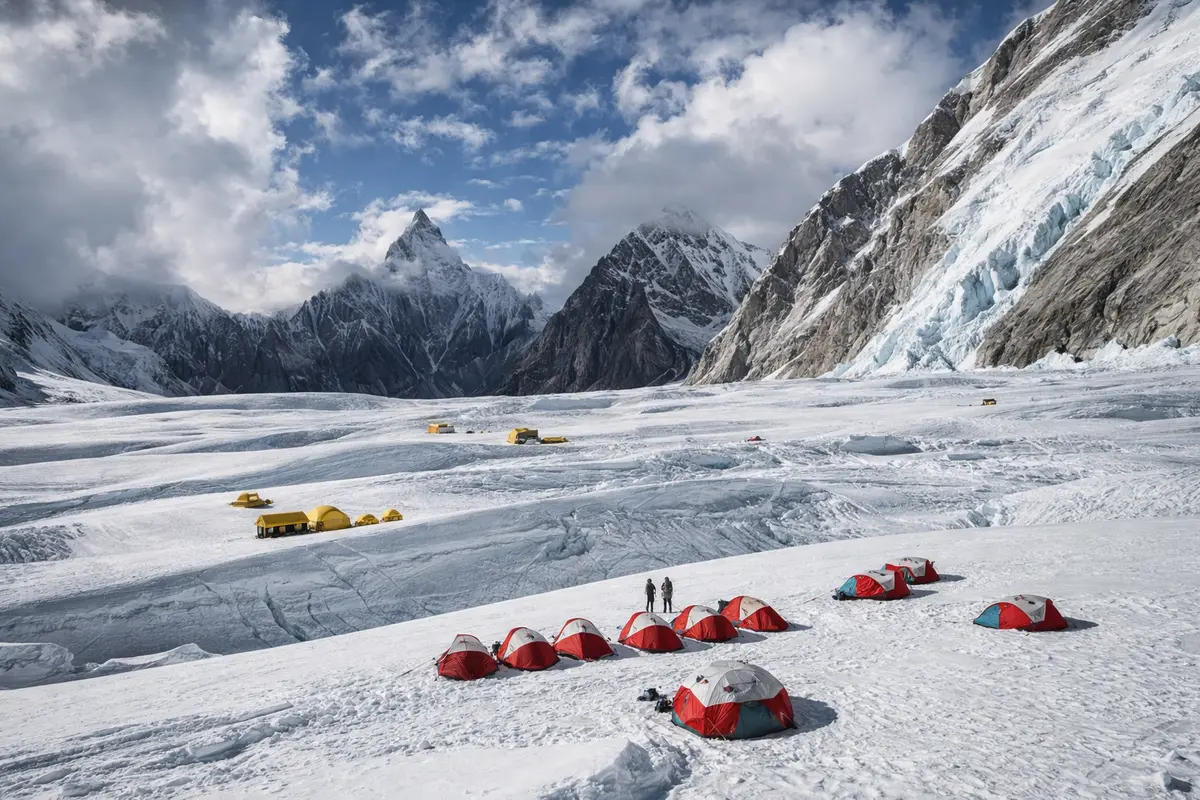
About Camp 1: Camp 1 is the first step above South Base Camp. To reach it, climbers must pass through the Khumbu Icefall, one of the most dangerous places on the entire mountain. The icefall is a jumbled, constantly moving river of ice. It’s full of deep cracks called crevasses and tall ice towers called seracs, which can collapse without any warning. Sherpas fix ropes and set up ladders before each climbing season to help teams get through. Once past the icefall, climbers arrive at Camp 1, which sits at the entrance to a wide, flat valley called the Western Cwm.
Camp 1 Altitude: 6,065 meters (19,900 feet)
Distance from Base Camp: About 4 to 5 km through the icefall
Time from Base Camp: 5 to 8 hours- climbers almost always start this section at 2 or 3 in the morning, when the cold keeps the ice more stable and reduces the risk of collapse
Risk & Difficulty Level: Very High. The Khumbu Icefall is responsible for more deaths on Everest than any other single section. Ice blocks the size of houses can shift and fall without warning. Timing and speed are critical.
Temperature: Spring daytime temps at Camp 1 hover around -15°C to -25°C (5°F to -13°F). At night, they drop to around -30°C (-22°F).
Weather Conditions: The Western Cwm above Camp 1 is shaped like a bowl. On sunny days, it can actually trap heat and feel surprisingly warm during the middle of the day. But afternoon storms roll in quickly and can ground climbers in their tents for days at a time.
Everest Camp 2
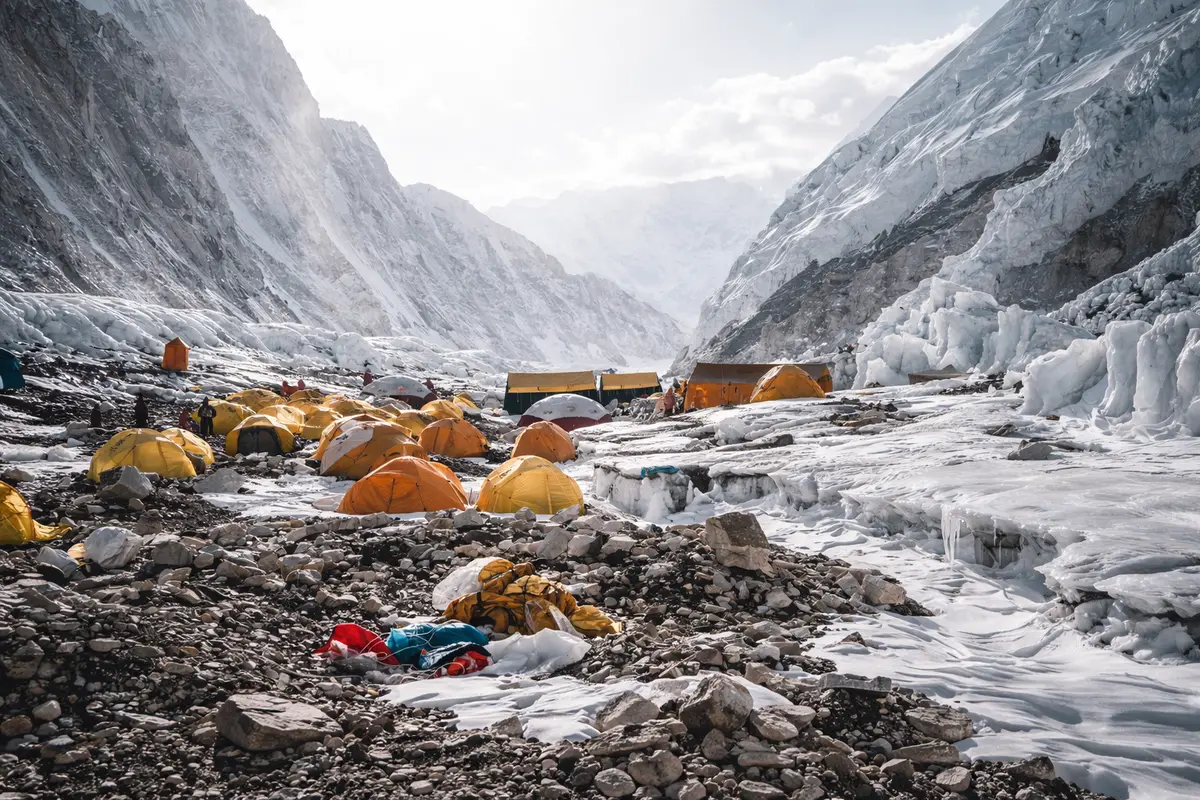
About Camp 2: Camp 2 is the largest and most important high camp on Everest. Mountaineers call it the Advanced Base Camp, or ABC. It sits at the top end of the Western Cwm, right below the massive wall of ice and rock known as the Lhotse Face. Almost every expedition team spends a lot of time at Camp 2, going up and down between here and South Base Camp several times to help their bodies adjust to the altitude before their final summit push.
Camp 2 Altitude: 6,400 meters (21,000 feet)
Distance from Camp 1: About 3 to 4 km along the relatively flat floor of the Western Cwm
Time from Camp 1: 3 to 5 hours- the terrain is much easier than the icefall, but every step at this altitude takes more effort than it would at sea level
Risk & Difficulty Level: High. The walls of Everest and the nearby peak of Nuptse overhang the Cwm, and ice blocks can break off and tumble down without warning. The reflected sunlight can also cause serious dehydration and snow blindness if you’re not wearing proper gear. By Camp 2, most climbers start thinking seriously about when to start using supplemental oxygen.
Temperature: Daytime temps at Camp 2 can actually reach -5°C to +5°C (23°F to 41°F) because of the heat trapped in the valley. But as soon as the sun goes down, temperatures fall to -20°C to -30°C (-4°F to -22°F).
Weather Conditions: The Cwm can cloud over quickly. Afternoon snowfall is very common. Any storm that hits the upper mountain makes it unsafe to stay at Camp 2, so climbers watch the forecasts closely and retreat to base camp when needed.
Everest Camp 3
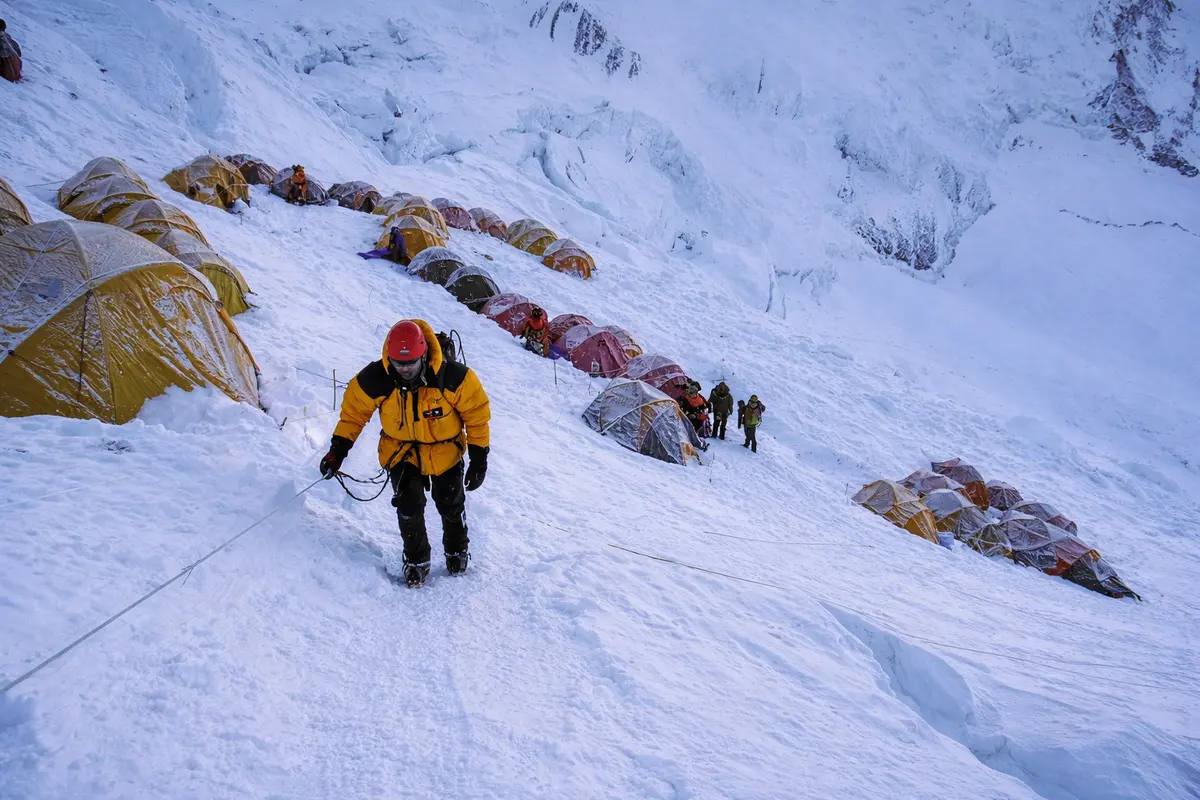
About Camp 3: Camp 3 hangs on the Lhotse Face, a steep wall of ice and rock that rises almost straight up for about 1,200 meters. This is one of the most dramatic and scary sections of the whole climb. The tents here are anchored directly into the ice on a steep slope. Climbers wear a harness and clip themselves to fixed ropes even while they’re sleeping, so they don’t slide off the mountain at night. Most teams only spend one night here before moving up to Camp 4 or heading back down.
Camp 3 Altitude: 7,162 meters (23,497 feet)
Distance from Camp 2: About 2 km, but it’s 2 km straight up a near-vertical ice face
Time from Camp 2: 5 to 8 hours of slow, exhausting climbing with crampons and ice axes
Risk & Difficulty Level: Extreme. Above 7,000 meters, the human body starts breaking down faster than it can recover. The thin air makes even small movements feel like hard work. A fall here without a rope could be fatal. The risk of altitude sickness goes up significantly, and most climbers begin using supplemental oxygen by this point if they haven’t already.
Temperature: Temps at Camp 3 range from -20°C to -35°C (-4°F to -31°F). Wind chill makes it feel even colder. Frostbite is a real danger if any skin is left exposed.
Weather Conditions: The Lhotse Face is wide open to the wind. Storms arrive fast here. A whiteout, when wind-driven snow completely blocks your vision, can make it impossible to see the fixed ropes just a few feet in front of you. Teams wait for a clear weather window before climbing this section.
Everest Camp 4- The Death Zone
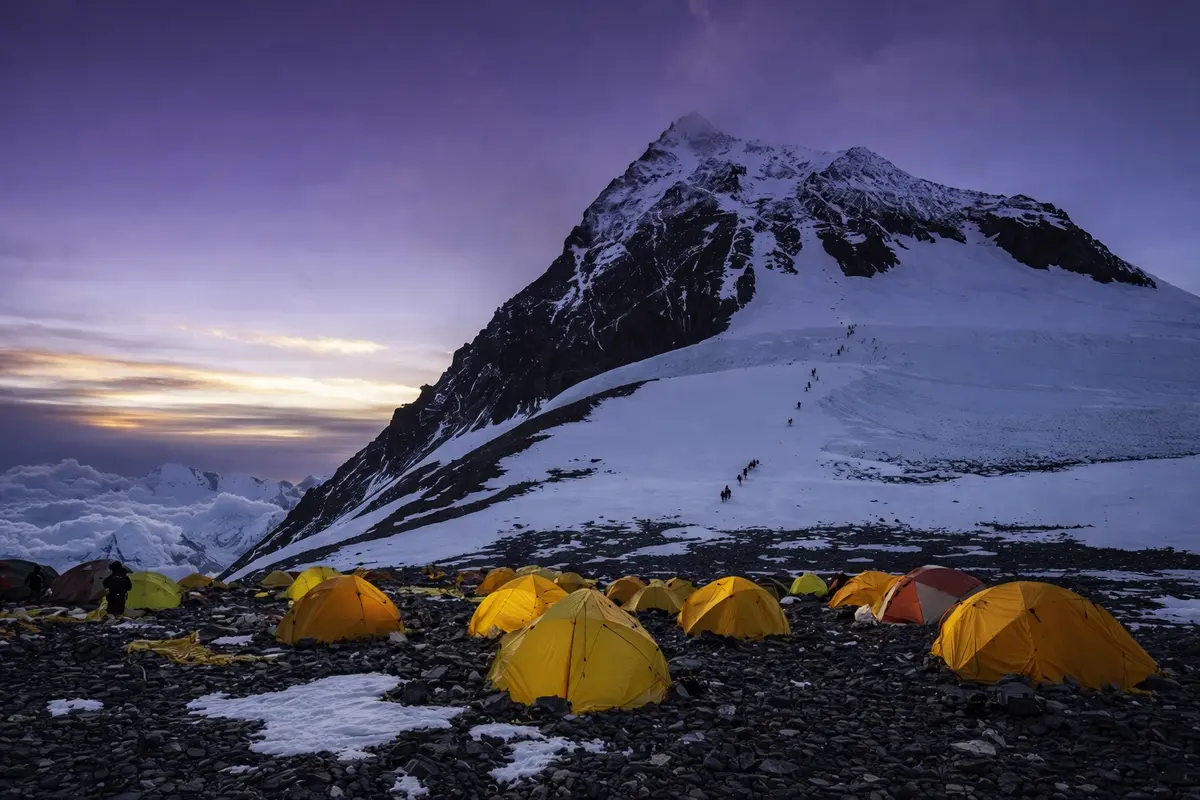
About Camp 4: Camp 4 sits at the South Col- a wide, flat saddle between the top of Everest and its neighbor, Lhotse. This is the last stop before the summit. And it’s one of the harshest, most dangerous places on the planet.
Camp 4 sits inside what climbers call the Death Zone– anywhere above 8,000 meters where the air has so little oxygen that the human body begins to fail. No amount of acclimatization can fix this. Your brain works slower, your body gets weaker, and frostbite can set in within minutes. Climbers don’t try to rest and recover here, they rest just long enough to prepare for the final push, then they move.
Most teams arrive at Camp 4 in the afternoon, rest for 4 to 8 hours, then leave again at midnight or 1 AM. The goal is to reach the summit by 9 or 10 in the morning, then get back down before afternoon winds and weather make the mountain even more deadly.
Camp 4 Altitude: 7,950 meters (26,083 feet)
Distance from Camp 3: About 1.5 km, climbers pass up through the Yellow Band (a layer of yellow limestone rock) and over a feature called the Geneva Spur
Time from Camp 3: 4 to 7 hours, every single step at this altitude feels like climbing stairs with a weight on your chest and a plastic bag over your head
Risk & Difficulty Level: Extreme / Life-Threatening. The South Col is where expeditions fall apart. Frostbite, oxygen system failures, extreme exhaustion, and sudden storms have all claimed lives here. The col is littered with old tents, oxygen canisters, and gear left behind by teams who had to turn around or were too exhausted to carry anything out. Every decision made at Camp 4 has life-or-death consequences.
Temperature: During summit season, temps range from -30°C to -40°C (-22°F to -40°F). With the wind chill, it can feel as cold as -60°C (-76°F). Those numbers are not a typo.
Weather Conditions: The South Col is one of the windiest places on Earth. Gusts regularly top 100 km/h (62 mph). Tents have been completely torn to shreds and blown off the mountain. The brief calm weather windows that teams wait weeks, sometimes months, for often last only 24 to 48 hours. Missing the window and getting caught in a storm at Camp 4 can be fatal.
Distance Between Everest Camps
Here’s a clear, at-a-glance table showing altitude, distance, and travel time between each camp on the standard South Route:
| Route Section | Starting Altitude | Ending Altitude | Distance | How Long It Takes |
| South Base Camp → Camp 1 | 5,364 m (17,598 ft) | 6,065 m (19,900 ft) | ~4–5 km | 5–8 hours |
| Camp 1 → Camp 2 | 6,065 m (19,900 ft) | 6,400 m (21,000 ft) | ~3–4 km | 3–5 hours |
| Camp 2 → Camp 3 | 6,400 m (21,000 ft) | 7,162 m (23,497 ft) | ~2 km (vertical) | 5–8 hours |
| Camp 3 → Camp 4 | 7,162 m (23,497 ft) | 7,950 m (26,083 ft) | ~1.5 km | 4–7 hours |
| Camp 4 → Summit | 7,950 m (26,083 ft) | 8,848.86 m (29,032 ft) | ~1 km (vertical) | 8–12 hours |
| Total (Base to Summit) | 5,364 m | 8,848.86 m | ~20.5 km | Multiple days |
Keep in mind that these time estimates can vary a lot depending on weather, the climber’s fitness level, how well they’ve acclimatized, and whether they’re using supplemental oxygen.
What are the Camps Called on Mount Everest?
Most of the camps on Everest don’t have fancy official names. They’re simply numbered, Camp 1, Camp 2, Camp 3, and Camp 4. But over the years, the climbing community has given some of them nicknames:
South Route (Nepal Side):
- South Base Camp → also called “EBC” (short for Everest Base Camp)
- Camp 1 → sometimes called the “Gateway Camp” because it sits just above the dangerous Khumbu Icefall
- Camp 2 → most commonly called “Advanced Base Camp” or just “ABC”, this is the main hub of any expedition
- Camp 3 → often called the “Lhotse Face Camp” because it’s literally stuck to the side of the Lhotse ice wall
- Camp 4 → universally known as the “Death Zone Camp” or “South Col Camp”
North Route (Tibet Side):
- North Base Camp → sometimes called “Driver’s Camp” because you arrive by road
- Intermediate Camp → sits at around 6,050 m, between the main base camp and the North Col
- Camp 1 (North) → at the North Col, around 7,000–7,100 m
- Camp 2 (North) → around 7,500 m
- Camp 3 (North) → around 8,300 m, the final camp before the summit on the north side
Mount Everest Base Camp Trail
The journey to either base camp is an adventure in its own right. The two trails are completely different from each other, one winds through colorful mountain villages, the other cuts across one of the most remote plateaus on Earth.
South Base Camp From Kathmandu
The south side trek starts with a flight. From Kathmandu, you’ll take a small plane to Lukla (2,860 m), a mountain town with one of the most dramatic airport runways in the world. The runway is perched on a hillside and ends at a cliff. It’s not for the faint of heart, but it gets you there fast.
From Lukla, the trail follows the Dudh Kosi River uphill through a series of Sherpa villages, tea houses, and monasteries. The path is well-marked, but the altitude gets higher every day.
Here are the main stops along the way:
- Phakding: (2,610 m) the first overnight stop, just a few hours from Lukla. Easy terrain, good for warming up your legs.
- Namche Bazaar: (3,440 m) the biggest town on the trail. Known as the “Gateway to the Himalayas.” You spend at least one extra acclimatization day here.
- Tengboche: (3,860 m) home of the famous Tengboche Monastery. On a clear day, the view of Everest, Lhotse, and Ama Dablam from here is jaw-dropping.
- Dingboche: (4,410 m) another acclimatization stop. You’ll feel the altitude here for the first time.
- Lobuche: (4,910 m) a small village, close to the terminal moraine of the Khumbu Glacier.
- Gorak Shep: (5,164 m) the last stop before base camp. From here, many trekkers also climb Kala Patthar (5,644 m) for one of the best views of Everest’s south face available without climbing.
- Everest Base Camp: (5,364 m) you made it.
The full round trip is about 130 km and takes 12 to 14 days. You’ll need a Sagarmatha National Park Entry Permit and a TIMS (Trekkers’ Information Management System) card. No technical climbing gear is required.
North Base Camp from Lhasa
The north side journey is a road trip, not a hike. From Lhasa, you drive southwest along the famous Friendship Highway, one of the highest roads in the world. The scenery shifts from ancient Tibetan cities to wide-open plateau views with distant snow-capped peaks.
Here are the key stops:
- Lhasa: (3,650 m) your starting point. Spend 1 to 2 days here to start acclimatizing before heading higher.
- Gyantse: (3,900 m) a historic town with the impressive Pelkor Chöde Monastery and Kumbum Stupa.
- Shigatse: (3,840 m) Tibet’s second-largest city. Home of Tashilhunpo Monastery, the traditional seat of the Panchen Lama.
- Tingri: (4,300 m) a small, windy town with clear views of Everest on the horizon. A good rest stop before the final push.
- Rongbuk Monastery: (4,980 m) the highest monastery in the world. Just 8 km from North Base Camp. The view of Everest’s north face from here is something you will never forget.
- North Base Camp: (5,150 m) the end of the road, literally. From here, you can look straight up at the massive north face of the world’s tallest mountain.
The drive from Lhasa takes 2 to 3 days each way. You’ll need a Tibet Travel Permit, an Alien Travel Permit for restricted areas, and a trekking permit for the Everest region. All of these must be arranged through a licensed Chinese travel agency. Independent travel to Tibet is not allowed for foreign visitors.
EBC Interesting Facts
Everest Base Camp isn’t just a starting point for climbers. It’s a world of its own, full of incredible records and surprising stories. Here are some of the most interesting facts about EBC:
The camp moves every single year. South Base Camp sits on the Khumbu Glacier, which slides downhill at about 1 meter per day. Because the glacier keeps moving, the camp has to be set up in a slightly different spot each season. Scientists have also warned that because of climate change and melting ice, the entire camp may need to be relocated to a lower elevation within the coming years.
Around 40,000 trekkers visit EBC each year. The trail to South Base Camp is one of the busiest trekking routes on Earth. People from all over the world, from first-time hikers to experienced mountaineers, make this journey every year.
Only about 800 people reach the summit per year. That’s a big gap between the 40,000 who reach base camp and the few hundred who make it all the way to the top. It shows just how massive the challenge of climbing Everest really is.
The first ascent happened on May 29, 1953. Sir Edmund Hillary from New Zealand and Tenzing Norgay Sherpa from Nepal were the first people to stand on the summit of Mount Everest. They used the south route, the same one trekkers walk today.
Above 8,000 meters, your body starts to die. The Death Zone isn’t a nickname chosen for drama. At that altitude, there isn’t enough oxygen for your body to function properly. Your brain slows down, your muscles weaken, and your organs start to struggle. Even with bottled oxygen, climbers can only survive in the Death Zone for a short time.
Rongbuk Monastery is the highest monastery in the world. At 4,980 meters (16,340 feet), this Buddhist monastery has stood for centuries just 8 km from the North Base Camp. Monks have watched climbers come and go for generations.
Everest’s summit sits inside the jet stream. High-altitude winds above 8,500 meters can reach more than 320 km/h (200 mph) in winter. The only reason anyone can summit is because the jet stream briefly shifts in May and October, creating a narrow window of calmer conditions.
Base Camp has its own doctor during climbing season. The Himalayan Rescue Association runs a medical clinic at South Base Camp from April through May. Doctors there treat altitude sickness, frostbite, injuries, and other emergencies before patients are flown by helicopter to Kathmandu hospitals.
Every expedition team must carry out a set amount of trash. Nepal has strict rules about waste on Everest. Climbing teams are required to bring back a minimum amount of garbage at the end of their expedition. Volunteer cleanup crews also trek to base camp and higher every year to remove waste left from past expeditions.
You don’t need to be a professional climber to reach base camp. The trek to South Base Camp needs no ropes, no climbing experience, and no technical gear. If you’re reasonably fit, take your acclimatization days seriously, and pack the right clothing, reaching EBC is something most healthy adults can achieve with the right preparation and mindset.
Thinking about trekking to Everest Base Camp? Go in spring (March to May) or autumn (September to November) for the best conditions. Always hire a licensed guide, get travel insurance that covers helicopter evacuation, and never rush your rest days. The mountain isn’t going anywhere- take the time to let your body catch up.
0 Comment