



























5 Days
Daily Tour
15 people
English
The Mardi Himal is a short and easy trek in the Annapurna Region. The Mardi Himal Trek 5 Days begins just after a two-hour drive from Pokhara, the famous tourist hub of Nepal. This trek offers breathtaking views of the marvelous mountains of the Annapurna Region. Although the Mardi Himal Trek used to be one of the lesser-known treks in the Annapurna trekking region, it has welcomed foreign and local tourists in huge numbers in recent years.
The trek starts with about two hours of driving from Pokhara to Kande. Once you reach Kande, your walking trail officially begins, and you start your hike toward Pitam Deurali. The pathway is moderate and easy to walk. Although the path up to Pitam Deurali involves some uphill or steep sections, the route from there towards Forest Camp descends before rising again. The beginning of this trek is easy and doable for beginner trekkers.
Unlike other trekking routes, this route does not follow the pathway of local villages from Pitam Deurali. The trekking trail runs under the woods, which gives an adventurous vibe even on an easy trek. As altitude increases, the size of the trees also starts to become shorter. The Mardi Himal Trail is rich in jungle resources with loads of rhododendron and alpine trees.
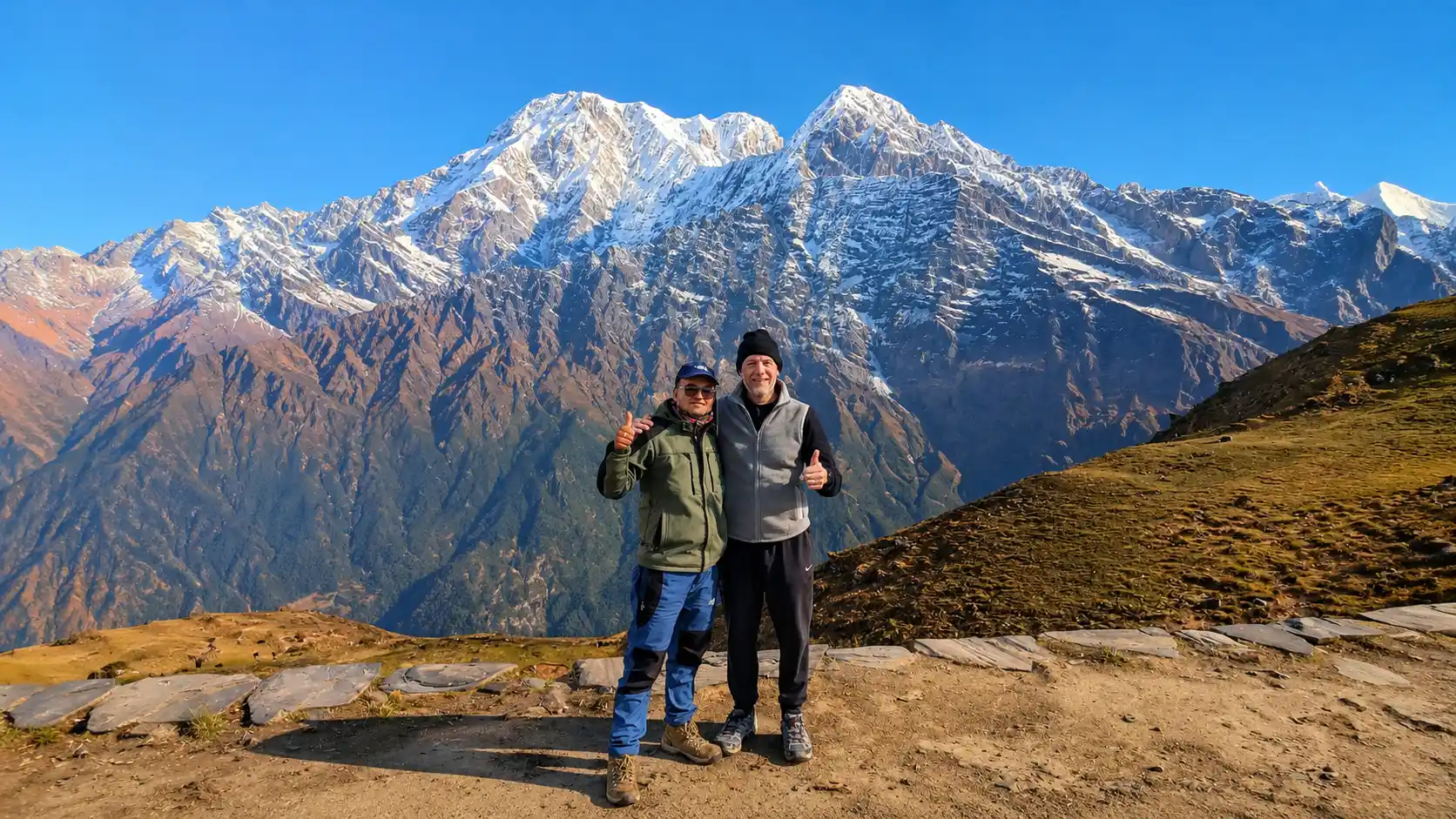
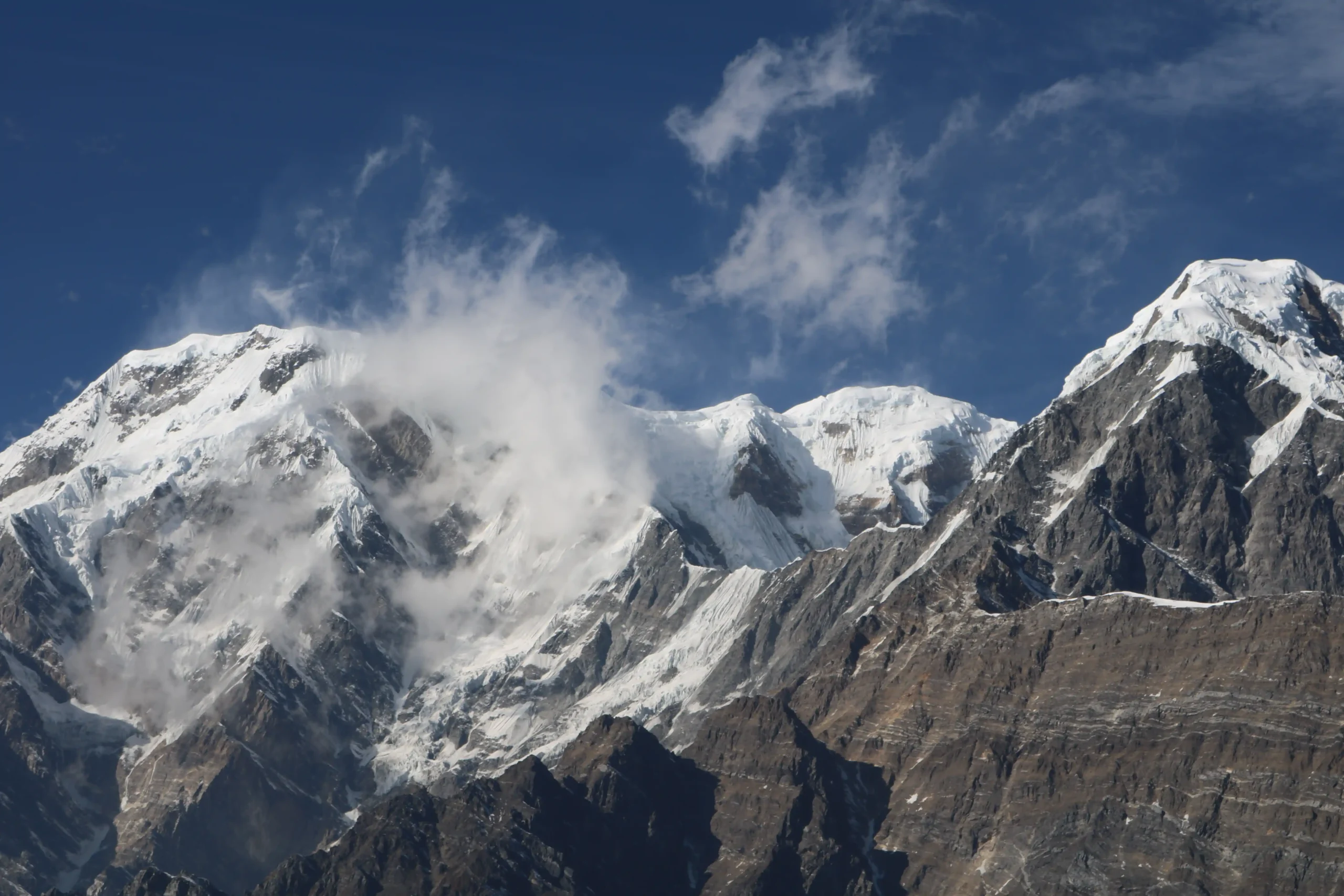
As soon as you reach High Camp, the temperature starts to fall, and you might even feel dizzy. There is a high chance of simple symptoms like dizziness while reaching High Camp. High Camp is the last stoppage point before Mardi Himal Base Camp. In clear weather, you will be viewing the mesmerizing view profiles of Mardi Himal and other Annapurna Range mountains.
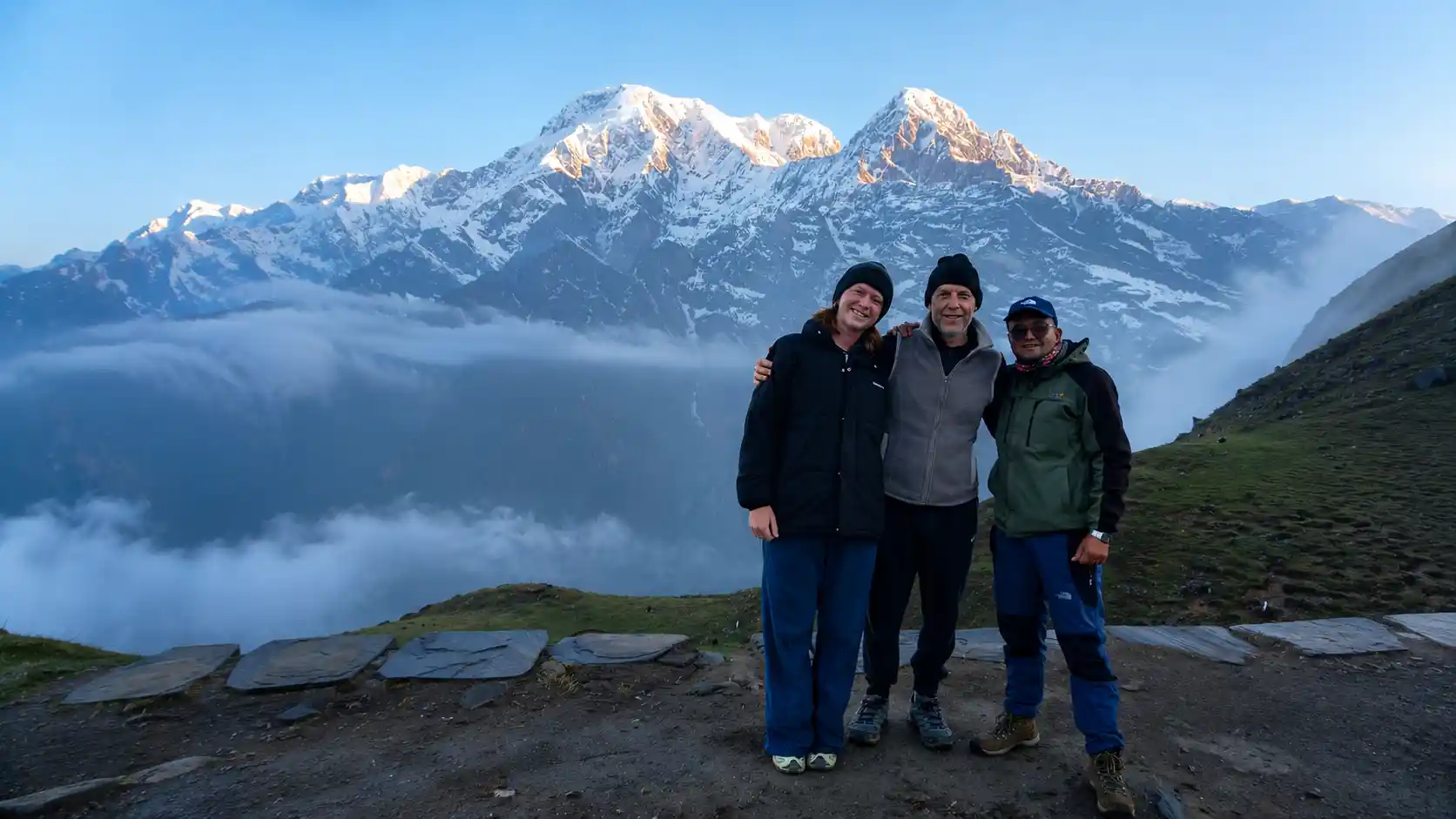
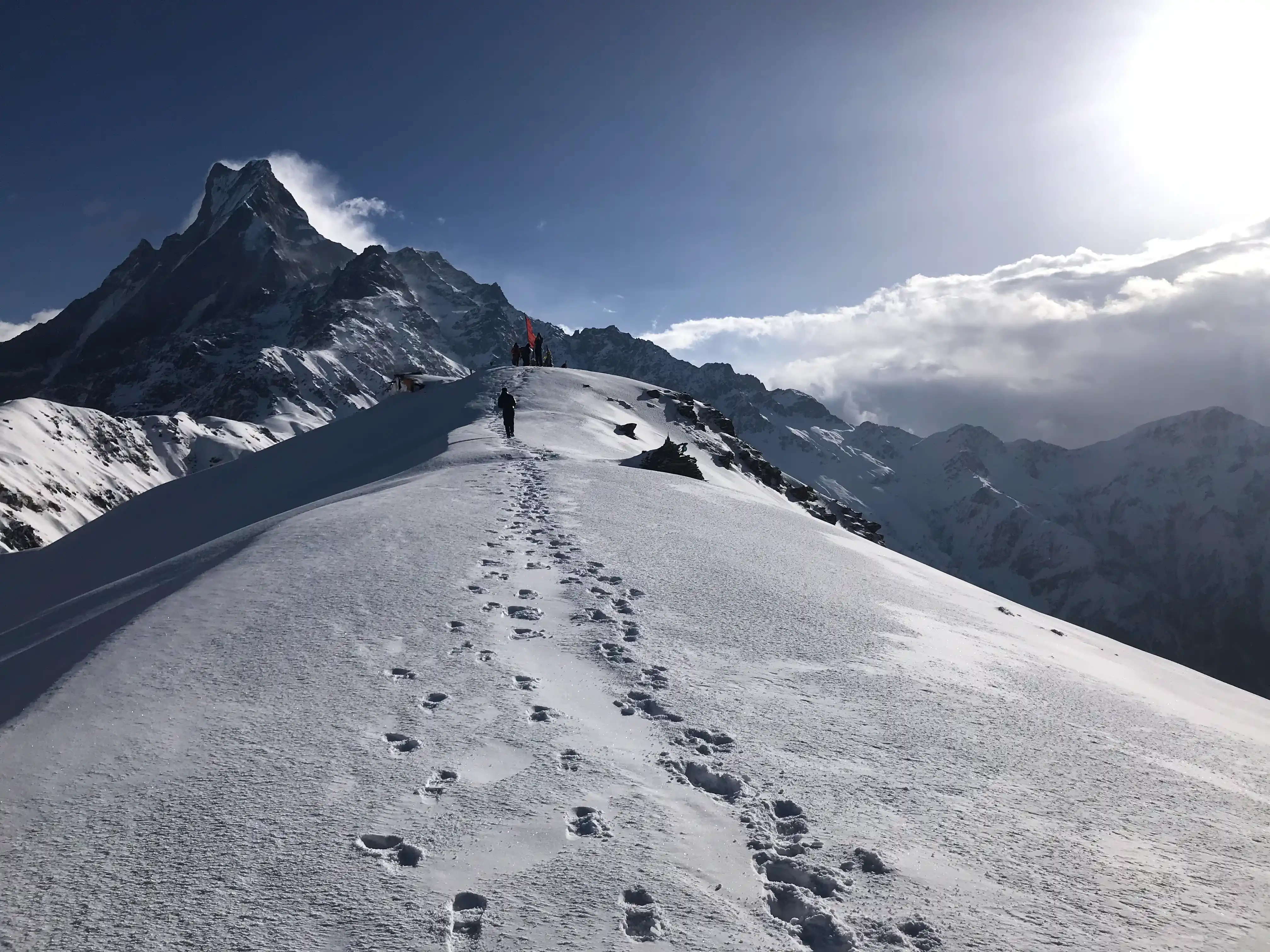
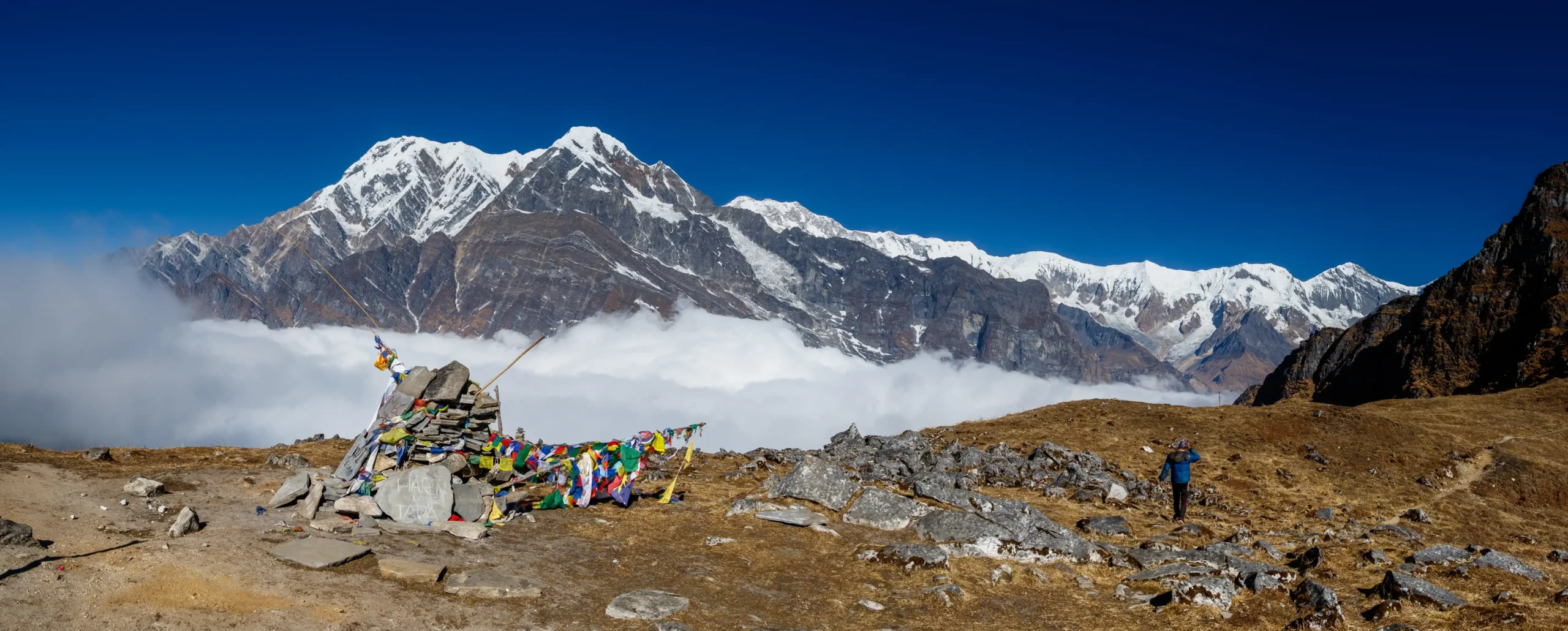
After walking for two to three hours early in the morning, you will reach the Mardi Himal Base Camp, which is at an elevation of 4,500 meters above sea level. Mardi Himal Base Camp offers the most beautiful view of the Annapurna Range. The viewpoint at Mardi Himal Base Camp offers a staggering sunrise reflecting on the mountains. To see this view, you have to be lucky enough to have the weather in your favor as well.
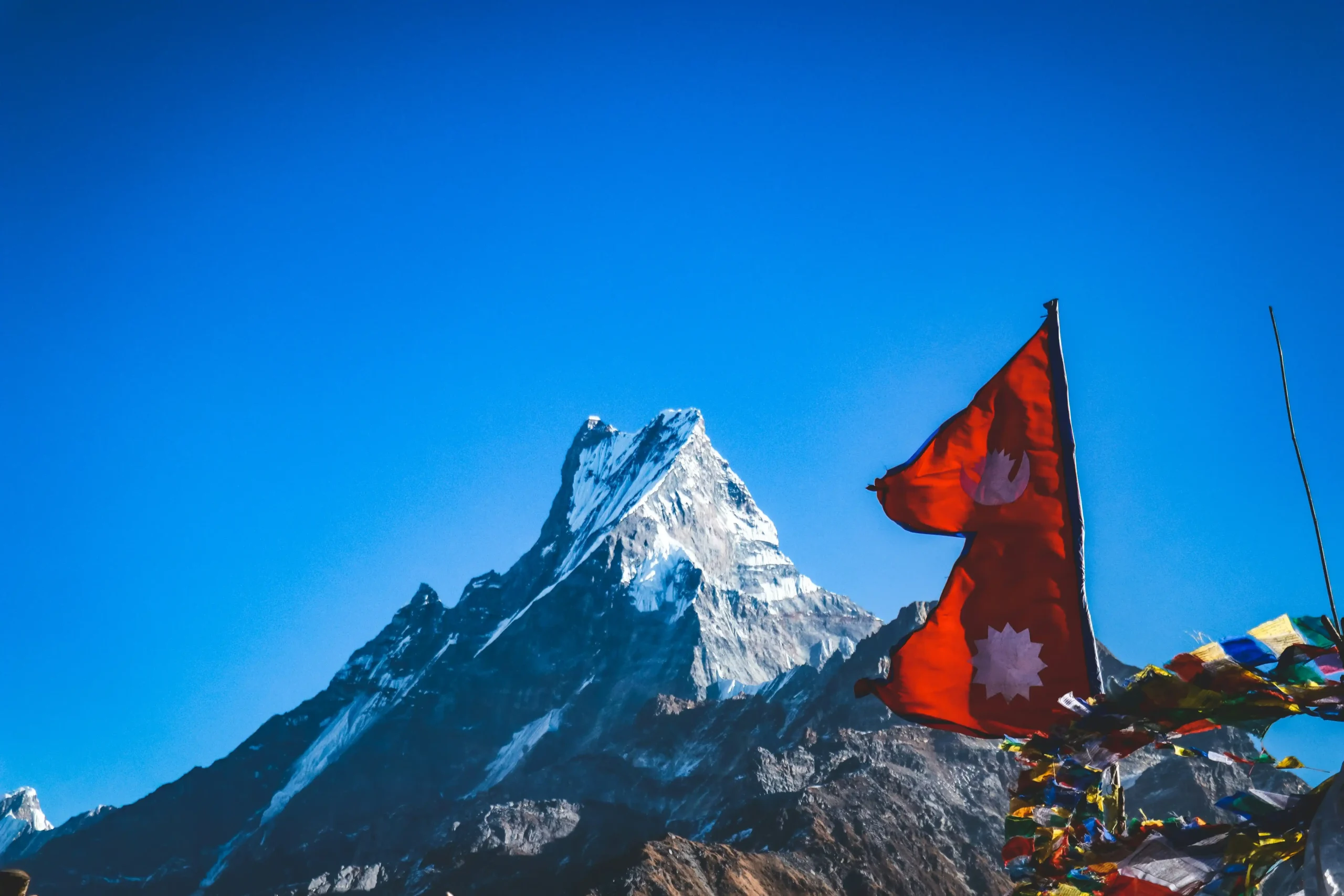
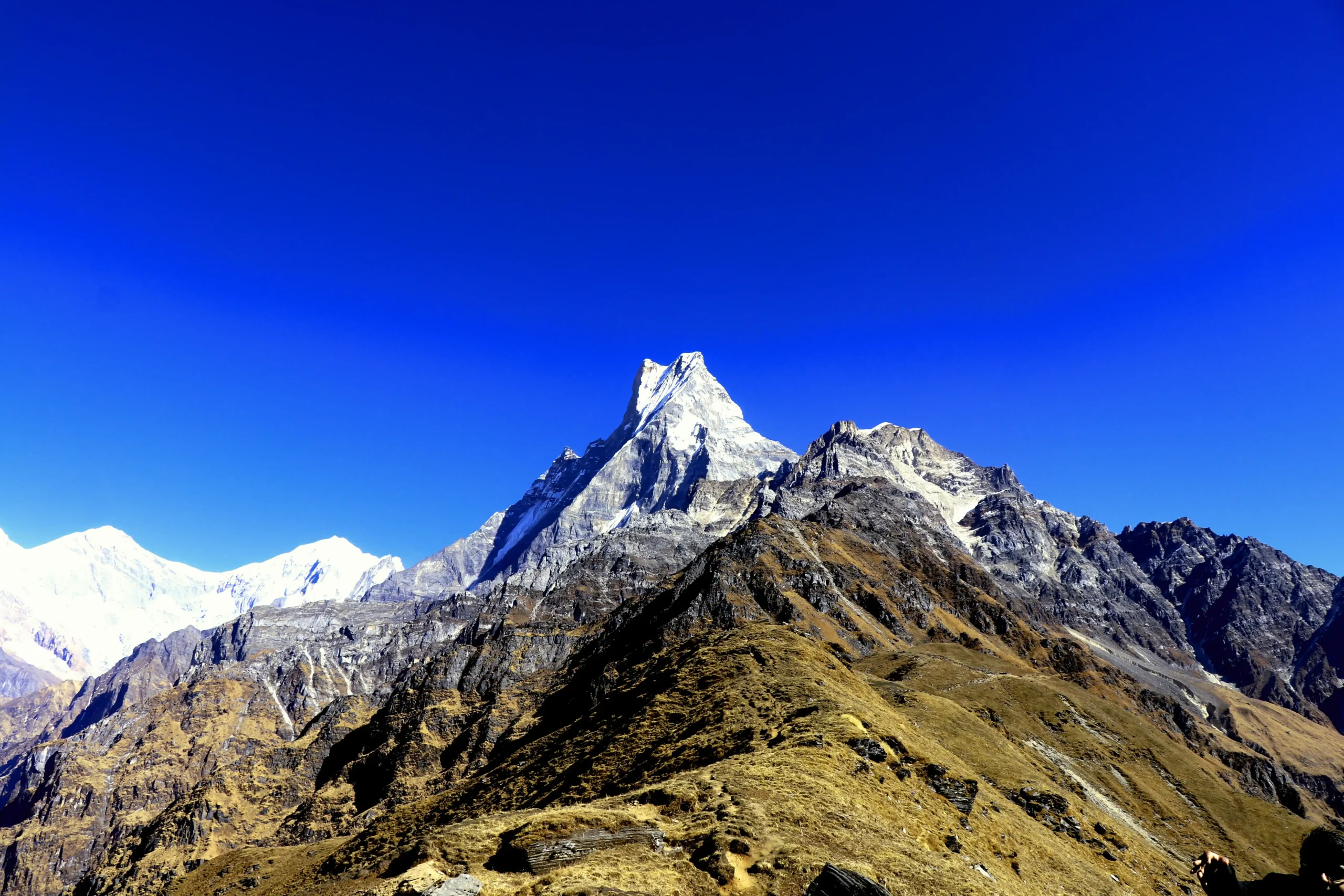
Mardi Himal stands at 5,587 meters in the Annapurna range, sitting right beside the iconic Machhapuchhre (Fishtail Mountain). The trekking route was only officially opened in 2012, making it a quiet, unspoiled, and off-the-beaten-path trail – a peaceful escape from Nepal’s more crowded popular treks.
If you want to spend more time exploring, check out our 12 Days Mardi Himal Trek for a longer, more immersive version.
Chat with us — real trekking experts, not bots.
Your adventure starts with a short and fun drive from Pokhara to Kande. The drive takes you through small villages and green hills. Once you reach Kande, you lace up your boots and start walking! The trail is easy and gentle, perfect for warming up your legs.
You walk through terraced farms and small settlements. Little by little, the views of the Annapurna mountains start to appear. When you reach Pitam Deurali, you can already see some amazing Himalayan peaks. A great first day!
Today you walk deeper into the hills and enter a beautiful green forest. The trees get taller and the air gets cooler and fresher. You will walk through thick rhododendron and oak trees. In spring, these trees bloom with bright red and pink flowers, it looks magical!
The trail goes up steadily, but it is not too hard. You can hear birds singing all around you. By the time you reach Forest Camp, you feel like you are deep in the mountains. Relax, enjoy a hot meal, and get ready for tomorrow!
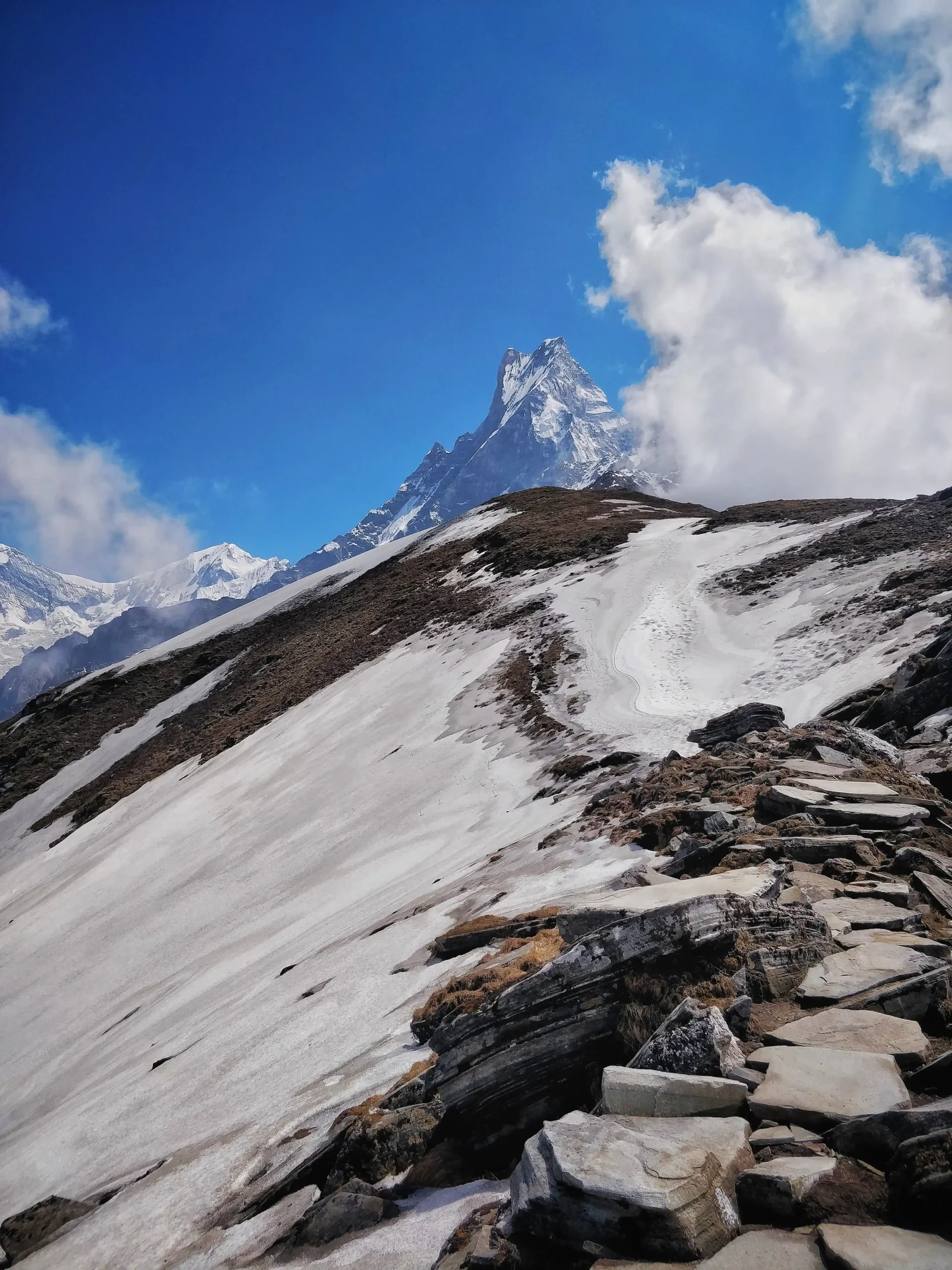
This is where things get really exciting! Today’s trail takes you out of the forest and onto open ridges. Step by step, the trees disappear and big mountain views take their place. You can see snow-capped peaks stretching across the horizon.
The trail gets steeper today, so take your time and walk slowly. Drink lots of water and enjoy the fresh mountain air. When you finally arrive at High Camp, the reward is incredible, a huge, wide-open view of the Himalayas all around you. The sunset from here is something you will never forget!
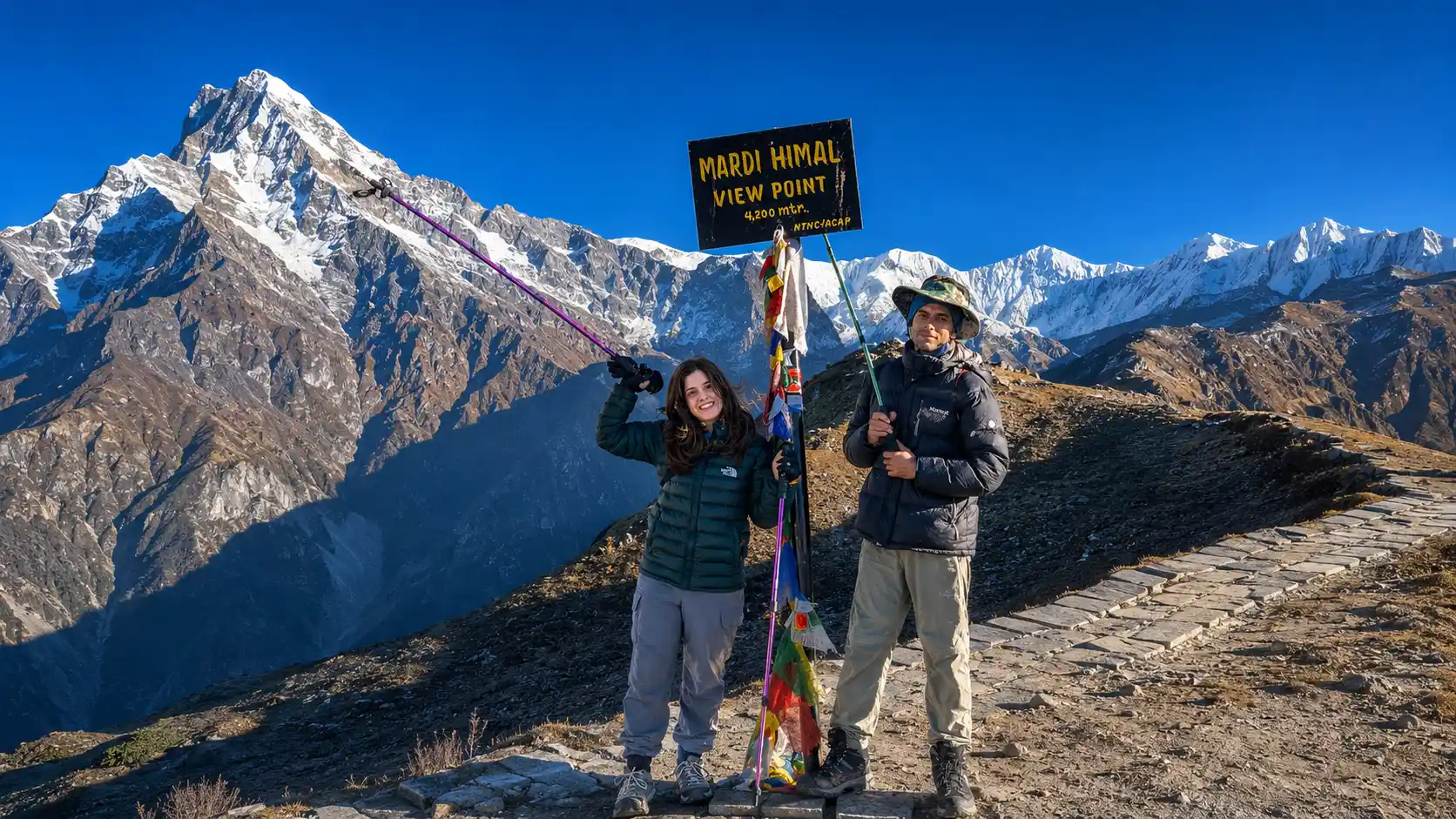
You start hiking before sunrise while the sky is still dark and full of stars. First, you climb up to the View Point at 4,200m, where you get a stunning early morning view of the mountains glowing in the first light of day.
If you feel strong and the weather is clear, you keep going up to Mardi Himal Base Camp at 4,450m. Standing there, you are surrounded by giant mountains like Machhapuchhre (Fishtail), Annapurna South, and Mardi Himal itself.
Take photos, breathe it all in, and feel proud of how far you have come! After enjoying the views, you carefully walk back down the same trail to High Camp for the night. The total walk up and back is about 8km, so pace yourself and go slow!
On your last day, you head downhill through a brand new trail toward Sidding Village. This route is different from the way you came up, so you get to see fresh scenery on your way down. The path winds through forests and terraced fields, and you pass through a quiet, traditional Nepali village.
Local people wave and smile as you walk by. At Sidding, a vehicle is waiting to drive you back to beautiful Pokhara. Back in the city, you can enjoy a hot shower, a delicious meal by the lake, and big smiles all around. You did it, the Mardi Himal Trek is complete!
Are you interested in planning a custom trip? Tell us your travel plans and we'll create a personalized itinerary based on your budget, interests, and schedule.
Chat with us — real trekking experts, not bots.

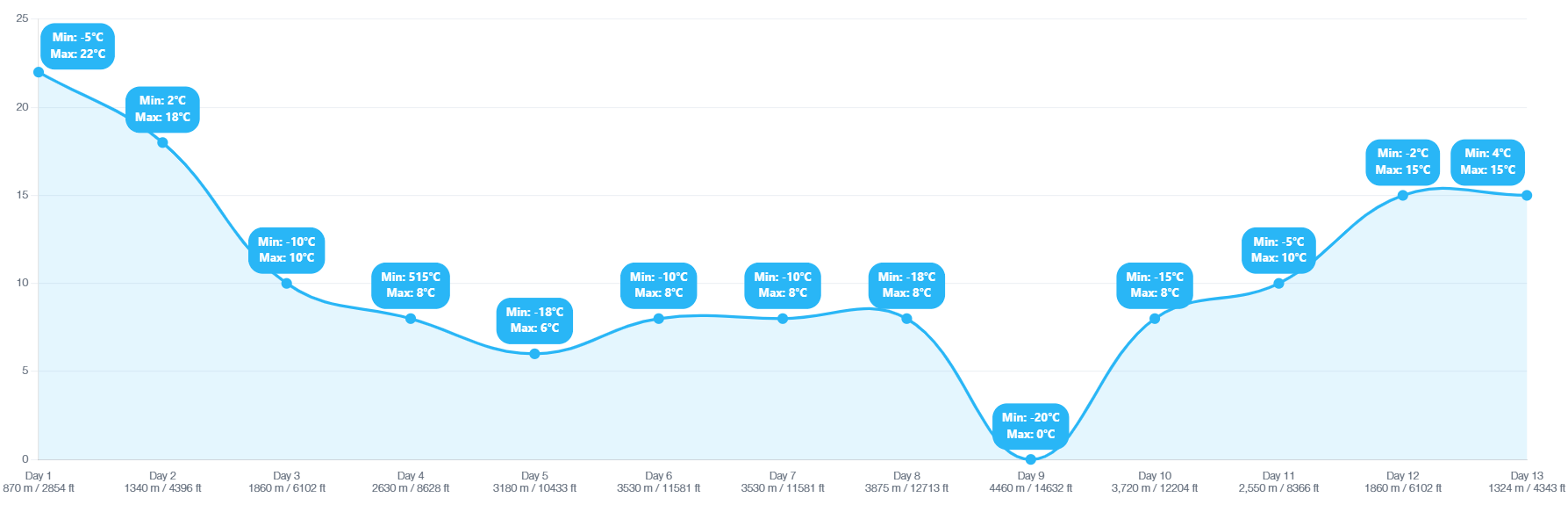
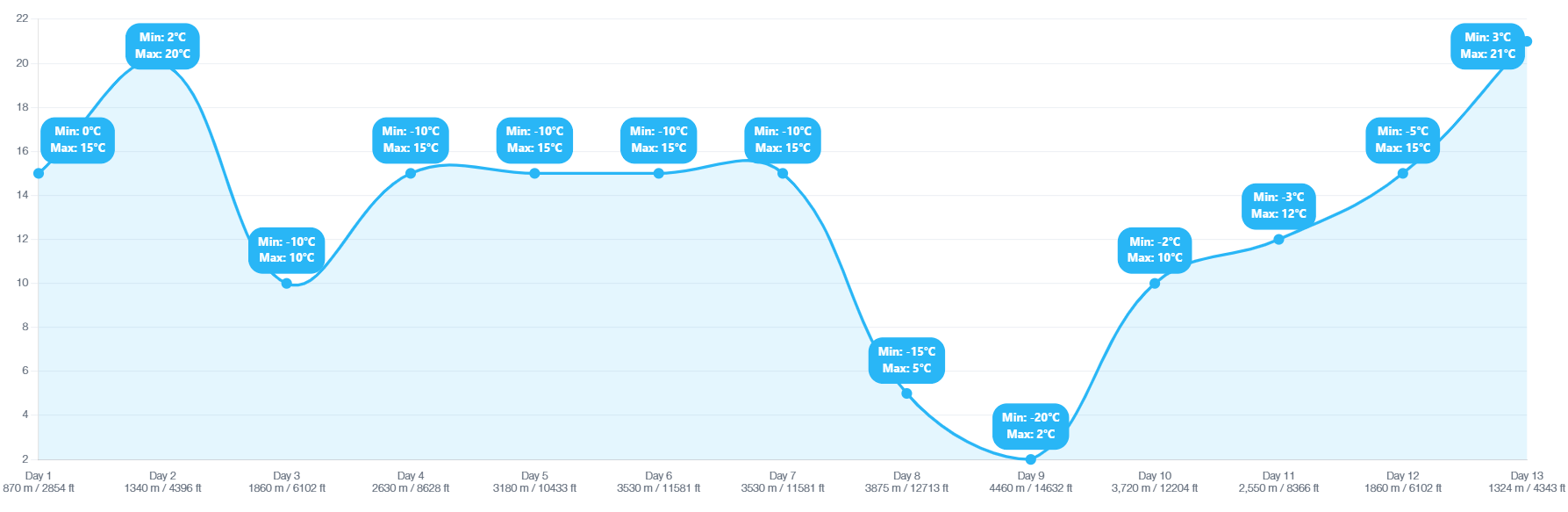
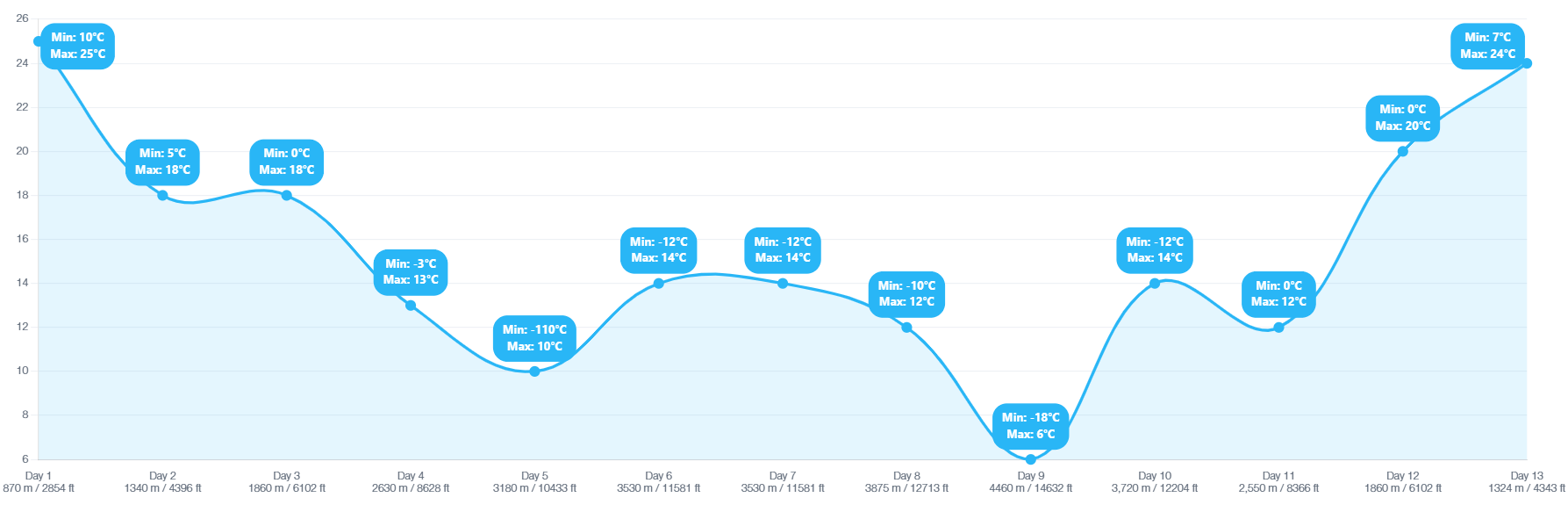
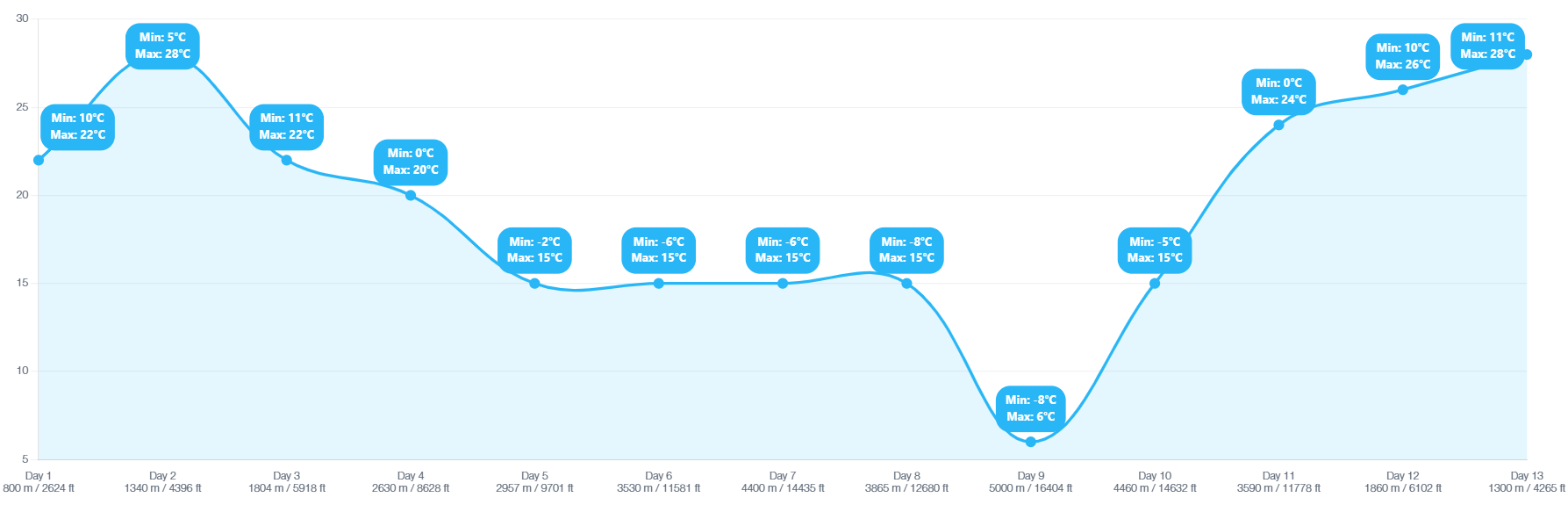
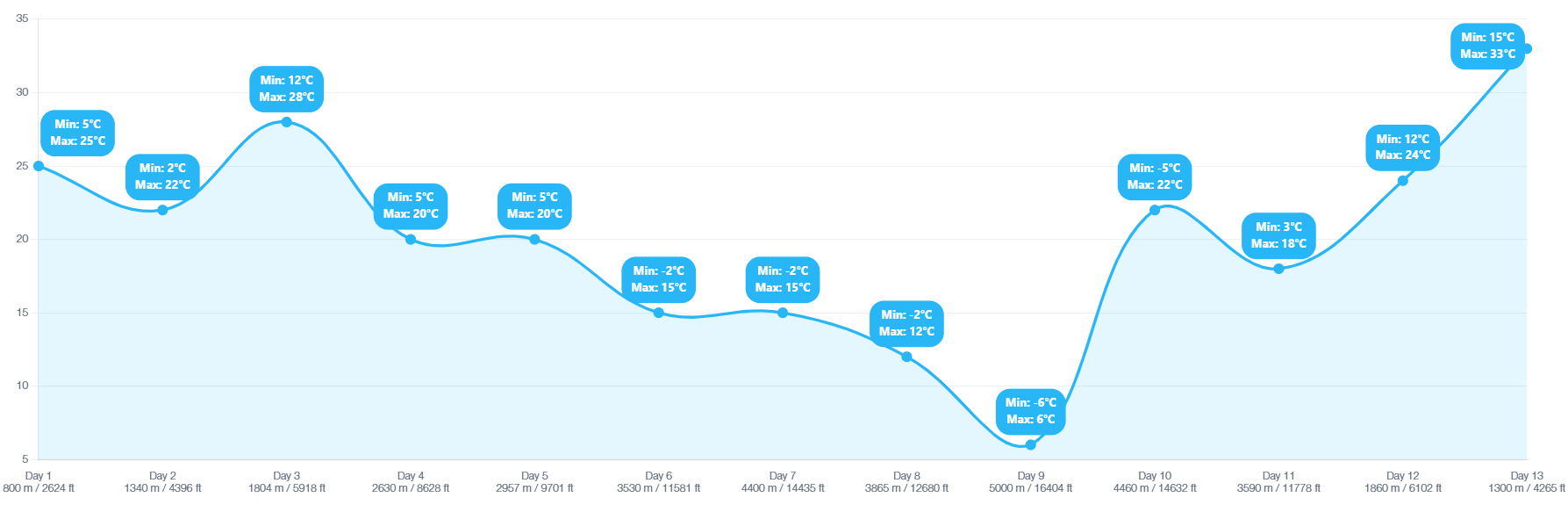
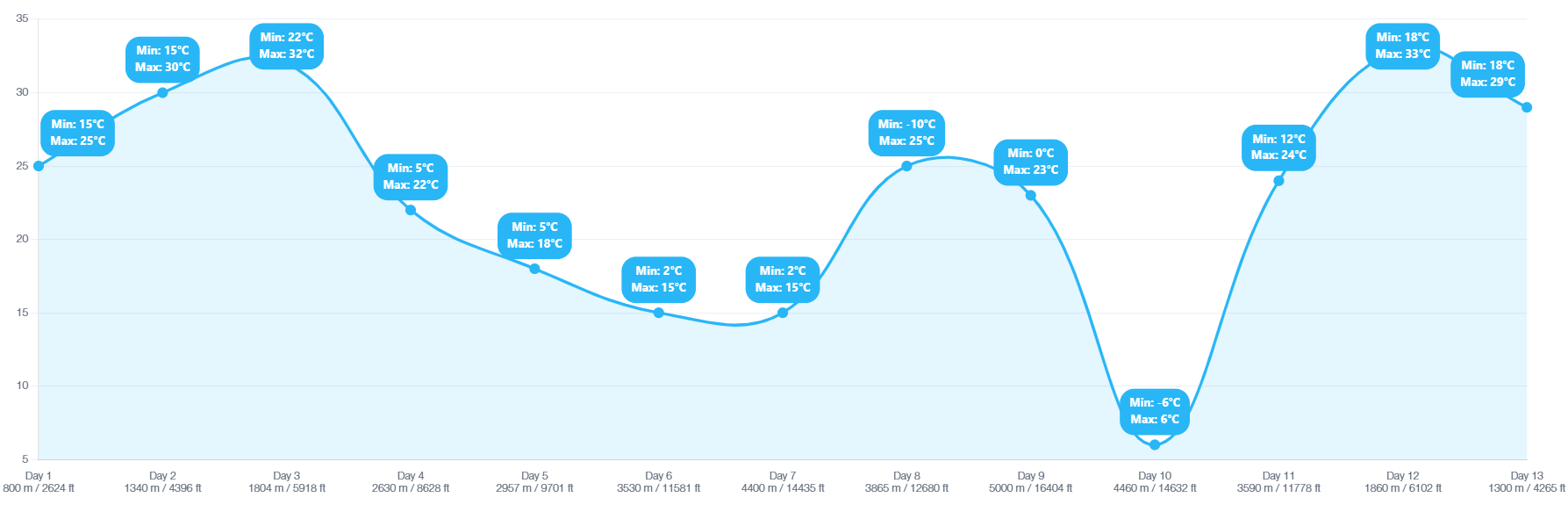
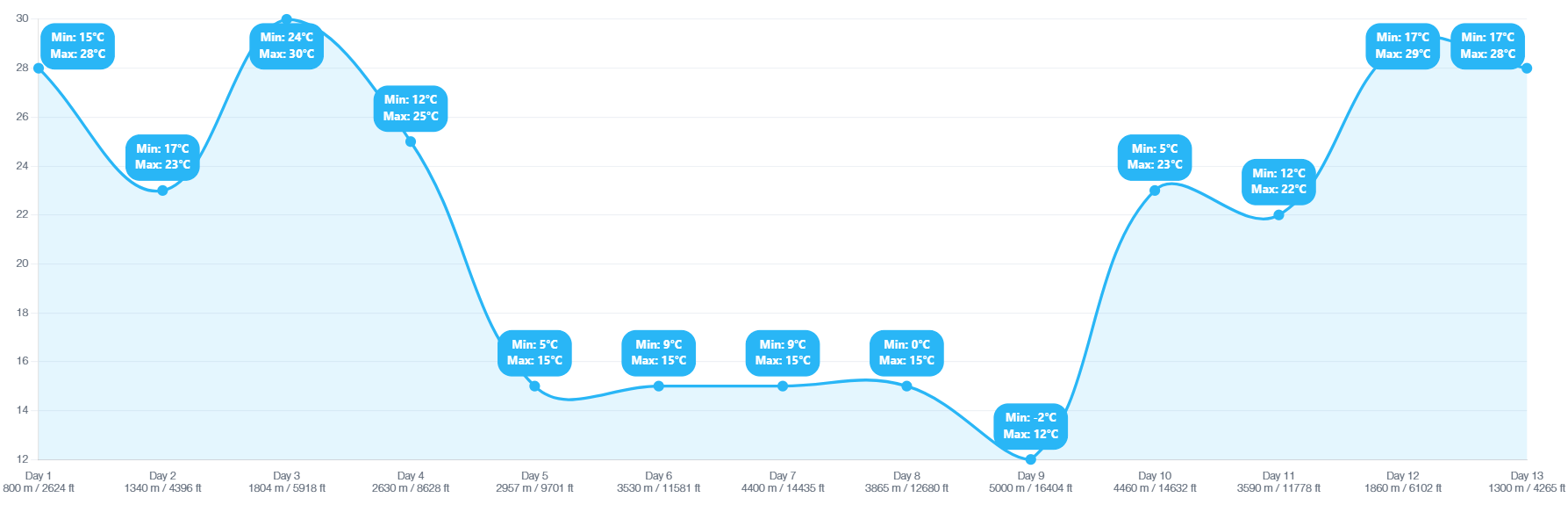
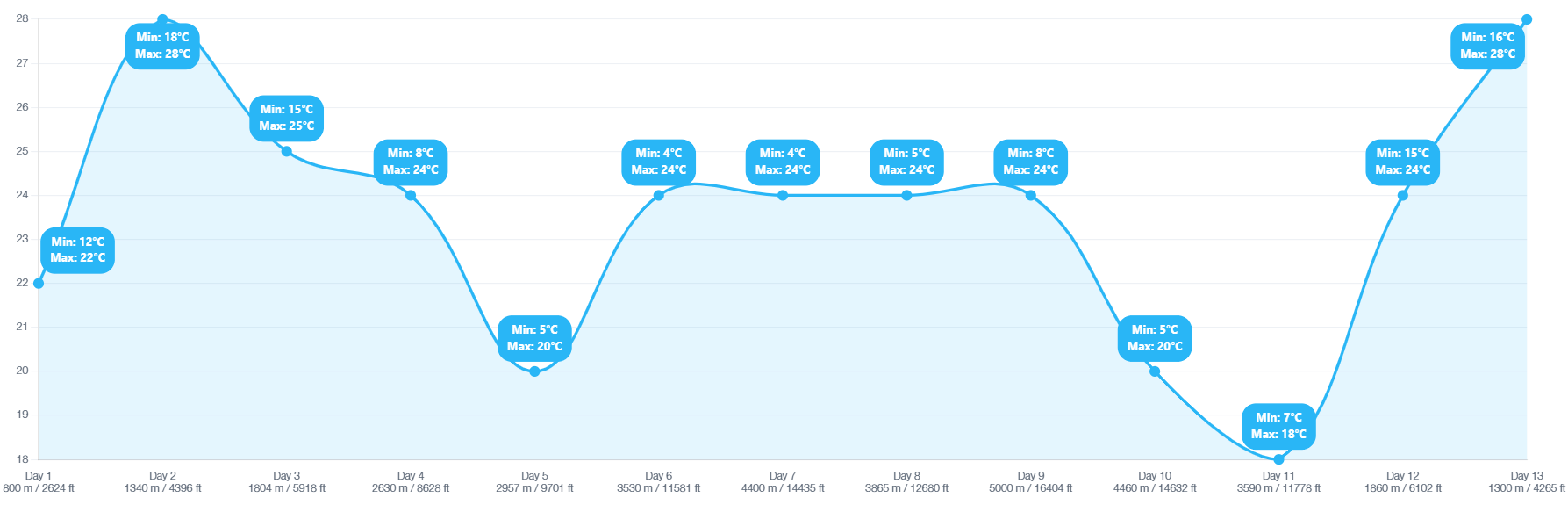
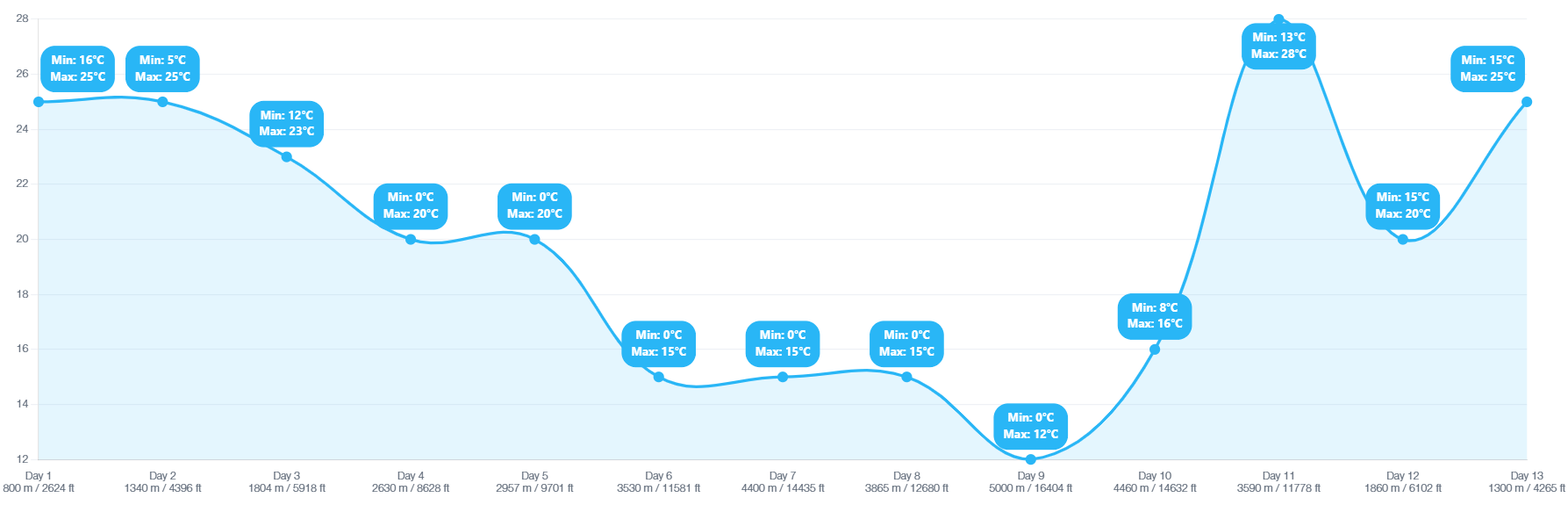
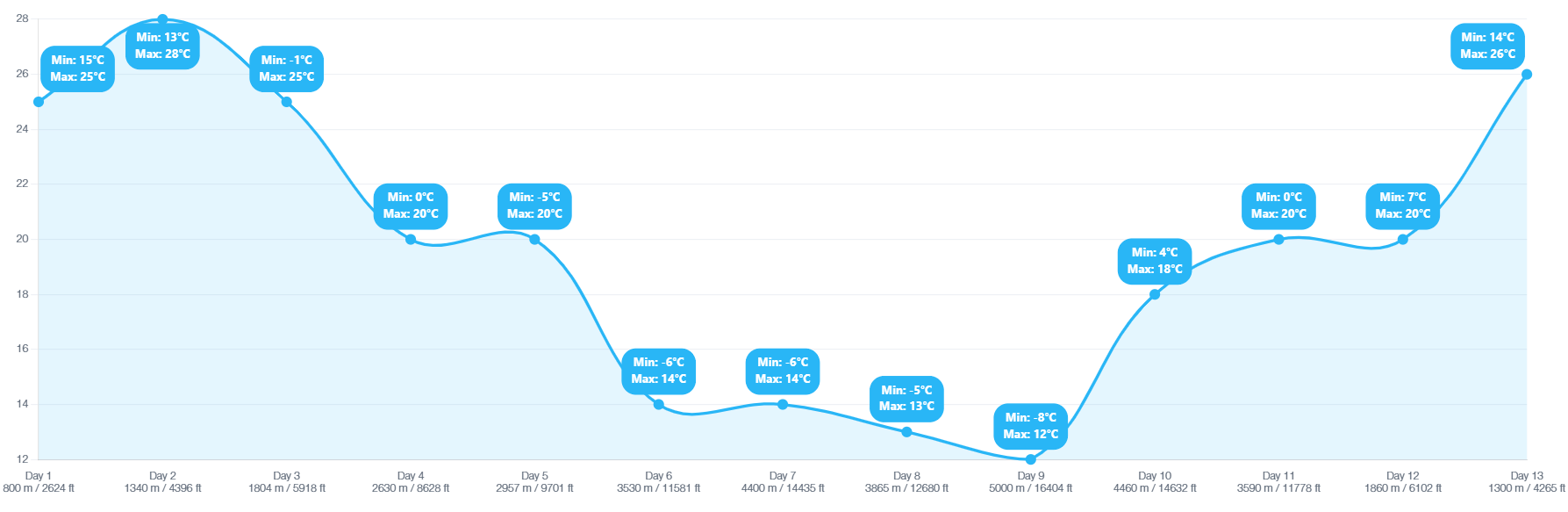
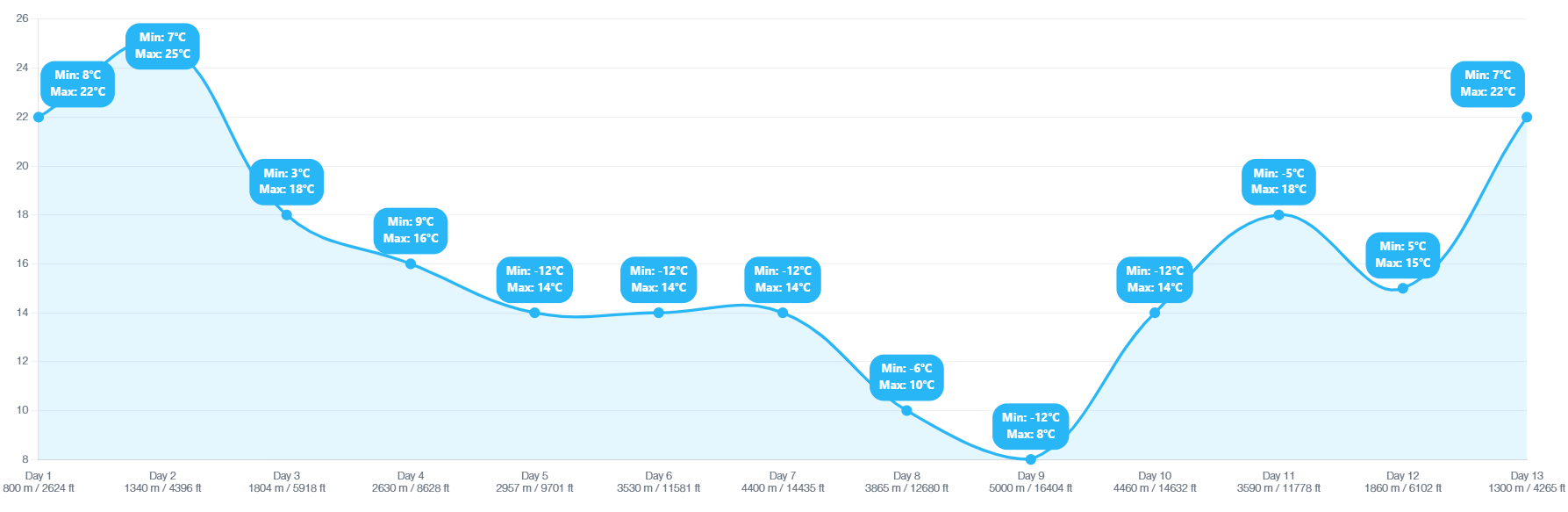
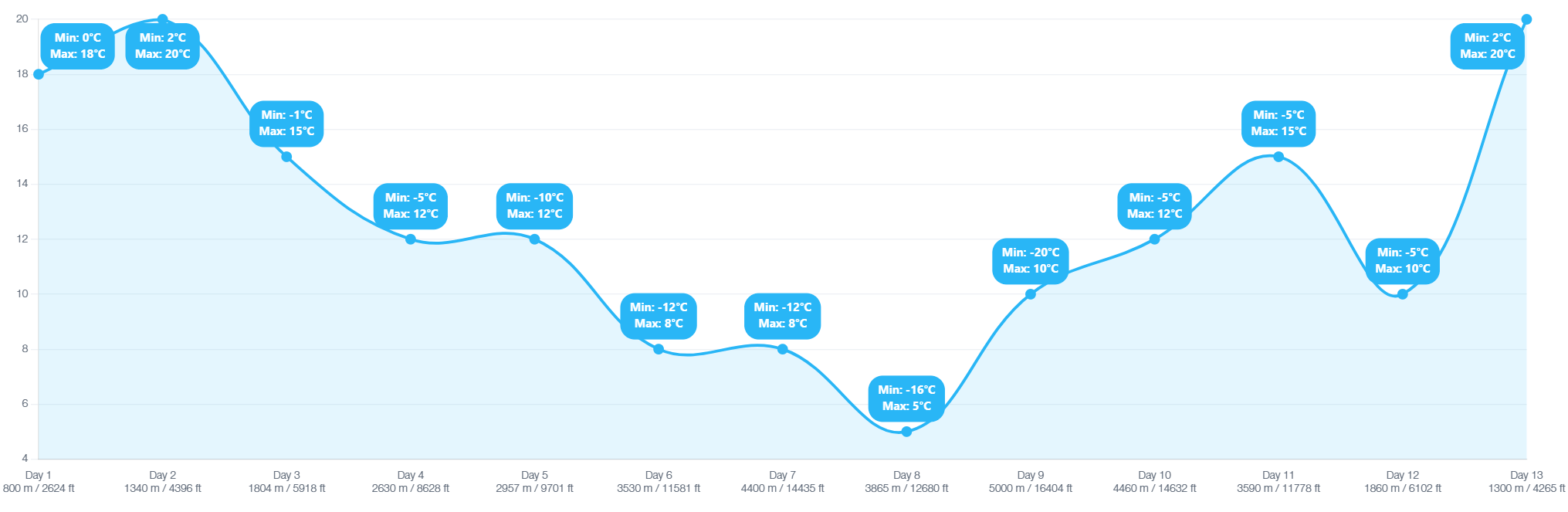
Temperature is for the reference only and may not be accurate
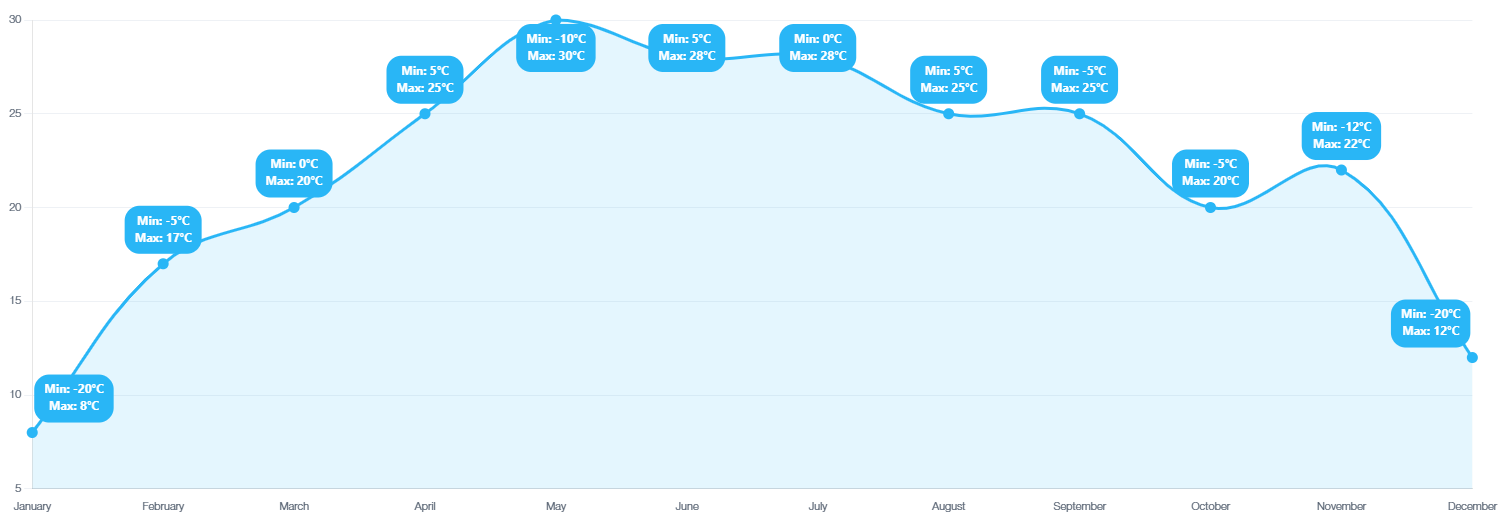
Temperature is for the reference only and may not be accurate
| Group Size (adult) | Price |
|---|---|
| 1-4 | $560 (Per Person) |
| 5-10 | $360 (Per Person) |
| 11-15 | $330 (Per Person) |
Layered Clothing: Lightweight, moisture-wicking base layers paired with warm insulating layers to handle the changing temperatures from Pokhara to High Camp.
Trekking Pants: Comfortable and quick-drying pants for long days of walking on the trail.
Shirts: Long-sleeve shirts for sun and wind protection, along with short-sleeve options for warmer lower sections of the trek.
Warm Hat and Gloves: Essential for cold mornings and evenings, especially at High Camp (3,550m) and Mardi Himal Base Camp (4,500m).
Hiking Boots: Sturdy, waterproof, and well-broken-in boots that give comfort and support on forest trails and rocky terrain.
Casual Footwear: Light sandals or flip-flops for relaxing at teahouses in the evenings.
Socks: Wool or synthetic trekking socks, with at least 3–4 thick pairs for the full 5 days.
Scarf/Buff: Useful for warmth and wind protection on the open ridge sections above Low Camp.
Daypack: A comfortable 20–30L backpack with a rain cover for carrying your daily essentials on the trail.
Trekking Poles: Highly recommended for steep climbs up to High Camp and long descents down to Sidding Village on Day 5.
Sleeping Bag Liner: A sleeping bag liner is recommended for extra warmth inside teahouse blankets. A full sleeping bag rated to -10°C is only necessary if trekking in the winter season (December–February).
Water Bottles: Bring 2 reusable water bottles (1 liter each). Also pack water purification tablets to save money and reduce plastic waste on the trail.
Sunglasses (UV400): The UV rays at Mardi Himal Base Camp (4,500m) are extremely strong. Good UV protection sunglasses are essential to protect your eyes.
Small Microfiber Towel: Teahouses do not always provide towels. A lightweight microfiber towel is compact and dries very quickly.
Cash (Nepali Rupees): There are no ATMs on the trail. Bring enough cash for hot showers, battery charging, WiFi, and personal snacks.
Snacks & Energy Bars: Pack nuts, chocolate, or energy bars for extra fuel between meals on longer days like Day 4.
Plastic Bags or Dry Bags: Keep your clothes and electronics dry inside your backpack on rainy days on the trail.
| Item | Description | Qty |
|---|---|---|
| Underwear | Breathable synthetic material (BYO) | 3 |
| Socks | Wool or synthetic trekking socks (BYO) | 4 |
| Base Layer Pants | Thermal bottoms — needed mainly for High Camp & Base Camp days | 1 |
| Base Layer Top | Thermal long-sleeve top — needed mainly for High Camp & Base Camp days | 1 |
| Trekking Shirts | Lightweight synthetic shirts (BYO or buy in Pokhara) | 2 |
| Trekking Pants | Lightweight and quick-dry (BYO or buy in Pokhara) | 2 |
| Hiking Boots | Well-broken-in waterproof trekking boots | 1 pair |
| Camp Shoes | Light sandals or flip-flops for teahouse evenings | 1 pair |
| Gloves | One thin pair for lower sections, one thick warm pair for High Camp & Base Camp | 2 pairs |
| Warm Hat | Fleece or wool hat to cover ears | 1 |
| Sun Hat | Wide-brim hat or cap for sun protection on open ridges | 1 |
| Fleece Jacket | Mid-layer fleece for cool mornings and evenings on the trail | 1 |
| Down Jacket | Lightweight insulated jacket — essential for cold nights at High Camp (3,550m) | 1 |
| Windbreaker/Rain Jacket | Lightweight waterproof and windproof outer shell jacket | 1 |
Personal Toiletries: Pack biodegradable soap, toothbrush, toothpaste, and any other essential personal care items to keep things eco-friendly on the trail.
Sun Protection: A high-SPF sunscreen (SPF 50+) is a must, UV rays are very strong at higher altitudes like Mardi Himal Base Camp (4,500m).
Lip Care: Use an SPF lip balm to protect your lips from dryness and cracking in the cold dry mountain air.
Small Microfiber Towel: Compact, lightweight, and quick-drying, perfect for teahouses that do not provide towels.
Basic First Aid Kit: Carry your personal medications, bandages, antiseptic wipes, and blister plasters. Consult your doctor about altitude sickness medicine (Diamox) before the trek.
Hand Sanitizer & Wet Wipes: Very handy for staying clean when water is limited on the higher sections of the trail above Low Camp.
Camera or Smartphone: The views of Machhapuchhre, Annapurna South, and Mardi Himal are absolutely stunning, bring your best camera to capture every unforgettable moment.
Extra Memory Cards & Batteries: Cold temperatures at high altitude drain batteries very quickly. Always carry spare batteries so you never miss a great shot at Base Camp.
Power Bank: A fully charged power bank is essential as electricity and charging points are very limited above Forest Camp on the trail.
Headlamp or Torch: Absolutely essential for the early morning start on Day 4 when you hike to Mardi Himal Base Camp before sunrise.
At Himalaya Hub, we are not just a trekking company – we are passionate mountain lovers who want to share the magic of the Himalayas with the world. Here’s why trekkers trust us:
All our guides are licensed, experienced, and from Nepal
First aid trained guides, emergency protocols, and constant support
We practice Leave No Trace principles and support local communities
We are always reachable before, during, and after your trek
We can adjust the itinerary, pace, or route based on your needs
Transparent pricing with everything clearly outlined
The Mardi Himal Trek can be done in most months of the year. However, some seasons offer a much better experience than others.
🌸 Spring (Mar, Apr, May) – Best Time
This is the most popular and most beautiful season for Mardi Himal Trek. The rhododendron forests explode in vibrant red, pink, and white blooms, making the trail look like a fairy tale. The weather is warm, stable, and visibility is excellent.
🍂 Autumn (Sep, Oct, Nov) – Best Time
Autumn is another prime trekking season. The monsoon rains have washed the air clean, leaving the skies crystal clear and the mountains stunningly visible. The weather is stable and temperatures are comfortable.
❄️ Winter (Dec, Jan, Feb) – Good but Cold
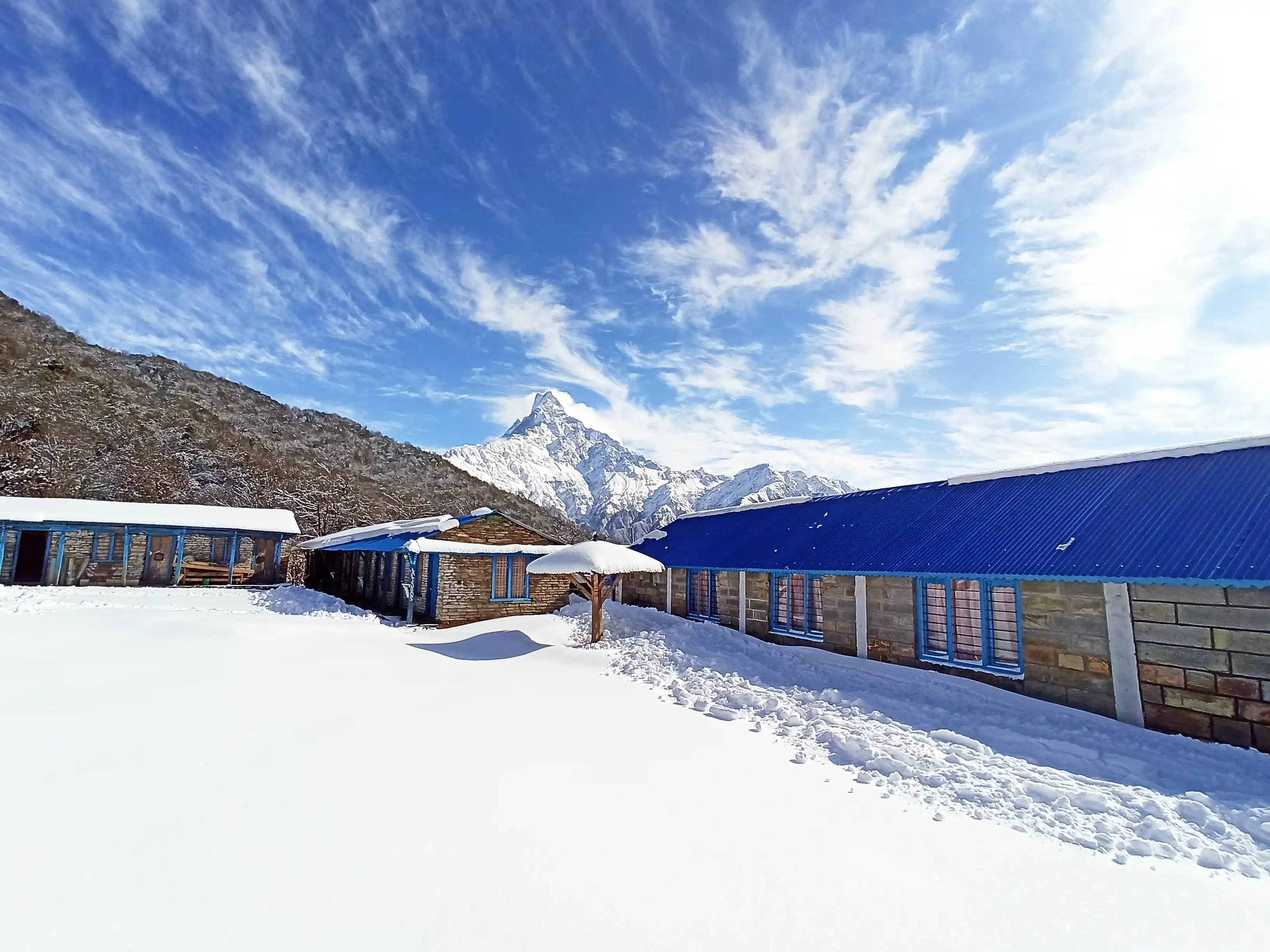
Winter trekking is possible but expect cold temperatures, especially at High Camp and Base Camp. Snow may be present on higher sections. It's quieter with fewer trekkers and has its own magical, snow-dusted beauty.
🌧️ Monsoon (Jun, Jul, Aug) – Not Recommended
The monsoon brings heavy rainfall, which makes trails slippery and muddy. Mountain views are often blocked by clouds. We generally do not recommend trekking Mardi Himal during this period unless you specifically enjoy rain trekking.
Book your Mardi Himal Trek for October–November (autumn) or March–April (spring) for the best experience. These months offer the best combination of weather, visibility, trail conditions, and overall trekking enjoyment.
To trek in the Mardi Himal area, you need two permits:
“Good News: When you book with Himalaya Hub, we handle all permit arrangements for you. No paperwork stress!”
The Mardi Himal trek is more than a journey through the mountains – it is also an opportunity to experience the local culture and way of life. As the trail winds through the lower sections, trekkers pass through Gurung and Magar villages, where traditional lifestyles, customs, and genuine local hospitality are still very much part of everyday life.
The Gurung community, historically known for its bravery and strong connection with the Gurkha tradition, has a rich cultural heritage shaped by Buddhist and Hindu beliefs. Their traditional clothing, dances, festivals, and rituals add a distinct cultural character to the journey. Along the trail, many teahouses are run by local families, giving trekkers a chance to sit with their hosts, hear about village life, and experience their customs firsthand. These teahouses also serve comforting homemade Nepali dishes such as dal bhat, dhido, and fresh organic vegetables.
Compared with some of Nepal’s more commercialized trekking routes, the Mardi Himal 5 Days Trek still offers a more authentic experience. You are not simply walking through villages as a visitor; the warm interactions with local families and the slower pace of mountain life make you feel connected to the community along the trail.
The Mardi Himal trek takes you through several ecological zones, making the journey especially rewarding for anyone who enjoys nature and wildlife. As the altitude changes, the landscape also changes, bringing different types of vegetation and wildlife along the trail.
What makes the Mardi Himal trek special is the variety you experience within a relatively short distance. In just a week-long journey, the trail takes you through forests, rhododendron-covered hills, and high alpine landscapes, offering a compact glimpse of Nepal’s remarkable biodiversity.
The Mardi Himal trek is generally considered a moderate-level trek, making it manageable for trekkers who have a reasonable level of fitness. Most days involve around 5–7 hours of walking, with a mix of steady climbs, steep ascents, and descents along the trail. Since the trek reaches an altitude of about 4,500 meters, there is a mild risk of altitude sickness, but it can usually be managed with proper acclimatization and a sensible pace.
You do not need previous trekking or mountaineering experience to take on the Mardi Himal trek. Even beginners can enjoy the route if they are physically prepared and comfortable with long days of walking. In the weeks before the trek, it is helpful to build your fitness through regular walking, cardio exercises, and leg-strength training. This preparation can make the uphill sections easier and help you feel more comfortable throughout the journey.
The Mardi Himal trek has a good network of teahouses and lodges along the route, and the accommodation has improved quite a bit over the years. Most places offer simple but comfortable rooms, generally with twin beds and shared bathrooms. As you move toward the higher camps, the facilities become more basic, but they still provide a practical place to rest after a long day on the trail.
Food is another part of the trekking experience, with a combination of traditional Nepali meals and familiar international dishes available at the teahouses. After several hours of walking, trekkers can enjoy filling and comforting meals such as:
The food and accommodation may become simpler at higher elevations, but the warm meals and basic comforts make the teahouses an important part of the Mardi Himal trekking experience.
Staying connected during the Mardi Himal trek is fairly manageable, especially in the lower villages. Most villages along the trail have access to electricity, so trekkers can charge their phones, cameras, and other electronic devices. However, charging services may come with a small extra fee, particularly at higher elevations.
Mobile network coverage is available across many parts of the trail through providers such as NTC and Ncell. The signal can become weaker as you gain altitude, especially around High Camp, where connectivity is more limited.
Many teahouses also provide Wi-Fi, allowing trekkers to stay in touch with family or friends when needed. However, because the trail is located in a remote mountain area, the connection can be slow and may not always be reliable.
Keeping yourself properly hydrated is important throughout the Mardi Himal trek, especially as you reach higher elevations. Safe drinking water is available along the route, but it is a good idea to carry a reusable 1–2 liter water bottle or an insulated flask so you can refill as needed.
Water refill options along the trail include:
Since the Mardi Himal trail passes through a sensitive Himalayan environment, trekkers are encouraged to avoid single-use plastic bottles whenever possible. Using boiled or purified water not only gives you a safer way to stay hydrated but also helps reduce plastic waste and supports more responsible trekking in the Annapurna region.
Small choices like carrying a reusable bottle can make a real difference in keeping the mountain trails clean and protecting the natural environment for future generations.
The Mardi Himal short trek brings together stunning mountain scenery, local culture, and a relatively accessible trekking experience. While some of the popular routes in the Annapurna region can become busy with trekkers, Mardi Himal offers a quieter and more peaceful trail. It is a good option for those who want to enjoy the mountains at a slower pace and have a more personal experience along the way.
Another advantage is that the trek is time- and cost-effective. Compared with longer journeys such as the Annapurna Circuit or Everest Base Camp trek, Mardi Himal requires less time and simpler logistics while still offering impressive views of the Himalayan mountains.
For trekkers looking for a shorter adventure without giving up the beauty and atmosphere of the Himalayas, the Mardi Himal trek offers a balanced combination of nature, culture, and mountain views.
As the Mardi Himal trek continues to attract more visitors, responsible trekking becomes increasingly important. Simple and thoughtful choices from trekkers can help protect the natural environment while also supporting the communities along the trail.
Here are some easy ways to trek more responsibly:
These small efforts can have a lasting impact. By following responsible trekking practices, we can help keep the Mardi Himal trail clean, natural, and welcoming for future generations.
Both the Mardi Himal trek and the Classic Poon Hill trek offer their own distinct experiences in the Annapurna region. Mardi Himal is known for its impressive mountain scenery and quieter trail, while Poon Hill is especially popular for its spectacular sunrise views over the Himalayas. On either trek, you can enjoy beautiful views of the Annapurna range while experiencing the traditional lifestyle and culture of the Gurung and Magar communities.
In terms of duration, the Poon Hill trek usually takes around 3 days from Pokhara, whereas the Mardi Himal trek takes about 5 days. If you have around 10 days available, you can also make the journey longer by combining the Mardi Himal trek with a continuation toward Annapurna Base Camp.
For those planning a 5-day Mardi Himal adventure, Nepal Wilderness Trekking offers the trek package at $560 per person. The package includes a guide, required permits, accommodation, meals throughout the trek, and transportation to and from the trekking starting point. There are no hidden costs, although the final price can vary depending on the number of people in the group.
With the main trekking arrangements covered in advance, you can focus on enjoying the trail, mountain scenery, and local culture without having to manage additional costs along the way.
Having comprehensive travel insurance is strongly recommended for anyone planning the Mardi Himal trek. Trekking in the mountains comes with changing weather and unpredictable trail conditions, so having the right coverage can provide important protection throughout the journey.
Your travel insurance should ideally cover:
Because mountain weather and trail conditions can change quickly, it is important to check your policy carefully and make sure it covers the activities and elevations included in your trek. The right insurance gives you added financial protection and greater peace of mind while exploring the Mardi Himal region.
The Mardi Himal Trek map shows a circular trail that starts from Pokhara, the gateway to the Annapurna region. A short drive takes you to Kande (1770m), where the adventure begins. The trail then moves up to Pitam Deurali (2100m), Forest Camp (2600m), Low Camp, High Camp (3540m), and finally Mardi Himal Base Camp (4450m).
The return route goes down to Sidding Village (1700m) before driving back to Pokhara. This loop offers an amazing variety of scenery from subtropical forests to snow-covered ridges.
Each section of the Mardi Himal trekking itinerary gives a new perspective of the Himalayas. The view from High Camp and Base Camp is among the most dramatic in Nepal, showing a complete panorama of the Annapurna Range.

 -4°C
-4°C



Chat with us — real trekking experts, not bots.


Member Since 2025




Rhododendron Ridge Walk Was Magical