
15 Days
Specific Tour
20 people
English
The Everest Base Camp Trek is one of the most famous trekking journeys in the world. This classic Himalayan adventure takes you deep into the Khumbu region, following the same trails used by legendary mountaineers heading toward Mount Everest, the world’s highest peak.
This trek is not just about reaching Everest Base Camp. It is about walking through Sherpa villages, crossing high suspension bridges, exploring ancient monasteries, and slowly gaining height while surrounded by some of the tallest mountains on Earth. Every day feels different, and every step brings you closer to the heart of the Himalayas.
At HimalayaHub, we run this trek as a 15-day well-paced journey so your body has enough time to adjust to altitude while still enjoying the experience fully. Whether this is your first high-altitude trek or one of many adventures, this trip is designed to be safe, rewarding, and deeply memorable.
The Everest Base Camp trek is a classic Himalayan journey that blends breathtaking mountain scenery with rich Sherpa culture. It takes you deep into the Everest region, where snow-covered peaks, peaceful monasteries, and traditional villages shape everyday life in the mountains. This trek is not only about reaching the base of the world’s highest mountain, but also about enjoying the journey that leads you there.
Our 15-day Everest Base Camp trek reaches an altitude of 5,364 meters at Everest Base Camp. Along the way, you’ll enjoy incredible views of Mount Everest, Lhotse, Nuptse, Ama Dablam, Pumori, Lobuche Peak, and many other Himalayan giants. The scenery changes every day, from green valleys and rivers to rocky trails and icy glaciers.
The adventure begins with a scenic mountain flight to Lukla, the gateway to the Everest region. Flight operations depend on the season. During non-peak months such as January, February, June, July, August, and December, flights usually operate directly from Kathmandu and take around 30 to 35 minutes, depending on weather conditions. In peak trekking seasons like March, April, May, September, October, and November, most flights are routed through Ramechhap (Manthali Airport) due to heavy air traffic in Kathmandu. In these months, travelers drive about 5 to 6 hours from Kathmandu to Ramechhap, followed by a short 20-minute mountain flight to Lukla. No matter where the flight starts, the journey offers stunning aerial views of rolling hills, deep valleys, and snow-covered Himalayan peaks.
From Lukla, the trek follows the Dudh Koshi River, crossing suspension bridges and passing through villages like Phakding before entering Sagarmatha National Park. The trail gradually climbs to Namche Bazaar, the main hub of the Everest region and an important acclimatization stop. After spending a rest day here, the trek continues to Tengboche, home to the famous monastery, and then onward to Dingboche and Lobuche, where the landscape becomes more rugged and dramatic.
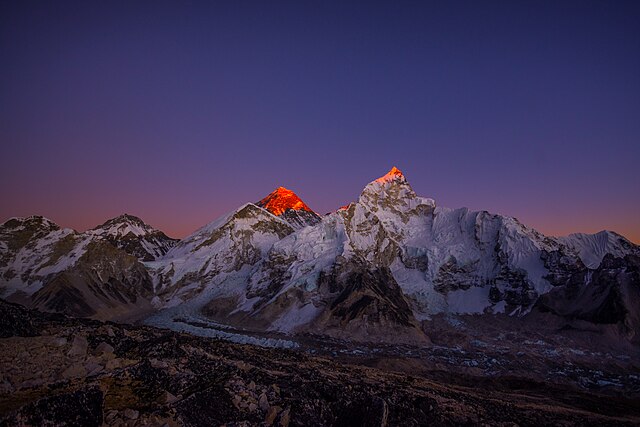
The highlight of the journey is the walk to Everest Base Camp, following the edge of the Khumbu Glacier. Standing at base camp is a proud and emotional moment for many trekkers. The next morning, a hike to Kala Patthar offers one of the best close-up views of Mount Everest, especially at sunrise. After this, the trail gradually descends back to Lukla, marking the end of an unforgettable Himalayan adventure.
The Everest Base Camp trek is challenging mainly because of altitude, but it does not require technical climbing skills. With proper acclimatization, a steady pace, and experienced guides, it becomes a rewarding journey for trekkers of all experience levels.
Our standard Everest Base Camp trek itinerary is carefully planned, but mountain travel is never fully predictable.
Weather conditions, flight delays or cancellations, natural events, health conditions of trekkers, or changes in government regulations can sometimes affect the schedule. When this happens, our team focuses on finding the best and safest alternative so the trek can continue smoothly whenever possible.
We kindly ask for your cooperation and flexibility in such situations. This mindset is an important part of trekking in remote Himalayan regions.
We strongly recommend adding at least one or two spare days after your trek. Flights to and from Lukla are often delayed due to weather, and having buffer days helps you avoid stress with international travel plans. These extra days can also be used for sightseeing in Kathmandu or short adventure activities if everything runs on time.
Flights to Lukla vary depending on the season, the number of travelers, and airline flight management decisions. Because Lukla is a mountain airport with a short runway, flight operations are closely tied to weather and visibility conditions.
March, April, May, September, October, and November
During peak trekking months, most Lukla flights operate from Ramechhap (Manthali Airport) instead of Kathmandu due to heavy air traffic. Travelers first drive from Kathmandu to Ramechhap, which takes about 5 to 6 hours, usually starting early in the morning. From Ramechhap, a short 20-minute mountain flight takes you to Lukla. Although the journey is longer on the ground, this routing helps reduce flight delays during busy seasons.
January, February, June, July, August, and December
In the quieter months, Lukla flights are more likely to operate directly from Kathmandu Airport. These flights typically take around 30 to 35 minutes, depending on weather conditions. Flying from Kathmandu reduces road travel time and makes the journey more convenient when air traffic is lower.
Flight delays or cancellations can happen at any time due to weather changes, poor visibility, runway conditions, or air traffic congestion. This is a normal part of mountain aviation in the Everest region. For this reason, flexible travel plans and extra buffer days are highly recommended when planning the Everest Base Camp trek.
Everest Base Camp weather changes quickly due to high altitude and mountain conditions. Mornings are often clear, while afternoons may bring wind, clouds, or light snow. Temperatures drop sharply as you ascend, with freezing conditions common near Base Camp, especially at night. Spring and autumn offer the most stable weather and clear views, while winter is extremely cold and monsoon season brings rain and clouds. Check the live weather updates below for current temperature, wind, and forecast before trekking.

 -13°C
-13°C




This itinerary gives a clear day-by-day outline of the Everest Base Camp Trek. The pace is steady, with planned acclimatization days to help your body adjust to the altitude.
Our Everest Base Camp Trek package is planned to keep everything simple, clear, and worry-free. Most essential services are included, so you can focus fully on the trekking experience.
Some personal, optional, and situational expenses are not included in the Everest Base Camp Trek cost, as they vary by individual preference and circumstances.
We offer fair and transparent pricing based on group size. The cost includes professional support, safety, and responsible tourism practices.
| Group Size | Price Per Person (USD) |
| 1 Person | $1,840 |
| 2–5 Pax | $1,790 |
| 6–11 Pax | $1,680 |
| 12–20 Pax | $1,570 |
Prices may change slightly based on flight costs, accommodation availability, and seasonal demand. For private trips or custom plans, feel free to contact us.
We have daily trips available on a private basis. To customize a group tour, please feel free to write us.

The Everest Base Camp Trek takes you from the lowlands of Kathmandu to the soaring heights of the Himalayas. Understanding the daily elevation gain is essential for proper acclimatization and preparation. Below is a visual altitude profile of the trek, showing the elevation changes across each day of the itinerary.
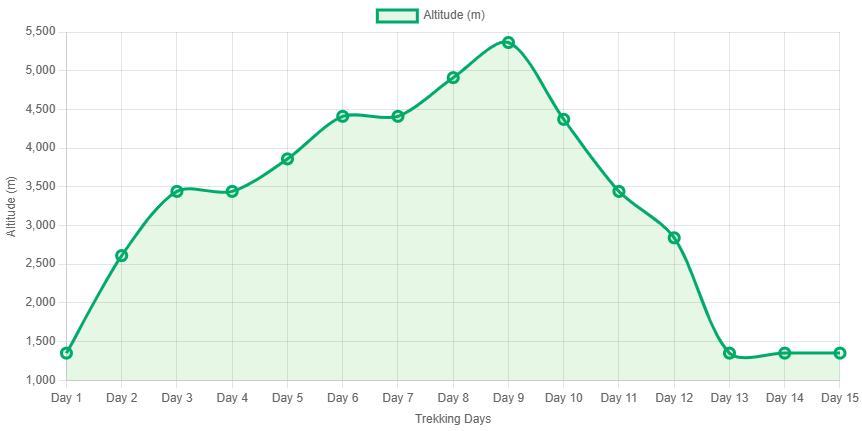
You can switch between meters and feet and hover over each point to see the specific location and its altitude. This helps you get a better sense of the trekking journey from start to finish.
Packing smart helps you stay warm, safe, and comfortable on the trail. This list covers the essentials most trekkers need. You can adjust quantities based on season and personal preference.
We believe trekking should benefit both travelers and the mountains they walk through.
When you trek with HimalayaHub, you’re not just visiting the Himalayas—you’re supporting the people who call them home.

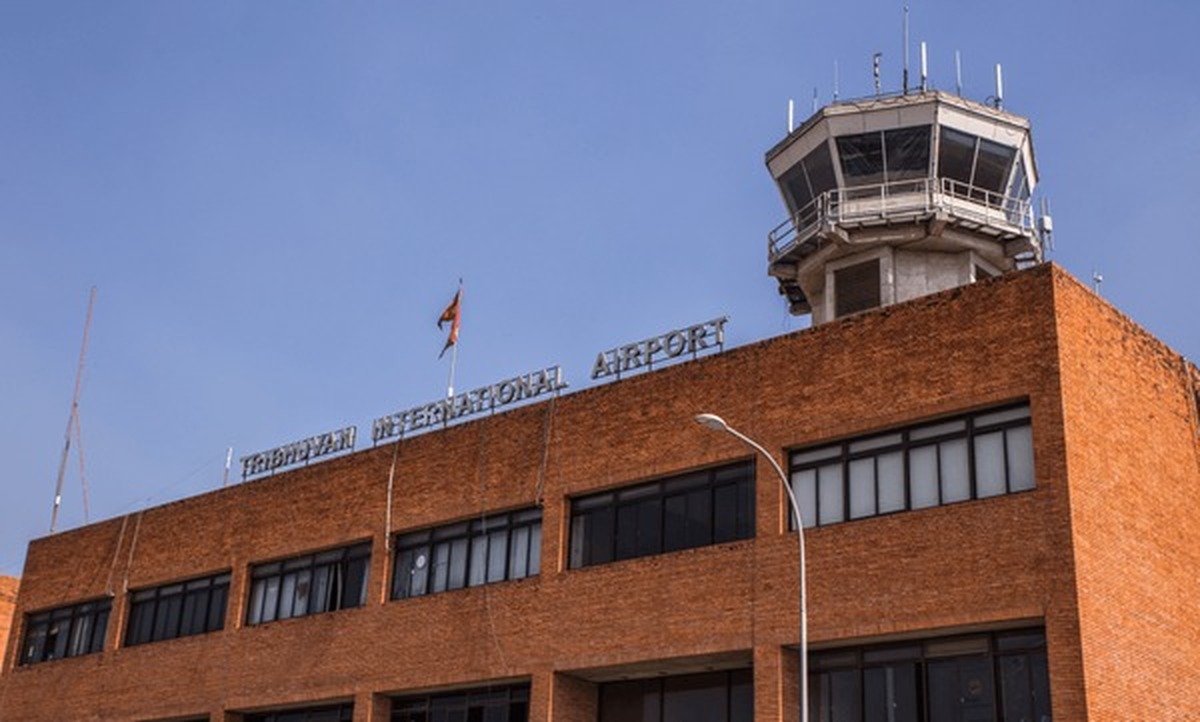
A representative from Himalaya Hub Adventure will welcome you at Tribhuvan International Airport and transfer you to your hotel. After some rest, you will meet our team for a detailed trip briefing. This is a good time to ask questions, meet your guide, and prepare for the trek ahead. If you arrive late at night, the briefing will be arranged the following day. Any remaining booking or payment formalities will also be completed during the meeting.
Accommodation: Hotel Altitude: 1,350 m
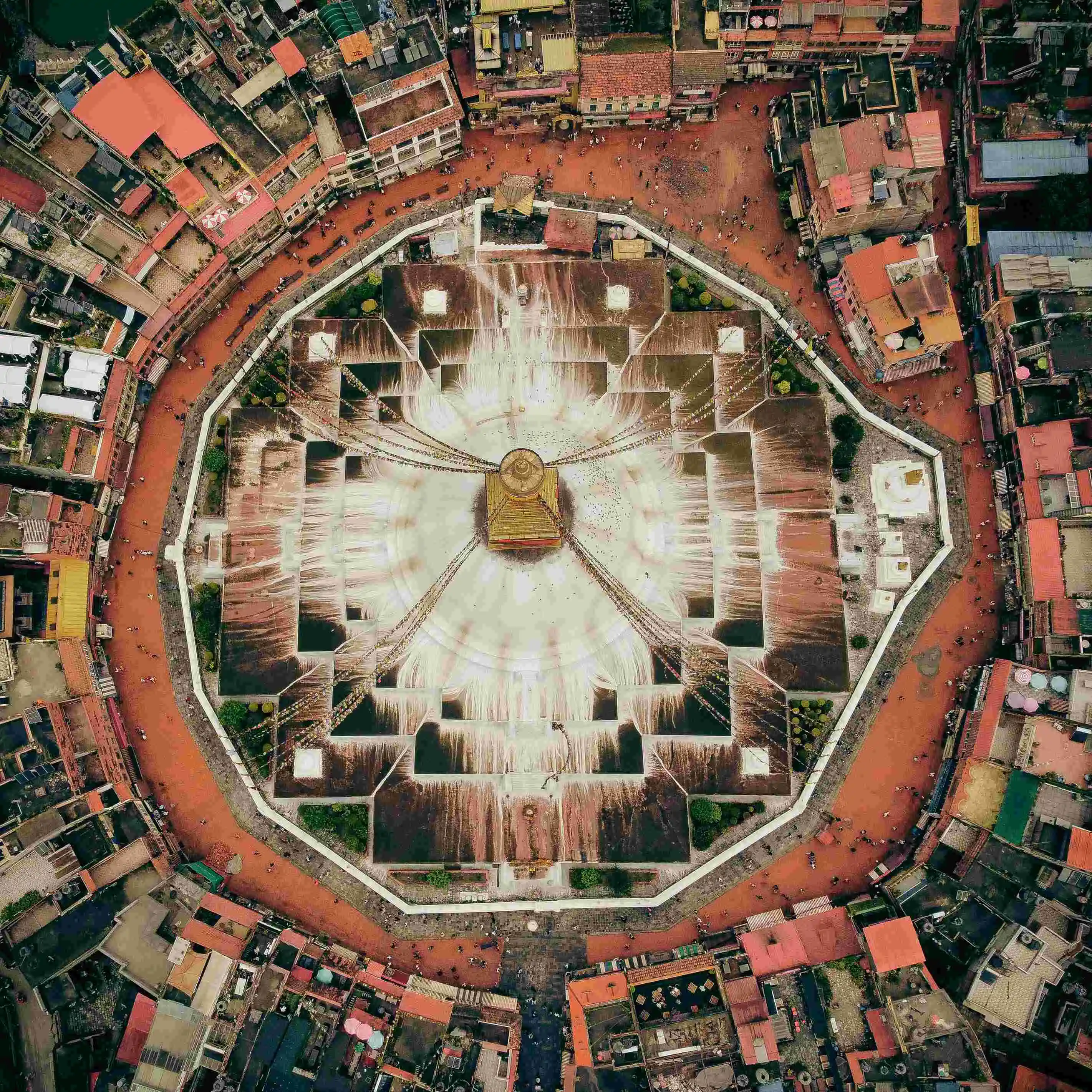
After breakfast, enjoy a guided tour of Kathmandu Valley’s UNESCO World Heritage Sites. You will visit Swayambhunath (Monkey Temple), Patan Durbar Square, Pashupatinath Temple, and Boudhanath Stupa. These cultural landmarks offer a deeper look into Nepal’s history, religion, and daily life. In the evening, return to the hotel and make final preparations for the trek.
Accommodation: Hotel Meals: Breakfast Altitude: 1,350 m

An early morning flight takes you to Lukla, the gateway to the Everest region. After landing, meet your trekking crew and begin the walk toward Phakding. The trail gently descends through small Sherpa villages, prayer wheels, and mani stones. Views of surrounding hills and the sacred Mt. Khumbila make this a pleasant first trekking day.
Accommodation: Guesthouse / Teahouse Meals: Breakfast, Lunch, Dinner Altitude: 2,840 m
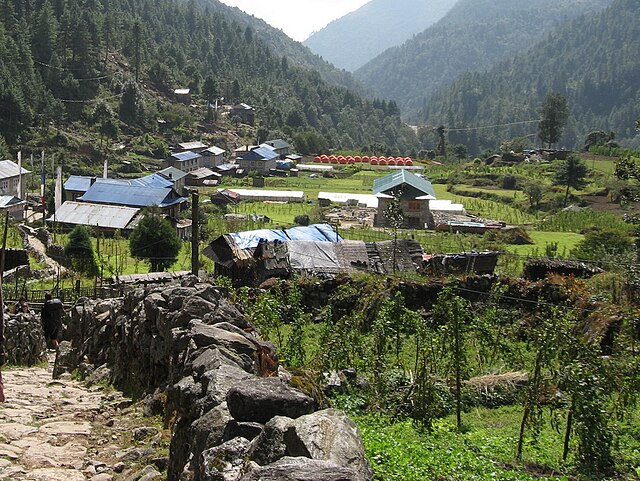
The trail follows the Dudh Koshi River, crossing several suspension bridges along the way. You pass through villages like Monjo before entering Sagarmatha National Park. After crossing the famous Hillary Suspension Bridge, the trail climbs steadily toward Namche Bazaar. If the weather is clear, you may catch your first distant view of Mount Everest before reaching town.
Accommodation: Guesthouse / Teahouse Meals: Breakfast, Lunch, Dinner Altitude: 3,441 m
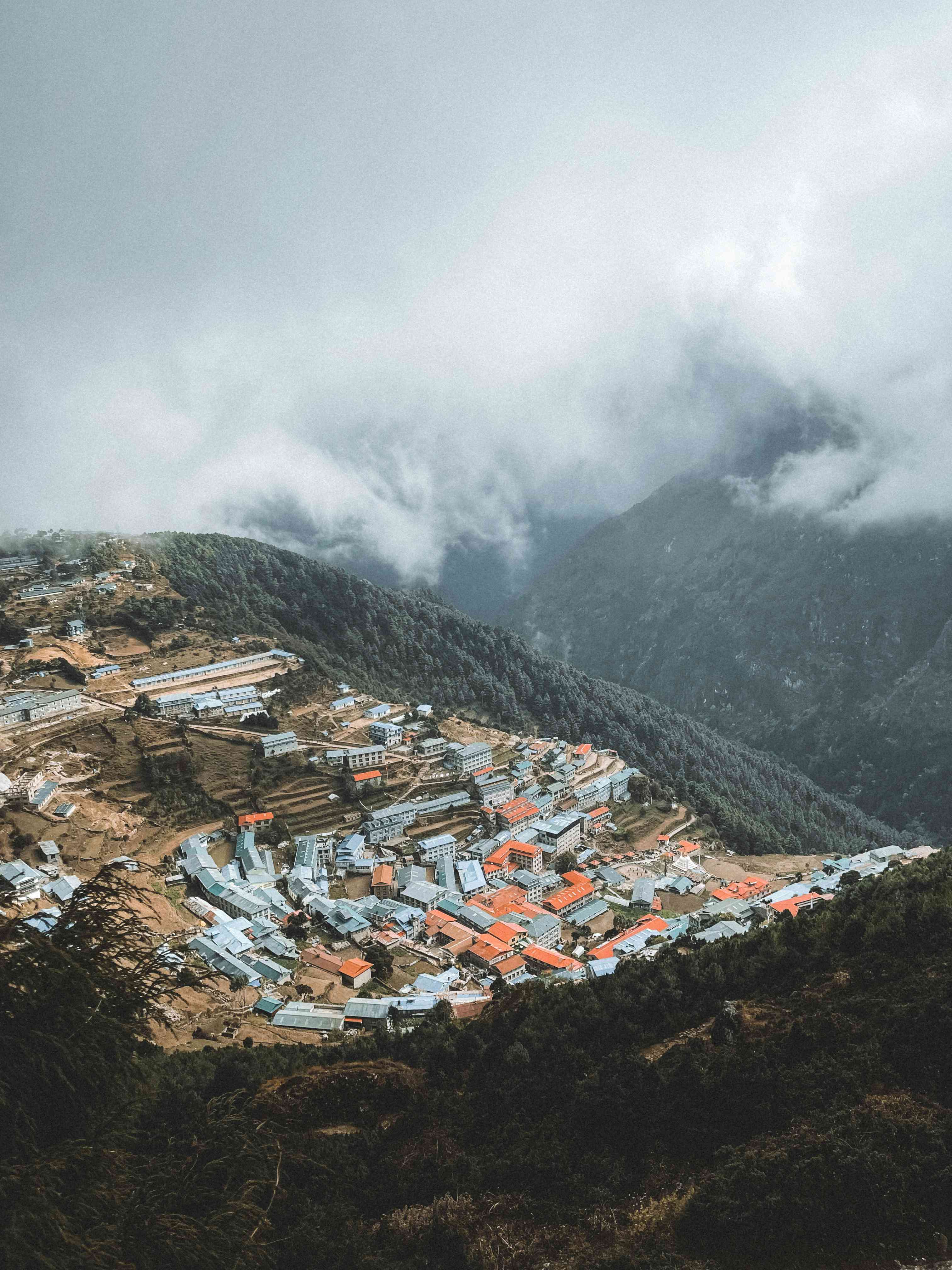
This rest day helps your body adjust to the altitude. You can explore Namche Bazaar, visit local shops, bakeries, and cafes, or hike to nearby viewpoints such as Everest View Hotel or surrounding villages. Namche is the main hub of the Everest region and offers great insight into Sherpa culture and mountain life.
Accommodation: Guesthouse / Teahouse Meals: Breakfast, Lunch, Dinner Altitude: 3,441 m
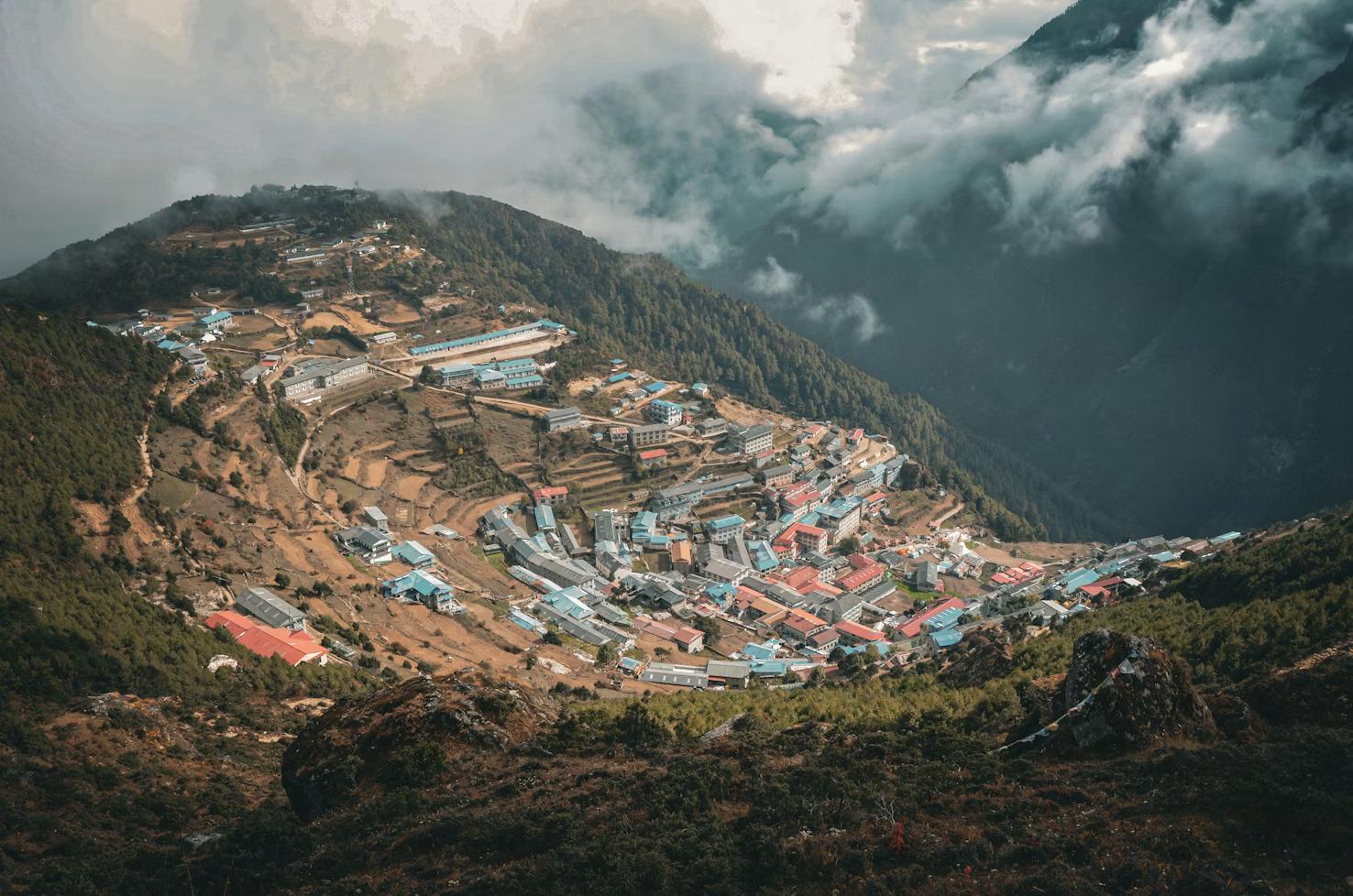
Leaving Namche, the trail follows scenic ridges with stunning views of Everest, Lhotse, Nuptse, and Ama Dablam. After descending to the river, you climb uphill to Tengboche. The village is home to the famous Tengboche Monastery, the largest monastery in the Everest region. If timing allows, you can observe an evening Buddhist prayer ceremony.
Accommodation: Guesthouse / Teahouse Meals: Breakfast, Lunch, Dinner Altitude: 3,860 m
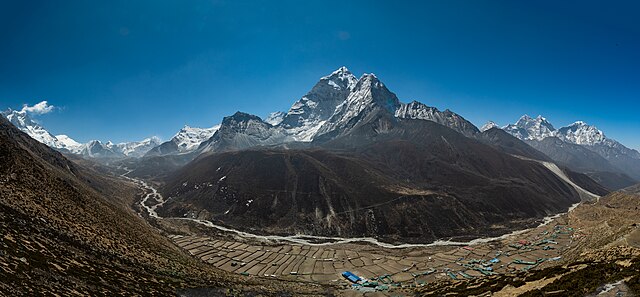
The trail descends through forests of rhododendron and conifer before crossing the Imja River at Pangboche. From here, the landscape becomes more open and alpine. As you move higher, stone walls protect crops from strong winds. Dingboche sits in a wide valley surrounded by towering peaks.
Accommodation: Guesthouse / Teahouse Meals: Breakfast, Lunch, Dinner Altitude: 4,400 m
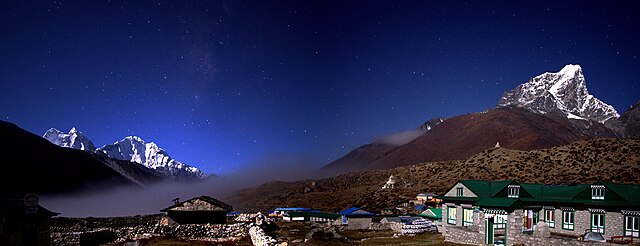
Another important rest day for acclimatization. You will take short hikes to nearby ridges, gaining elevation during the day and returning to Dingboche to sleep. From the viewpoints, enjoy panoramic views of major Himalayan peaks, including Lhotse, Makalu, Cho Oyu, and surrounding valleys.
Accommodation: Guesthouse / Teahouse Meals: Breakfast, Lunch, Dinner Altitude: 4,730 m
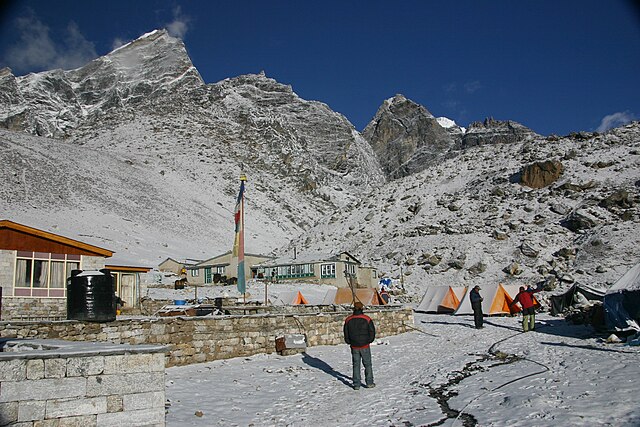
The trail climbs gradually along the edge of the Khumbu Glacier. Along the way, you pass memorials dedicated to climbers who lost their lives on Everest. The landscape becomes more rugged and dramatic, with close-up views of snow-covered peaks and glaciers.
Accommodation: Guesthouse / Teahouse Meals: Breakfast, Lunch, Dinner Altitude: 4,900 m

Today is one of the most exciting days of the trek. Walk to Gorak Shep, then continue toward Everest Base Camp. Standing at the base of the world’s highest mountain is a powerful and unforgettable moment, surrounded by ice formations and towering Himalayan giants. After spending time at base camp, return to Gorak Shep for the night.
Accommodation: Guesthouse / Teahouse Meals: Breakfast, Lunch, Dinner Altitude: 5,363 m

Early in the morning, hike to Kala Patthar, the best viewpoint for close-up views of Mount Everest, especially at sunrise. After descending back to Gorak Shep for breakfast, continue downhill to Pheriche. The lower altitude makes walking easier and more comfortable.
Accommodation: Guesthouse / Teahouse Meals: Breakfast, Lunch, Dinner Altitude: 4,200 m
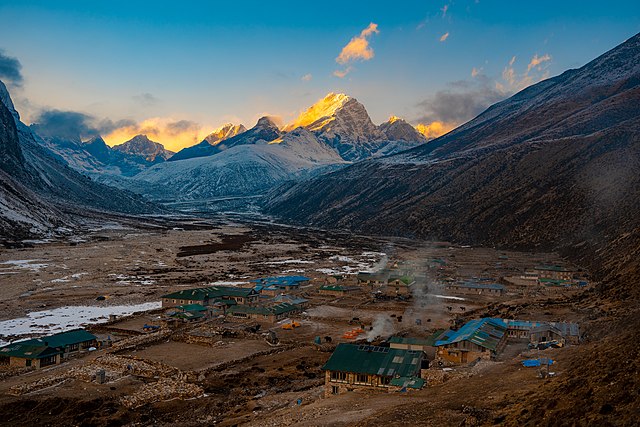
The trail descends through familiar villages, forests, and river crossings. As you lose altitude, breathing becomes easier and the surroundings feel greener. Enjoy final mountain views before reaching Namche Bazaar again.
Accommodation: Guesthouse / Teahouse Meals: Breakfast, Lunch, Dinner Altitude: 3,540 m
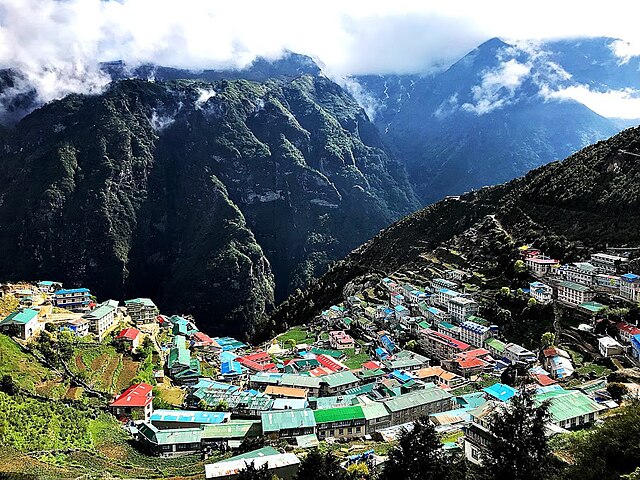
Your final trekking day takes you back to Lukla. Retrace your steps across suspension bridges and villages while reflecting on the journey. In Lukla, celebrate the successful completion of your Everest Base Camp trek with your trekking team.
Accommodation: Guesthouse / Teahouse Meals: Breakfast, Lunch, Dinner Altitude: 2,840 m
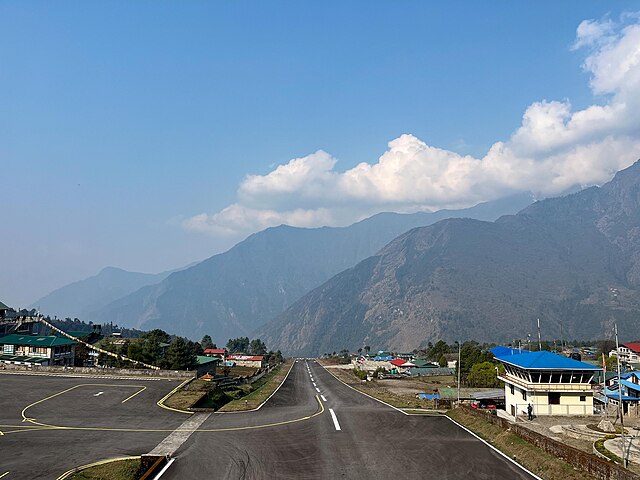
Take an early morning flight back to Kathmandu. After checking into your hotel, enjoy free time to rest, explore the city, or shop for souvenirs. In the evening, enjoy a farewell dinner.
Accommodation: Hotel Meals: Breakfast, Dinner Altitude: 1,350 m
Our team will transfer you to the airport for your onward journey or next adventure. Your Everest Base Camp trek may be over, but the memories will stay with you forever.
Meals: Breakfast
The Everest Base Camp Trek is a high-altitude trekking journey in Nepal that takes you to the base of Mount Everest at 5,364 meters. It follows the classic route through Sherpa villages, monasteries, suspension bridges, and glacial valleys in the Khumbu region.
The standard Everest Base Camp trek usually takes around 12 to 15 days, depending on the itinerary, acclimatization days, and flight schedules to and from Lukla.
The trek starts with a flight to Lukla and officially begins from there. It ends back in Lukla after reaching Everest Base Camp and returning via the same trail.
Weather at Everest Base Camp changes quickly. Days can be sunny and pleasant, while nights are cold, especially above 4,000 meters. Wind and snowfall are common at higher elevations.
In spring and autumn, daytime temperatures range from 10°C to 15°C at lower altitudes, dropping below freezing at night near Base Camp. Winter temperatures can fall as low as -15°C or lower.
Yes. Lukla flights depend heavily on visibility and weather conditions. Delays and cancellations are common, which is why buffer days are strongly recommended.
Yes. Most travelers need a Nepal tourist visa, which can be obtained on arrival at Kathmandu Airport or from a Nepali embassy before travel.
You need a valid passport, Nepal visa, trekking permits, travel insurance, and copies of important documents for registration and emergencies.
Yes. Your passport details are recorded when issuing trekking permits such as the Sagarmatha National Park Permit and the Khumbu Pasang Lhamu Rural Municipality Permit. These registrations are mandatory for safety tracking and emergency response.
The cost varies based on season, group size, accommodation level, and services included. A standard guided Everest Base Camp trek typically costs between USD 1,200 and USD 2,500, including permits, domestic flights, accommodation, meals on the trail, guides, and porters. Luxury or helicopter-assisted treks cost significantly more.
Most packages include airport transfers, domestic flights, trekking permits, accommodation during the trek, meals on the trail, guides, porters, and government taxes.
Yes. Personal expenses such as hot showers, Wi-Fi, charging devices, snacks, drinks, and tips for guides and porters are usually extra.
The local teahouse and the restaurants have their own menus where you can get the item of the food you like. The most common item of foods are: noodles, breads, egg items, curries, rice, soups, dumpling etc. Even some of the teahouses/restaurants offer continental, Indian, Japanese, Chinese, Italian and other item of foods. You can also taste some local food items like Tsampa, yak meat and many other Tibetan and Sherpa food items on the trail.
Actually, the last human settlement before Everest Base Camp is Gorekhshep. There are no teahouses/guesthouses/hotels at Everest Base Camp. Therefore, you can not stay overnight at Everest Base Camp. However, if you carry all the required food items, tents and equipment for accommodation, you can stay overnight at Everest Base Camp. But, you need to have that permit prior to the trekking.
If an individual trekker asks to arrange his/her Everest Base Camp Trek, then, the trek/tour operator has to do it. It means even an individual traveler can do this trek with his/her guide and the porter. So, you don’t need to panic that you are the only traveler in the group; you still can do this trek. The group size ranges between 1-18 people. If there are more than 10 people in a group, then, the company will hire an assistant guide too to take a good care of the trekkers.
Yes, you can do this. We also suggest you do the same because carrying/taking your own sleeping bag and down jacket will be more reliable for you during the trek because you can fully trust in your equipment. But, some trekking companies also provide sleeping bag and the down jacket which may be fresh and reliable enough.
You can leave your excess gear at hotel in Kathmandu. The hotel you used in Kathmandu will store your excess gear until you come back to claim them from the trekking. They will be safe and don’t forget to take the tags of the luggage/gears and keep them safe.
Yes, you cannot do Everest Base Camp Trek without proper acclimatization. At least, 2 days of acclimatization is must beforehand you go to step your foot at Everest Base Camp. We will take first day acclimatization at Namche and the second day acclimatization at Dingboche in Everest Base Camp Trek. You are prone to the risk of altitude sickness if you do not get proper acclimatization. Do not ascend quickly in rush while doing your Everest Base Camp Trek. Your body needs acclimatization.
There is not any diet plan that you have be trained with for EBC trek. You can just go with regular diet that you have in your daily life. But most importantly, you should use fresh and well-cooked food items during the trek. Furthermore, we suggest you not to drink and smoke a lot above 5000m during the trek.
The weather in Everest Base Camp trek is always unpredictable because the weather condition switches in every 15 minutes. Normally, the weather is fairly perfect in the morning and get worse in the afternoon. The evenings and the nights are very cold on the trek. If you do Everest Base Camp Trek during Autumn( Sep-Nov) and Spring ( Mar-May), you will have incredibly good weather. In summer ( Jun-Aug), you will have rain and in winter ( Dec-Feb) you will have snow.
There are two ways of getting to Lukl. The one is by flight and the other is by road. The road connects Kathmandu to Bupsa. Bupsa is the village located just below Lukla. You get Bupsa by jeep ride. If you take a flight to Lukla, it is 40 mins flight with spectacular mountain views. During the bad weather, no flights are operated to and from Lukla and during the rainy season, no jeep ride is possible to get to Bupsa.
There is no age limit for doing EBC Trek. However, the children below 10 are recommended to trek to Everest Base Camp. Otherwise, people of any age can do Everest Base Camp Trek.
Normally, toilets are shared. Do not expect the separate toilet for you; be ready to share the toilets. Carry toilet paper on your own because it’s hard to use water at higher altitude. However, some hotels/guesthouses on the trail may provide you separate toilet for you. For this you have to ask the company to provide you luxury accommodation.
You can use ATM at two places in Everest Base Camp Trek. You can find them in Lukla and Namche. After Namche, there is no ATM booth. So, you are suggested to prepare the money you need during Everest Base Camp Trek in Kathmandu. But, at least, you can use the ATMs located in Lukla and Namche Bazaar in case of emergency and when you are running out of money on the trek.
You’d better carry a medical kit which will help you in case of emergency. Yes, your guide will carry one during the trek but if you carry your own medical kit that will really be reliable and authentic. If you have your own, you can use it at any time you want which can save you from bigger risks.
While it’s possible to trek solo, hiring a guide or joining a group is highly recommended for safety, navigation, and cultural insights.
Acclimatization days are built into most itineraries to reduce the risk. Listen to your body and descend immediately if symptoms worsen.
Tea houses along the route provide basic lodging and meals, including Nepali staples like dal bhat, noodles, and soups.
Limited connectivity is available, but it’s best to inform loved ones in advance of the potential communication delays.
Previous trekking experience is helpful but not mandatory. What matters most is good physical fitness, mental readiness, patience, and the ability to walk for several hours daily at high altitude. Many first-time trekkers successfully complete the trek with proper acclimatization and a guided itinerary.
Yes, beginners can complete the Everest Base Camp trek if they are physically fit, follow a slow acclimatization schedule, and trek with a guide. Although no technical climbing skills are required, the high altitude, long walking days, and cold conditions make the trek challenging. First-time trekkers are strongly advised to join a guided itinerary with proper acclimatization days.
There is no official government-mandated age limit for the Everest Base Camp trek. However, most trekking companies set a minimum age of around 16 years due to altitude risks, cold temperatures, and long walking days. Trekkers under 18 usually require written parental or guardian consent. For trekkers over 60, there is no upper age limit, but a medical clearance is strongly recommended to ensure fitness for high-altitude trekking.
You should be able to walk 5–7 hours a day on uneven terrain. Good stamina and basic cardiovascular fitness are enough for most people.
Walking, hiking, stair climbing, cycling, and light cardio are ideal preparations. Training should focus on endurance rather than speed.
Yes. Altitude is the main challenge of the trek, not steep climbs or technical difficulty.
Essential items include warm layered clothing, a down jacket, sleeping bag, trekking boots, water bottles, personal medications, and a power bank.
No. Most trekking gear can be rented or purchased in Kathmandu at affordable prices.
Your daypack should be light, carrying only daily essentials. Porters usually carry the main duffel bag with weight limits applied.
Accommodation is mainly in teahouses, which are simple family-run lodges offering basic but comfortable rooms.
Heating is usually available only in the dining area, not in bedrooms. Nights get colder as altitude increases.
Private rooms are more common at lower altitudes but become limited higher up, especially during peak seasons.
Yes. Altitude sickness can affect anyone. Proper acclimatization, hydration, and a slow pace are essential to prevent it.
Guides monitor trekkers daily. If symptoms worsen, descent or helicopter evacuation can be arranged if covered by insurance.
Yes. Guides carry basic first aid kits and are trained to recognize altitude-related issues early.
Tap water is not safe to drink. Trekkers use boiled water, purification tablets, or UV purifiers.
ATMs are available in Kathmandu and Namche Bazaar but are unreliable beyond that. Carry enough cash.
Charging is available in teahouses for an extra fee. Power banks are highly recommended.
You reach Lukla by a short domestic flight from Kathmandu or Ramechhap, depending on the season.
During peak seasons, flights are shifted to Ramechhap due to congestion at Kathmandu Airport.
Yes. Weather-related delays are common, so keeping 1–2 buffer days is strongly advised.
To trek to Everest Base Camp, you need two permits. The first is the Sagarmatha National Park Entry Permit, which allows access to the Everest region. The second is the Khumbu Pasang Lhamu Rural Municipality Permit, which replaces the older TIMS card system for this region. Both permits are mandatory and are checked at multiple points along the trail.
These two permits are the main ones you need for Everest Base Camp. Together, foreign trekkers typically pay around USD 35–50 total, while SAARC nationals and Nepalis pay significantly less.
Yes. In a guided Everest Base Camp trek, all required permits and national park fees are fully included in the package price. You do not need to arrange or pay for permits separately.
The Sagarmatha National Park Permit can be issued in Kathmandu or at the park entrance in Monjo. The Khumbu Pasang Lhamu Rural Municipality Permit is issued in Lukla. If you trek with a guide or agency, they handle the entire permit process for you.
Yes. Permits are required for all trekkers, whether guided or independent. Without valid permits, you will not be allowed to continue beyond checkpoint areas.
| # | Discount group | From adult | To adult | Value |
|---|---|---|---|---|
| 1 | Pax | 2 | 5 | $1790.00 |
| 2 | Pax | 6 | 11 | $1680.00 |
| 3 | Pax | 12 | 20 | $1570.00 |

Member Since 2025





Leave a review