
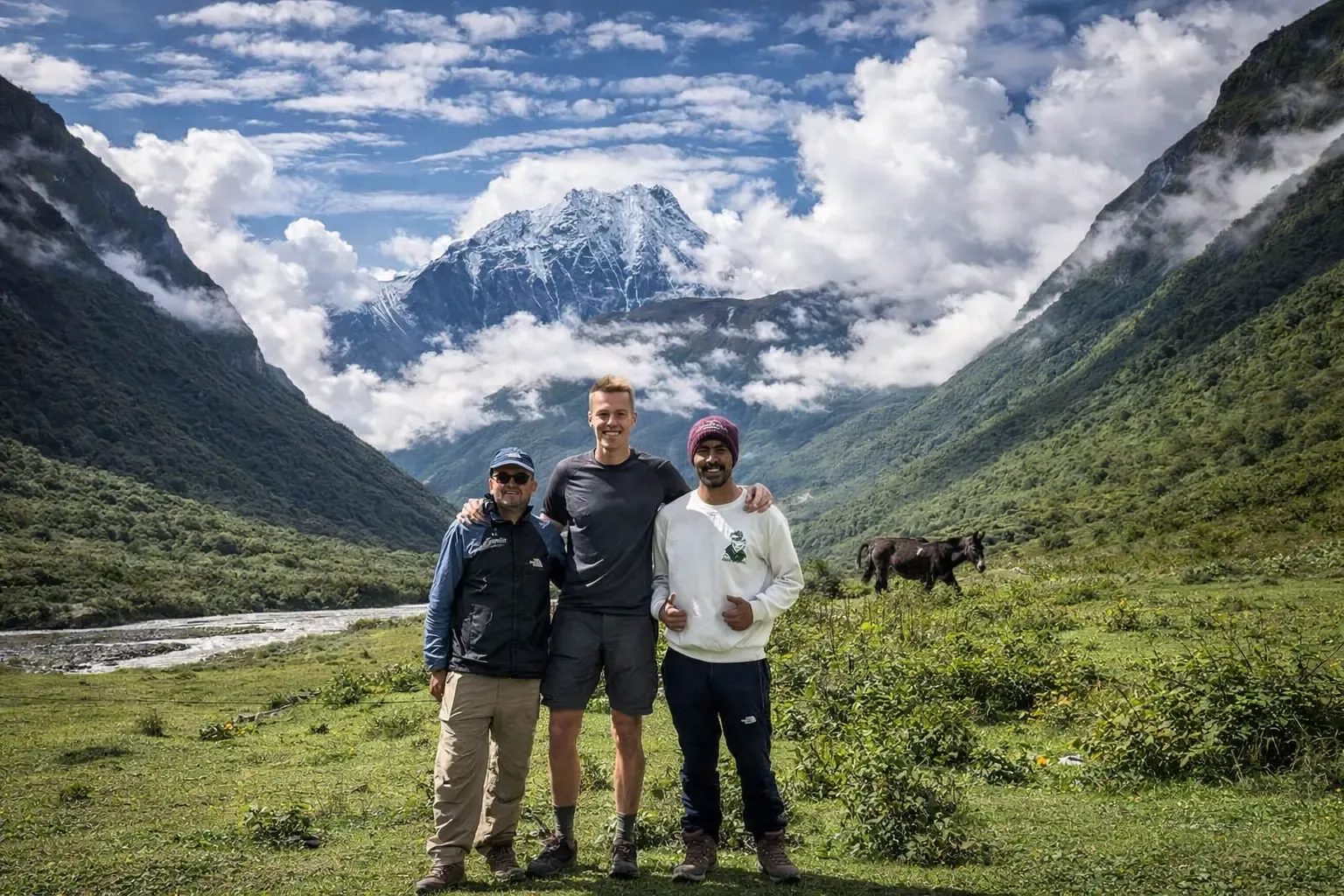

September is the magical transition month in Nepal, the vital bridge between the wet, humid monsoon season and the crisp, clear early autumn trekking season. If you are planning a September Manaslu Trek, you are choosing a time when the Himalayas are washing off the dust of summer and preparing for the peak trekking rush.
During this journey, you will circle the majestic Mount Manaslu (8,163m), navigate the stunning Budhi Gandaki River gorge, and experience the pristine, uncrowded nature of the 177 km trail. A post-monsoon trek offers vibrant, rain-washed landscapes, lush green forests, and unparalleled clarity for mountain views. However, because this is a transitional month, timing (early vs. late September) is absolutely everything. If you are still deciding on your exact dates, comparing this month with others in our guide to the Best Time for Manaslu Circuit Trek can help you make the final call.
Overview of the Manaslu Circuit Trek in September
Here is a quick snapshot of what to expect on this epic high-altitude route during the early autumn season:
- Total Distance: Approx. 177 km (110 miles).
- Max Altitude: 5,106m (Larkya La Pass / Larke La Pass).
- Trek Duration: Typically 13 to 18 days depending on acclimatization.
- Best Time within September: Mid to late September for the clearest mountain views and driest trails.
- Permits Required: Restricted Area Permit (RAP), MCAP, ACAP.
- Accommodation: Teahouses (fully reopening and freshly stocked after the summer break).
Is September a Good Time for the Manaslu Circuit Trek?
Absolutely, but the experience changes drastically depending on when you arrive. Trekking Nepal in September requires understanding the shifting weather patterns.
Early September vs. Late September
Early September (Sept 1 – Sept 15): This period represents the tail-end of the monsoon. You should expect frequent afternoon showers, highly humid conditions in the lower Budhi Gandaki gorge, and muddy trails. However, the landscape is at its most spectacular, waterfalls are massive, and the alpine flora is incredibly vibrant and green.

Late September (Sept 16 – Sept 30): This is the sweet spot for an early autumn trek. The rains stop, the skies clear up to reveal stunning, razor-sharp views of Mt. Manaslu, Himalchuli, and Ngadi Chuli, and the trails begin to dry. Best of all, the massive October crowds haven’t arrived yet, leaving the trail feeling peaceful and exclusive.
Pros and Cons of a September Trek
Pros:
- Lush, vibrant landscapes and roaring waterfalls.
- Dust-free trails and incredibly clean alpine air.
- Warmer daytime temperatures compared to late autumn.
- Easy to find teahouse beds without the intense competition of October.
Cons:
- Unpredictable road transport and potential delays due to landslides in the first week.
- Muddy, slippery lower trails and leeches if trekking in early September.
Weather and Temperature on the Manaslu Circuit in September
Understanding the temperature shifts is crucial for packing the right layers. The climate varies drastically depending on your elevation.
Lower Elevations (Soti Khola to Namrung: 800m to 2,600m): The climate here is warm and humid, especially in the first half of the month. Daytime temperatures average a comfortable 18°C–25°C (64°F–77°F).
Mid Elevations (Lho to Samdo: 2,600m to 3,800m): Daytime hiking is highly pleasant, ranging from 12°C–16°C. However, once the sun dips behind the massive peaks, the temperature drops sharply to crisp nights of 2°C–6°C.
What is the temperature at Larkya La Pass in September?
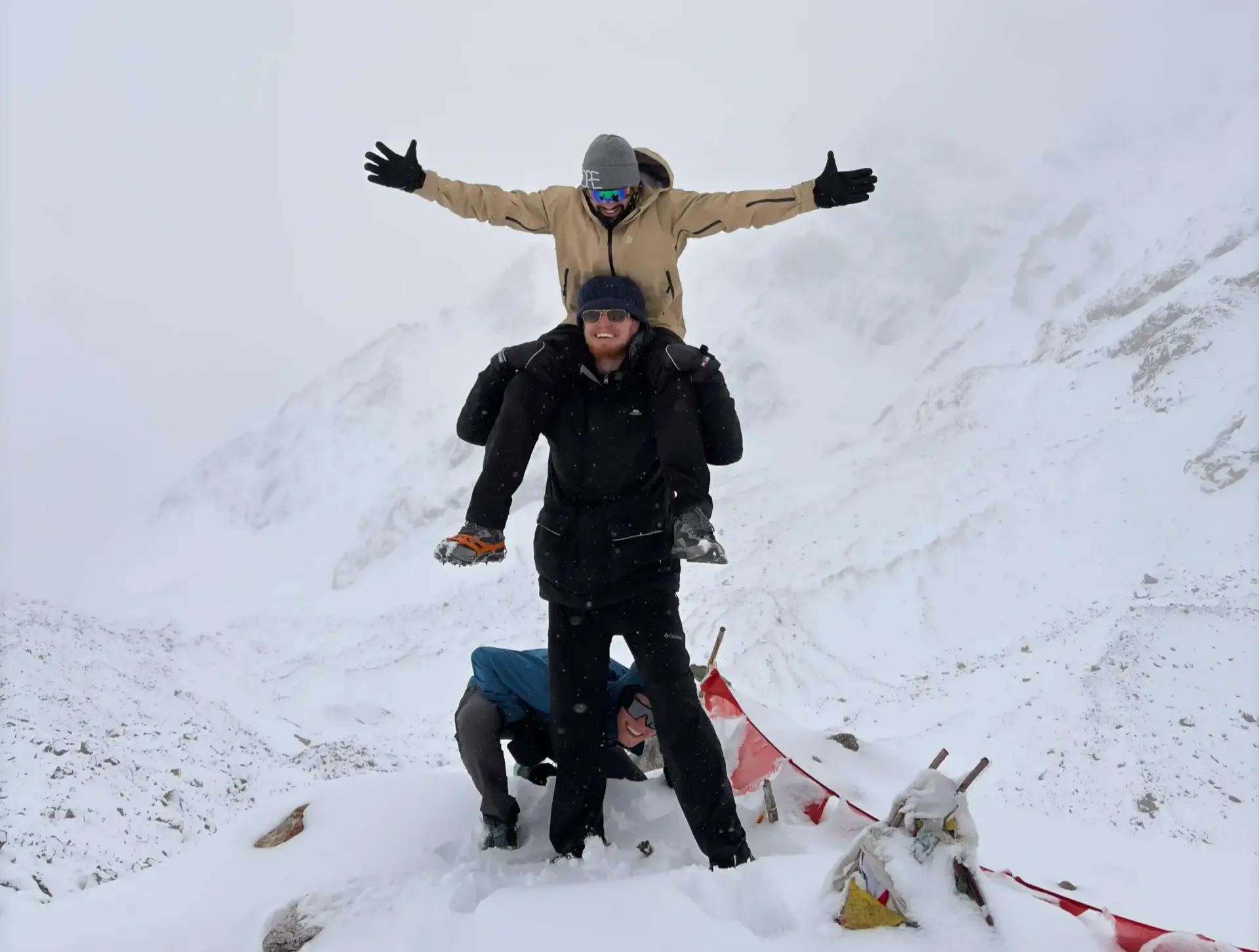
At 5,106m, Larkya La Pass in September experiences daytime temperatures of 2°C to 5°C, but drops to -5°C to -10°C at night and early morning. Fortunately, the pass is generally free of deep winter snowstorms during this month, making the crossing relatively safe and highly rewarding.
Trail Conditions, Difficulty & Safety in September
If you are trekking in early September, you must be prepared for slippery descents and potential trail detours due to swollen rivers. Minor ankle sprains are more common on these muddy post-monsoon trails, so trekking poles are highly recommended. By late September, the trails dry out significantly, making the footing much more stable.
As you approach high-altitude stops like Samagaon and Dharmasala, the risk of Altitude Mountain Sickness (AMS) increases. The key to avoiding AMS is a slow, steady ascent and aggressive hydration. Furthermore, due to the remote nature of the region, carrying comprehensive travel insurance that covers emergency helicopter evacuation up to 6,000m is strictly mandatory.
Because the Manaslu Circuit Trek difficulty is considered moderate to challenging, requiring good cardiovascular fitness, reviewing our guide on Preparation for Manaslu Circuit Trek will ensure you are physically ready for the long days and steep ascents.
Getting There: Road Conditions in September
The drive from Kathmandu to the trailhead at Machha Khola takes approximately 8-10 hours. While the highway from Kathmandu to Arughat is now mostly paved, the final rugged dirt section to Machha Khola remains highly susceptible to monsoon landslides. Therefore, a private 4WD Jeep is highly recommended over local public buses for safety and comfort in early September.
Modern Trailhead Update: Today, the jeep road reliably goes all the way to Machha Khola (and sometimes even further to Salleri), meaning you can skip the lower, warmer sections if you prefer to start at a higher elevation. Additionally, unlike in the past, Ncell and NTC 4G networks now reach up to Samagaun and Samdo, and basic paid Wi-Fi is available in most teahouses up to those villages, allowing you to stay connected during the first half of the trek.
Itinerary Options for the September Trek
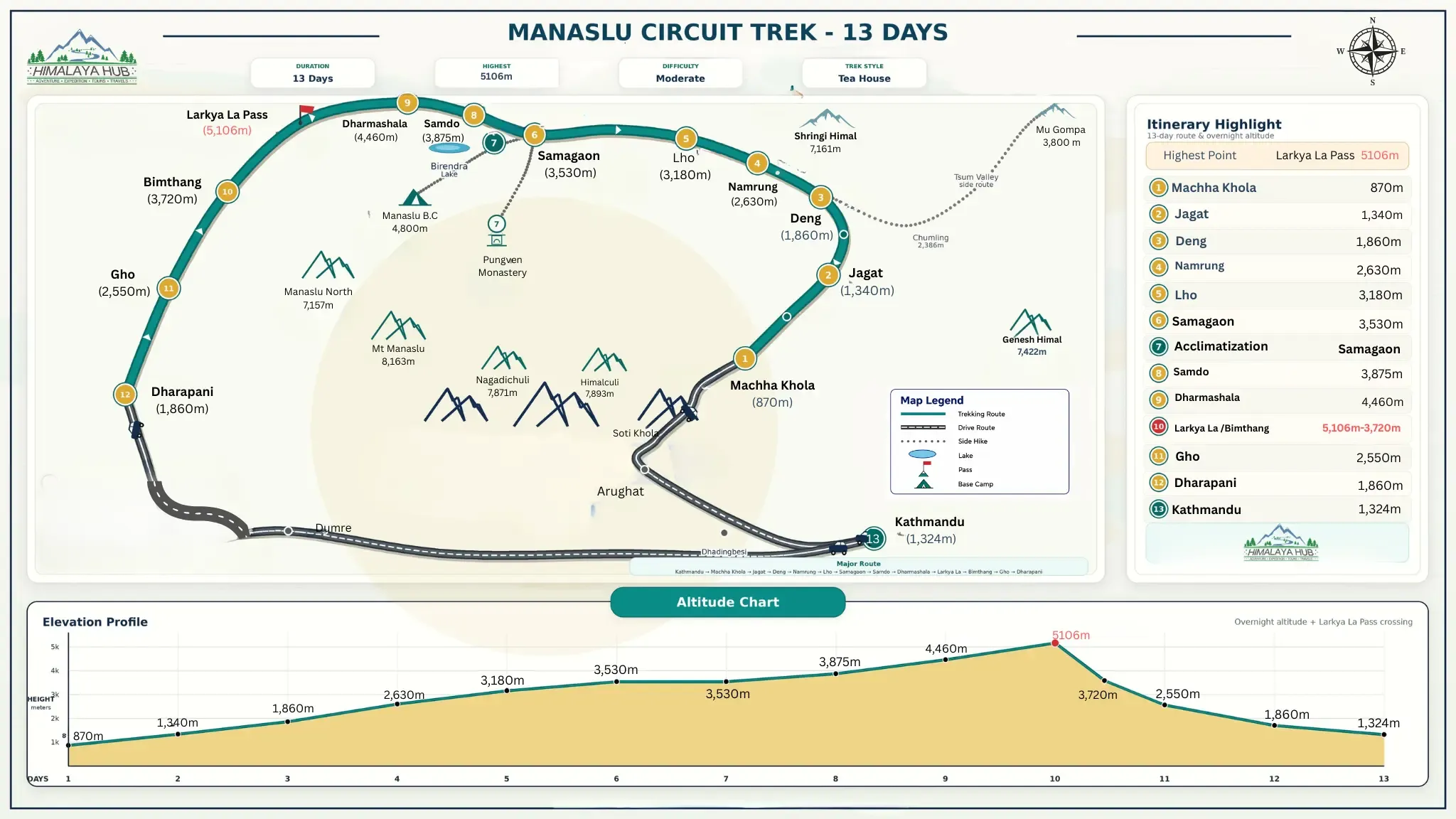
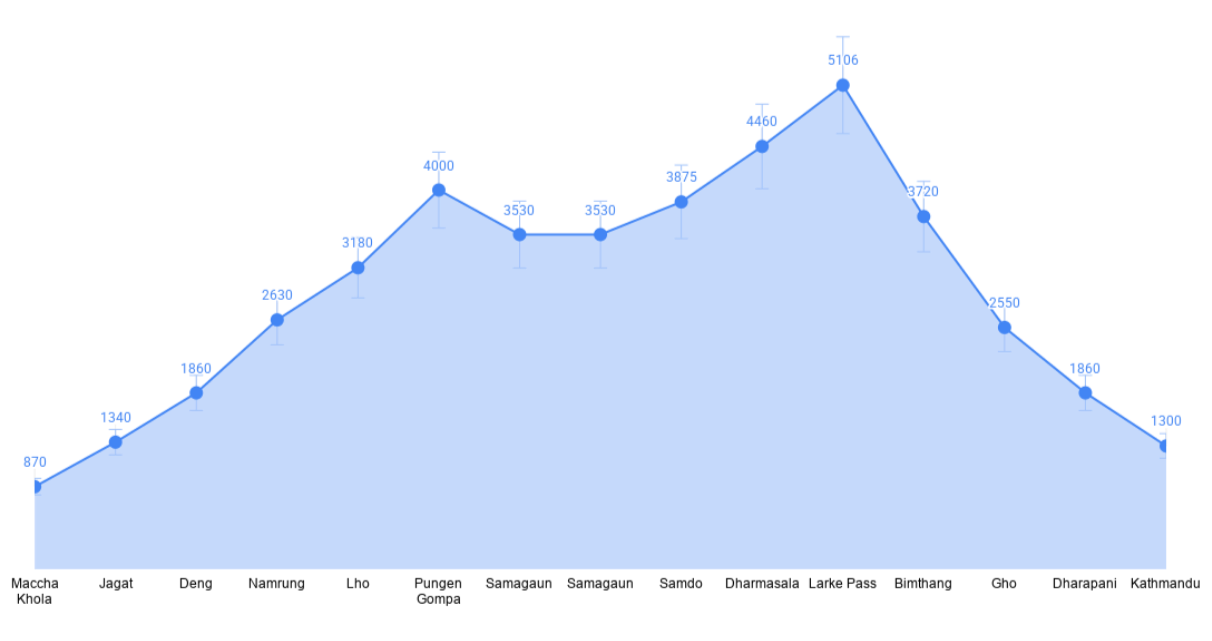
The Manaslu Circuit Trek Itinerary remains highly flexible to suit your fitness and schedule. Strong, experienced hikers can complete the circuit in a brisk 13 days. However, those wanting to safely acclimatize or explore spectacular side trails such as the Tibetan border/Rui La, Pungyen Gompa, or the culturally rich Tsum Valley Trek might prefer a more relaxed 16-day route.
The local experts at Himalaya Hub offer customized itineraries tailored exactly to your schedule, ensuring the safest and most enjoyable pace for your specific fitness level.
Essential Packing List for a September Trek
When compiling your Manaslu Circuit Trek Packing List, the focus for September must shift heavily toward rain and mud management.
You must pack waterproof trekking boots, leech socks or gaiters (essential for the muddy lower elevations), and dry bags to protect your electronics. Heavy winter micro-spikes are rarely needed in September, but a waterproof duffel bag is an absolute must for your porters.
Download 13 Days Packing CheckList
Download 16 Days Packing CheckList
Himalaya Hub Guide Tip: “Skip the heavy winter down jacket if you are trekking in early September; instead, prioritize a high-quality Gore-Tex rain shell and waterproof backpack covers. Also, pack a small ziplock of table salt. It’s the best trick for harmlessly removing leeches in the lower jungle sections!”

Accommodation and Food in September
Unlike October, where trekkers often have to fight for a bed, September offers the luxury of choice. Teahouses are freshly cleaned, well-stocked, and welcoming after the quiet summer months. Understanding the overall Manaslu Circuit Trek Accommodation standards will help you appreciate the cozy, rustic comfort of these mountain lodges.
2026 Festival Note: Depending on the lunar calendar, major Nepali festivals like Dashain or Tihar sometimes fall in late September. During these specific days, some local teahouse owners may close for 24-48 hours to celebrate with their families. It is always a smart backup to carry a few extra energy bars or snacks just in case.
To combat the chill and fuel your body, rely on warming, calorie-dense foods. The famous local Dal Bhat is a staple, while hot garlic soup is excellent for altitude acclimatization. You will also notice a unique abundance of fresh, post-monsoon green vegetables in the lower elevations, a rare treat on high-altitude trails. To discover what else to eat on the trail, read our guide on Manaslu Circuit Foods.
Permits, Regulations, and Cost in September
To trek in this restricted region, you need three specific permits: the Restricted Area Permit (RAP), the Manaslu Conservation Area Project (MCAP) permit, and the Annapurna Conservation Area Project (ACAP) permit. Note that a TIMS card is not required for the Manaslu region. Navigating the bureaucracy can be tricky, so reviewing our checklist for Manaslu Trek Permits will ensure you have all the necessary paperwork in order.
Because September marks the beginning of the autumn pricing tier, the RAP costs $100 for the first week. The MCAP and ACAP permits cost 3,000 NPR (approximately $23–$25 USD) each. For a full breakdown of the paperwork and budgeting, read our detailed guide on the total Manaslu Circuit Trek Cost.
Why Choose Manaslu Over Annapurna in September?
When deciding between the two classic circuits, Manaslu holds a distinct advantage in September. Annapurna’s newer road infrastructure gets incredibly muddy and is highly prone to landslide blockages during the tail-end of the monsoon. Manaslu, however, remains a wild, foot-traffic-only path. This means you get a much more authentic, uninterrupted adventure without the risk of getting stuck behind a landslide-blocked jeep track.
Conclusion
Trekking the Manaslu Circuit in September offers a beautiful, early autumn experience. You will be rewarded with the perfect balance of lush green valleys, roaring waterfalls, returning clear mountain views, and quiet, peaceful trails.
When you are ready to hit the trail, the local experts at Himalaya Hub are here to help. Whether you want a swift 13-day hike or an expansive 16-day exploration, we can craft the perfect, customized itinerary for your September adventure. Contact us today to secure your permits, 4WD transport, and experienced guides!
Reviews


Himalaya Hub Adventure executive director Ramesh gave us all the necessary in...
Himalaya Hub Adventure executive director Ramesh gave us all the necessary information to make our holiday really special and memorable. He attended to all our needs and gave a highly competitive quote. He provided us excellent vehicles and drivers and guide.
We set out from Kathmandu by road and visited Manakamana temple on the way to Pokhara. After a day of sightseeing in Pokhara including watching sunrise from Sarangkot viewpoint, we took next day early morning public bus to Ghandruk from where started our trek towards Tadapani . It is an ancient trade route and gives really memorable and special experiences but unfortunately we had continuous rain from the moment we started the trekking. Due to the clouds we missed the beautiful views of Himalayas which this trekking route is really famous for. We also spent some tense time in Tatopani due to the landslides along Kali Gandaki river where our guide took some excellent decisions to keep us safe.
Overall it was a great experience.
Ramit is a very good guide - very caring, knowledgeable, and always making sure I was safe and comfortable. He managed everything perfectly from hotels to food to permits. The only downside was the weather. Because of heavy rain, we couldn't see the good views from Ghorepani/Poon Hill and the trail became quite slippery and dangerous in some parts. But that's nature, nothing anyone can control, and he handled it very professionally and kept me safe. He took excellent decisions when faced with challenges posed by extreme weather conditions such as choosing a hotel accommodation at higher ground to keep us in safety in case of a flood and landslide. He sought required information for taking decisions regarding our trekking progress in difficult weather. He tested the path for safe crossing to minimise the risks that we were exposed to. He listened to our special needs and requirements and tried his best to meet with them such as ensuite accommodation, hot water, vegetarian food etc. His choice of teahouses and hotels were excellent.
Highly recommend Himalaya Hub Adventures for Nepal holiday packages.
Highly recommend Ramit Surkheti for anyone planning to trek in Nepal.

This tour is in the Himalayan hills and is relatively easy (ave. 6 hrs trekking per day). Lovely village sceneries, see Nepali agriculture, walks through the jungle and stiff climbs sometimes. 💪🏽
Communication with Puru of Himalaya Hub Adventures to book the tour and get all the details was very smooth.
Highly recommended!

From the morning pickup, bus transport, and hotel in Pokhara, through each day of trekking and our return to Kath...
From the morning pickup, bus transport, and hotel in Pokhara, through each day of trekking and our return to Kathmandu, everything was taken care of seemlessly.
Their well trained guide/porter Karan made every effort to see that we had a great experience.
This was our second time using Himalaya Hub, we had an excellent Everest Base Camp trek with them in 2018, so naturally they were our first choice when we arrived in Kathmandu this year.


Kind thanks from Julie and Ida, we will always remember🙏🏼


A huge thank you to our guides, Rosha...
A huge thank you to our guides, Roshan and Bipin, who were outstanding—professional, knowledgeable, kind, and went above and beyond to make sure everyone felt safe, comfortable, and well looked after. Roshan was especially organised at the guesthouses and meal times, quickly getting us settled in after each day’s trekking and clearly explaining the plan for the next day.
I also have a severe nut allergy, which Roshan managed with great care throughout the trek, something I really appreciated.
If you’re considering trekking in Nepal, I couldn’t recommend Himalaya Hub Adventure highly enough.












Helpful Resources for Planning Your Manaslu Trek
- Manaslu Circuit Trek Map
- Manaslu Circuit Trek in Spring
- Manaslu Circuit Trek Distance
- Manaslu Circuit Trek in October
- Manaslu Circuit Trek in November
- Manaslu Conservation Area
- Remote Area Treks in Nepal
Frequently Asked Questions (FAQs)
Is September a good time to do the Manaslu Circuit Trek?
Yes, particularly mid-to-late September. It offers the perfect balance of lush landscapes, clearing skies, and significantly fewer crowds compared to the peak of October.
How much does it rain on the Manaslu Trek in September?
Early September sees afternoon showers and lingering monsoon rain, but by late September, the skies generally clear up, offering dry days and excellent visibility.
Will I encounter leeches on the trail in September?
Yes, leeches are common in the lower, humid forested areas during the first half of September. Wearing leech socks, gaiters, and using salt helps keep them away.
Do I need a sleeping bag for the Manaslu Trek in September?
Yes. While lower elevations are warm, nights at high camps like Dharmasala and Samdo drop near freezing. A sleeping bag rated for -10°C is highly recommended.
Are tea houses open on the Manaslu Circuit in September?
Yes, almost all tea houses fully reopen in September after the monsoon break, offering warm meals and cozy beds.
Is it safe to cross Larkya La Pass in September?
Yes. Late September is one of the safest times to cross, as the deep winter snow has not yet arrived and the skies are generally clear.
Can I trek the Manaslu Circuit without a guide in September?
No. As of April 2023, the Nepal government implemented a nationwide ban on solo trekking. All foreign trekkers must be accompanied by a licensed guide. Furthermore, because Manaslu is a restricted area, a guide is strictly mandatory to secure the RAP anyway.
0 Comment